Victorian Puzzles: The Golden Age of Brain Teasers and Parlor Games
Explore the fascinating history of Victorian puzzles. Learn about hand-cut wooden jigsaws, puzzle purses, and the 2025 revival of 19th-century brain teasers.
By Free To Play Puzzles Editorial Team 12 min read
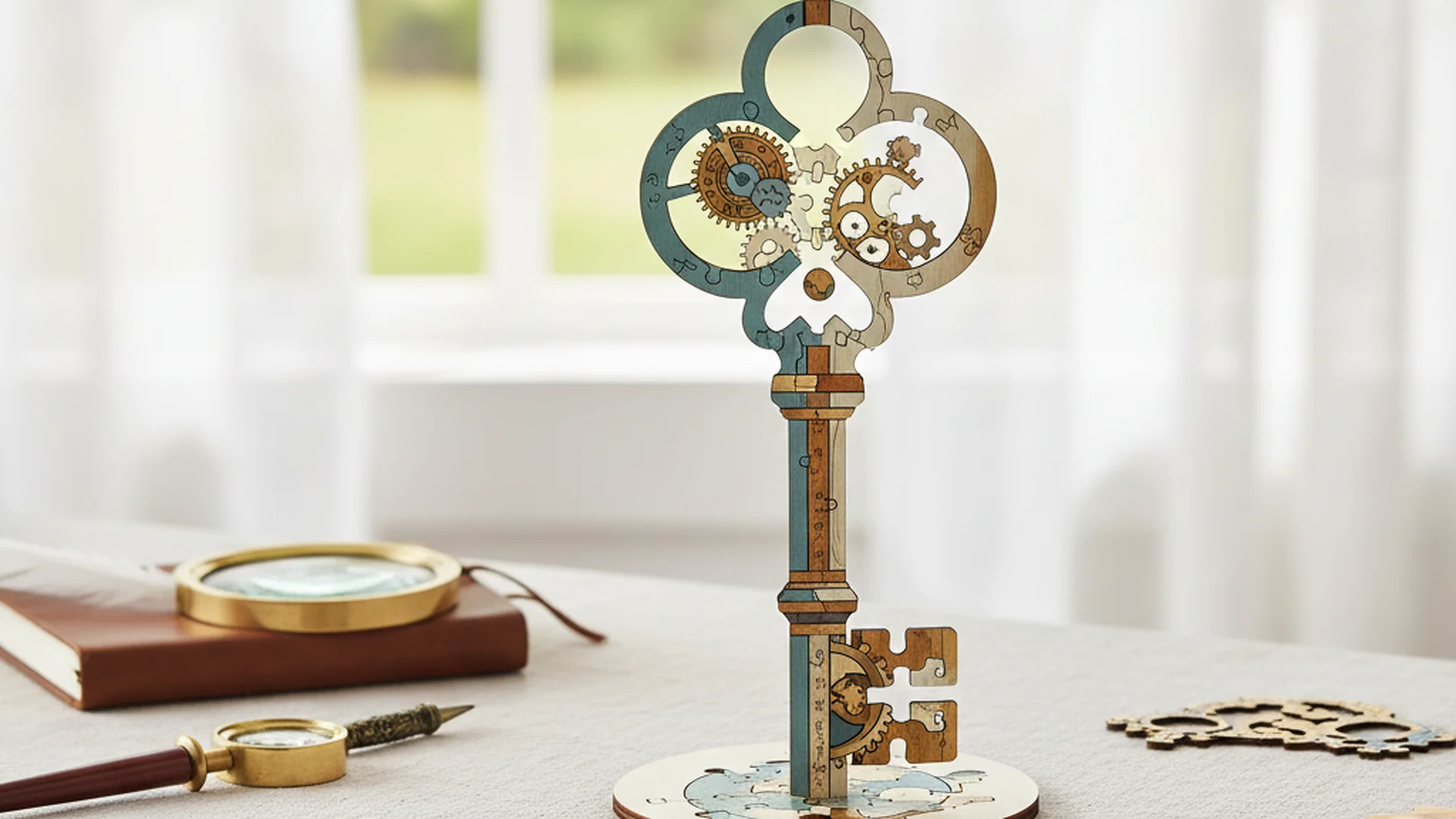
In the dimly lit, velvet-draped parlors of the 19th century, a peculiar revolution was taking place. Long before the digital glow of a smartphone or the standardized grid of a modern Sudoku grid, the elite of society gathered around mahogany tables to engage with victorian puzzles. These were not merely distractions for children; they were sophisticated, hand-crafted status symbols that challenged the intellect and defined social etiquette. To understand the "Golden Age" of brain teasers is to understand a time when a single sneeze could undo hours of meticulous labor, and a "dissected map" was the height of educational luxury.
The Origins: From Classroom to Parlor
The story of the Victorian jigsaw puzzle begins decades before Queen Victoria took the throne. In the 1760s, London cartographer John Spilsbury created the first "dissected maps." By mounting a map of the world onto a thin sheet of wood and cutting along the borders of kingdoms and empires, Spilsbury created an interactive geography lesson for the children of the British nobility.
However, during the mid-to-late 19th century, these educational aids underwent a radical transformation. As the industrial revolution progressed, the middle and upper classes found themselves with more leisure time. Puzzles shifted from the nursery to the drawing room. This transition was solidified by Queen Victoria herself, whose well-documented enthusiasm for intricate brain teasers made the hobby fashionable for adults across Europe and America.
The Craftsmanship of the Treadle Scroll Saw
What sets 19th century puzzles apart from their modern counterparts is the sheer artistry of their construction. Before the era of mass-produced cardboard, puzzles were hand-cut from solid mahogany, cedar, or fruitwood.
The tool of choice was the treadle scroll saw, a foot-powered machine that allowed craftsmen to create incredibly intricate, swirling cuts. Unlike the "grid-cut" puzzles we buy today—where pieces are roughly the same shape and snap together securely—Victorian puzzles featured a "free-form" or "Victorian-cut" style.
Whimsy Pieces and the Art of the "Victorian-Cut"
One of the most enchanting features of high-end victorian puzzles is the inclusion of "whimsy pieces." These are individual puzzle pieces cut into recognizable shapes that reflect the theme of the image. For example, a puzzle depicting a Victorian garden might include pieces shaped like a watering can, a rosebud, or a butterfly.
Real-World Example: The "Naughty Nineties" Hidden Images
In the late 1890s, puzzle makers began experimenting with social boundaries. Some puzzles featured hidden silhouettes or "double entendres" that only became visible once the pieces were assembled. These "Naughty Nineties" puzzles allowed the Victorians—who were famous for their rigid social codes—to enjoy a bit of scandalous humor in a socially acceptable format.
Advertisement
Beyond the Jigsaw: A Variety of Brain Teasers
While dissected maps and jigsaws were popular, the Victorian era was a fertile ground for many types of puzzles. The 19th-century mind was obsessed with hidden meanings and secret messages.
The Puzzle Purse
A "Puzzle Purse" was a popular craft, often used for Valentine’s Day. It was a complex, origami-style folded note. To read the full message, the recipient had to unfold the paper in a specific sequence, revealing hidden layers of text, intricate drawings, or even a lock of hair tucked inside the final fold.
Rebuses and Double Acrostics
Before the rise of newspaper puzzles, socialites exchanged calling cards featuring Rebuses. These were word-picture puzzles where icons represented syllables (e.g., a picture of an eye, a heart, and a sheep to mean "I love you").
Similarly, Double Acrostics were the intellectual peak of parlor entertainment. In these word games, the first and last letters of each answer formed two related words or names. The complexity of these games often required a deep knowledge of classical literature and history, much like the Logic Puzzles we enjoy today.
| Puzzle Type | Format | Primary Use |
|---|---|---|
| Dissected Map | Hand-cut wood | Geography Education |
| Puzzle Purse | Origami paper | Romantic Correspondence |
| Acrostic Ring | Gemstone jewelry | Secret messages ("Dearest") |
| Rebus | Visual icons | Calling cards & social games |
Collecting and Restoring 19th Century Puzzles
For the modern collector, Victorian puzzles represent a significant investment. In the late 1800s, a premium wooden puzzle could cost $5.00. While that sounds cheap today, it represented nearly 10% of a worker’s monthly wage ($50.00). Today, these rare artifacts are highly sought after in the world of Puzzle History Overview.
Expert Preservation Tips
If you are lucky enough to own a piece of 19th-century history, follow these guidelines from professional restorers:
- Climate Control: Humidity is the enemy. It causes "delamination," where the paper lithograph peels away from the wooden base. Store your collection in a cool, dry place.
- UV Protection: Victorian dyes were often vegetable-based and fade rapidly. If displaying a completed puzzle, use UV-blocking museum glass.
- Archival Repairs: If a piece is missing, professional restorers use watercolor pencils for "in-painting." Unlike markers or acrylics, watercolors are reversible and match the matte finish of antique paper perfectly.
The Victorian 2.0 Revival (2025–2026)
We are currently witnessing a massive resurgence of the Victorian aesthetic in the puzzling world. Driven by the "Dark Academia" trend on social media, modern enthusiasts are looking backward to find challenges that offer a more tactile, "offline" experience.
Smart Puzzles and AR Integration
New for the 2025–2026 season are "Smart Puzzles." Companies are now producing Victorian-themed jigsaws that utilize Augmented Reality (AR). Once you complete a section of a vintage-style botanical garden, you can view it through a smartphone app to see the flowers "bloom" or discover digital clues hidden within the artwork. This blend of ancient puzzles logic and modern tech is redefining the hobby.
Eco-Friendly Materials
Reflecting the 19th-century reliance on natural materials, 2026 trends show a shift away from plastic toward bamboo and FSC-certified birch plywood. These materials mirror the weight and feel of Victorian mahogany but with a modern focus on sustainability.
Advertisement
Common Mistakes to Avoid
When venturing into the world of Victorian-era brain teasers, novices often fall into several traps:
- Mistaking "Non-Interlocking" for Broken: Many beginners believe a puzzle is "low quality" if the pieces don't snap together. In reality, interlocking "tabs" are a 20th-century invention. A true Victorian puzzle requires a steady hand and a calm environment.
- Overvaluing Cardboard: By the late 1890s, mass production led to the first cardboard puzzles. While old, these are rarely as valuable as the hand-cut wooden versions from the middle of the century.
- Assuming They Were Just for Kids: Some of the most difficult puzzles ever created were the "Adult-Only" challenges of the 1880s, which were sold without a guide picture on the box. Imagine trying to solve a 1,000-piece mahogany puzzle with no reference image!
Frequently Asked Questions
What is a "Victorian-cut" puzzle?
A Victorian-cut puzzle features organic, free-form shapes cut by hand. Unlike modern grid-cut puzzles where pieces follow a predictable pattern, every piece in a Victorian-cut puzzle is unique, making the assembly significantly more difficult.
What are "whimsy pieces"?
Whimsy pieces are puzzle pieces cut into specific, recognizable shapes like animals, tools, or flowers. They are usually designed to match the theme of the puzzle's artwork and are a sign of high-quality craftsmanship.
Were Victorian puzzles used for gambling?
While not their primary purpose, historical records show that the "extreme" puzzles of the late 1800s (those without box art) were often used in social competitions where wagers were placed on who could finish a section first.
Why do some Victorian puzzles have missing pieces?
Because the pieces were non-interlocking and hand-cut, they were very easy to lose. Furthermore, because each puzzle was cut individually, you couldn't simply "order a replacement" from the manufacturer; a missing piece usually meant the puzzle was incomplete forever unless a specialist hand-carved a new one.
Conclusion
The victorian puzzles of the 19th century represent a unique intersection of art, mathematics, and social history. They remind us of a time when the challenge was not just in the "win," but in the patience and craftsmanship required to engage with the medium. Whether you are a collector of antique mahogany jigsaws or a fan of the new AR-powered "Victorian 2.0" designs, these brain teasers offer a timeless escape into a world of intricate beauty.
As we move through 2025 and 2026, the legacy of these 19th-century masters continues to inspire a new generation of solvers to slow down, look closer, and appreciate the "whimsy" in every piece of the puzzle.
Explore More History
Discover how puzzle design has changed over the centuries.
Put it into practice

Keep reading
Brain Health
Brain Teasers vs Puzzles: Key Differences for Brain Health
Explore the vital differences between brain teasers vs puzzles. Discover which cognitive exercises offer the best benefits for mental longevity and focus in 2025.
Apr 17, 2026 10 min

Technology
Mastering Fire Tablet Puzzles: The Ultimate Guide to Brain Games in 2025
Discover the best fire tablet puzzles and amazon fire brain games. Learn about cognitive benefits, hardware optimization, and the top-rated apps for 2025.
Oct 14, 2026 12 min
Therapy
The Ultimate Guide to Cognitive Rehabilitation Puzzles and Brain Injury Games
Discover how cognitive rehabilitation puzzles and brain injury games use neuroplasticity to accelerate recovery after TBI or stroke. Expert tips for 2025.
Sep 21, 2026 12 min
Advertisement