Behavior Therapy Puzzles: Using Play and Visual Reinforcement for Developmental Growth
Explore how behavior therapy puzzles and ABA puzzle activities enhance cognitive development and social skills through visual reinforcement and task analysis.
By Free To Play Puzzles Editorial Team 12 min read
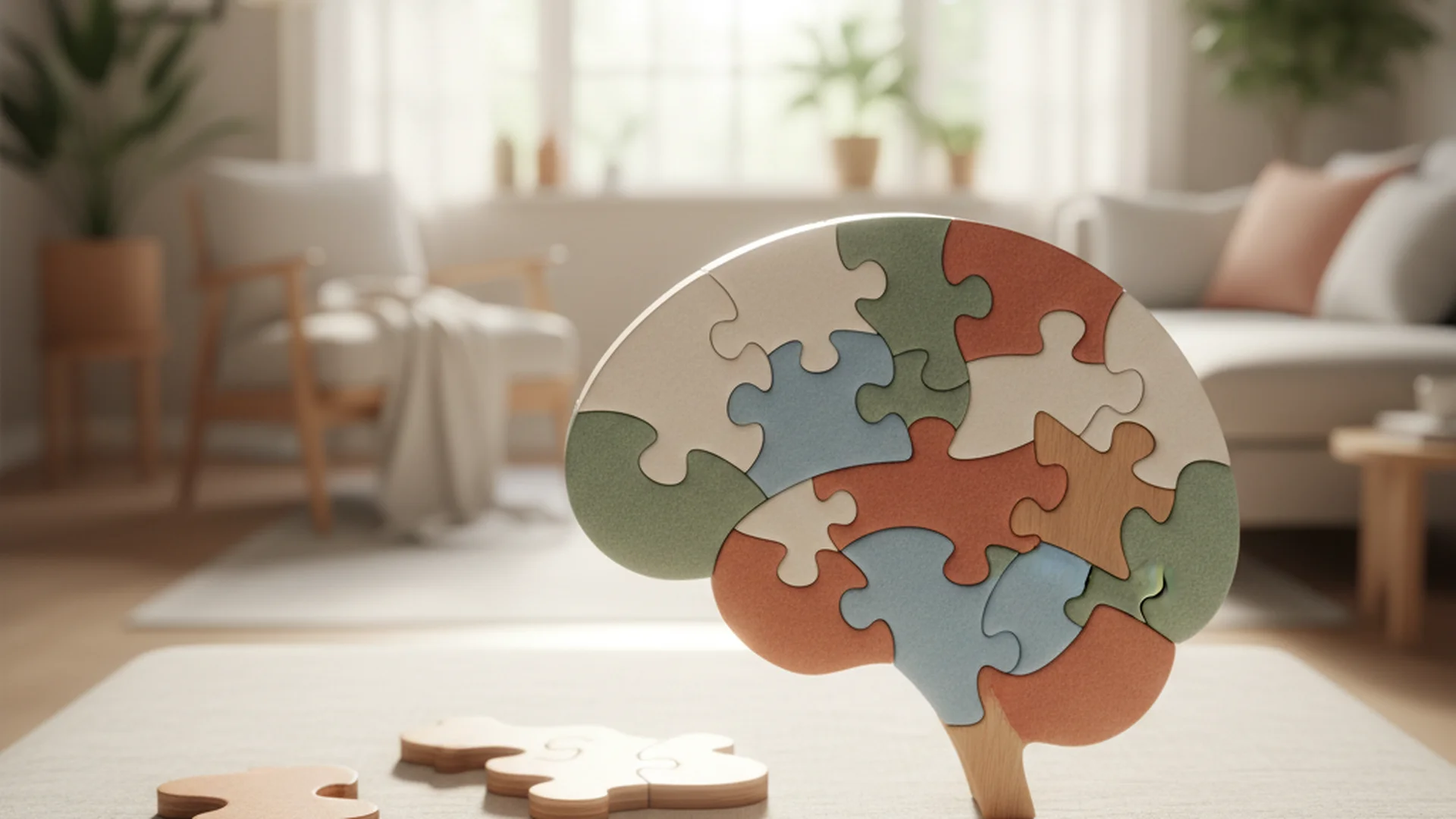
In the world of developmental intervention, the simplest tools often provide the most profound results. As a retro gaming historian, I’ve spent years analyzing the mechanics of play, but few "game loops" are as effective for the human brain as the humble jigsaw. In the clinical setting, behavior therapy puzzles have evolved from mere toys into sophisticated instruments for cognitive restructuring and skill acquisition. Whether used in Applied Behavior Analysis (ABA) or speech therapy, these activities offer a structured environment where a child can practice persistence, motor planning, and social collaboration.
The Science of the Piece: Cognitive and Motor Benefits
The effectiveness of incorporating puzzles into therapy is backed by rigorous recent data. According to the CDC (2025), over 75% of children are developmentally capable of completing simple puzzles—such as shapes, colors, or animals—by age 2. This milestone isn't just about matching a wooden cow to a wooden hole; it represents the birth of "Task Analysis."
In ABA puzzle activities, task analysis refers to the process of breaking down a complex skill into small, manageable steps. To a therapist, assembling a 24-piece puzzle is a sequence of discrete behaviors:
- Identifying corner pieces (spatial awareness).
- Sorting by color (categorization).
- Testing fit (trial and error/persistence).
- Scanning the board (visual search).
Recent research highlights the clinical impact of these steps. A 2024/2025 randomized controlled trial focused on the Jigsaw Puzzle Assisted Visual Reinforcement (JPVR) technique. The study found that using puzzles as visual anchors significantly improved knowledge retention and practice scores, showing up to a 53% improvement in children with speech and hearing impairments.
The "Behavior Puzzle" System: A DIY Token Economy
One of the most effective uses of puzzles in modern therapy isn't the act of doing the puzzle, but using the puzzle as a visual representation of progress. This is often referred to as a "Behavior Puzzle" or a visual token economy.
In this system, the puzzle completion is the signal for a "backup reinforcer"—a reward like extra time on a favorite app or a specific snack. Instead of earning stickers, a child earns a piece of a 9- or 12-piece puzzle for every positive behavior exhibited (e.g., following an instruction, staying seated, or using "kind words").
How to Build Your Own Visual Reinforcement Puzzle:
- Select an Image: Choose a picture of something the child highly values (e.g., a favorite cartoon character).
- Segment the Goal: Cut the image into a specific number of pieces that correspond to the difficulty of the day's goals.
- The Reinforcement Loop: Every time the child completes a target behavior, they "win" a piece and place it on the board.
- The Final Reward: Once the last piece is placed, the "backup reinforcer" is immediately delivered.
Advertisement
Expert Recommendations for ABA Puzzle Activities
When implementing puzzles in OT sessions or ABA programs, therapists follow specific protocols to ensure the activity remains therapeutic rather than frustrating.
Fading Prompts for Independence
The goal of any behavior therapy is to move the child toward independence. Therapists use a "fading" hierarchy:
- Hand-over-Hand: The therapist physically guides the child's hand to the correct spot.
- Gestural: The therapist points to the general area where a piece belongs.
- Visual: The therapist lays the piece near the correct hole but does not point.
- Independent: The child scans the pieces and the board to find the match without help.
Choosing the "Goldilocks Zone"
Parents often struggle to find the right difficulty. If a puzzle is too easy, it lacks therapeutic value; if it's too hard, the child loses "Behavioral Momentum." Experts suggest the 80/20 Rule: 80% of the pieces should be relatively easy for the child to place, while only 20% should provide a genuine challenge that requires adult prompting or deeper problem-solving.
2025 Tech Trends: VR, AI, and Digital Gamification
As we move further into 2025 and 2026, the intersection of brain training and behavior therapy is becoming increasingly digital. AI-assisted session planning is now being used to analyze a child’s speed and accuracy in real-time. If a child completes a puzzle 30% faster than their baseline, the software automatically suggests a more complex pattern for the next session.
There is also a significant shift toward Digital Game Therapy. Trials scheduled for 2026, such as those involving the GuessWhat app, use mobile-based puzzle and charade games to teach social cues and emotional recognition. These digital platforms allow for "Naturalistic Teaching"—the idea that therapy should happen in a familiar, low-stress environment like a tablet screen rather than a clinical desk.
| Trend | Therapeutic Focus | 2025 Status |
|---|---|---|
| AI Difficulty Scaling | Adaptive Learning | In Clinical Use |
| Digital Charades | Social Cue Recognition | Beta Testing |
| Silicone Texture Puzzles | Sensory Integration | Widely Available |
| VR Puzzle Environments | Generalization of Skills | Early Research |
Common Mistakes to Avoid
In my analysis of gameplay loops, I've seen how a poorly designed reward system can "break" a player's motivation. The same applies to therapy.
Bribes vs. Reinforcement
One of the most common mistakes is using a puzzle piece as a bribe. A bribe is offered during a meltdown to stop the behavior ("If you stop crying, I'll give you the piece"). Reinforcement is a pre-planned consequence for a specific "wanted behavior." The child should know the "contract" before the task begins.
Overwhelming Complexity
Choosing a 100-piece puzzle for a child who hasn't mastered 10 pieces leads to a total collapse of behavioral momentum. If a child begins to show signs of sensory overload, contemporary puzzles for cognitive rehabilitation suggest shifting to a "co-regulation" approach. In this scenario, the puzzle isn't a task to be completed for compliance; it's a tool to help the child calm down and ground themselves.
Advertisement
Frequently Asked Questions
What happens when the behavior puzzle is finished?
In a reinforcement system, the completion of the puzzle is the bridge to a larger reward. While the puzzle itself can be fun, the "backup reinforcer" (like a break or a favorite snack) ensures the child remains motivated to perform the target behaviors throughout the session.
Should the puzzle pieces themselves be the reward?
It depends on the child. For some, the act of completing the image is intrinsically rewarding. For others, the puzzle is "work." A skilled therapist assesses whether the puzzle is a task or the reinforcement and adjusts the plan accordingly.
Can behavior therapy puzzles help with social skills?
Absolutely. Therapists use puzzles to foster "joint attention" and turn-taking. By holding a piece and waiting for the child to ask for it ("I want the blue piece, please") or asking the child "Where does this go?", the therapist turns a solitary activity into a collaborative social exchange.
What if my child hates puzzles?
Modern neurodiversity-affirming practices focus on individualization. If a child finds puzzles frustrating or boring, an ethical therapist will pivot to a different medium—such as building blocks or logic games—to achieve the same cognitive and behavioral goals.
Conclusion: From Compliance to Connection
The ultimate goal of using puzzles in behavior therapy is not simply to produce a finished picture. It is to build the cognitive pathways required for patience, problem-solving, and communication. By viewing these activities through the lens of strategic gameplay, we can create environments where children feel empowered to solve "the puzzle of life," one piece at a time.
As we look toward 2026, the focus remains on moving away from "robotic" compliance and toward genuine connection. Whether it's a wooden peg puzzle or a high-tech AI interface, the core principle remains: play is the work of childhood, and every piece placed is a victory for development.
Enhance Your Strategy
Explore our collection of cognitive tools and logic games to boost development today.
Put it into practice
Keep reading
Therapy
Unlocking Communication: The Power of Speech Therapy Games and Language Therapy Puzzles
Discover how speech therapy games and puzzles accelerate language development. Learn expert strategies, 2025 trends, and play-based techniques for all ages.
Mar 18, 2026 12 min

Therapy
Harmonizing the Mind: The Rise of Music Therapy Puzzles
Discover how music therapy puzzles and musical brain games therapy improve memory, mood, and neuroplasticity through interactive auditory challenges.
Oct 16, 2026 10 min
Therapy
The Clinical Power of Puzzles: A Guide to Occupational Therapy Sessions
Explore how puzzles occupational therapy sessions drive cognitive and motor development. Learn about VR trends, session structures, and expert OT strategies.
Aug 30, 2026 12 min
Advertisement