The Ultimate Guide to Puzzle Games for 40s: Boost IQ and Brain Health
Discover why puzzles for 40s are the ultimate brain hack. Learn how 25 minutes of play can boost IQ, improve memory, and keep your brain feeling 20 years younger.
By Free To Play Puzzles Editorial Team 10 min read
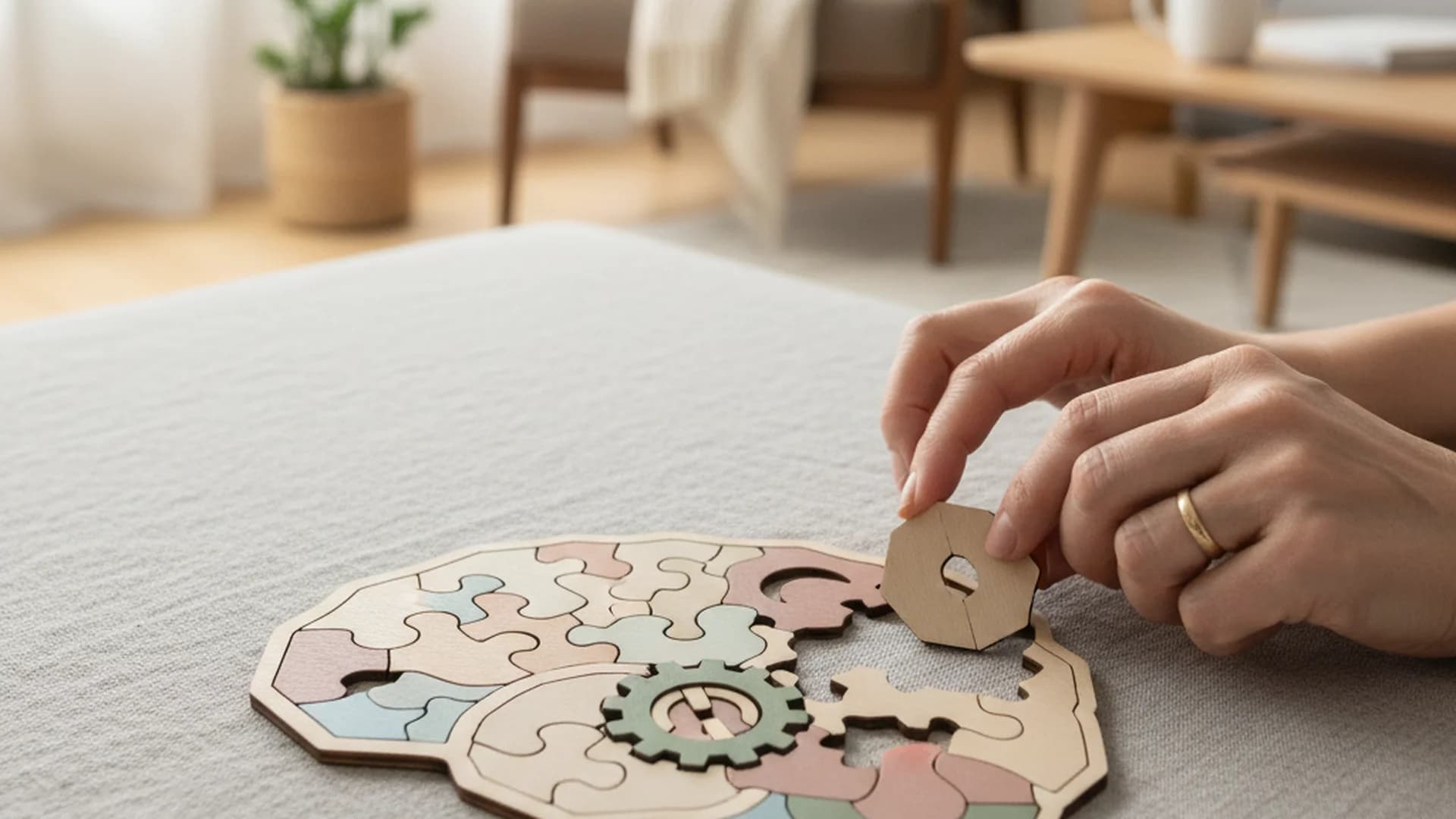
If you have recently found yourself reaching for your phone to solve a quick logic grid or spending your Sunday morning immersed in a complex detective mystery, you are part of a massive global movement. The 40–49 age group has officially emerged as the "Power Demographic" of the gaming world. No longer just a hobby for kids or retirees, puzzles for 40s have become a vital tool for stress management, cognitive enhancement, and social connection.
As a strategic gameplay analyst, I have watched the landscape shift. In 2025, engagement in this age group increased by a staggering 33%. We aren't just playing to pass the time; we are playing to stay sharp. Recent data suggests that the right mix of adult brain games 40s can actually rewire your neural pathways, offering a digital fountain of youth for the modern mind.
The Science of the "20-Year-Old" Brain
One of the most exciting developments in cognitive science is the realization that our 40s are a critical "pivot point" for brain health. A landmark study by the University of York found that adults in their 40s who regularly engage with digital puzzles exhibit working memory and distraction-resistance abilities comparable to people in their 20s.
This isn't just about being "good at games." It is about neuroplasticity—the brain's ability to reorganize itself by forming new neural connections. When you engage with Brain Training exercises or solve a difficult Sudoku, you aren't just finding numbers; you are strengthening the prefrontal cortex.
Furthermore, the long-term benefits are profound. The Fisher Center for Alzheimer’s Research has noted that complex mental activities can reduce the risk of dementia by 46% over a seven-year period. For those of us in our 40s, this is the perfect time to build "cognitive reserve"—a mental savings account that protects against future decline.
Cross-Training Your Brain: A Modern Strategy
Just as you wouldn’t go to the gym and only train your left bicep, you shouldn't rely on a single type of puzzle. To maximize the benefits of adult brain games 40s, you need a "cross-training" approach. Your brain thrives on variety and novelty.
1. Logic and Number Puzzles
Games like Sudoku and 2048 are fantastic for training deductive reasoning and pattern recognition. If you find yourself stuck on high scores, checking out 2048 High Score Tips can provide the strategic shift needed to challenge your brain further.
2. Word and Linguistic Challenges
Traditional Crosswords and modern variations like Wordle or Word Scramble keep your verbal fluency high. These games tap into your "crystallized intelligence"—the accumulated knowledge of language and facts that actually tends to peak in our 40s and 50s.
3. Spatial and Visual Reasoning
Don't neglect the visual side of things. Digital Sliding Puzzles and Tangram require you to manipulate shapes mentally. This skill is vital for everything from navigating new cities to understanding complex data visualizations at work.
4. Strategy and Narrative Depth
The latest trend for 2025–2026 is the "Narrative Detective" genre. Games like Rise of the Golden Idol or The Roottrees Are Dead require players to track complex information over long periods. This engages multiple cognitive areas simultaneously, from memory to logic to emotional intelligence.
Advertisement
Real-World Examples of High-Impact Puzzles
To get the most out of your gaming time, consider these three tiers of engagement currently popular with the 40s demographic:
- The "Flow State" Ritual: Many professionals in their 40s use Sudoku or Crosswords between 9 PM and 12 AM to wind down. This provides a meditative "flow state" that reduces cortisol levels after a high-stress workday.
- The Narrative Workout: Players are flocking to "Lost Media" style puzzles. These involve digging through fictional websites, emails, and photos to solve a crime. This mimics the "deep work" required in modern professional roles, keeping your analytical skills sharp.
- The Social Strategist: Games like Among Us or Codenames add a layer of social processing. Deciphering if a friend is lying or coordinating a team strategy provides a secondary layer of cognitive protection against aging.
New Trends: AI and VR in 2026
The world of puzzles for 40s is evolving rapidly. We are seeing a move toward "Personalized AI Workouts." Apps like MindPal now use AI to adjust difficulty in real-time. If the AI detects you are solving spatial puzzles too quickly but struggling with memory tasks, it will pivot your daily "prescription" to focus on your weaknesses.
Additionally, Immersive VR Puzzles are becoming a household staple. "Digital Escape Rooms" like Escape Simulator 2 allow you to physically move through a space, providing a high-intensity cognitive workout that improves spatial awareness more effectively than a flat 2D screen.
| Game Type | Primary Benefit | Recommended Frequency |
|---|---|---|
| Logic (Sudoku/2048) | Processing Speed | Daily |
| Strategy (Chess/RPG) | Executive Function | 2-3 times Weekly |
| Word Games | Verbal Fluency | Daily |
| Narrative/Mystery | Working Memory | Weekly Session |
Common Mistakes to Avoid
Even with the best intentions, many adults in their 40s fall into traps that limit their cognitive growth.
Staying in the Comfort Zone
The most common error is playing the same level of the same game for years. If you can do the Monday Crossword while watching TV, it is no longer "training" your brain; it is just a pastime. To keep neuroplasticity high, you must embrace the frustration of a new challenge.
The "Assumed Inevitability" Myth
Many people in their 40s start to excuse "senior moments" as a natural part of aging. In reality, your brain is still incredibly plastic. Don't accept decline; challenge it. If you enjoyed our guide on Puzzle Games for 30s, you'll know that the habits you build now set the stage for your 50s and 60s.
Ignoring the Physical Connection
No amount of Logic Puzzles can offset the cognitive impact of poor sleep or a sedentary lifestyle. Physical exercise increases blood flow to the hippocampus, the brain's memory center. Think of exercise as the "fuel" and puzzles as the "engine."
Advertisement
Frequently Asked Questions
Do brain training apps actually work?
They provide modest gains in specific tasks like processing speed and short-term memory. However, they are most effective when part of a "lifestyle approach" that includes physical exercise, social interaction, and diverse types of puzzles.
Is Sudoku or a crossword puzzle enough for brain health?
They are excellent for maintenance, but once you master them, the benefit plateaus. To continue building cognitive reserve, you must introduce new types of challenges or significantly increase the difficulty level.
Can digital games replace traditional jigsaw puzzles?
Not entirely. While digital games excel at training processing speed, physical jigsaw puzzles are often superior for visual-spatial reasoning and providing a screen-free "flow state" that is essential for eye health and stress reduction.
What is the best time of day to play?
For the 40s demographic, statistics show a peak in play between 9 PM and 12 AM. While this is great for stress reduction, some experts suggest playing difficult logic games in the morning when "fluid intelligence" is at its peak.
Conclusion
The 40s are not a time for cognitive slowing; they are a time for strategic sharpening. By engaging with diverse puzzles for 40s, from Number Games to immersive detective mysteries, you are doing more than just gaming. You are actively maintaining your IQ, expanding your memory, and ensuring your brain remains as agile as it was two decades ago.
Remember the mastery rule: keep it challenging, keep it diverse, and most importantly, keep it fun. Your brain is a "use it or lose it" organ—so go ahead and find your next challenge today.
Ready to Level Up?
Challenge your brain with our daily logic puzzles and strategy guides.
Put it into practice
Keep reading
Demographics
The Ultimate Guide to Puzzle Games for Teens 14-17: Logic, Strategy, and Digital Detox
Discover the best puzzles for teenagers aged 14-17. From high-complexity jigsaws to AR/VR logic games, explore how puzzling builds college-ready cognitive skills.
May 27, 2026 12 min
Demographics
The Ultimate Guide to Puzzle Games for Tweens 11-13: 2025 Edition
Explore the best puzzles for tweens ages 11-13. From 3D logic games to tech-integrated challenges, discover how middle school puzzles boost brain power and focus.
May 13, 2026 12 min
Demographics
The Best Puzzle Games for 8-10 Year Olds: A 2026 Strategy Guide
Explore the evolving world of puzzles for 8-10 year olds. From 3D challenges to AI-driven play, discover how to boost cognitive growth and reduce screen fatigue.
Feb 6, 2026 12 min
Advertisement