Beyond the App: Why Printable Brain Games for Adults Are Making a Massive Comeback in 2025
Discover the cognitive benefits of printable brain games for adults. Learn how adult puzzle PDFs can delay memory decline, improve logic, and boost mental acuity.
By Free To Play Puzzles Editorial Team 12 min read
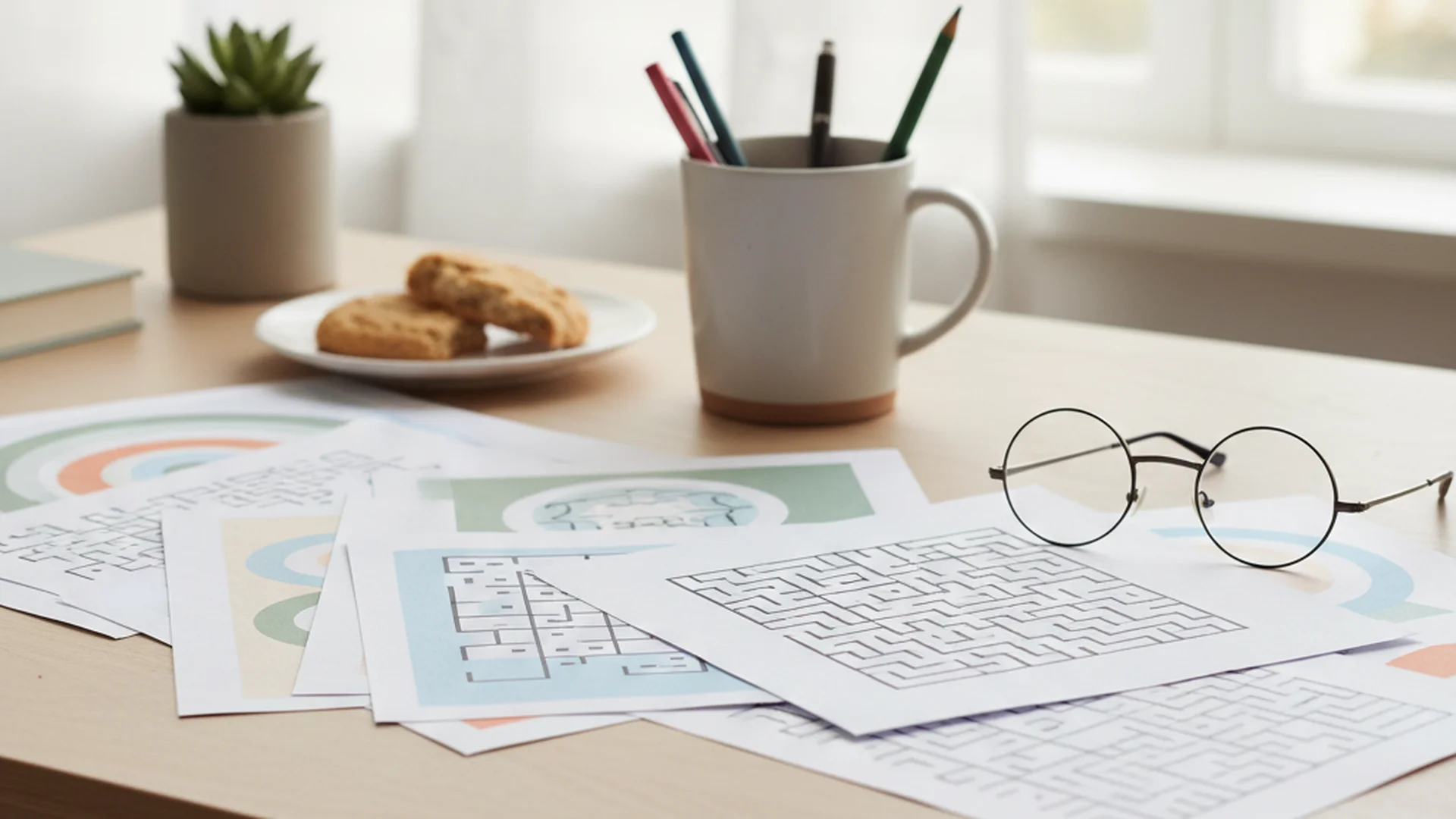
In an era increasingly dominated by flickering screens and high-intensity digital notifications, a quiet revolution is taking place on the coffee tables and desks of millions of Americans. Printable brain games adults are no longer just a hobby for the Sunday morning commute; they have become a scientifically backed cornerstone of cognitive longevity. As we move into 2025, the shift from "brain-training" apps back to the tactile experience of an adult puzzle pdf is driven by a desire for digital detox and the proven superior benefits of pencil-to-paper engagement.
Whether you are looking to sharpen your focus, expand your vocabulary, or simply find a meditative way to unwind, printable puzzles offer a versatile and accessible solution.
The Science of Solving: Why Paper Beats Digital
For years, the market was flooded with apps promising to make you "smarter" through gamified software. However, recent research suggests that the traditional method of solving puzzles on paper might actually be more effective for long-term brain health.
A landmark 2024–2025 study from UCLA and other leading health institutions confirmed that regular engagement with crossword puzzles can delay the onset of memory decline by an average of 2.5 years in older adults. Perhaps more surprisingly, research published in NEJM Evidence highlighted that adults with mild memory problems who utilized crosswords for 78 weeks saw significantly less brain shrinkage and improved overall cognition compared to those who played web-based games.
The Power of Cognitive Reserve
Think of your brain like a muscle. When you engage with a challenging adult puzzle pdf, you aren't just passing time; you are building "cognitive reserve." This is essentially a buffer of strengthened neural pathways. While brain games cannot entirely prevent neurological diseases like Alzheimer’s, they strengthen the brain’s architecture so it can function better for longer, even as age-related changes occur.
The Trinity of Brain Training: Word, Number, and Visual
To get the most out of your mental workouts, experts recommend a "cross-training" approach. Just as you wouldn't only train your arms at the gym, you shouldn't only train one part of your brain. Rotating through different categories ensures you are stimulating various cognitive functions.
1. Word and Linguistics (Verbal Memory)
Word-based games like Crosswords and cryptograms target your verbal memory and linguistic processing. They force you to retrieve information from deep within your long-term memory and find connections between seemingly unrelated concepts.
2. Number and Logic (Working Memory)
Games like Sudoku or KenKen are essential for developing logic and working memory. These puzzles require you to hold multiple variables in your head at once as you deduce the correct placement of numbers. According to the University of York (2023–2024), older adults who regularly played these games had the same memory abilities as non-players in their 20s.
3. Visual and Spatial (Reasoning)
Visual puzzles, such as nonograms or maze-based challenges, target spatial reasoning. These are often overlooked but are vital for maintaining the brain's ability to navigate environments and visualize complex structures.
| Category | Targeted Skill | Example Game |
|---|---|---|
| Linguistics | Verbal Memory | Crosswords |
| Logic | Working Memory | Sudoku |
| Spatial | Visual Reasoning | Nonograms |
Advertisement
Emerging Trends in Printable Puzzles (2025–2026)
The world of printables is evolving rapidly. We are seeing a move away from the stark, clinical designs of the past toward more engaging and personalized experiences.
Discovery-Based Puzzles (The "LOK" Trend)
One of the biggest shifts for 2025 is the rise of "rules discovery" printable PDFs. Unlike traditional games where the rules are explained upfront, these puzzles (inspired by indie titles like LOK) require the player to figure out how the game works as they play. This adds an extra layer of neuroplasticity training, as you are learning a new language or logic system from scratch.
Warm Minimalism Design
Modern high-quality PDFs have ditched the harsh black-and-white grids. The current trend is "Warm Minimalism," featuring soft earth tones like terracotta and moss green, rounded edges, and biophilic (nature-inspired) borders. This design philosophy aims to reduce stress, making the puzzle-solving experience as much about relaxation as it is about mental effort.
Hybrid Print-and-Play (PnP)
"Escape Room" style PDF kits are becoming increasingly popular for social puzzling. You print out a narrative-driven kit that combines logic puzzles with a story, allowing you to solve mysteries with friends or family. This social engagement is a major factor in Cognitive Benefits.
Best Practices for a Healthy Brain Habit
To see real results from printable brain games adults should follow a structured approach. Consistency is the most critical factor.
- The 15–30 Minute Rule: A daily 15-minute "mental workout" is significantly more effective than a three-hour marathon once a week.
- Progressive Difficulty: Once a puzzle type becomes "easy," its cognitive benefit drops. If you can finish a Sudoku in under five minutes without breaking a sweat, it’s time to move from Medium to Hard.
- Combine with Physical Activity: Aerobic exercise increases blood flow to the brain. Solving a puzzle after a brisk walk can significantly enhance the cognitive gains made during the session.
- The "Aha!" Moment: Don't rush to the answer key. The process of deduction—the slow "burn" of figuring out a difficult clue—is where the real brain growth happens.
Common Mistakes to Avoid
Even the most dedicated puzzlers can fall into traps that limit their progress.
- The "Genius Myth": Many believe that brain games will increase their general IQ. In reality, puzzles improve specific skills. Sudoku makes you better at logic, but it won't necessarily help you with your taxes. The goal should be overall brain health, not a higher IQ score.
- Ignoring Sleep and Nutrition: Brain games are not a "magic bullet." Your brain needs deep sleep to consolidate the connections made during puzzle-solving. Without proper rest and a heart-healthy diet, the cognitive benefits of printables are drastically reduced.
- Staying in Your Comfort Zone: If you only do word searches because you "hate math," you are missing out on logic training. Force yourself to try different genres to ensure full-brain stimulation.
- Focusing on Speed vs. Process: Speed-solving is a fun competitive hobby, but for cognitive health, the deep deduction of a difficult puzzle is superior to the rapid-fire completion of an easy one.
Advertisement
Frequently Asked Questions
Are printable puzzles as effective as brain-training apps?
Yes, and in many cases, they are superior. Paper puzzles provide a tactile experience that aids spatial reasoning and eliminates the "blue light" issues associated with smartphones. Experts often recommend the "pencil to paper" method for better focus and less eye strain.
Can brain games actually prevent Alzheimer's?
While they cannot prevent the disease entirely, they build what researchers call "cognitive reserve." This allows the brain to function at a higher level for a longer period of time despite physical age-related changes.
Where can I find high-quality adult puzzle PDFs?
Popular 2025 recommendations include specialized indie sites like Krazydad for logic, Puzzles to Print for themed games, and indie "Print-and-Play" books found on platforms like Itch.io. Many players also enjoy creating custom PDFs using AI-enhanced personalization tools.
Which types of puzzles are best for memory?
Word games (crosswords and cryptograms) are excellent for verbal memory and linguistic recall. For working memory and deductive reasoning, number-based games like Sudoku or nonograms are the gold standard.
Conclusion
The resurgence of printable brain games adults are embracing highlights a collective move toward more intentional, screen-free mental health practices. By incorporating a variety of puzzles into your daily routine—from the linguistic challenges of a crossword to the logic-heavy demands of a Sudoku grid—you are doing more than just passing the time. You are actively investing in your brain's future, building a cognitive reserve that will serve you for decades to come.
Remember, the goal isn't to be the fastest or to have the highest IQ; it’s to keep the gears turning. So, grab a pencil, print out your favorite adult puzzle pdf, and give your brain the workout it deserves.
Ready to Start?
Challenge your mind with our collection of engaging puzzles.
Put it into practice
Keep reading
Brain Health
5-Minute Brain Games: Quick Mental Workouts for Peak Performance
Discover the power of quick brain games. Learn how 5-minute mental workouts can boost memory, attention, and cognitive health based on 2025 research.
Jul 30, 2026 12 min
Memory Visual
Memory Games for Seniors: Brain Training for Healthy Aging
Discover the best memory games for seniors to maintain cognitive health. Learn benefits, strategies, and accessible games designed for older adults.
Jan 19, 2025 12 min
Memory Visual
Memory Match Games for Brain Training: Complete Guide
Discover how memory match games improve cognitive function. Learn strategies, benefits for all ages, and tips to enhance your memory through card matching puzzles.
Jan 18, 2025 10 min
Advertisement