Mastering Preschool Puzzle Skills: A Strategy Guide for Ages 3 to 5
Unlock the cognitive potential of your child with our deep dive into preschool puzzle skills. Learn age-specific milestones, strategies, and the latest 2025 trends.
By Free To Play Puzzles Editorial Team 12 min read
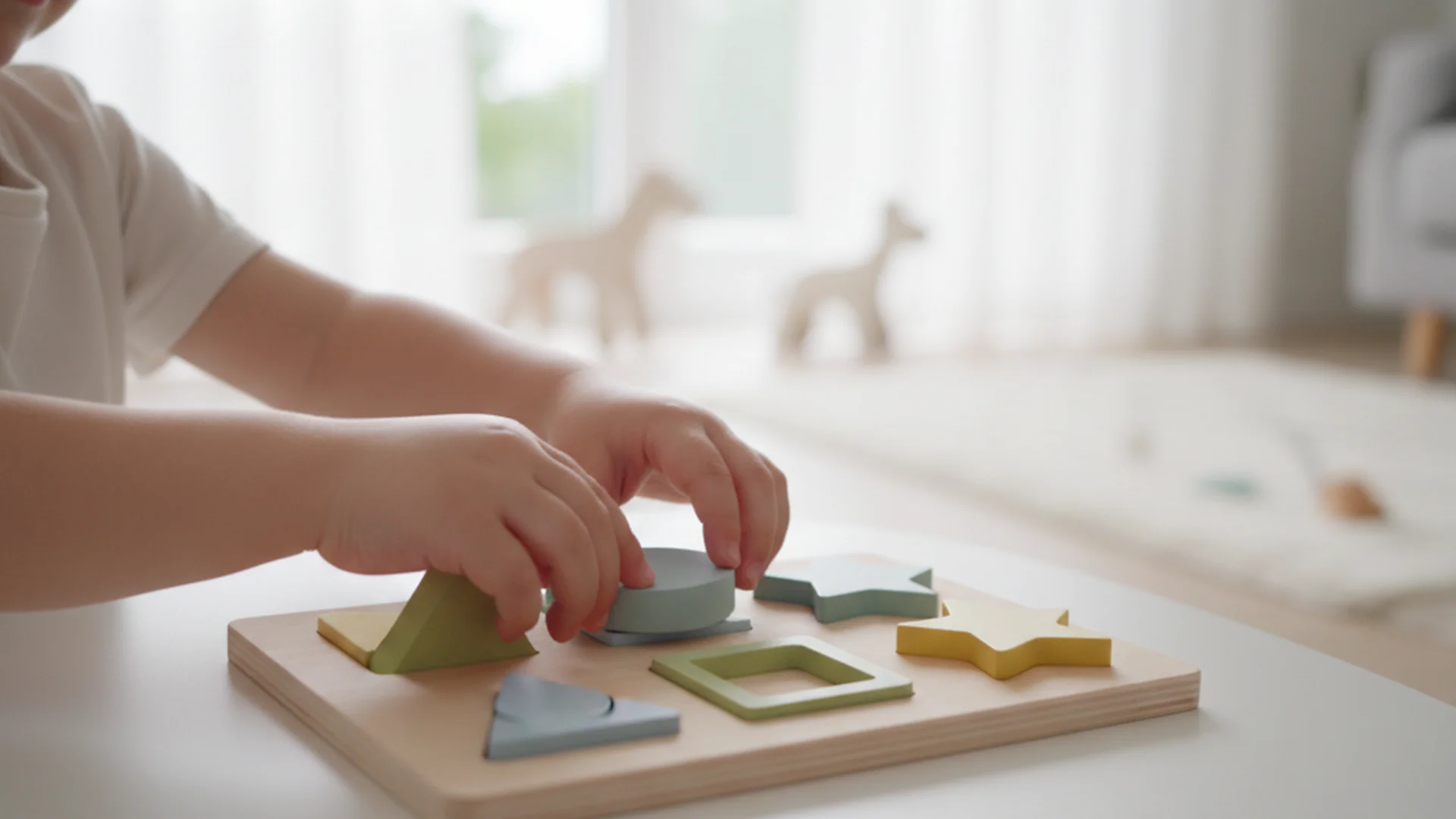
In the world of strategic gameplay, we often look at high-level logic and complex algorithms. However, as a historian of gaming, I’ve found that the most sophisticated "operating system" updates happen long before a child ever picks up a controller. The development of preschool puzzle skills is, in many ways, the foundational tutorial for a lifetime of strategic thinking. Between the ages of 3 and 5, a child’s brain undergoes a massive architectural shift, moving from the chaotic exploration of physical objects to the refined execution of visual logic.
Whether it’s a simple 12-piece wooden frame or a complex 100-piece floor puzzle, these tools are more than just quiet-time distractions; they are the building blocks of spatial intelligence. Understanding how to guide this development without overstepping is the hallmark of a great "coach"—or in this case, a great parent.
The Cognitive Architecture of Puzzling
When a preschooler engages with a puzzle, they aren't just looking for a fit; they are performing a complex series of mental rotations, color matching, and pattern recognition. Research into early childhood development suggests that regular puzzle play provides a massive Cognitive Advantage. Specifically, studies indicate that consistent engagement can boost a child's IQ by up to 13 points. This is because puzzles force the brain to work across both hemispheres: the creative left side for image recognition and the logical right side for spatial placement.
The Shift from Physical to Visual
One of the most fascinating aspects of 3-5 year old puzzle development is the transition that occurs around the fourth birthday.
- At Age 3: The methodology is almost entirely "trial and error." A child will pick up a piece and physically try to jam it into various slots. They are learning about the physical properties of the pieces—the "pincer grip" and the "click" of a successful match.
- At Age 4: The brain begins to "pre-visualize." Instead of trying every piece, the child looks at the image on the piece, compares it to the "big picture" on the box, and makes a logical deduction. This is a leap from tactile exploration to abstract reasoning.
Understanding this shift is crucial for providing the right support at the right time. If you understand the Puzzle Benefits early on, you can tailor your approach to match their current mental "hardware."
Milestones: The Roadmap for 3-5 Year Old Puzzle Development
Parents often ask, "What is the right level of difficulty?" In my experience as a strategic analyst, the "Sweet Spot" of difficulty—the Flow State—is where growth happens. If a puzzle is too easy, the child gets bored; if it’s too hard, they experience "learned helplessness."
Age 3: The Explorer Phase
At three years old, children are refining their Fine Motor Skill Puzzles capabilities.
- Piece Count: 12 to 24 pieces.
- Focus: High-contrast images and sturdy materials.
- Behavior: Expect a lot of piece-flipping and occasional frustration.
Age 4: The Strategist Phase
This is where the Logic Puzzles mindset begins to take root.
- Piece Count: 24 to 48 pieces.
- Focus: Distinct imagery with clear boundaries (e.g., a red barn against a blue sky).
- Strategy: They may start to group pieces by color or recognize specific characters within the larger image.
Age 5: The Master Builder Phase
By age five, children are preparing for Kindergarten Puzzle Readiness.
- Piece Count: 50 to 100 pieces.
- Focus: Complex patterns and smaller details.
- Strategy: This is the ideal time to introduce the "Edge First" strategy, a foundational logic skill used by professional speed-puzzlers and casual hobbyists alike.
| Age Group | Recommended Piece Count | Primary Strategy | Focus Area |
|---|---|---|---|
| 3 Years | 12–24 pieces | Trial & Error | Fine Motor Control |
| 4 Years | 24–48 pieces | Visual Matching | Spatial Awareness |
| 5 Years | 50–100 pieces | Border-First | Logical Sequencing |
Advertisement
Expert Strategies: How to Scaffold Success
In gaming, "scaffolding" is the process of providing enough support to keep the player moving without doing the work for them. The same applies to preschool puzzle skills.
Use Spatial Vocabulary
Don't just say, "Put it there." Use words that build their mathematical foundation. Words like rotate, flip, corner, edge, above, and beside help translate physical actions into linguistic concepts. This is essentially teaching them the "code" of the physical world.
The "Scaffold, Don't Solve" Rule
It is incredibly tempting to slide that final piece into place when your child is struggling. Resist. Instead, use "spatial prompts."
Real-World Example: The "Blue Sky" Dilemma
Imagine a 4-year-old working on a landscape puzzle. They have 10 pieces of identical blue sky left. A 3-year-old might give up or throw the pieces. An "analyst-in-training" will look at the shapes of the tabs and blanks. By prompting them to look at the "in-nies and out-ies," you are moving them from color recognition to shape-based logic—a key component of Math Readiness Puzzles.
Trends in 2025: The Future of Puzzling
As we move into 2025 and 2026, the world of preschool puzzle skills is being revolutionized by new materials and technologies.
1. Eco-Conscious and Sustainable Materials
Sustainability is no longer a niche; it's the standard. Parents are moving away from flimsy plastics and toward puzzles made from bamboo, FSC-certified wood, and recycled ocean plastics. These materials are not only better for the planet but offer a tactile weight that helps children with sensory processing.
2. 3D Logic Stackers
Moving beyond the flat X and Y axes, 3D logic puzzles are a massive trend for late 2025. These require children to understand "z-axis" spatial relationships. Think of them as physical versions of classic "stacking" games, where pieces must be placed in a specific vertical order to reveal a hidden image or complete a structure.
3. AR-Enhanced (Augmented Reality) Puzzles
Some of the most exciting 2026 releases involve AR. Once a puzzle is completed, a parent can scan it with a tablet to see the scene come to life. For example, a completed solar system puzzle might trigger a 3D orbit view on the screen, providing educational facts. This bridges the gap between physical play and digital literacy without the passivity of traditional screen time.
Common Mistakes to Avoid
Even the best-intentioned parents can accidentally hinder their child's preschool puzzle skills development by falling into these common traps.
The "More is Better" Fallacy
Many parents believe that if their 3-year-old can do a 24-piece puzzle, they should immediately jump to 100 pieces to "challenge" them. This often backfires. It is far better for a child to master a 24-piece puzzle independently than to become frustrated and watch an adult do a 100-piece one. Confidence is the engine of learning.
Ignoring Image Quality
Not all puzzles are created equal. A "muddy" or overly artistic image with soft colors is significantly harder for a young brain to process than a high-contrast image with clear, distinct characters. When starting out, look for "busy" scenes with lots of unique, identifiable objects rather than large expanses of single colors (like grass or sky).
The "Solo Activity" Myth
Puzzles are often seen as a way to keep a child quiet and occupied. While they are great for that, floor puzzles are also incredible tools for "cooperative play." Learning how to negotiate space—"You do the dinosaur, I’ll do the volcano"—teaches essential social skills and spatial negotiation.
Advertisement
Frequently Asked Questions
How many pieces should a 3-year-old’s puzzle have?
For most 3-year-olds, 12 to 24 pieces is the ideal range. This allows them to finish the activity in one sitting (usually 5–15 minutes), which builds their confidence and attention span.
My child just throws the pieces. Is that normal?
Yes, it is perfectly normal. At age 3, children are still refining their gross motor control and sensory exploration. They may be more interested in the "clink" of a wooden piece than the image itself. Encourage them to help you "find one match" before they move on to other play.
When should I move my child to a more difficult puzzle?
The best time to "level up" is when your child can complete their current favorite puzzle in under 5 minutes without any help from you. If they are bored and doing it on "autopilot," it's time for more pieces or a more complex image.
Are digital puzzle apps as good as physical ones?
Digital apps are excellent for teaching the logic of puzzles and image matching. However, they cannot replace physical puzzles for developing the "pincer grip," fine motor coordination, and 3D spatial awareness required to rotate a physical object in space. A balance of both is fine, but prioritize physical pieces for children under 5.
What is the best strategy to teach a 4-year-old?
Start with the "Face Up" rule and then introduce the "Edge First" strategy. Show them that pieces with a "flat side" belong on the outside. This teaches them to categorize and sequence, which are vital precursors to both math and reading.
Conclusion: Building a Foundation for Life
Developing preschool puzzle skills is a marathon, not a sprint. As a strategic gameplay analyst, I see the direct line between the toddler who learns to find the "corner piece" and the adult who can break down a complex project into manageable steps. By providing the right tools—high-contrast images, sturdy materials, and the occasional AR-enhanced challenge—you are giving your child a massive head start in cognitive development.
Remember to celebrate the "dopamine hit" of that final piece. Whether it’s a simple 12-piece farm scene or a complex 100-piece map of the stars, that moment of completion is a victory for their growing brain.
Ready to Level Up?
Explore our deep dives into early childhood logic and games.
Put it into practice

Keep reading
Child Development
Toddler Puzzle Development: A Comprehensive Guide for Ages 2-3
Unlock your child's potential with our guide on toddler puzzles development. Learn milestones, motor skills, and 2025 trends for 2-3 year old puzzle skills.
Mar 7, 2025 12 min
Child Development
Mastering Kindergarten Puzzles: A Guide to School Readiness
Discover why kindergarten puzzles are the ultimate tool for school readiness. Learn benchmarks, developmental benefits, and 2025 trends for early childhood success.
May 19, 2026 12 min
Child Development
Mastering Size Sorting Puzzles: A Guide to Early Sequencing
Discover how size sorting puzzles and big small sequencing activities build essential math and literacy skills in children. Expert tips for parents and educators.
Mar 15, 2026 10 min
Advertisement