Beyond the Pieces: How Fine Motor Puzzles Unlock Your Child’s Potential (2025 Guide)
Discover how fine motor puzzles bridge the gap between play and life skills. Learn the 2025 trends in hand coordination puzzles and developmental milestones for kids.
By Free To Play Puzzles Editorial Team 12 min read
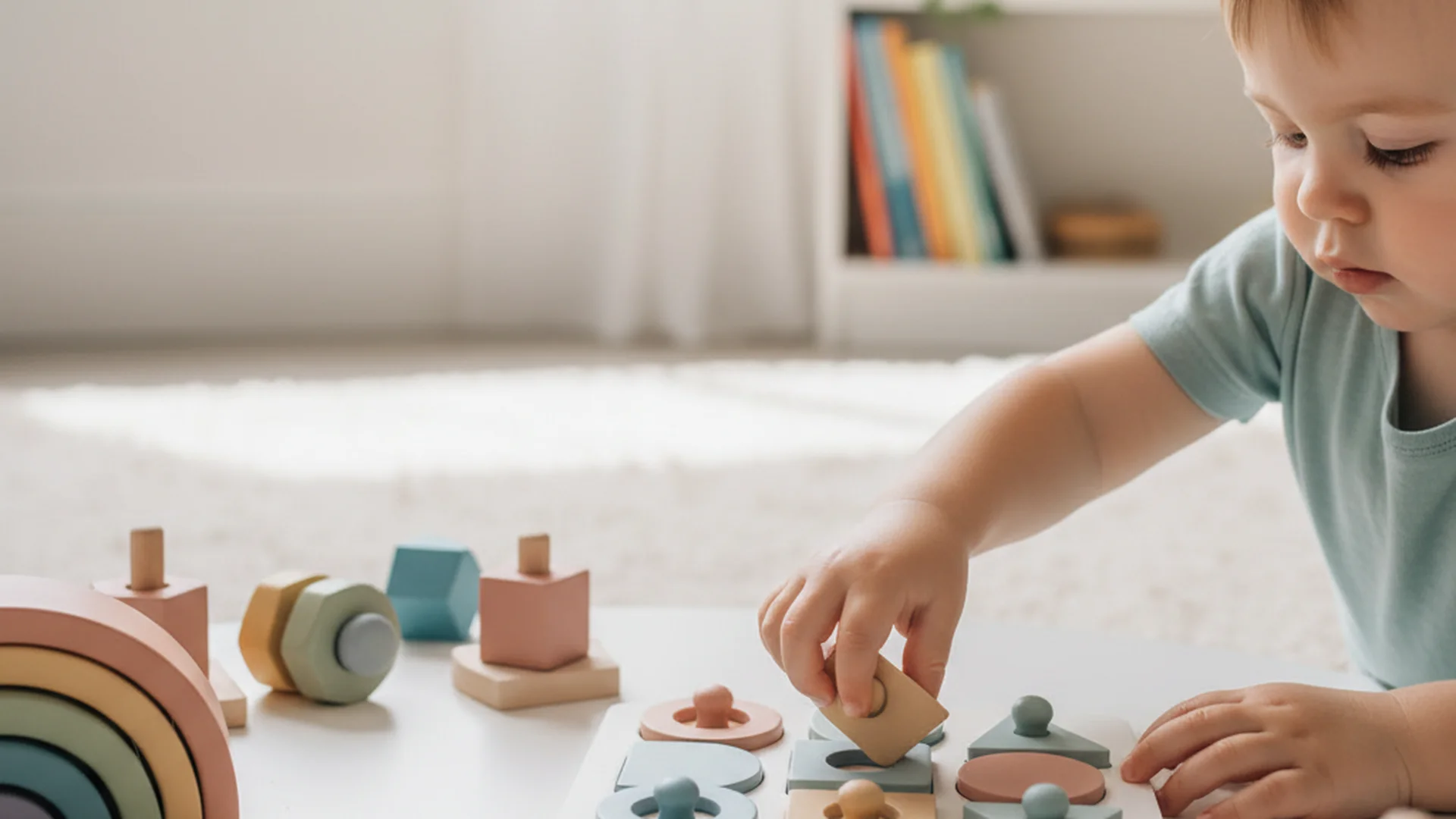
In the world of child development, we often look for the "next big thing" in educational technology. However, as a historian of gaming and strategic play, I’ve observed that the most revolutionary tools are often the ones that have been sitting on our shelves for decades. Fine motor puzzles are not just simple pastimes; they are the fundamental "controllers" of early childhood, training the brain and hands to work in a synchronized dance of precision.
Whether it’s a toddler gripping a wooden knob or a preschooler maneuvering a complex 3D assembly, these tools serve as the primary gateway to functional independence. From buttoning a jacket to mastering the pencil grip required for kindergarten, the journey starts with the humble puzzle piece.
The Science of Hand-Eye Synergy
Fine motor skills involve the use of small muscles in the hands and wrists. While gross motor skills allow a child to run and jump, fine motor skills allow them to create and manipulate. The use of fine motor puzzles bridges the gap between these two worlds by requiring "bilateral coordination"—the ability to use both sides of the body at once.
In my analysis of strategic gameplay, the "Helper Hand" concept is vital. When a child works on hand coordination puzzles, they use their dominant hand to place a piece while their non-dominant hand (the helper) stabilizes the board. This seemingly simple act is the neurological precursor to complex tasks like cutting paper with scissors or holding a ruler while drawing.
The Roadmap: From Knobs to Jigsaws
Not all puzzles are created equal. To maximize developmental benefits, parents and educators should follow a "scaffolded progression." Rushing a child into complex jigsaws before they have mastered basic grips can lead to frustration and "learned helplessness."
| Age Range | Puzzle Type | Primary Skill Focus |
|---|---|---|
| 12–18 Months | Large Knob Puzzles | Palmar Grasp & Release |
| 18–24 Months | Small Peg Puzzles | Pincer Grasp (Thumb/Index) |
| 2.5 Years | Chunky/Wooden Puzzles | Finger-tip Manipulation |
| 3 Years | Frame Jigsaws | Spatial Boundaries & Logic |
| 4+ Years | Floor/3D Puzzles | Gross Motor & Precision |
Understanding Toddler Puzzle Development is the first step in selecting the right tool for your child's current milestone.
The Power of the Pincer Grasp
Between 9 and 12 months, infants develop the pincer grasp—the ability to pick up small objects with the thumb and forefinger. Fine motor puzzles with small pegs are designed specifically to "exercise" this grip. By repeatedly lifting and placing these pieces, children strengthen the intrinsic muscles of the hand, which directly correlates to their ability to hold a pencil without fatigue later in life.
Advertisement
Why Physical Puzzles Beat Digital Apps
In our modern era, it is tempting to hand a child a tablet with a puzzle app. However, from a strategic gameplay perspective, digital interfaces lack "tactile resistance." When a child moves a physical piece, they feel the weight, the texture, and the friction of the wood against the board.
Physical hand coordination puzzles require "3D rotation" or in-hand manipulation. This is the ability to turn a piece within the hand without using a surface for help. An app only requires a "swipe" or "tap," which does nothing to build the muscle density required for real-world tasks.
2025–2026 Trends: The Future of Puzzling
As we move into the 2025–2026 cycle, the puzzle industry is undergoing a "functional" revolution. We are moving beyond flat images toward "Intelligent Design" that appeals to the modern, eco-conscious family.
1. 3D Functional Puzzles
The trend for 2025 is moving toward puzzles that result in a usable object. "Puzzle Lamps" and mechanical 3D models of clocks or globes are surging in popularity. These require high-level precision and offer a tangible reward for the physical effort exerted.
2. Augmented Reality (AR) Integration
"Hybrid Puzzles" are the new frontier. After completing a physical puzzle, children can use a tablet to see the image come to life. This adds a layer of digital reward to the physical labor, encouraging children who might otherwise prefer screen time to engage with physical toys.
3. Eco-Conscious Materials
The "Eco-Parent" demographic of 2026 is driving a shift away from plastics. Expect to see a rise in hand coordination puzzles made from sustainable bamboo, cork, and FSC-certified recycled wood. These materials offer unique textures that provide better sensory feedback than plastic.
Common Mistakes to Avoid
Even with the best intentions, it’s easy to approach puzzle time in a way that hinders development rather than helping it.
- The "Busy Hands" Fallacy: Assuming that because a child’s hands are moving, they are developing fine motor skills. Stacking large, light blocks uses gross motor skills; it’s the precision of fine motor puzzles that builds writing strength.
- Skipping Levels: Trying to force a 3-year-old to complete a 100-piece puzzle because they are "smart." If they haven't mastered Classification Puzzles Kids, they will struggle with the logic required for larger sets.
- Neglecting the Non-Dominant Hand: If the puzzle board is sliding all over the table, the child isn't learning bilateral integration. Encourage them to use their "helper hand" to hold the frame steady.
Advertisement
Actionable Strategies: "Play with a Purpose"
To turn a standard puzzle into a therapeutic powerhouse, try these expert-recommended "hacks":
The Sensory Bin Hide-and-Seek
Hide the pieces of a wooden puzzle in a bin of dry rice or beans. This forces the child to use "tactile discrimination"—feeling for the shape of the piece before they even see it. Once they find it, they must then use their motor skills to place it. This combines sensory processing with fine motor execution.
The Inclined Surface Trick
Place the puzzle board on a slant board or a three-ring binder. Working on an incline promotes wrist extension. This is the optimal anatomical position for hand strength and is the same position used for proper handwriting.
Incorporating Logic and Cause
Puzzles that demonstrate Cause Effect Puzzles (like a puzzle where a piece reveals a hidden image underneath) provide immediate cognitive feedback, keeping the child engaged for longer durations.
Frequently Asked Questions
At what age should my child start doing puzzles?
Experts recommend starting as early as 18–24 months with simple knob puzzles. However, you can introduce sensory "touch and feel" boards as early as 12 months to get them used to the concept of boundaries and shapes.
How do puzzles actually improve handwriting?
Puzzles develop two specific things: the tripod grasp (using the thumb, index, and middle finger) and finger isolation. By strengthening these specific muscles, children experience less hand fatigue when they eventually start using pens and pencils for extended periods.
What is the difference between a peg puzzle and a jigsaw puzzle?
A peg puzzle focuses primarily on the physical grip (the pincer grasp). A jigsaw puzzle focuses more on visual discrimination and spatial reasoning—the ability to see how two different shapes fit together to form a whole. Both are necessary, but they target different developmental milestones.
My child gets frustrated easily. How can I help?
Start with "completion." You place all the pieces except one, and let the child "finish" the puzzle. This provides the dopamine hit of success without the overwhelming struggle of starting from scratch. As they gain confidence, leave two pieces out, then three, and so on.
Conclusion
The journey from a toddler's first clumsy grasp to the precise movements of a writer or artist is paved with puzzle pieces. By choosing the right fine motor puzzles and moving through the developmental stages with patience, you are giving your child the physical and cognitive tools they need for a lifetime of success.
In 2025, the trend is clear: we are returning to tactile, purposeful play. Whether it's a 3D mechanical model or a simple wooden peg board, these tools remain the gold standard for Puzzle Benefits in early childhood. For older children looking to transition into more complex challenges, exploring Logic Puzzles can continue to sharpen those spatial and cognitive "muscles" well into the school years.
Ready to Level Up?
Explore our collection of brain-boosting games and developmental guides today.
Put it into practice
Keep reading
Child Development
Beyond Counting: How Math Readiness Puzzles Build Future STEM Success
Explore the power of math readiness puzzles and number sense games. Learn how spatial reasoning and logic-based play prepare children for academic success in 2025 and beyond.
Jul 3, 2026 12 min
Child Development
Mastering Kindergarten Puzzles: A Guide to School Readiness
Discover why kindergarten puzzles are the ultimate tool for school readiness. Learn benchmarks, developmental benefits, and 2025 trends for early childhood success.
May 19, 2026 12 min
Child Development
Mastering Size Sorting Puzzles: A Guide to Early Sequencing
Discover how size sorting puzzles and big small sequencing activities build essential math and literacy skills in children. Expert tips for parents and educators.
Mar 15, 2026 10 min
Advertisement