Beyond Counting: How Math Readiness Puzzles Build Future STEM Success
Explore the power of math readiness puzzles and number sense games. Learn how spatial reasoning and logic-based play prepare children for academic success in 2025 and beyond.
By Free To Play Puzzles Editorial Team 12 min read
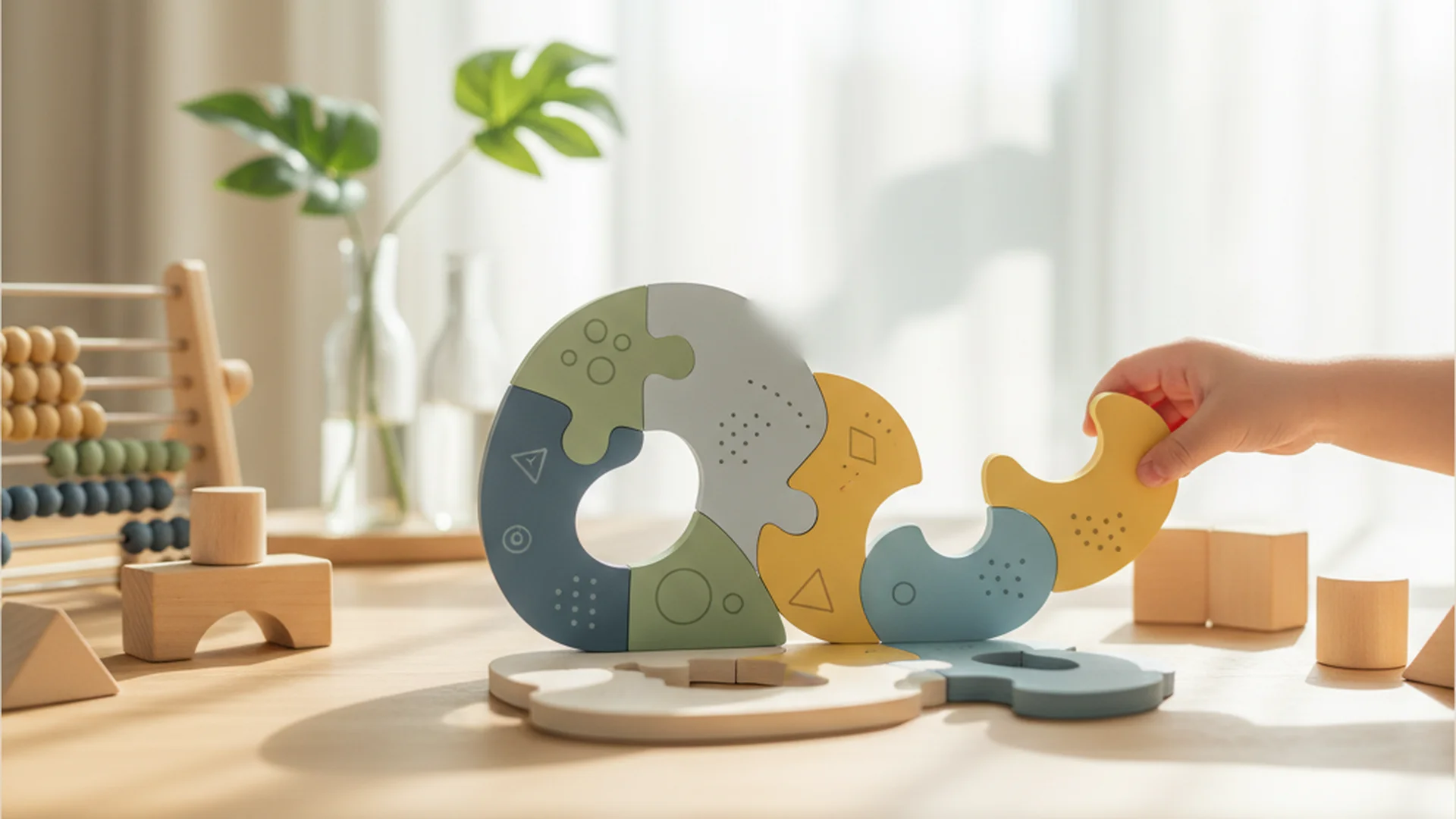
For many parents and educators, the word "math" conjures images of dusty chalkboards and repetitive drills. However, math can be viewed through a different lens: as a series of intricate, beautiful patterns waiting to be decoded. In the critical first five years of life—the "Golden Age" of math logic—the most effective way to prepare a child for academic success isn't through worksheets, but through math readiness puzzles.
By engaging children in number sense games, we aren't just teaching them to count; we are teaching them to think. Current research suggests that these early interactions with logic and spatial puzzles are the single most significant predictor of later success in both math and reading.
The Science of Play: Why Puzzles Matter
The "Nation’s Report Card" (NAEP) from 2024 provided a wake-up call for educators. While 4th-grade math scores saw a modest 2-point increase from 2022, they remain significantly lower than pre-pandemic levels. Perhaps more concerning is that nearly a quarter of students are performing below the "Basic" proficiency level. This is where the "Puzzle Boost" comes in.
A landmark study from the University of Chicago found that children who play with puzzles between the ages of 2 and 4 develop vastly superior spatial skills by age 4.5. This isn't just about fitting a piece into a hole; it’s about mental transformation—the ability to rotate shapes and visualize outcomes. This spatial reasoning is the "secret sauce" for future success in Science, Technology, Engineering, and Math (STEM) disciplines.
Building the Foundation: Essential Number Sense Games
"Number sense" is a child's fluidity and flexibility with numbers. It is the understanding of what numbers mean and how they relate to one another. To build this, we must move from the concrete to the abstract.
The Power of Subitizing
Instead of teaching a child to count 1-2-3-4-5 by pointing, we should encourage "subitizing." This is the ability to instantly recognize the number of items in a small group without counting them one by one—like knowing a die shows a "five" without counting the dots.
Real-World Example 1: The Snack Time Challenge When serving crackers, don't just hand them over. Place three on a plate and ask, "How many do you see?" Change the arrangement. Can they still see it's "three" if they are in a line versus a triangle? This builds the mental flexibility required for higher-level Math Puzzles.
Sorting and Pattern Recognition
Before a child ever writes a plus sign, they should be masters of sorting. Sorting toys by color, size, or function develops the categorical logic necessary for set theory and algebra.
| Age Range | Skill Focus | Recommended Activity |
|---|---|---|
| 2–3 Years | Spatial Logic | Large-piece wooden puzzles and Tangram exploration. |
| 3–4 Years | One-to-One Correspondence | Counting physical objects like buttons or snack pieces. |
| 4–5 Years | Subitizing & Patterns | Using dice-based games and identifying patterns in music or nature. |
| 5–6 Years | Computational Fluency | Simple Logic Puzzles and number-building games. |
Advertisement
What’s New in 2026: The Future of Math Readiness
As we move into 2026, the landscape of Preschool Puzzle Skills is being transformed by technology and new legislative mandates.
AI-Driven Personalization
Modern educational platforms now use AI to identify a child's "Zone of Proximal Development." This ensures that math readiness puzzles are never too easy (leading to boredom) nor too hard (leading to frustration). The software adjusts the difficulty in real-time based on the child’s speed and logic patterns.
Immersive Learning (AR/VR)
Augmented Reality (AR) math "scavenger hunts" have become a staple in primary classrooms. Students use tablets to "see" 3D geometric shapes hidden in their physical environment. They might have to find all the "cylinders" in the room or solve a spatial puzzle that exists in the air in front of them.
Legislative Shifts
As of 2025, several states have mandated early screening for dyscalculia—a math-related learning disability. This has led to a surge in diagnostic games designed to identify gaps in number sense before they become academic hurdles. This shift toward "acceleration" rather than "remediation" means puzzles are being used to preview upcoming concepts while filling in old gaps.
The Parent and Teacher Toolbox: Best Practices
To successfully implement math readiness puzzles, we must change how we interact with the "struggle." In puzzle solving, the struggle is the point—it's where the learning happens.
1. Concrete Before Abstract
The National Association for the Education of Young Children (NAEYC) recommends using real objects for thousands of hours before introducing written equations. A child who can physically see that two blocks plus three blocks equals five blocks will have no trouble understanding "2 + 3 = 5" later on.
2. Kinesthetic Learning
Movement matters. Research shows that math games involving physical activity can increase information retention by up to 38%.
Real-World Example 2: The Human Number Line Create a number line on the floor with masking tape. Have your child jump to "number 4," then jump two spaces forward. This physical manifestation of addition makes the concept "sticky" in the brain. For more movement-based ideas, explore Gross Motor Puzzle Games.
3. Low-Stress Environments
The rules of a game should be simple. If the "cognitive load" is spent trying to remember how to play, there is no room left for the math. Choose games with high logic but low complexity.
Common Mistakes to Avoid
In our rush to help children "get ahead," we often fall into traps that can actually hinder their development.
- Introducing Symbols Too Early: Using written numbers (like "5 + 5") before a child understands the physical quantity leads to "rote performance." They might memorize the answer, but they don't understand the why.
- Over-Reliance on "Speed": Making every number game a race can alienate deep, slow thinkers and create "math anxiety" as early as 1st grade. Prioritize logic over the clock.
- The "Fixed Mindset": Never say, "I'm not a math person." Current neurological research proves that math readiness is a skill set built through exposure, not a fixed trait.
- Unstructured Play vs. Intentional Play: While free play is vital, children don't "pick up" number sense by accident. "Intentional play"—where a parent subtly guides the mathematical focus—is necessary for mastery.
Real-World Example 3: The "Wait" Strategy When a child is struggling with a Problem Solving Puzzles Kids task, wait 10 seconds before helping. This "productive struggle" is where the brain actually builds new neural pathways.
Advertisement
Frequently Asked Questions
When is my child "ready" for math puzzles?
Readiness is about behavior, not age. If your child is spotting patterns in music, sorting their cars by color, or showing "one-to-one correspondence" (touching one object for every number they count), they are ready for introductory math readiness puzzles.
Are math games better than traditional drills?
Yes. While drills can build speed, games develop "computational fluency." This is the ability to use numbers flexibly and strategically, which is essential for advanced mathematics.
Does my child need to know their numbers before starting puzzles?
No. In fact, many spatial puzzles, like those found in Kindergarten Puzzle Readiness, build the logic required to understand numerical symbols later. Tangrams and shape-matching are "pre-math" essentials.
How much time should a preschooler spend on math games?
For young children, math should be integrated into daily life. Think "math moments" rather than "math lessons." Counting steps, sorting laundry, and 5-minute sessions with 10 Minute Puzzle Games are ideal.
Conclusion: Making Math a Daily Routine
Turning daily routines into "Math Moments" is the most effective way to ensure long-term readiness. Whether it's through Visual Perception Puzzles Kids or a simple game of "I Spy" with shapes, the goal is to make numbers a natural part of their world.
Remember, we aren't just preparing them for a test in 4th grade; we are giving them the tools to understand the architecture of the universe. By fostering a love for math readiness puzzles today, you are building the engineers, scientists, and problem-solvers of 2040.
Ready to Start?
Explore our collection of logic and number games to build your child's skills.
Put it into practice

Keep reading
Child Development
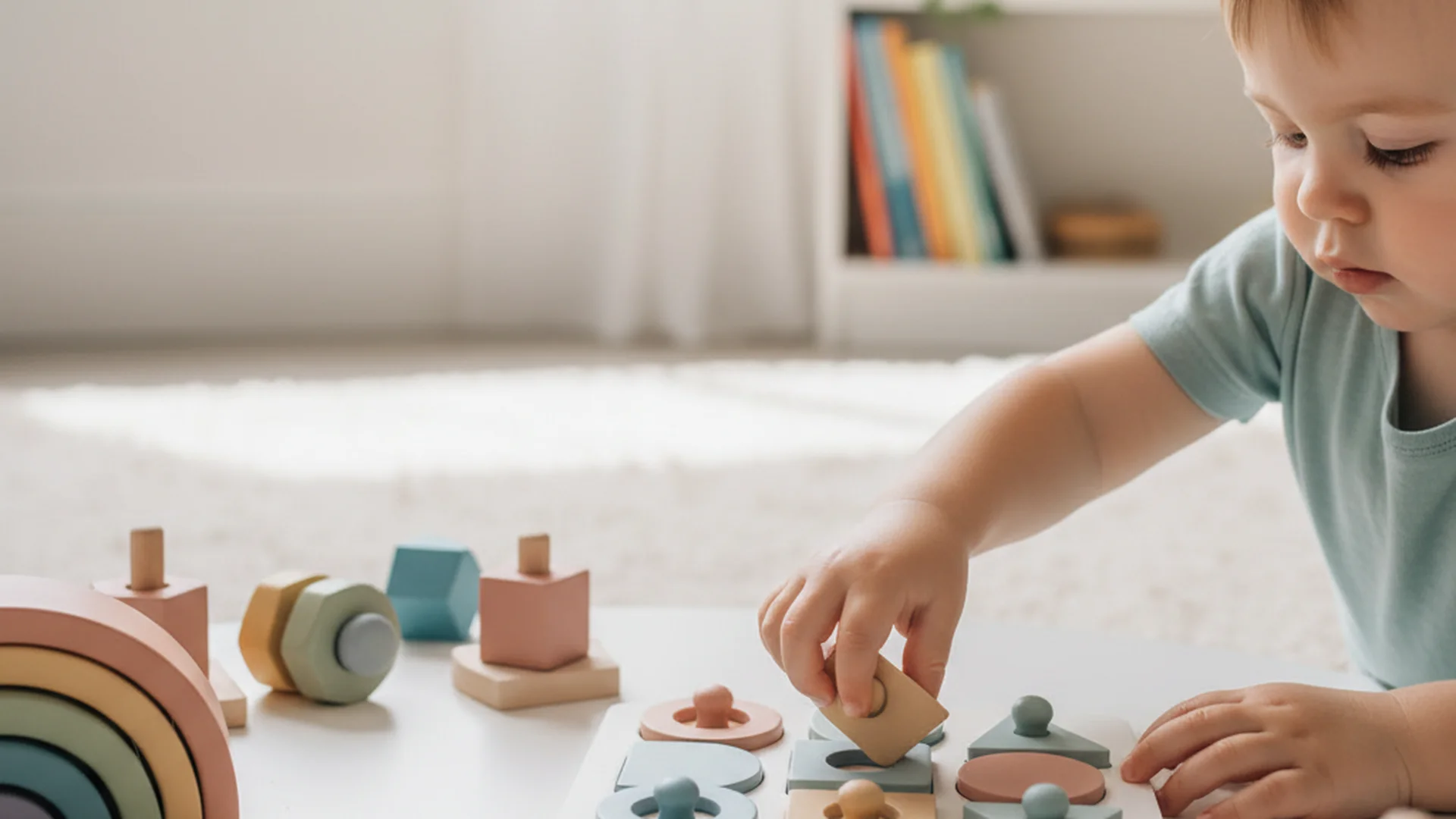
Why Shape Puzzles for Kids are the Secret to Early STEM Success
Discover why shape recognition puzzles are vital for cognitive development. Learn how geometric shapes games build STEM skills and spatial reasoning.
Jul 5, 2026 10 min
Child Development
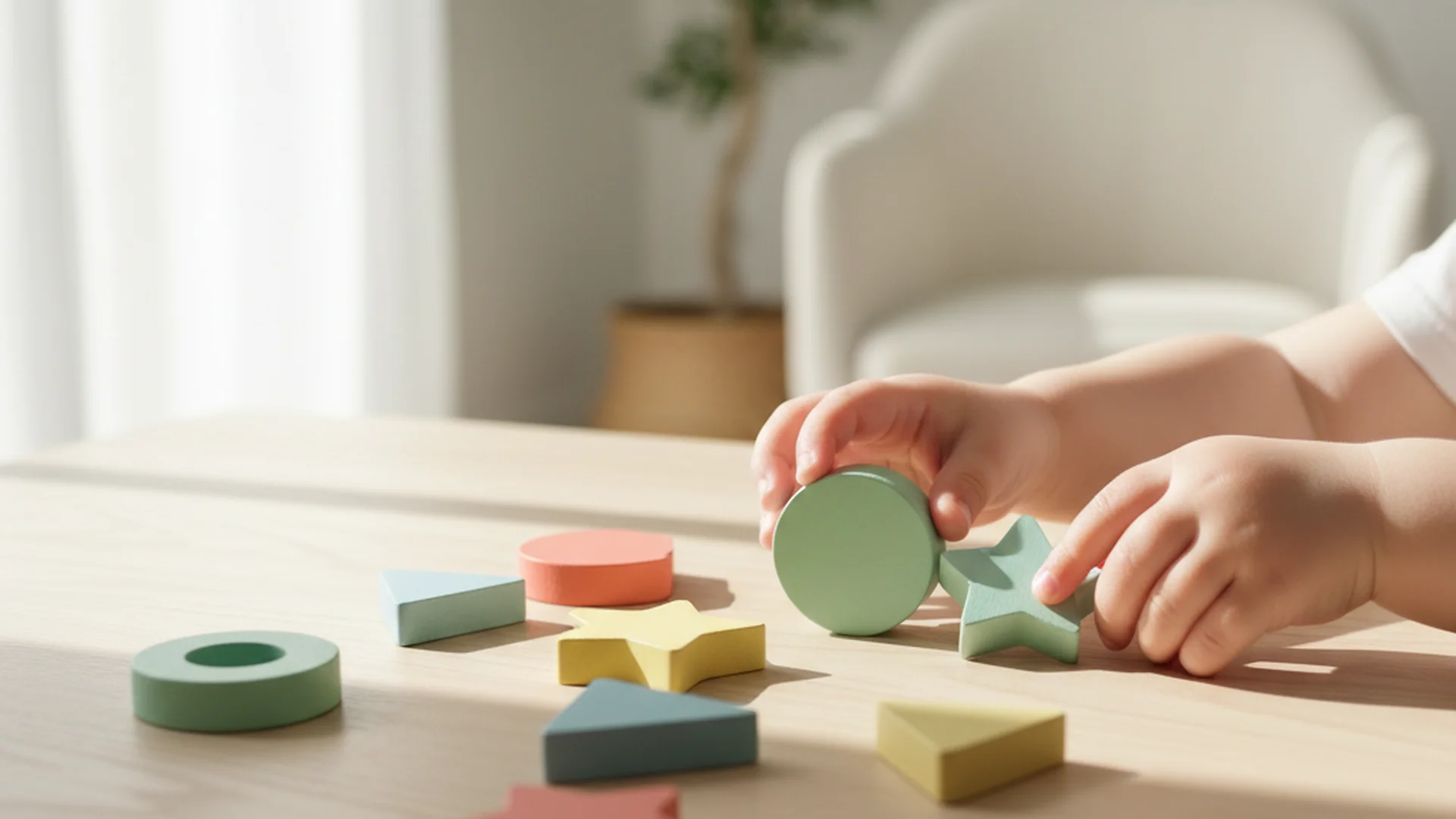
Beyond the Pieces: How Fine Motor Puzzles Unlock Your Child’s Potential (2025 Guide)
Discover how fine motor puzzles bridge the gap between play and life skills. Learn the 2025 trends in hand coordination puzzles and developmental milestones for kids.
Sep 8, 2026 12 min
Child Development
Mastering Kindergarten Puzzles: A Guide to School Readiness
Discover why kindergarten puzzles are the ultimate tool for school readiness. Learn benchmarks, developmental benefits, and 2025 trends for early childhood success.
May 19, 2026 12 min
Advertisement