Why Shape Puzzles for Kids are the Secret to Early STEM Success
Discover why shape recognition puzzles are vital for cognitive development. Learn how geometric shapes games build STEM skills and spatial reasoning.
By Free To Play Puzzles Editorial Team 10 min read
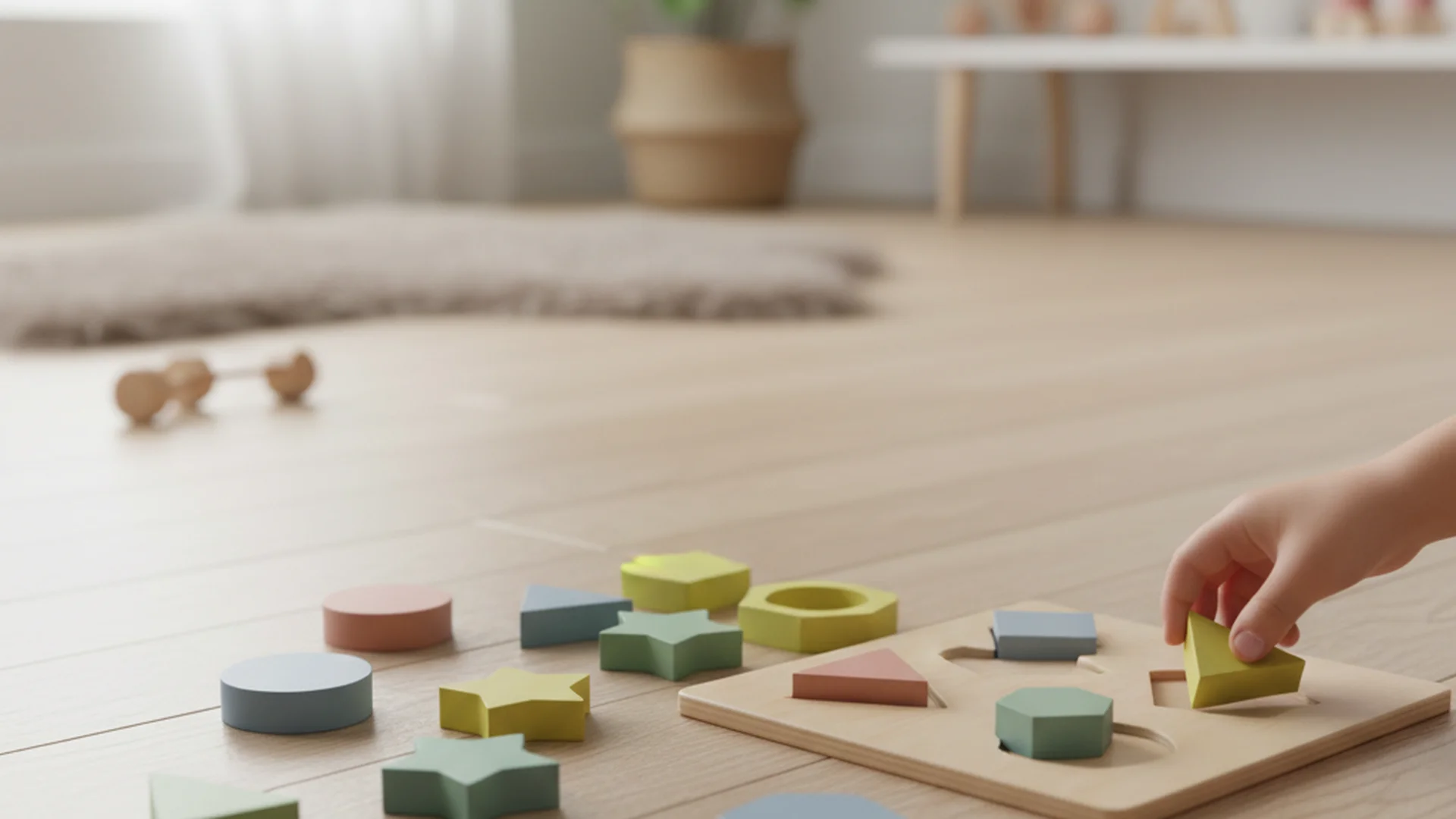
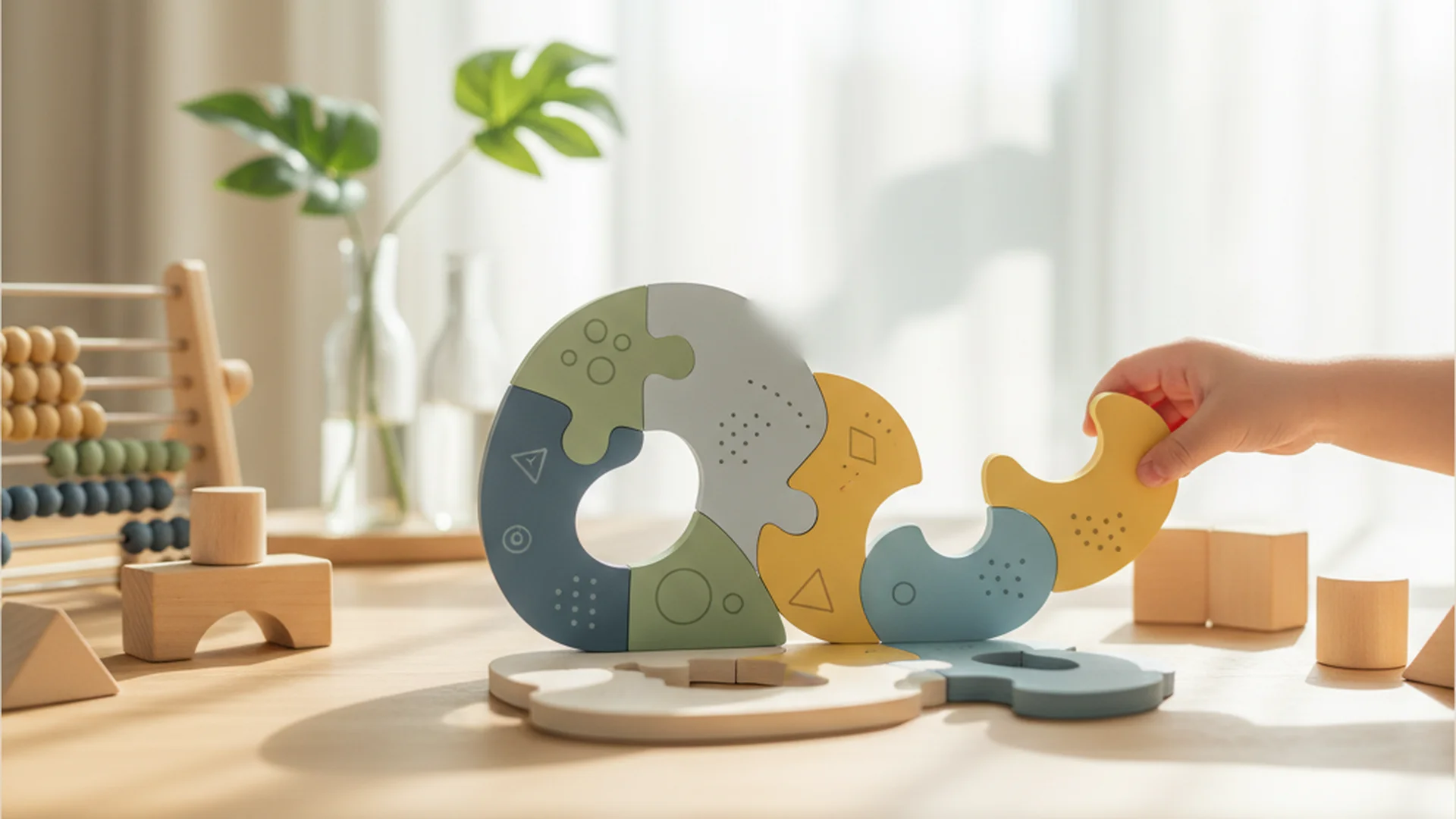
In the world of early childhood education, we often overlook the humble wooden block or the simple triangle cutout. However, these objects are the "atomic units" of logic. Introducing shape puzzles kids can engage with at an early age is not merely a way to pass the time; it is a fundamental neurological exercise. These puzzles bridge the gap between basic sensory input and the complex abstract reasoning required for future academic success.
When a toddler rotates a wooden triangle to fit it into a slot, their brain is performing high-level computations involving spatial rotation and tactile feedback. These early experiences with geometric shapes games create the neural pathways that will eventually handle geometry, physics, and engineering.
The Science of Shape Recognition: More Than Just Play
Research from the University of Chicago (2012) highlights a profound connection between early play and later ability. Their study found that children who engage with puzzles between the ages of 2 and 4 demonstrate significantly higher spatial skills by age 4.5. Why does this matter? Because spatial skills are a direct and powerful predictor of success in STEM (Science, Technology, Engineering, and Math) subjects later in life.
The ability to recognize shapes is tied to specific cognitive milestones. While most children can identify basic shapes like circles, squares, and triangles by age 3 or 4, the foundation is laid much earlier. Remarkably, a child’s ability to recognize and differentiate shapes at just 20–24 months can predict their language and thinking skills by the time they reach first grade.
Why Physical Puzzles Trump Digital Games
In our 2025 educational landscape, the temptation to hand a child a tablet is high. While apps like Khan Academy Kids are excellent for logic, physical sets deserve priority.
Physical puzzles are essential for developing the pincer grasp—the coordination between the index finger and thumb. This is the same motor foundation required for handwriting and surgical precision later in life. Furthermore, physical objects provide tactile discrimination. A child learns the "heft" and "friction" of a wooden piece, which helps them understand spatial boundaries in a way a glass screen cannot.
The Pincer Grasp and Cognitive Mapping
When a child uses fine motor skill puzzles, they are mapping their physical movements to a 3D mental model. This multi-sensory feedback loop strengthens the parietal lobe, the area of the brain responsible for processing sensory information and spatial navigation.
Advertisement
Best Practices for Teaching Geometry Through Play
How you interact with your child during puzzle time is just as important as the puzzle itself. We use a method called "scaffolding."
The "Orientation" Technique
When a child is stuck, the instinct for many parents is to say, "It goes there," or to push the piece in for them. Instead, try asking: "What happens if we turn it?"
This encourages spatial rotation. By asking the child to manipulate the piece mentally and physically, you are helping them develop problem solving puzzles kids skills that are essential for higher-level mathematics.
Multi-Sensory Shape Hunts
To help a child generalize what they learn on the puzzle board, take the game into the real world.
- The Kitchen Search: "Can you find a rectangle in the pantry?" (A cereal box).
- The Street Walk: "What shape is that stop sign?" (An octagon).
- The Nature Hunt: "Find a circle in the garden." (A flower center or a pebble).
Common Mistakes to Avoid
Even well-meaning parents can accidentally instill "false logic" in early learners. Here are the most common pitfalls:
1. The "Square vs. Rectangle" Trap
Many parents teach squares and rectangles as two completely unrelated categories. In mathematics, a square is a special type of rectangle. While this seems like a small detail, mis-teaching this early on can lead to significant confusion when the child enters primary school geometry. Use language like, "This is a square, which is a special rectangle with four equal sides."
2. The Orientation Bias
Children often think a triangle is only a triangle if its "point" is facing up. If they don't recognize a triangle that has been flipped or turned sideways, they are focusing on the image rather than the properties (three sides and three vertices).
3. "Brute Force" Puzzling
If a child tries to force a piece into a hole using sheer pressure, they aren't learning. This "brute force" method bypasses the trial-and-error logic needed for math readiness puzzles. If you see this, gently remove the piece and encourage them to look at the edges again.
| Mistake | Potential Impact | Better Approach |
|---|---|---|
| Brute Force | Stunts logic development | Encourage visual comparison |
| Orientation Bias | Limited geometric understanding | Rotate pieces and boards |
| Digital Over-reliance | Poor fine motor skills | Prioritize tactile wooden puzzles |
2. Recent Trends: The Future of Puzzles (2025–2026)
The toy market is undergoing a massive shift. The global STEAM toy market is projected to reach $31.62 billion by 2026, driven by a desire for "play with purpose."
- Eco-Conscious Materials: We are seeing a move away from plastic toward FSC-certified bamboo and bio-plastics made from sugarcane. Parents in 2026 are demanding sustainability alongside educational value.
- Smarter Screen-Free Tech: New "Smart Sensory" puzzles use hidden sensors to provide auditory feedback. When a child places a "Hexagon" correctly, the board might play a rewarding chime or speak the name of the shape, providing reinforcement without the need for a blue-light screen.
- AR-Integrated Puzzles: Augmented Reality is bridging the gap between physical and digital. Once a 3D puzzle is completed, a parent can scan it with a phone to show an animation of how that shape exists in architecture or nature.
Advertisement
Frequently Asked Questions
At what age should I start shape puzzles?
I recommend introducing large, chunky wooden knob puzzles as early as 12 months. At this stage, it's more about motor control than geometry, but the exposure to shapes begins the familiarization process.
Which shapes should a child learn first?
Circles are the easiest because they have no corners and fit into their slots regardless of how they are rotated. Squares and triangles usually follow. Save complex shapes like hexagons or trapezoids for age 3 and up.
My child is frustrated; should I help?
Use the scaffolding method. Instead of doing it for them, offer a "nudge." Rotate the piece 45 degrees so they can see the alignment better, or point to the matching corner. This builds frustration tolerance, a key emotional intelligence trait.
Are digital shape games bad for development?
Not "bad," but they are incomplete. While apps teach the logic of "this goes here," they do not provide the 3D spatial analysis required to understand how objects fit together in physical space. Use them as a supplement, not a replacement.
Conclusion
As we look toward 2026, the emphasis on "play with purpose" has never been stronger. By choosing the right shape puzzles kids can manipulate, rotate, and even "fail" with, you are giving them the tools to build a sophisticated mental map of the world. Remember to focus on the properties of the shapes—the sides, the corners, and the spatial relationships—rather than just the names.
Want to boost your child's logic skills?
Explore our full range of brain-building games today.
Put it into practice
Keep reading
Child Development
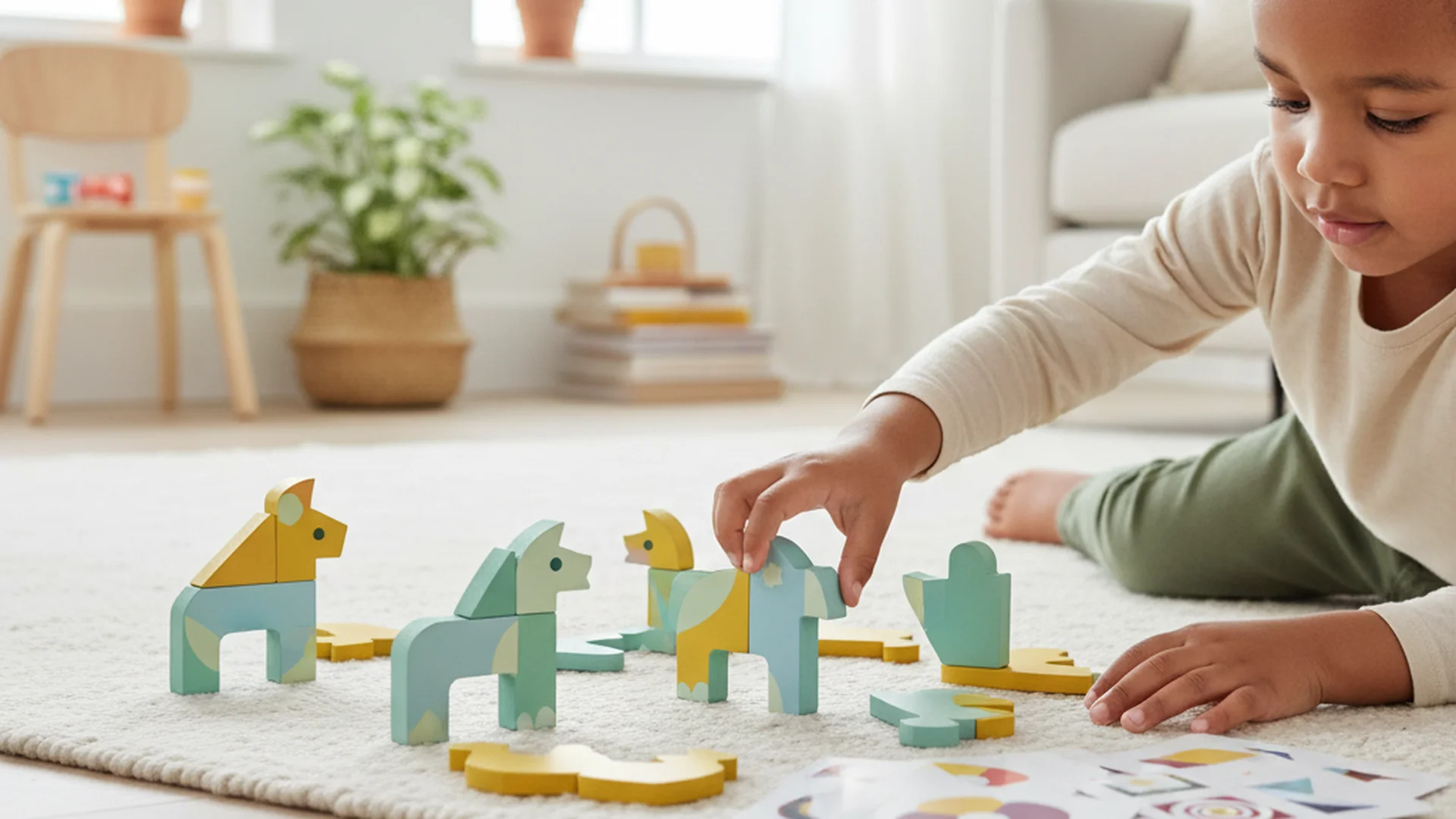
Beyond Counting: How Math Readiness Puzzles Build Future STEM Success
Explore the power of math readiness puzzles and number sense games. Learn how spatial reasoning and logic-based play prepare children for academic success in 2025 and beyond.
Jul 3, 2026 12 min
Child Development
Visual Perception Puzzles for Kids: Strengthening the Brain-Eye Connection
Discover how visual perception puzzles and games boost literacy, motor skills, and cognitive development in children. Expert advice.
Dec 17, 2024 12 min
Child Development
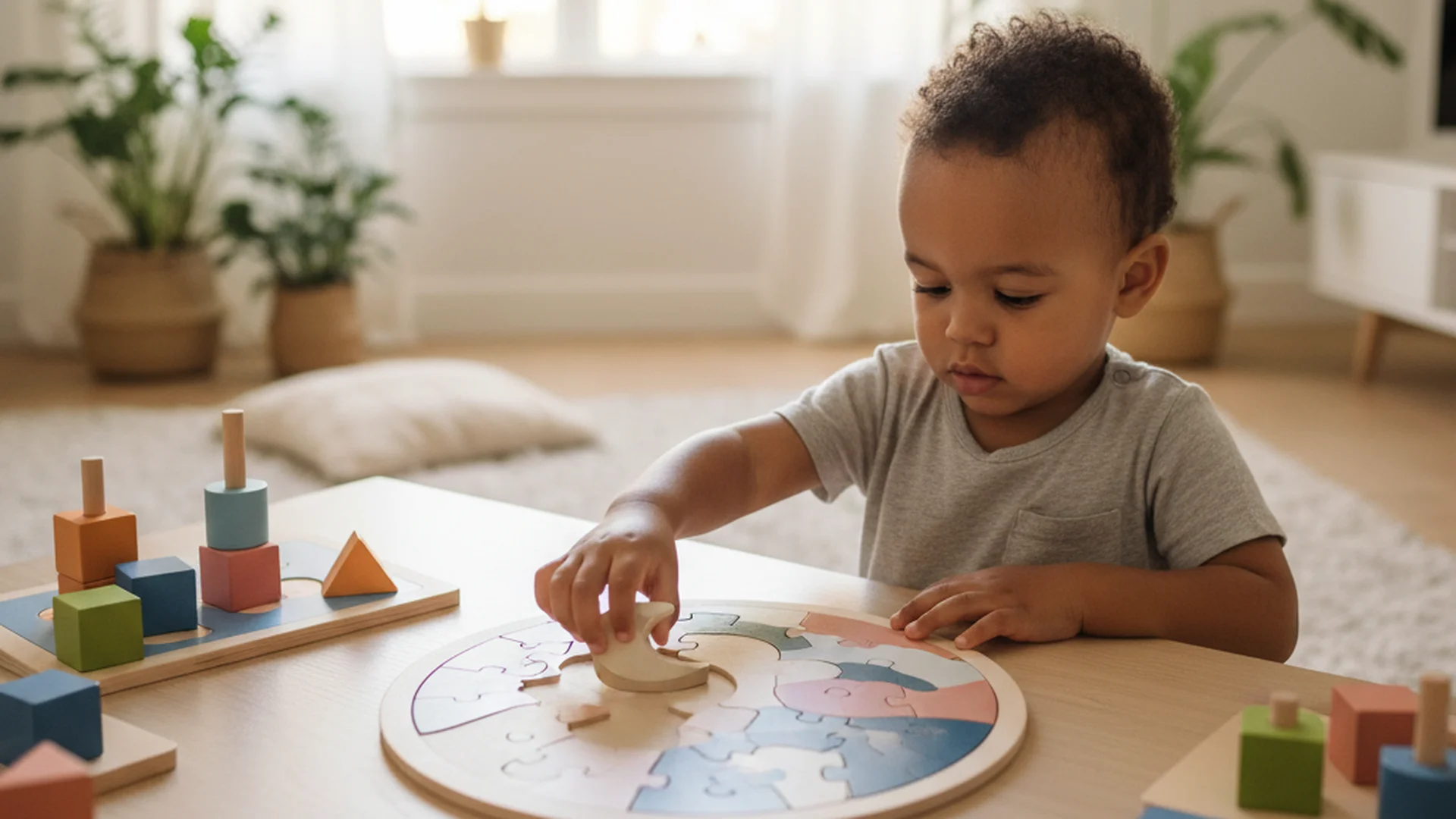
Patience Building Puzzles: Helping Kids Develop Frustration Tolerance
Discover how patience puzzles for kids can improve focus, emotional regulation, and school readiness. Learn expert techniques to build frustration tolerance today.
Apr 13, 2026 12 min
Advertisement