Visual Perception Puzzles for Kids: Strengthening the Brain-Eye Connection
Discover how visual perception puzzles and games boost literacy, motor skills, and cognitive development in children. Expert advice.
By Free To Play Puzzles Editorial Team 12 min read
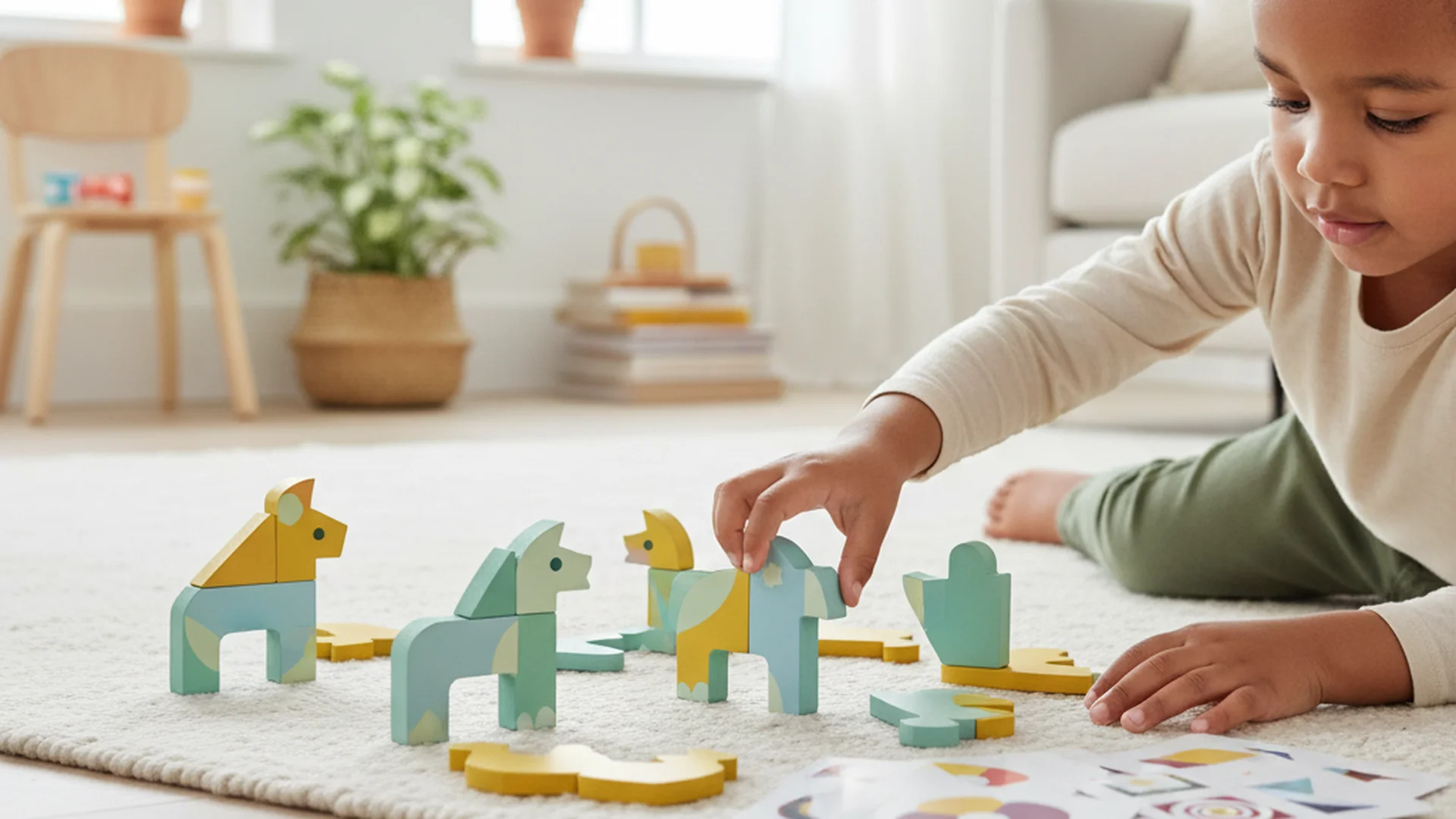
When we think about a child’s vision, we often think about "20/20" scores—the ability to see letters on a chart clearly. However, as a logic instructor, I often remind parents that the eyes are merely the hardware; the brain is the software. Visual perception puzzles are the "software updates" that allow children to interpret, analyze, and act upon the information their eyes receive.
Research indicates that approximately 75% to 90% of all classroom learning is processed through the visual system. From recognizing a teacher’s handwriting on a chalkboard to identifying the difference between a "p" and a "q," visual processing is the silent engine of academic success. When this engine stalls, even the brightest child can struggle with basic literacy and motor tasks.
The Science Behind the Sight
Visual perception is a complex suite of skills that involves more than just "looking." It includes visual discrimination (noticing differences), visual memory (remembering what was seen), and visual closure (identifying a whole object when only parts are visible).
Recent research from 2024-2025 has overturned the long-held belief that visual perception matures by age seven. We now know that certain aspects, such as peripheral visual processing and complex spatial integration, continue to develop until at least age 10. This extended window of "brain plasticity" means that engaging in visual perception puzzles throughout elementary school is vital, not just in the toddler years.
The correlation between these skills and reading achievement is staggering. Studies show a correlation range of 0.42 to 0.80, meaning students with high visual-motor integration scores consistently outperform their peers in reading speed and comprehension.
Identifying the Signs of Perceptual Struggle
It is estimated that up to 3.4% of children in mainstream schools may have difficulties associated with Cerebral Visual Impairment (CVI), and nearly 3 million children in the U.S. live with Nonverbal Learning Disability (NVLD), which primarily impacts visual-spatial processing.
How do you know if your child is struggling? Look for these common red flags:
- Losing their place frequently while reading.
- Struggling to copy shapes or sentences from a chalkboard to their paper.
- Difficulty distinguishing between similar letters (b/d, p/q) or numbers (6/9).
- Avoidance of fine-motor activities like Tangram puzzles or Lego.
- Difficulty with "figure-ground" tasks, such as finding a specific toy in a cluttered box.
Advertisement
The Activity Guide: Choosing the Right Puzzles
To effectively support development, activities must be scaffolded according to the child’s age and current skill level.
1. Toddlers (Ages 1–3): The Foundation
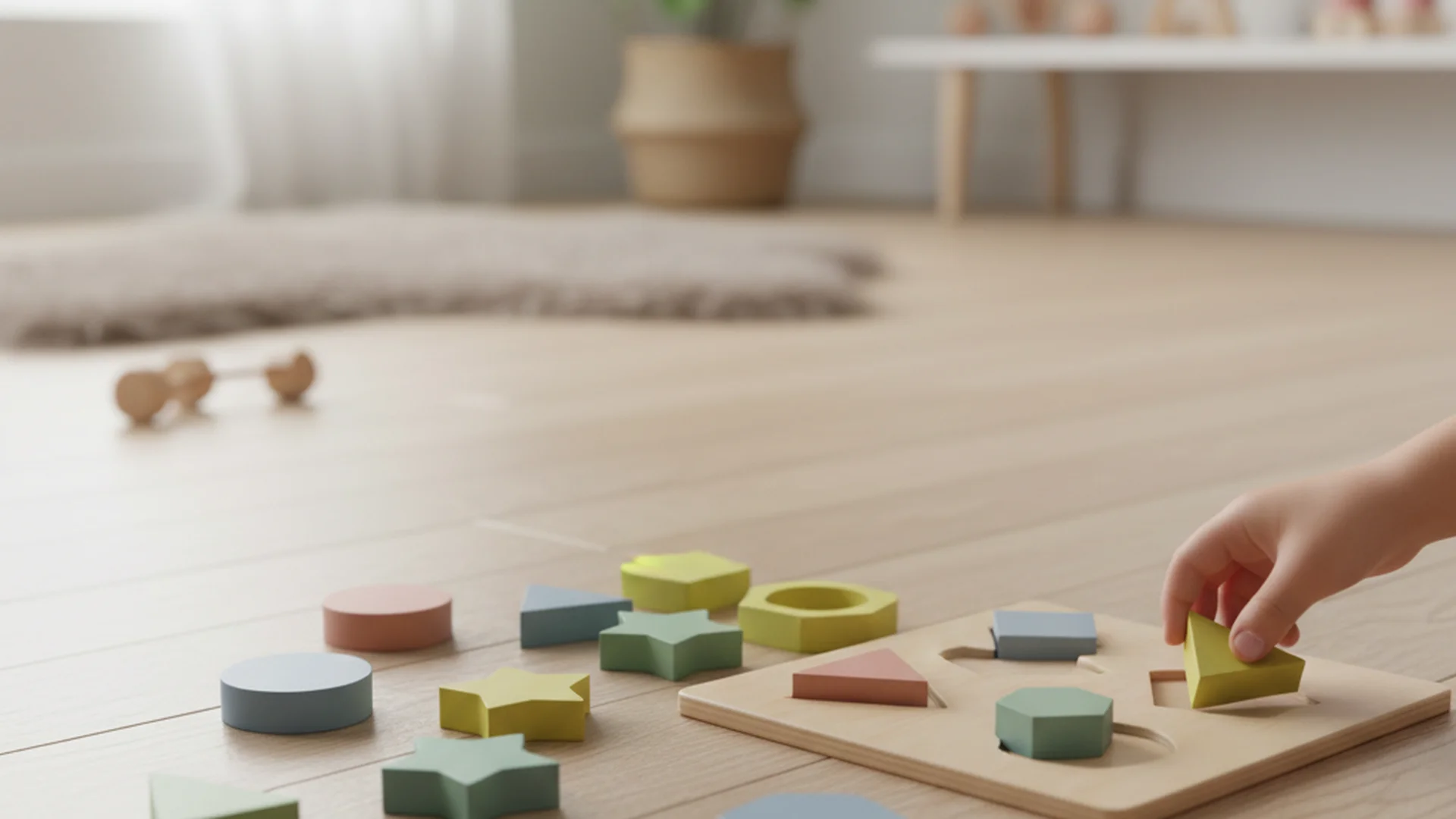
At this stage, we focus on basic tracking and shape recognition. Single-piece inset puzzles are ideal because they provide a clear "boundary" for the brain to process.
Real-World Example: Use "Visual Scavenger Hunts" in the living room. Ask your child to find "all the things that are round" or "everything that is blue." This builds the foundation for visual discrimination games they will play later.
2. Preschoolers (Ages 3–5): Crossing the Midline
Preschoolers should transition to large floor puzzles. These are excellent because they require the child to reach across their body (crossing the midline), which integrates the left and right hemispheres of the brain.
Real-World Example: Use sandpaper letters or "drawing" in shaving foam. By feeling the shape of a letter while looking at it, the child uses a multisensory approach to anchor visual memory.
3. School-Age (Ages 6–10): Complexity and Logic
This is the time to introduce complex jigsaw puzzles and logic-based games like Sudoku. These tasks require "visual closure"—the ability to visualize what the final image should look like based on a small fragment.
Real-World Example: "Spot the Difference" puzzles in nature. While on a walk, ask your child to find two leaves that look different or to spot the bird hidden in the branches. This generalizes classroom skills to the real world.
Modern Trends: Puzzles in 2025-2026
The world of visual perception puzzles is evolving rapidly. As we move into 2025 and 2026, several key trends are changing how kids play:
- AR-Integrated Puzzles: Augmented Reality "Smart Puzzles" allow children to scan completed sections with a tablet. This adds a layer of digital "escape room" riddles, challenging them to use visual data to solve 3D problems.
- 3D and Round Puzzles: There is a move away from the traditional square grid. Round puzzles and 3D mechanical models (like globes or clocks) challenge spatial reasoning more aggressively by removing the "edge" anchors kids usually rely on.
- Eco-Conscious Materials: 2025 sees a massive shift toward "Heirloom" quality puzzles made from bamboo and recycled wood, moving away from plastic-heavy toys.
- Puzzle Lamp Decor: A new trend in "Functional Art" allows kids to build their own LED room decor. Assembling a 3D puzzle that becomes a working lamp provides a long-term sense of accomplishment.
| Puzzle Type | Skill Targeted | Best Age Range |
|---|---|---|
| Inset Puzzles | Shape Recognition | 12-24 Months |
| Floor Puzzles | Spatial Awareness | 3-5 Years |
| Jigsaws (100+ pcs) | Visual Memory | 7+ Years |
| Sudoku | Pattern Recognition | 8+ Years |
| 3D Models | Spatial Integration | 10+ Years |
Common Mistakes to Avoid
In my experience as an instructor, I see well-meaning parents make a few common errors when trying to help their children with visual processing:
The "Growing Out of It" Myth
Visual processing issues are typically lifelong neurological conditions. Children do not "grow out" of them; instead, they learn "compensatory strategies." If a child is struggling at age five, they need intervention now to build those strategies before academic demands increase in middle school.
The "Laziness" Assumption
When a child takes a long time to copy a sentence from the board, they are often labeled as "unmotivated." In reality, they may be struggling with visual-motor integration. It requires immense mental effort for them to look up, remember the shape of a letter, look down, and then command their hand to recreate it.
Relying Solely on Glasses
As mentioned, glasses only fix the input of light into the eye. They do not address how the brain categorizes that light. Always pair a standard vision exam with a perceptual assessment if your child shows signs of struggle.
Advertisement
The Multisensory Secret
One of the most effective ways to boost visual perception is to stop using just the eyes. Experts recommend "feeling" shapes before identifying them. By using pipe cleaners to build letters or tracing shapes in a sand tray, children engage their tactile system. This physical "anchor" makes it significantly easier for the brain to recognize the visual counterpart later.
If you are looking for structured ways to begin, consider exploring preschool puzzle skills or investigating kindergarten puzzle readiness to see where your child stands on the developmental timeline.
Frequently Asked Questions
My child has 20/20 vision; how can they have visual perception issues?
Vision is about the clarity of the image the eye captures. Visual perception is about how the brain interprets that image. A child can see a "b" clearly but still not be able to tell if it is a "b" or a "d" because their brain isn't processing the orientation correctly.
How do puzzles specifically help with reading and writing?
Puzzles build "visual closure" (recognizing a whole from parts) and "visual discrimination" (noticing differences in shape). These are the exact skills required to tell the difference between letters and to remember the "shape" of a word for sight-reading.
What is the best age to start visual perception games?
You can start as early as 12 months with basic tracking games (like following a bubble) and "I Spy" with large, obvious objects. Structured puzzles are most effective between ages 2 and 6, which is a peak period for visual plasticity.
Can digital puzzles replace physical ones?
While digital games like Minesweeper or 2048 offer great logic benefits, physical puzzles are superior for young children because they involve "tactile feedback" and three-dimensional spatial awareness that a flat screen cannot replicate.
Conclusion
Visual perception is the invisible bridge between seeing and learning. By incorporating visual perception puzzles and visual discrimination games into your child's daily routine, you are doing more than just passing the time—you are giving their brain the tools it needs to navigate a visually complex world. Whether it’s a classic wooden jigsaw or a modern 3D "Puzzle Lamp," every piece clicked into place is a win for their cognitive development.
Ready to Boost Your Child's Brainpower?
Explore our collection of logic-building games today.
Put it into practice

Keep reading
Child Development
Why Shape Puzzles for Kids are the Secret to Early STEM Success
Discover why shape recognition puzzles are vital for cognitive development. Learn how geometric shapes games build STEM skills and spatial reasoning.
Jul 5, 2026 10 min
Puzzle Types
Optical Illusion Puzzles: The Science and Strategy of Visual Brain Teasers
Explore the world of optical illusion puzzles. Learn why our brains fall for visual deceptions, expert solving strategies, and the latest 2026 trends in perceptual art.
Jul 23, 2026 12 min
Child Development
Patience Building Puzzles: Helping Kids Develop Frustration Tolerance
Discover how patience puzzles for kids can improve focus, emotional regulation, and school readiness. Learn expert techniques to build frustration tolerance today.
Apr 13, 2026 12 min
Advertisement