Beyond the Crossword: How Compound Word Puzzles Are Rewiring Our Brains in 2026
Explore the science of compound word puzzles. Learn how word combination games boost memory, vocabulary, and cognitive speed with expert tips.
By Free To Play Puzzles Editorial Team 10 min read
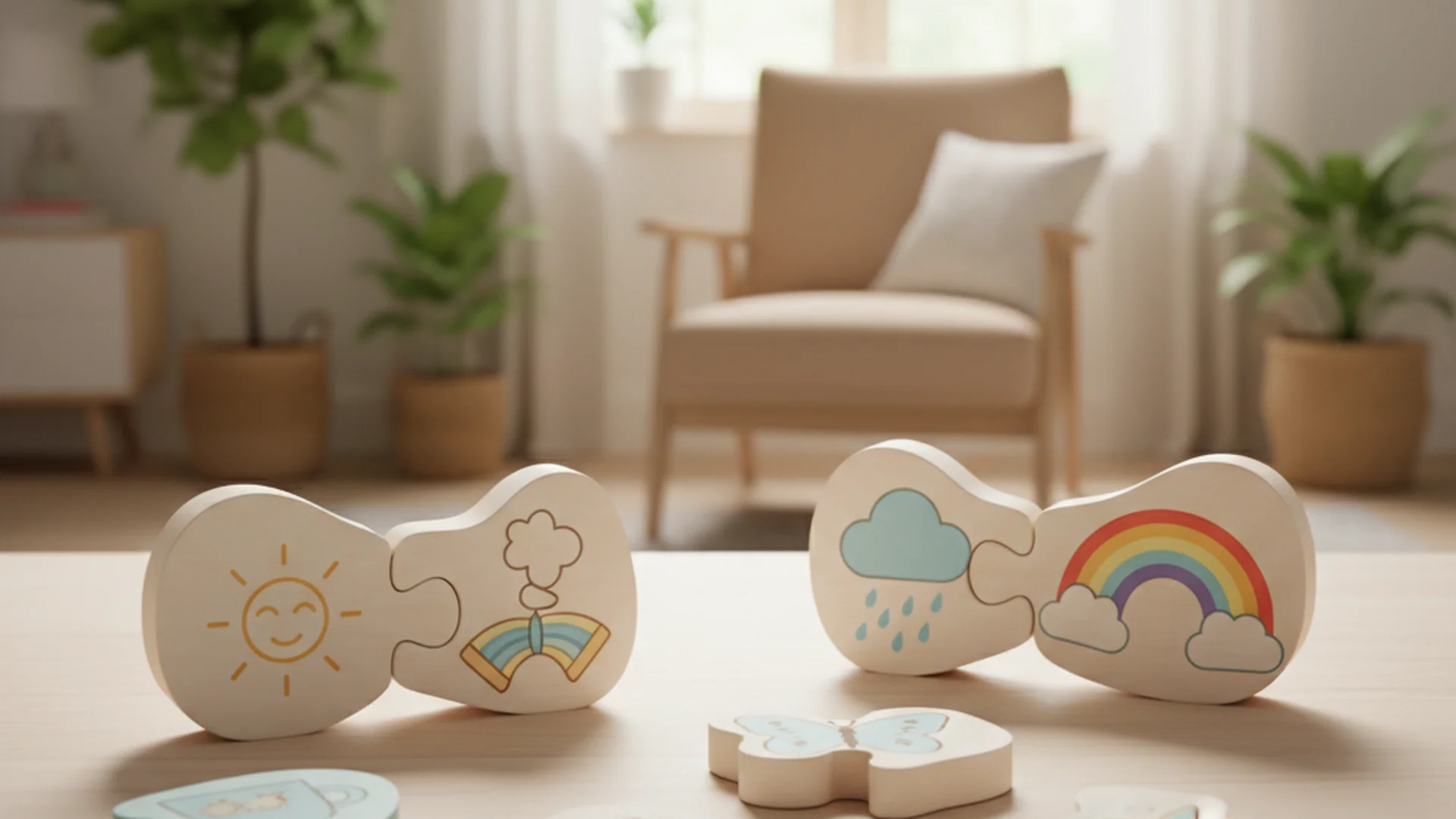
In the world of linguistics and logic, few things are as satisfying as watching two distinct concepts snap together to form something entirely new. Compound word puzzles have long been a staple of classroom learning, but as we move into 2026, these word combination games are undergoing a digital and cognitive revolution. Whether you are a competitive puzzle solver or a parent helping a child develop literacy skills, understanding the mechanics of how we join words is essential for mastering modern language games.
Breaking down complex structures into their fundamental parts is a great way to sharpen the mind. Compound word puzzles do exactly this: they challenge our brains to see the "units" within the whole, fostering a type of mental agility that transcends simple vocabulary drills.
The Science of Word Combination: Why It Matters
Recent research has shed new light on how our brains process compound structures. According to a 2025 study by Wordbble Research, regular engagement with strategic word puzzles can improve working memory by up to 40%. This is largely due to the "chunking" mechanism, where the brain learns to store and retrieve information in efficient blocks rather than individual letters.
Furthermore, puzzle enthusiasts demonstrate 25% faster word recognition than non-players. This speed is critical for high-level performance in other logic-based activities, such as Logic Puzzles or competitive Anagram Games. For school-aged children, the impact is even more pronounced, with consistent play linked to a 25% increase in vocabulary acquisition.
The Three Pillars: Understanding Compound Types
Not all compounds are created equal. To excel at word combination games, you must recognize the three primary formats that these puzzles utilize.
| Compound Type | Definition | Examples |
|---|---|---|
| Closed Compounds | Two words joined without a space | Notebook, Starfish, Firefly |
| Open Compounds | Separate words acting as one unit | Ice cream, High school, Post office |
| Hyphenated Compounds | Words connected by a hyphen | Mother-in-law, Well-being, Six-pack |
Closed Compounds: The Logic of One
Closed compounds are the most common in traditional puzzles. They involve taking two concrete nouns and fusing them. In a Word Scramble setting, these are often the most difficult to decode because the lack of a space hides the transition point between the two base words.
Open Compounds: The Conceptual Unit
Open compounds are often misunderstood. A "living room" isn't a room that is literally alive; it is a singular concept. Recognizing these is key for games like the NYT Connections or our Connections Game Tips guide, where grouping items by conceptual similarity is the goal.
Hyphenated Compounds: The Modifier
Hyphens are typically used when the compound acts as an adjective before a noun (e.g., a well-known actor). In puzzles, these often serve as the "bridge" clues that connect different sections of a grid.
Advertisement
Expert Strategies for Mastering Compound Puzzles
If you want to move beyond basic recognition and into the realm of a word game pro, you need a systematic approach. Here are the methods we recommend.
The Multi-Sensory Approach
Don't just look at the words; interact with them.
- Visual Jigsaws: Use cards where the two parts of the word physically snap together.
- Tactile Sensory Bins: For younger learners, hiding word parts like "sun" and "flower" in a bin of rice or sand creates a physical connection to the language.
Scaffolding Difficulty
Start with Concrete Compounds—words you can easily visualize, like doghouse or raincoat. Once your brain is primed, move to Abstract Compounds like background, anytime, or nevertheless. These require a deeper level of semantic processing.
2025-2026 Trends: The Future of Word Games
The landscape of compound word puzzles is shifting rapidly due to new technologies. We are seeing a move away from static paper puzzles toward dynamic, personalized experiences.
AI and Personalization
New platforms like WordBox and JoinedWords, launched in 2025, use AI to create custom puzzles based on a user's specific vocabulary gaps. If the AI detects you struggle with hyphenated modifiers, it will procedurally generate more of those in your daily challenge.
AR/VR Puzzle Spaces
Augmented Reality is bringing words into the physical world. Some apps now allow users to "pin" word parts to real-world objects. You might see the word "book" floating near your physical bookshelf and have to "find" the word "case" hidden elsewhere in the room to complete the puzzle.
Hybrid Casual "Puzzle Battles"
A massive trend for 2026 is the "Puzzle Battle." Players solve compound word chains (e.g., cream → cheese → cake → walk) to "attack" opponents in real-time. This gamification keeps the "reward" centers of the brain engaged, which experts suggest is most effective in 10–15 minute sessions.
Common Mistakes to Avoid
Even seasoned players fall into common traps. Understanding these spelling and logic errors will give you a significant advantage.
- The Portmanteau Confusion: Many people mistakenly call smog (smoke + fog) or motel (motor + hotel) compound words. These are actually blends. A true compound word puzzle requires the full spelling of both original words (e.g., pancake).
- The "Alot" Error: Alot is not a word. It remains two separate words: a lot. This is a frequent "trick" in word combination games.
- Alright vs. All right: While alright is gaining popularity in casual text, "all right" remains the formal standard in most professional puzzles.
- Everyday vs. Every day: This is a classic spelling trap. Everyday is an adjective (e.g., my everyday shoes), while Every day is an adverbial phrase (e.g., I walk every day).
- Over-Hyphenation: Don't add hyphens where they aren't needed. For instance, writing tooth-brush instead of the correct toothbrush will cost you points in competitive play.
Advertisement
Frequently Asked Questions
Is every word made of two parts a compound word?
No. Some words are portmanteaus or blends, like brunch (breakfast + lunch). To be a compound word, it must preserve the full spelling of both original words, such as pancake or keyboard.
When do I use a hyphen in compound words?
Generally, you should hyphenate when the compound acts as an adjective before a noun, such as "a well-known actor." Compound nouns themselves are usually closed (like farmhouse) or open (like post office).
How do compound word puzzles help with dyslexia?
These puzzles assist with "segmentation"—the ability to break down a dauntingly long word into smaller, manageable chunks. This reduces "word-blindness" and helps players decode language with less anxiety.
What is the difference between an open compound and just two regular words?
An open compound has a unique, singular meaning that is different from the words used individually. For example, "full moon" refers to a specific lunar phase, not just any moon that happens to be full.
Are compound words the same as word ladders?
No. Compound words focus on joining two words to create a new meaning. A Word Ladder involves changing one letter at a time to transform one word into another.
Conclusion
Mastering compound word puzzles is more than just a way to pass the time; it is a scientifically-backed method for enhancing your cognitive longevity and linguistic precision. By recognizing the difference between closed, open, and hyphenated forms—and avoiding the common pitfalls of portmanteaus and spelling traps—you can significantly improve your performance in any word game.
As we look toward the AI-driven and AR-integrated puzzles of 2026, the core skill remains the same: the ability to see how small pieces fit together to create a larger, more meaningful whole.
Ready to Start?
Test your skills with our daily word challenges and boost your brainpower.
Put it into practice
Keep reading
Word Games
Mastering the Lewis Carroll Word Ladder: History, Logic, and 2026 Strategies
Explore the fascinating history of Lewis Carroll word ladders. Learn expert strategies, the math behind Doublets, and how to solve the toughest word puzzles.
Feb 14, 2026 12 min
Word Games
Mastering Word Ladder Puzzles: The Ultimate Guide to Doublets
Discover the history, strategy, and evolution of word ladder puzzles. Learn expert techniques to solve doublets and explore 2025 trends in word gaming.
Dec 19, 2025 9 min
Word Games
The Ultimate Guide to Word Scramble Games and Anagram Puzzles
Explore the science, history, and master strategies behind word scramble games. Learn how anagram puzzles boost brain health and cognitive performance in 2025.
Sep 17, 2025 12 min
Advertisement