Mastering Word Ladder Puzzles: The Ultimate Guide to Doublets
Discover the history, strategy, and evolution of word ladder puzzles. Learn expert techniques to solve doublets and explore 2025 trends in word gaming.
By Free To Play Puzzles Editorial Team 9 min read
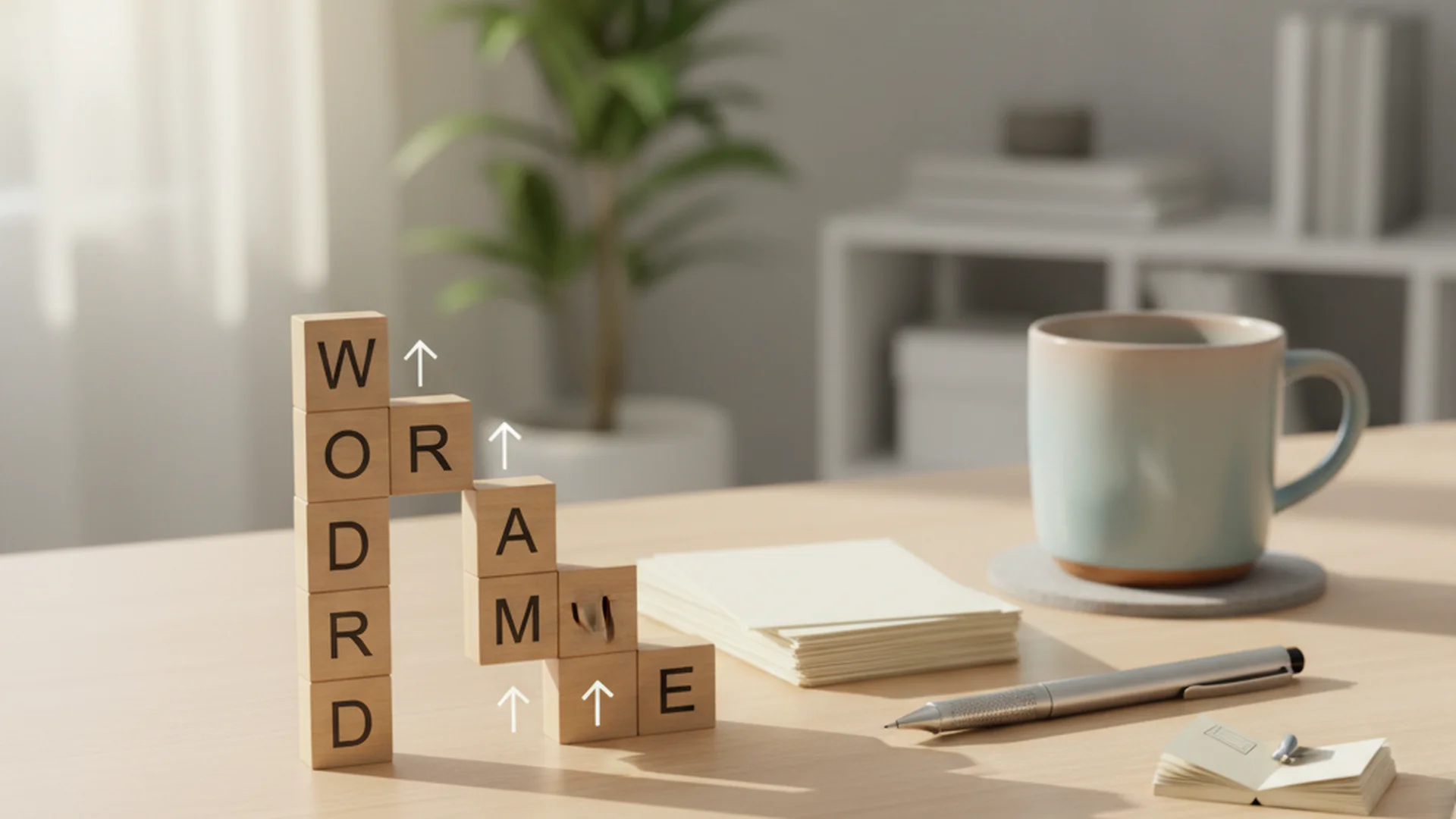
The allure of word ladder puzzles lies in their deceptive simplicity. At first glance, the task of transforming one word into another by changing a single letter at a time seems like a straightforward linguistic exercise. However, as any seasoned enthusiast of the doublets puzzle will tell you, these games are a rigorous test of vocabulary, logic, and spatial reasoning. Whether you are a casual player or a competitive strategist, understanding the deep mechanics of these puzzles can transform your gameplay from a series of guesses into a calculated science.
In this comprehensive guide, we will explore the Victorian origins of the game, analyze the mathematical principles that govern word transitions, and look ahead at the massive resurgence word ladders are experiencing in 2025 and 2026.
The Victorian Origins of the Doublet
The history of the word ladder is as prestigious as the puzzles themselves. They were invented by Lewis Carroll, the iconic author of Alice in Wonderland, on Christmas Day in 1877. Carroll, a mathematician by trade, originally titled the game "Word-links" before it was published under the name "Doublets" in Vanity Fair in 1879.
Carroll designed these puzzles to entertain his young friends, but they quickly captured the imagination of the British public. The fundamental rule remains unchanged: transform a "start word" into an "end word" using the fewest possible steps, ensuring every intermediate step is a valid dictionary word.
How Word Ladder Puzzles Work: The Rules
Before diving into advanced strategies, it is essential to understand the "Lexicon" of the game. In a standard word ladder, you are given two words of the same length. Your goal is to reach the second word by changing exactly one letter at each step.
- Length Consistency: In classic puzzles, the word length never changes (e.g., a four-letter word must stay a four-letter word).
- Step Validity: Every intermediate step must be a recognized word in the puzzle's specific dictionary.
- No Anagramming: You cannot rearrange the letters; you can only substitute one.
- No Proper Nouns: Generally, names of people, places, or brands (like "ALEX" or "UTAH") are prohibited.
Modern digital versions, such as Word Ladder, often utilize dictionaries ranging from 25,000 to 170,000 words, including the Collins Scrabble Words list, which adds a layer of complexity for those used to basic household dictionaries.
Advertisement
The Mathematics of the Ladder: Hamming Distance and Aloof Words
To truly master word ladder puzzles, one must look at them through the lens of graph theory. Computer scientist Donald Knuth famously analyzed five-letter words and discovered that the English language is not as interconnected as we might think.
The "Aloof" Words
Knuth found that out of a set of 5,757 common five-letter words, 671 words are "aloof." This means they have no "neighbors"—no other word can be formed by changing just a single letter. Words like "ADIEU" or "ONYX" are notoriously difficult to use in puzzles because they offer zero flexibility.
Hamming Distance
The "Hamming distance" is the number of positions at which the corresponding letters between two words are different. For example, if you are moving from "COLD" to "WARM":
- C vs W (Different)
- O vs A (Different)
- L vs R (Different)
- D vs M (Different)
The Hamming distance is 4. This tells you that the absolute minimum number of steps required is 4. However, because you must form valid words at every step, the actual path is often longer.
| Start Word | End Word | Hamming Distance | Optimal Steps |
|---|---|---|---|
| COLD | WARM | 4 | 4 |
| CAT | DOG | 3 | 3 |
| ATLASES | CABARET | 7 | 52 |
Expert Strategies for 2025–2026 Gameplay
As word games evolve, so do the techniques used by top-tier players. If you want to improve your "Word Golf" score (reaching the target in the fewest "strokes"), consider these expert-approved methods.
1. The "Meet in the Middle" Strategy
Beginners often work exclusively from the top down. Experts recommend working 2–3 steps up from the bottom word simultaneously. By seeing where the potential paths might intersect, you can identify "bridge words" much faster.
2. Focus on the Vowels
Vowels are the pivots of the English language. If you find yourself stuck with a difficult consonant cluster, look for a way to swap a vowel. This often opens up entirely new "neighborhoods" of words.
3. The "Step-Aside" Maneuver
Sometimes, the most direct path is blocked. You may need to change a letter that is already correct to reach a more flexible word.
- Example: To get from "FOOD" to "GRUB," you might change "FOOD" to "FOOT" first. Even though 'T' isn't in "GRUB," "FOOT" provides access to different consonant combinations that eventually lead to the target.
4. High-Frequency Letter Targeting
Try to steer your word transitions toward words containing R, S, T, L, N, and E. These letters have the highest number of neighbors, giving you more options if your current path becomes difficult.
Word Ladder Puzzles in the Modern Era: 2025 Trends
The landscape of word gaming has shifted dramatically in 2025. Following the global success of Wordle, major media outlets like Sky News have integrated daily word ladder puzzles into their digital platforms.
The Rise of "Weaver" and "Weaver X"
The viral game Weaver has redefined the genre for the 2020s. In 2025, the release of Weaver X introduced "minimalist" ladders where players are not just judged on whether they solve the puzzle, but whether they found the mathematically shortest path.
Competitive Speed Puzzling
In Texas and California, the 2025-2026 "Speed Puzzling Championships" have begun including word ladder sprints. These are high-pressure "relay" events where competitors must solve a series of 4-step ladders in under 60 seconds to advance.
Educational Comeback
Education researchers, following the Timothy Rasinski model, have brought word ladders back into K-6 literacy curriculums. By 2026, these puzzles are expected to be a standard tool for teaching "phoneme-grapheme" relationships, helping students understand how small changes in spelling create entirely new meanings.
Advertisement
Common Mistakes to Avoid
Even experienced players can fall into traps that make a doublets puzzle impossible to solve.
- The Anagram Error: Never try to rearrange the letters. If your word is "STOP," your next word cannot be "POST." It must be something like "STEP" or "SLOP."
- Proper Noun Pitfall: Avoid words like "ALEX," "UTAH," or "EBAY." While they feel like common words, most standard puzzle dictionaries will reject them.
- Hamming Blindness: Don't be afraid to change a "correct" letter. Beginners often refuse to change a letter that already matches the target word, but sometimes that "correct" letter is what's keeping you stuck in a narrow word branch.
- Dictionary Reliance: Assuming every word you know is valid. Most platforms use specific dictionaries like the Merriam-Webster Collegiate. If a word feels too "slangy" or "archaic," it likely won't work.
For more tips on similar challenges, check out our Word Scramble Games Guide or learn How to Solve Word Scrambles.
Frequently Asked Questions
What is the difference between Word Ladders and Word Golf?
They are essentially the same game. "Word Golf" is a common synonym used in competitive circles where the goal is to finish the ladder in the fewest number of "strokes" (steps), similar to how a golfer aims for the lowest score.
Can I change the length of the word in a word ladder?
In the classic Lewis Carroll version, the length must remain constant. However, a modern variation called "Stepword" allows players to add or remove one letter as a step. If you are playing a standard doublet, stick to the original length.
What is the longest word ladder ever solved?
While casual puzzles are usually 4 to 6 steps, extreme computational ladders are much longer. For example, a ladder converting ATLASES to CABARET requires 52 optimal steps.
Are there any words that are impossible to use?
Yes. As Donald Knuth discovered, "aloof" words (like "aloof" itself!) have no neighbors. If a puzzle asks you to start with an aloof word, it is likely using a non-standard dictionary or a variation that allows letter additions.
Why are word ladders good for your brain?
Word ladders engage both the linguistic and logical centers of the brain. They require "fluid intelligence"—the ability to solve new problems and identify patterns—making them an excellent tool for cognitive maintenance. For a broader look at this, see our Word Games: Complete Collection and Strategy Guide.
Conclusion
From the Victorian drawing rooms of Lewis Carroll to the high-speed digital arenas of 2026, word ladder puzzles have proven to be a timeless test of human ingenuity. By mastering the "Meet in the Middle" strategy, understanding the Hamming distance, and avoiding the "aloof" word traps, you can elevate your game to a professional level.
The resurgence of these puzzles in digital formats and educational settings ensures that the "Doublet" will remain a cornerstone of word gaming for years to come. Whether you are solving a daily challenge on your phone or competing in a speed sprint in Texas, remember: every letter matters.
Ready to Start?
Challenge your brain with our daily puzzles.
Put it into practice


Keep reading
Word Games
The Ultimate Guide to Word Scramble Games and Anagram Puzzles
Explore the science, history, and master strategies behind word scramble games. Learn how anagram puzzles boost brain health and cognitive performance in 2025.
Sep 17, 2025 12 min
Word Games
The Ultimate Mad Libs Guide: Facts, Tips, and 2025-2026 Trends
Discover the history, educational benefits, and expert strategies for Mad Libs. Learn about AI-powered word games and the latest 2025-2026 brand collaborations.
May 7, 2026 12 min
Word Games
Mastering Letter Boxed: The Ultimate Strategy Guide for 2-Word Solves
Unlock the secrets of NYT Letter Boxed. Learn expert letter boxed strategy, 2-word solution tips, and cognitive techniques to master this word puzzle.
Mar 23, 2026 12 min
Advertisement