The Ultimate Guide to Printable Word Search Puzzles for Kids: Education Meets Play
Discover why printable word search kids love are essential for development. Learn about 2025 trends, age-appropriate designs, and cognitive benefits.
By Free To Play Puzzles Editorial Team 10 min read
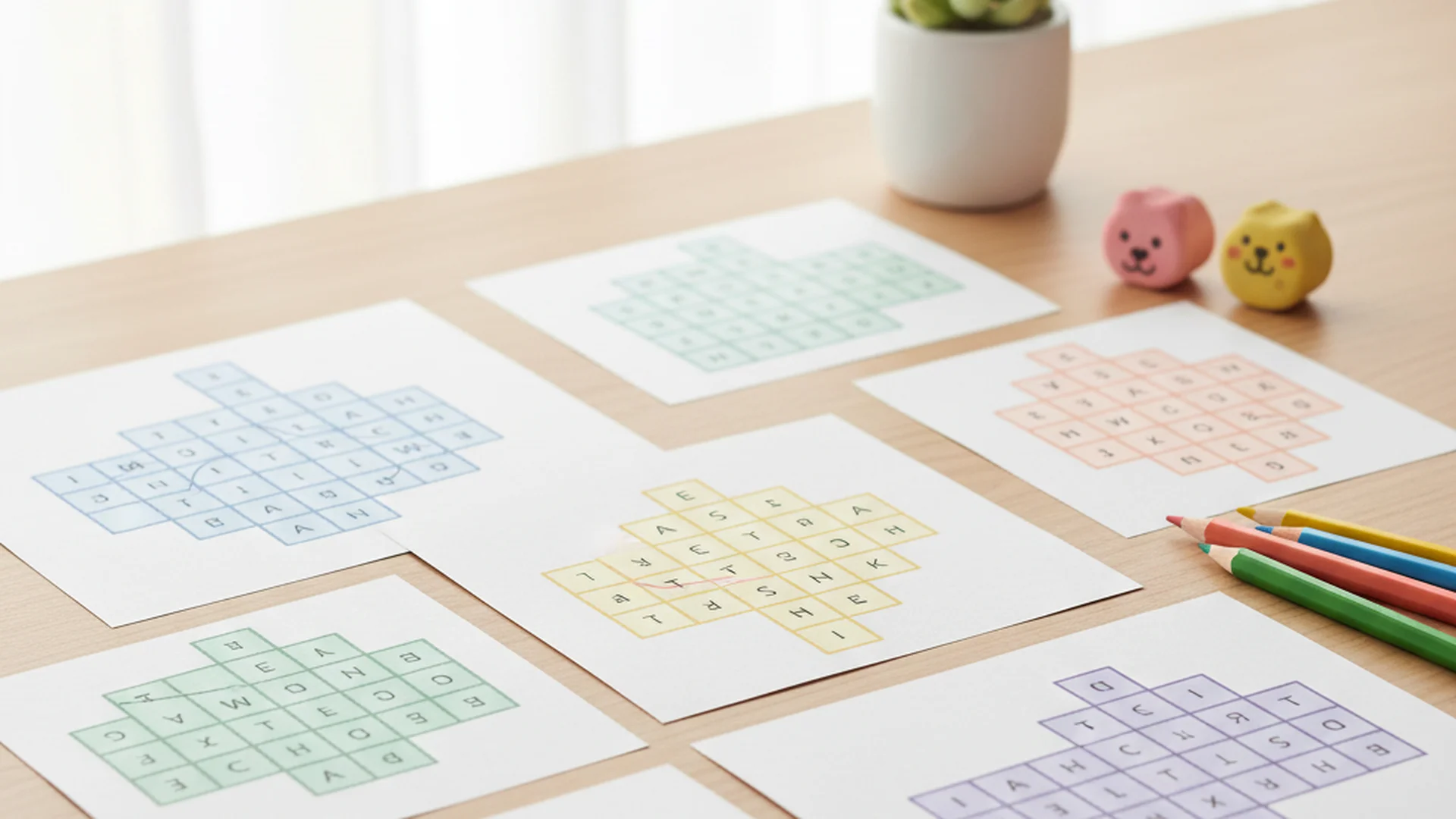
In an era dominated by digital screens, the humble printable word search kids use for learning and leisure remains a powerhouse of cognitive development. As a mathematical logic instructor, I have watched countless students transform their relationship with language through the simple act of scanning a grid for hidden patterns. Whether you are a teacher looking for educational word searches or a parent seeking a rainy-day activity, understanding the science behind these puzzles can help you maximize their impact.
The demand for high-quality, free word search children can enjoy often peaks in November as families transition to indoor activities. However, the benefits of these puzzles extend far beyond mere "busy work." From improving vocabulary retention to boosting spatial reasoning, word searches are a foundational tool in the modern educational toolkit.
Why Printable Word Searches Matter in 2025
The educational landscape is shifting. While digital tools are prevalent, a significant 2024–2025 trend shows a "return to paper" for deep-focus tasks. Research by Chesy et al. (2018) highlights that word search puzzles significantly improve student motivation and decrease the reluctance often associated with learning complex new terms.
Cognitive Enhancement and Mastery
It is not just about finding words; it is about how the brain processes information. Studies show that using word searches can increase concept mastery by over 10%. For instance, in controlled cycle tests, students' scores have been seen to jump from an average of 71.47 to 80.29 when puzzles were integrated into the curriculum. This is largely due to the "incidental learning" that occurs when a child repeatedly scans the spelling of a word while searching for its first letter.
Designing the Perfect Puzzle: Age-Appropriate Scaffolding
Not all word searches are created equal. A puzzle that is too easy will bore an older child, while one that is too complex will lead to frustration and a sense of failure. To keep the experience positive, we follow specific "scaffolding" guidelines.
Ages 3–5: The Pre-Reader Stage
At this age, the focus is on letter recognition rather than complex vocabulary.
- Grid Size: 4x4 or 5x5.
- Word Types: 3-letter CVC (Consonant-Vowel-Consonant) words.
- Visual Aids: Use pictures alongside the word list to help them associate the visual object with the printed letters.
Ages 6–8: The Developing Reader
This is the "sweet spot" for many children. They can handle more complexity but still need clear boundaries.
- Grid Size: 10x10.
- Directions: Keep words horizontal (left to right) and vertical (top to bottom) only. Avoid backwards words in word searches at this stage.
- Themes: Use engaging topics like an animal word search to keep interest high.
Ages 9+: The Logic Master
Older children need a challenge that taxes their pattern-recognition skills.
- Grid Size: 15x15 or 20x20.
- Complexity: Include diagonal word search tips and words hidden in reverse.
- Red Herrings: Increase the "filler" letters that look like the start of actual words (e.g., if the word is "FLOWER," place "FLOX" nearby) to force closer inspection.
Advertisement
Top Trends for 2025 and 2026
The world of printables is evolving with technology. We are moving away from generic, one-size-fits-all sheets toward a more personalized, eco-conscious approach.
1. AI-Powered Personalization
The most significant shift this year is the use of Generative AI. Approximately 60% of teachers reported using AI tools recently, with 33% using them specifically to create custom activities. Parents are now doing the same—creating puzzles based on a child's specific weekend plans, favorite book characters, or even their own name.
2. Sustainability and "Ink-Saver" Designs
As environmental awareness grows, "eco-printing" has become a priority. Modern printables are stripping away heavy, colorful backgrounds in favor of minimalist, high-contrast black-and-white designs. This saves cartridge ink and makes the letters stand out more clearly for children with visual processing needs.
3. Hybrid Interactive Puzzles
Looking toward 2026, we are seeing the rise of "printable-to-digital" bridges. Some modern word searches now include a QR code. Once the child finds all the words, they scan the code to unlock a short animation or a digital badge related to the theme, like a "Space Explorer" certificate for a solar system puzzle.
Best Practices for Creators and Parents
If you are generating your own puzzles using online tools, there are several professional standards you should follow to ensure the best educational outcome.
- Clean Typography: Avoid "fun" or loopy fonts. Stick to clean, sans-serif fonts like Arial, Verdana, or Helvetica. Developing eyes struggle with stylized letters.
- Thematic Consistency: A puzzle about "Ocean Life" should only contain ocean-related words. This helps children categorize information, which is a key component of brain training.
- Alphabetical Clue Lists: Listing the words to find in alphabetical order provides a secondary layer of learning, helping children practice sorting and organizational skills.
Common Mistakes to Avoid
Even seasoned educators can fall into traps when selecting or creating word searches for children.
- The "Busy Work" Trap: Handing a child a puzzle just to keep them quiet minimizes the educational value. To avoid this, always follow up the puzzle with a discussion. "Which of these words was the hardest to find? Do you know what it means?"
- Overcrowding the Grid: Many creators try to fit too many words into a small space. This creates a "blur" effect. Ensure there is generous "leading" (the space between lines) to keep the grid legible.
- Ignoring the Perimeter: A common mistake is forgetting to place words along the very edges of the grid. Savvy kids quickly realize that words are rarely on the edges and stop looking there, which reduces the complexity of the pattern search.
- Using Complex Fillers: Using a letter distribution that doesn't match the theme (like putting too many 'Z's in a puzzle about 'Farm Animals') makes the hidden words stand out too easily.
| Difficulty Level | Recommended Grid | Word Directions | Educational Focus |
|---|---|---|---|
| Beginner | 5x5 | Horiz/Vert | Letter Recognition |
| Intermediate | 10x10 | Horiz/Vert/Diag | Vocabulary Building |
| Advanced | 20x20 | All Directions | Pattern Mastery |
Advertisement
Frequently Asked Questions
At what age can kids start word searches?
Most children can begin simple word searches around ages 5–7. The primary prerequisite is the ability to recognize the alphabet and a basic understanding of how to read from left to right. For younger children, start with 3-letter words and very small grids.
Can word searches replace reading practice?
No. Word searches should be used as a supplement to reading, not a replacement. They are excellent for visual scanning and spelling recognition, but they do not help with phonics or reading comprehension in the same way a book does.
How do I make a word search harder for older kids?
To increase difficulty, expand the grid size (15x15 or larger), use longer and more obscure vocabulary, and include words hidden backwards or diagonally. You can also remove the word list entirely and provide "riddle clues" where the child must solve the riddle to know which word to look for.
Why are black-and-white designs preferred?
While color is fun, high-contrast black-and-white designs are better for focus. They reduce visual "noise," making it easier for the child to track letters. They are also more sustainable and cost-effective to print at home or in classrooms.
Conclusion
Printable word searches are more than just a way to pass the time; they are a bridge to better literacy and sharper cognitive skills. By selecting age-appropriate challenges and staying mindful of modern design trends like "ink-saver" layouts and AI personalization, you can provide a high-value educational experience for very little cost.
Whether you're exploring animal word search themes or teaching your child diagonal word search tips, remember that the goal is to make learning feel like a win.
Want more puzzles?
Explore our full collection of educational word searches and brain games.
Put it into practice

Keep reading
Word Search
Hollywood at Your Fingertips: The Ultimate Guide to Movie Word Search Puzzles
Explore the world of movie word search puzzles. Learn about cognitive benefits, 2026 film trends, and expert design tips for the ultimate Hollywood experience.
Aug 12, 2026 10 min
Word Search
Giant Word Search Puzzles: The Ultimate Guide to Mega Challenges
Discover the world of giant word search puzzles. Learn about world records, cognitive health benefits, and expert strategies for conquering massive grids.
Jan 18, 2026 10 min
Word Search
The Ultimate Guide to Word Search Books for Kids: Cognitive Benefits and 2025 Trends
Discover why word search books kids love are booming in 2025. Explore cognitive benefits, age-appropriate grids, and the latest trends in children’s puzzles.
Mar 15, 2025 12 min
Advertisement