Pong: The Game That Started It All
Explore the definitive pong game history. From the first prototype at Andy Capp’s Tavern to modern 2026 hardware, learn strategies and secrets from this complete guide.
By Free To Play Puzzles Editorial Team 12 min read
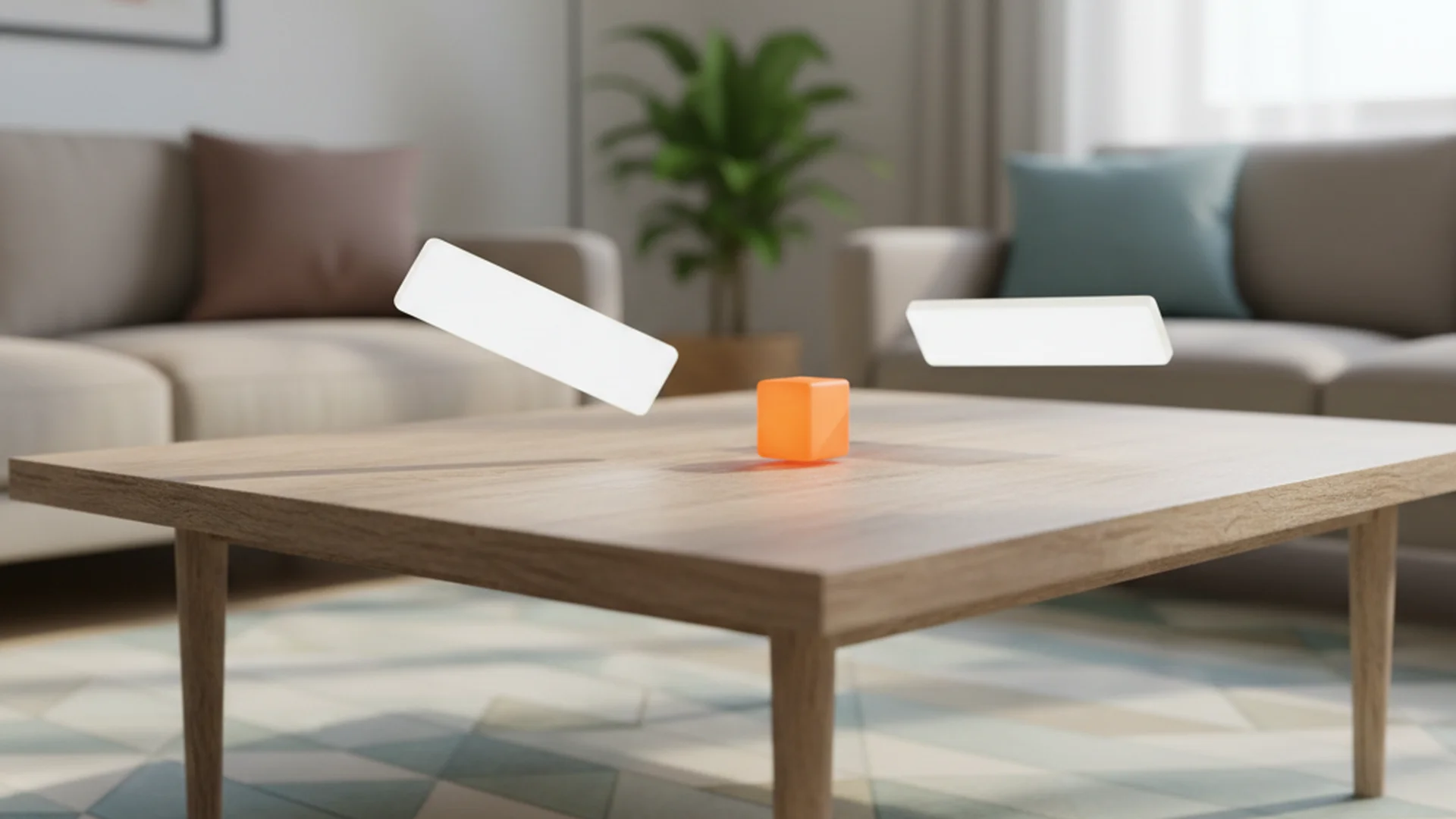
In the early 1970s, the concept of "video gaming" was a fringe curiosity restricted to high-end university laboratories and expensive mainframe computers. Everything changed in November 1972 with the release of a simple, black-and-white electronic simulation of table tennis. When we examine pong game history, we aren't just looking at a retro curiosity; we are looking at the "Big Bang" of a $200 billion global industry.
The simplicity of Pong is fascinating. Its minimalist design—two paddles and a square ball—harnesses fundamental principles of hand-eye coordination and rapid visual processing. Today, over fifty years since its debut, Pong remains a masterclass in elegant design. This pong complete guide will take you through the origins, the mechanics, and the modern 2026 revival of the game that taught the world how to play.
The Origin Story: From a Tavern to a Global Phenomenon
The story of Pong begins not in a corporate boardroom, but in a local bar called Andy Capp’s Tavern in Sunnyvale, California. Atari co-founder Nolan Bushnell assigned a young engineer named Allan Alcorn a "warm-up" exercise: create a simple television-based game. Alcorn took the assignment and added features that Bushnell hadn't even requested, such as the ball speeding up the longer it stayed in play and the paddles being divided into segments to allow for different return angles.
The "Milk Carton" Incident
To test the game’s viability, the team installed the first Pong prototype at Andy Capp’s Tavern. Within two weeks, Alcorn received a late-night phone call from the bar owner. The machine had "broken." When Alcorn arrived to inspect the cabinet, he found the problem wasn't a technical failure. The coin-catcher—an actual plastic milk carton—was overflowing with quarters to the point that the coin slot was jammed.
The Technical Brilliance of Discrete Logic
One of the most common misconceptions in pong game history is that the original machine was "programmed" on a computer. In reality, the 1972 Pong cabinet did not have a microprocessor (CPU) or a line of software code. Instead, it was built entirely using hard-wired discrete logic (Transistor-Transistor Logic or TTL).
| Feature | Original Arcade Pong (1972) | Modern Video Games |
|---|---|---|
| Processor | None (Discrete Logic) | Multi-core CPU/GPU |
| Memory | Minimal (Flip-flops) | Gigabytes of RAM |
| Display | Black & White CRT | 4K/OLED |
| Input | Analog Potentiometer (Paddle) | Digital Controller/Mouse |
Advertisement
Pong Complete Guide: Mastering the Mechanics
To the casual observer, Pong looks like a game of luck. However, high-level players understand that the game is governed by specific internal "algorithms" that can be exploited. If you want to dominate your next match on the Atari Gamestation Go or a browser emulator, follow these expert strategies.
1. The Seven-Segment Paddle
The paddle isn't one solid block. In the original logic, it is divided into seven distinct sections.
- The Center Segment: Returns the ball at a 180-degree horizontal line. Use this to maintain control.
- The Outer Edges: These are the most aggressive. Hitting the ball with the very tip of the paddle sends it back at a steep, vertical angle. This is the best way to "outrun" your opponent's paddle speed.
2. Aim for the "Gotcha Zones"
In the original 1972 code, there are four "holes" or corners on the screen where the ball can occasionally sail past a paddle even if the player appears to be in the correct position. These zones are near the top and bottom boundaries. If you can force the ball into a high-angle trajectory toward these corners, the hardware often fails to register the collision, leading to a "cheap" but effective point.
3. Anticipating the Speed Spike
The ball in Pong does not move at a constant speed. It is programmed to accelerate at specific intervals during a rally.
- Volley 4: The first speed increase.
- Volley 12: The final, maximum speed increase.
Pong in 2025–2026: The Retro Revival
As we move through 2025 and into 2026, Pong is experiencing a significant renaissance. Modern hardware and "spiritual sequels" have introduced a new generation to the simplicity of the paddle.
New Hardware: Atari Gamestation Go
Launched in October 2025, the Atari Gamestation Go is a high-end handheld/home hybrid. Unlike previous "mini" consoles, this unit features high-precision analog paddle controllers specifically designed to replicate the feel of the 1972 potentiometer. For enthusiasts of Classic Arcade Games: Ultimate Retro Gaming Guide, this represents the gold standard for home play.
qomp2: The Ball’s Revenge
The 2024-2025 release of qomp2 has turned the Pong formula on its head. In this "spiritual sequel," you do not play as the paddle; you play as the ball. The goal is to escape the confines of the two paddles and navigate through complex, puzzle-filled levels. A physical "Gold Edition" released in mid-2025 has become a cult favorite for those who enjoy the minimalist aesthetic of the original.
Atari 50: Expanded Edition (2025)
The Atari 50 collection received new DLC timelines in early 2025. One specific expansion, "The First Console War," provides a deep dive into the legal battles between Atari and Magnavox, including interactive "circuit diagrams" that show how the original Pong hardware functioned.
Common Mistakes to Avoid
Even seasoned gamers often fall prey to common misconceptions about Pong. Avoiding these mental traps will improve your game and your understanding of video game history.
- The "Spin" Myth: Many players frantically move their paddle up or down during a hit, believing they are adding "spin" or "curve" to the ball. This is a myth. In the original 1972 code, there is no spin. The return angle is determined solely by which part of the paddle the ball touches at the moment of impact.
- Static Defending: Beginners often stay in the center and wait for the ball. Experts "shadow" the ball's movement, keeping their paddle aligned with the ball's Y-axis at all times. This reduces the distance the paddle needs to travel for a last-second save.
- Ignoring the "Hustle": In some versions of Pong, the paddle moves faster when you are moving toward the center than when you are moving toward the edges. Learning the "velocity curves" of your specific version is crucial.
Advertisement
Frequently Asked Questions
Is Pong the first video game ever made?
No. While Pong is the most famous early game, it was preceded by several others. Computer Space (1971) was the first commercial arcade game, and Tennis for Two (1958) was an early laboratory experiment. However, Pong was the first commercially successful video game that reached the mainstream public.
Who actually created Pong?
While Nolan Bushnell and Ted Dabney founded Atari and came up with the concept, the game was physically designed and built by Allan Alcorn. He was the engineer who turned the vision of "electronic ping-pong" into a working hardware reality.
Why did Atari have to pay Magnavox?
Atari was sued by Magnavox because Ralph Baer, the inventor of the Magnavox Odyssey (the first home console), had already patented a "television tennis" game. Nolan Bushnell had seen a demonstration of the Odyssey before Pong was released. Atari eventually settled out of court for a $700,000 licensing fee to avoid a protracted legal battle.
Can you play the original Pong today?
Yes. You can find authentic versions in the Atari 50 collection on consoles and PC. Additionally, modern hardware like the Atari 2600+ and the Atari Gamestation Go allow you to play with hardware that mimics the original experience. For a quick fix, many Arcade Games sections on gaming websites offer browser-based versions.
How does playing Pong benefit the brain?
Pong is a good pick for improving visual tracking and inhibitory control. The game requires the brain to constantly predict the trajectory of the ball while suppressing the urge to over-react with the paddle. It is an excellent, low-stress way to maintain cognitive "processing speed."
The Enduring Legacy of Two Rectangles
Fifty years later, Pong remains the ultimate example of "less is more." It didn't need 4K graphics, loot boxes, or a complex narrative to capture the imagination of millions. It succeeded because it was intuitive; anyone could walk up to the cabinet, turn the dial, and understand the game instantly.
Whether you are exploring pong game history for academic reasons or using this pong complete guide to sharpen your skills for a retro tournament, the game’s impact is undeniable. It transformed televisions from passive receivers into interactive playgrounds, paving the way for everything from Asteroids to modern virtual reality.
Ready to Start?
Experience the game that started it all on our dedicated Pong page.
Put it into practice

Keep reading
Arcade Games
The History of Pong: How a Simple Table Tennis Game Launched an Industry
Discover the complete pong game history, from its 1972 arcade debut to its 2026 resurgence. Learn how Atari changed entertainment forever with a simple digital ball.
Mar 7, 2026 12 min

Arcade Games
Free Asteroids Online: The 2026 Guide to Modern Retro Gaming
Discover the best ways to play free asteroids online in 2026. Explore modern HTML5 versions, pro strategies, and the cognitive benefits of this Atari classic.
Jul 31, 2026 12 min
Arcade Games
Mastering the Arena: Ultimate Snake Game Strategies for Higher Scores
Boost your high scores with expert snake game strategies. From the classic Box Method to advanced Hamiltonian cycles, learn how to dominate the leaderboards in 2025.
Oct 3, 2026 12 min
Advertisement