Mastering Matching Logic Puzzles: The Ultimate Guide to Deductive Reasoning
Explore the world of matching puzzles. Learn expert strategies for logic grids, discover 2025 trends, and improve your deductive reasoning skills today.
By Free To Play Puzzles Editorial Team 12 min read
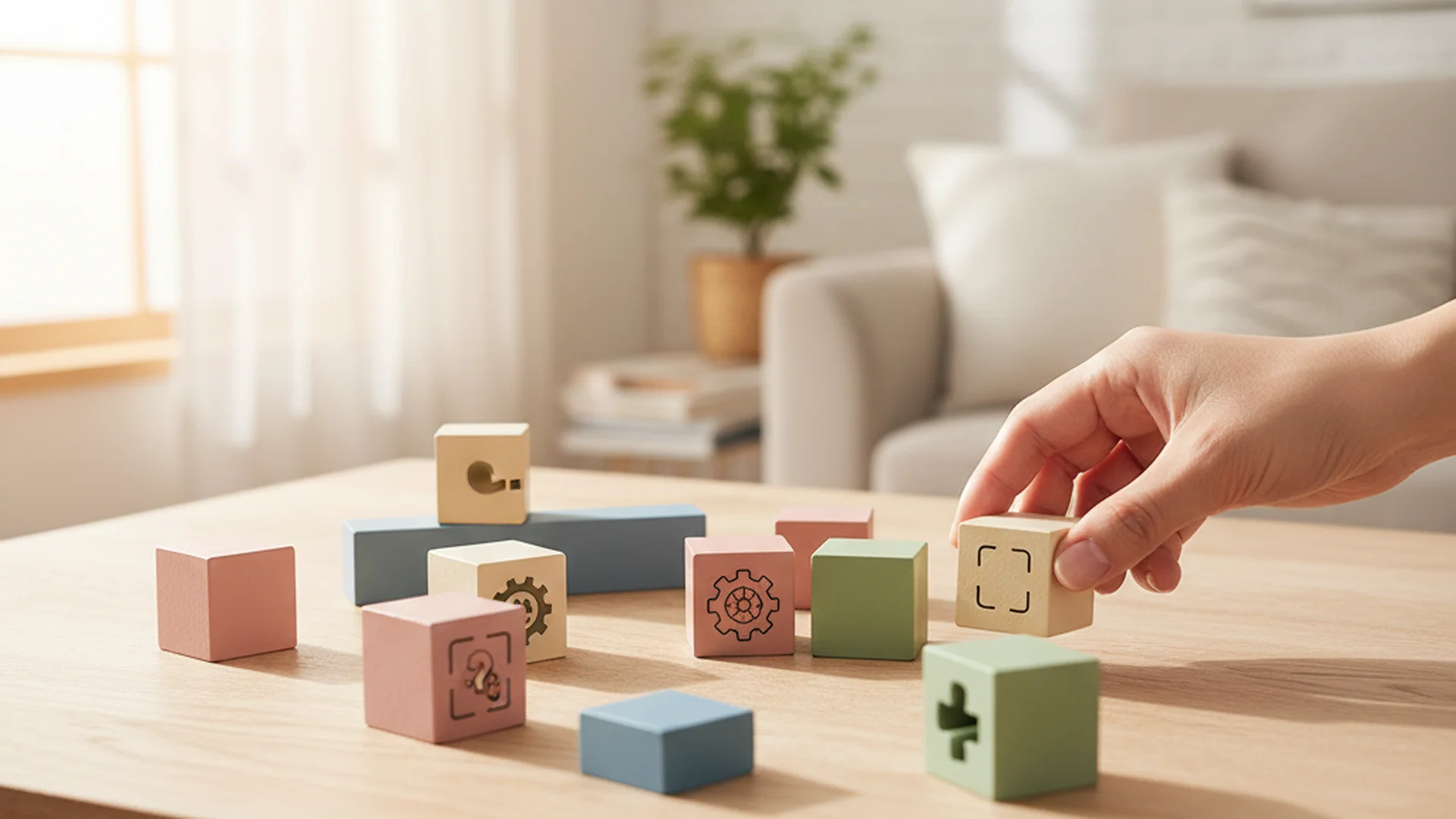
If you enjoy untangling clues, matching puzzles are hard to beat. There is a unique, rhythmic satisfaction in taking a chaotic jumble of facts—names, professions, pet types, and favorite colors—and systematically pinning them into their rightful places. Whether you call them logic grids or pairing logic puzzles, these challenges are more than just a pastime; they are a workout for the "deductive engine" of your brain.
In today’s fast-paced digital landscape, the popularity of these games has skyrocketed. From the classic paper-and-pencil grids found in the back of magazines to the high-octane "hybrid-casual" apps dominating the App Store in 2025, the art of matching is undergoing a massive renaissance. In this guide, we will explore the mechanics of these puzzles, expert strategies for solving them, and why they remain a cornerstone of cognitive health.
The Anatomy of a Matching Logic Puzzle
At its core, a matching puzzle is a test of deductive reasoning. Unlike math puzzles, which require arithmetic, these puzzles require you to follow the rule of "If A = B and B ≠ C, then A ≠ C."
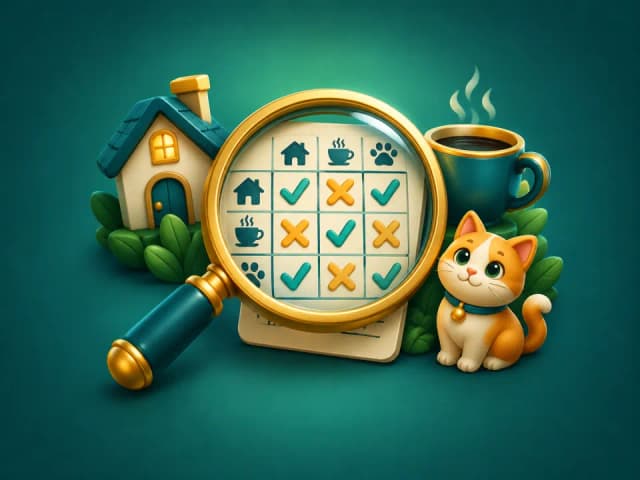
The most common format is the Logic Grid. This is a cross-hatch matrix where categories are listed on both the vertical and horizontal axes. Your goal is to use a set of clues to fill the grid with "O" (for a match) and "X" (for an impossibility).
Why Logic Grids Work
The beauty of the grid system is that it visualizes the process of elimination. When you place an "O" in a square, you can immediately fill the rest of that row and column with "X"s, because each item can typically only be paired with one other item. For a deeper look at how this reasoning works, you might enjoy our guide on Deductive Reasoning Puzzles.
Expert Strategies for Solving Pairing Logic Puzzles
To solve a puzzle like an expert, you need to move beyond simple "if-then" statements. Here are advanced techniques for tackling complex grids.
1. The Cross-Referencing Rule
This is the "Golden Rule" of matching puzzles. If you discover that Mr. Henderson is the Architect, and a separate clue tells you that the Architect lives in the Blue House, you must immediately link Mr. Henderson to the Blue House. On your grid, any "X" or "O" associated with the Architect must now be mirrored in Mr. Henderson’s section.
2. Analyze Negative Clues First
Beginners often skip clues that say what something isn't. For example: "The person who likes blue is not the Architect." These are actually the most valuable clues to start with. They allow you to place "X" marks immediately without any guesswork. Often, filling in several "X" marks will leave only one empty box in a row, revealing a "hidden" match you wouldn't have found otherwise.
3. The "Either/Or" Linkage
Look for clues that group three different entities. Example Clue: "Sarah is either the Baker or the Pilot. The Pilot lives in London." If you already know from a different clue that Sarah lives in Paris, you can conclude she cannot be the Pilot. Therefore, Sarah must be the Baker. This level of logic is exactly what makes Einstein's Riddle so legendary.
Advertisement
The 2025-2026 Puzzle Landscape: Trends and Innovation
The world of matching puzzles has evolved significantly over the last year. We are seeing a blend of high-tech digital experiences and a return to high-quality physical craftsmanship.
Hybrid-Casual and AI Challenges
In 2025, mobile gaming has shifted toward "Hybrid-Casual" titles. Games like Screw Jam and Color Block Jam have generated upwards of $70M in revenue by combining simple matching mechanics with complex 3D physics or narrative layers (like solving a mystery). Furthermore, platforms like Puzzle Baron are now using AI to generate infinite, unique logic grids that adapt to your skill level in real-time.
The Rise of "Slow" and Sustainable Puzzles
On the physical side, 2026 is seeing a trend toward "Eco-Friendly Slow Puzzles." Luxury brands are launching matching kits made from recycled bamboo and magnetic sustainable cardstock. These are designed for "digital detox" sessions, focusing on the tactile satisfaction of solving a puzzle away from a screen.
Digital vs. Physical
While many still prefer the feel of a pencil, digital versions offer "Auto-X" features. These features automatically fill in the impossibilities once you find a match, allowing you to focus on the higher-level deduction rather than the administrative task of marking boxes. For more on this debate, check out our article on Digital vs Physical Tangrams.
| Feature | Physical Puzzles | Digital Apps (2025) |
|---|---|---|
| Tactile Feel | High | Low |
| Difficulty Scaling | Static | Adaptive (AI-driven) |
| Speed | Slower (manual marking) | Faster (Auto-X features) |
| Sustainability | High (if bamboo/wood) | Moderate (energy use) |
Real-World Examples of Matching Logic
To understand how these work in practice, let’s look at three scenarios where matching logic is applied.
- The Classic Logic Grid: Matching four neighbors to their respective pets, house colors, and favorite drinks.
- The Forensic Application: Investigators use "link analysis"—a form of pairing logic—to match suspects to locations and motives during a criminal inquiry.
- The Scientific Method: In biology, "pairing" is used to match DNA sequences or protein structures, using the process of elimination to identify unknown variables.
Common Mistakes to Avoid
Even seasoned solvers can get tripped up by these common pitfalls:
- Jumping to Conclusions: Assuming that because a clue mentions two things in the same sentence, they must be a match.
- Treating "Blank" as "False": In logic, a blank space on your grid means "Unknown," not "No." Resist the urge to mark an "X" until you have a solid deductive reason.
- Ignoring the Introduction: The introductory paragraph often contains vital constraints (e.g., "Each person lives in a different city"). Skipping this is the #1 reason solvers get stuck.
- Forgetting the Gender Cues: If a clue says "The Doctor checked his watch," and you know "Clara" is one of the names, you can immediately rule out Clara as the Doctor.
Advertisement
Frequently Asked Questions
What is a "Logic Grid" puzzle?
It is a deductive reasoning puzzle where you match items from different categories (e.g., people, ages, and pets) using a series of clues and a cross-hatch grid to eliminate impossible pairings. It is the most common form of matching puzzle found in print.
Do logic puzzles have more than one solution?
A professionally designed logic puzzle should have exactly one unique solution. If you find multiple possibilities that satisfy all clues, it is usually considered a flaw in the puzzle's design.
What is the difference between a "Math Puzzle" and a "Logic Puzzle"?
Math puzzles focus on arithmetic, equations, and numerical patterns. Logic puzzles rely strictly on deductive reasoning—the ability to draw valid conclusions from given premises—and usually require no mathematical calculations at all.
Are matching puzzles good for kids?
Absolutely. Educators frequently use pairing puzzles to teach critical thinking and the "process of elimination." These skills are essential for standardized testing and general problem-solving.
Can these puzzles prevent Alzheimer’s?
While research suggests that mentally stimulating activities can delay the onset of dementia symptoms by approximately 2.5 years, they are not a cure or a preventative measure against biological brain aging. They are best used as part of a holistic lifestyle including physical exercise.
Conclusion
Whether you are a casual player on a mobile app or a competitive cruciverbalist looking for a new challenge, matching puzzles offer a timeless appeal. They satisfy our innate desire for order and reward our ability to think clearly under the constraints of a complex "logic trap." By using an elimination grid, focusing on negative clues, and avoiding the temptation to guess, you can master even the most daunting grids.
As we look toward 2026, the integration of AI and sustainable physical kits ensures that the "pairing" genre will continue to thrive. So, pick up a pencil or open your favorite app, and start matching!
Ready to Sharpen Your Mind?
Explore our collection of brain-teasing challenges and logic guides today.
Put it into practice

Keep reading

Logic Puzzles
Mastering Who Done It Puzzles: The Science of Deductive Mystery
Explore the resurgence of who done it puzzles. Learn expert strategies, the logic grid method, and how 2026 technology is transforming the mystery genre.
Nov 28, 2025 12 min

Logic Puzzles
Logic Puzzle Printables: The Ultimate Guide to Free Deductive Fun
Discover the benefits of printable logic puzzles. Learn how to solve logic grids, explore 2025 trends like eco-friendly PDFs, and boost your brain health today.
Jul 21, 2026 10 min

Logic Puzzles
Mastering Knights and Knaves: The Ultimate Guide to Truth-Teller and Liar Puzzles
Unlock the logic of the Island of Knights and Knaves. Learn expert strategies to solve truth-teller and liar puzzles, from Smullyan classics to AI benchmarks.
Jun 4, 2026 12 min
Advertisement