The Surprising Science of Jigsaw Puzzle Benefits: A 2025 Cognitive Guide
Discover the scientifically-backed jigsaw puzzle benefits for your brain, from IQ boosts to stress relief. Explore 2025 trends and expert puzzling strategies.
By Free To Play Puzzles Editorial Team 12 min read
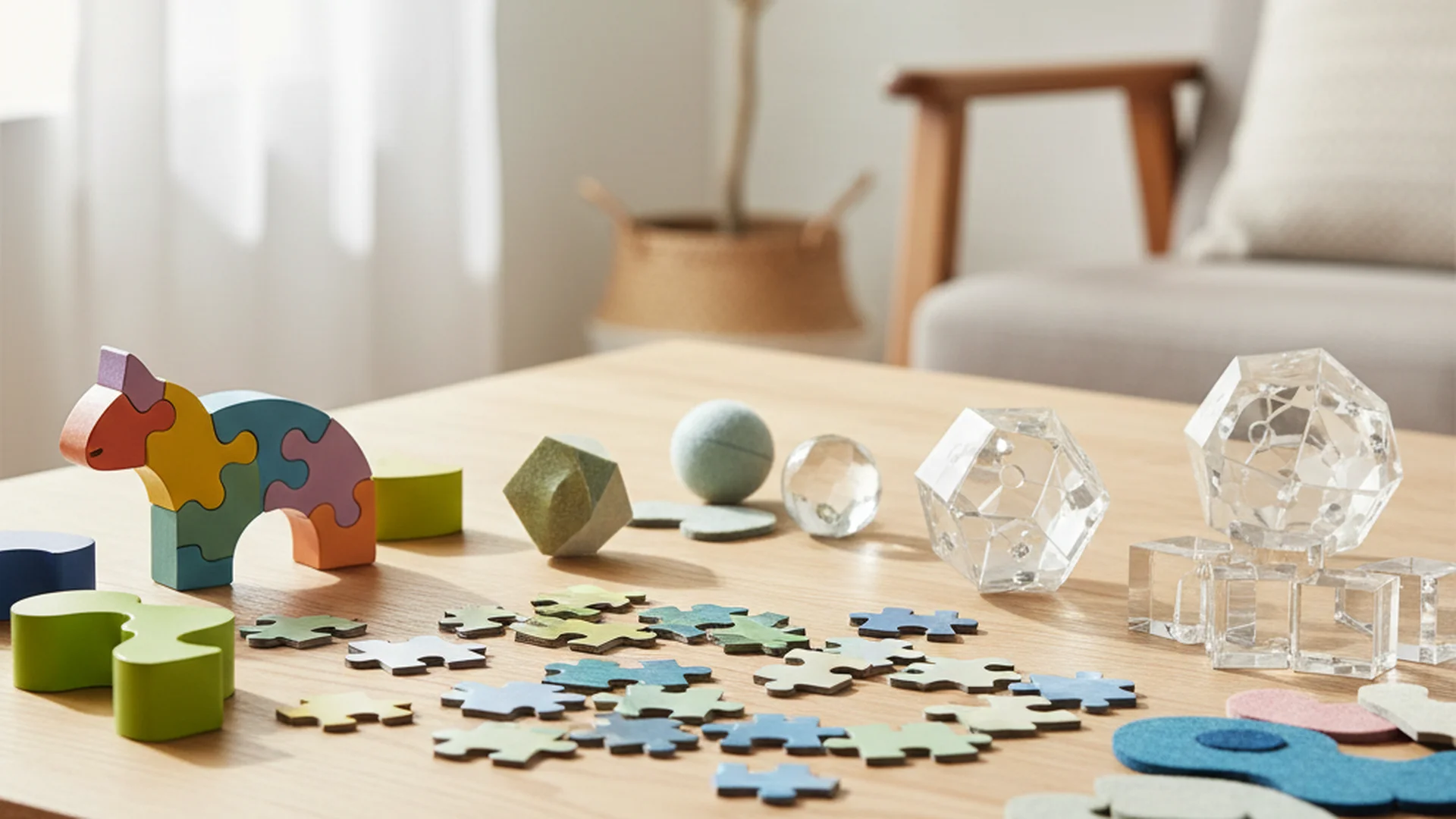
For many, the sight of a thousand scattered cardboard pieces on a dining room table evokes a sense of nostalgic comfort. However, as we navigate 2025, the conversation around jigsaw puzzle benefits has shifted from mere recreation to essential cognitive health. In an era dominated by high-speed digital consumption, the slow, methodical process of solving a picture puzzle offers a unique sanctuary for the human mind.
Whether you are a seasoned "dissectologist" or a newcomer looking for a "digital detox," the impact of this hobby on your neurology is profound. From strengthening neural connections to inducing a meditative "flow state," the jigsaw brain benefits are currently being recognized by researchers and health professionals as a vital tool for mental longevity.
The Cognitive Powerhouse: How Puzzles Shape the Brain
The human brain is designed to seek patterns and resolve chaos. When you sit down with a puzzle, you aren't just matching colors; you are engaging in a sophisticated neurological workout.
Bilateral Integration: The Full-Brain Workout
One of the most significant jigsaw brain benefits is a process known as bilateral integration. Most daily activities lean heavily on one side of the brain. The left hemisphere typically handles logic, linear thinking, and sequencing, while the right hemisphere manages creativity, intuition, and "big picture" visualization.
Puzzling is one of the few activities that demands both sides work in perfect harmony. You must use your left brain to logically sort pieces by shape or edge type, while simultaneously using your right brain to envision how a tiny splash of blue fits into a sprawling sky. This cross-brain communication strengthens the corpus callosum—the bridge between the two hemispheres—improving overall cognitive efficiency.
Increasing IQ and Cognitive Reserve
Research from the University of Michigan has highlighted a startling correlation between puzzle-solving and intelligence. Their studies suggest that engaging in puzzles for at least 25 minutes a day can increase your IQ by approximately 4 points. This isn't just about becoming "smarter" in a vacuum; it’s about strengthening the neural connections that allow for faster problem-solving and better memory retention.
Furthermore, the concept of "Cognitive Reserve" is critical as we look toward aging. Data from the Archives of Neurology indicates that mentally stimulating activities like jigsaw puzzles can delay the onset of dementia and Alzheimer's symptoms by 2.5 to 3 years. By building a denser network of neural pathways, you essentially create a "buffer" that protects the brain against age-related decline.
Mental Health and the "Flow State"
In 2025, the global jigsaw puzzle market has surged to $2.76 billion, largely driven by adults seeking relief from chronic stress. The physiological response to puzzling is remarkably similar to that of deep meditation.
Cortisol Reduction and Dopamine Release
When you focus on a puzzle, your brain enters a state of "soft focus." This distraction from intrusive thoughts physically lowers cortisol (the primary stress hormone) levels. The American Institute of Stress has noted that the rhythmic nature of searching for pieces helps regulate breathing and heart rate.
Perhaps the most addictive part of the hobby is the "dopamine hit." Every time you find a "perfect fit," your brain releases a small burst of dopamine. This neurotransmitter is responsible for feelings of accomplishment and pleasure, creating a positive feedback loop that encourages persistence and focus.
Mindfulness in a Digital Age
The "digital detox" movement has embraced puzzles as a screen-free alternative to scrolling. Unlike social media, which provides fragmented, rapid-fire stimuli, puzzles require sustained attention. This helps rebuild a shortened attention span, a common side effect of modern technology use.
Advertisement
Developmental Benefits for Children
While much of the recent growth is in the adult demographic, the benefits for children remain foundational. Early puzzle play (specifically between ages 2 and 4) is a massive predictor of later success in STEM fields.
| Skill Developed | Description | Long-term Benefit |
|---|---|---|
| Spatial Transformation | Mentally rotating shapes to fit a gap. | Higher performance in geometry and physics. |
| Fine Motor Skills | Pincher grasp used to pick up small pieces. | Improved handwriting and manual dexterity. |
| Persistence | Dealing with the frustration of a "non-fit." | Greater emotional resilience in school. |
Studies from the National Institutes of Health (NIH) show that children who play with puzzles frequently demonstrate superior mathematical reasoning by the time they reach middle school. If you're looking for ways to engage the younger generation, consider reading our Easy Riddles for Kids to supplement their cognitive growth.
Expert Strategies for the Modern Puzzler
As a logic instructor, I often see people get frustrated by jumping into a 1,000-piece challenge without a plan. To maximize the jigsaw puzzle benefits, you need an environment and a strategy that prevents physical strain and mental burnout.
The "Task Lighting" Rule
Never puzzle under standard yellow room lights. To distinguish between subtle shades of a gradient sky or a forest, you need a dedicated LED task lamp. Experts recommend an adjustable color temperature—cool-white (around 5000K) is best for reducing eye strain and eliminating the glare often found on glossy puzzle pieces.
Advanced Sorting Techniques
Most beginners start and end with the "edges-first" strategy. While this works for simple puzzles, high-level enthusiasts use more nuanced methods.
- Typography and Texture: Sort pieces that have text or distinct textures (like animal fur or brickwork) into separate trays.
- Quadrant Sorting: For puzzles with 2,000+ pieces, try to sort internal pieces into quadrants (top-left, bottom-right). This prevents you from feeling overwhelmed by the sheer volume of cardboard.
- The "Islands" Method: Build distinct objects (a house, a tree, a person) separately on the board and connect them later.
Recent Trends: The World of Puzzles in 2025–2026
The industry is currently undergoing a technological and cultural revolution. We are seeing a shift from simple cardboard toys to high-end decor and competitive sports.
AR and Smart Puzzles
Augmented Reality (AR) puzzles are the leading trend for 2026. Once you complete the physical puzzle, you can use a smartphone app to see the image come to life. Some AR puzzles even feature "hidden narratives" where you must solve the physical puzzle to unlock a digital mystery or escape room scenario. If this blend of physical and mental challenge appeals to you, check out our guide on Escape Room Puzzles.
Eco-Conscious Materials
The "plastic-free" movement has reached the puzzle world. Leading brands are ditching plastic bags inside the boxes in favor of paper or reusable cloth bags. We are also seeing a rise in puzzles made from sustainable bamboo and 100% recycled high-density cardboard, which offers a more satisfying "snap" when pieces connect.
Competitive Speed Puzzling
Believe it or not, puzzling is now a spectator sport. The World Jigsaw Puzzle Championship in Valladolid, Spain, has seen record-breaking attendance.
- 2025 Championship: September 15–21.
- 2026 Championship: September 16–20.
Watching these professionals can teach you a lot about Jigsaw Puzzle Strategies that you can apply to your own home hobby.
Advertisement
Common Mistakes to Avoid
To ensure your puzzling remains a benefit and not a burden, avoid these common pitfalls:
1. The "Edges-First" Fallacy
While starting with edges is the standard advice, it can be a trap. If your puzzle has a solid, single-color border (like a vast black frame), the edges will be the hardest part. Experts suggest skipping the border and building "islands" of color first.
2. Buying "Alphabet Soup" Brands
Avoid generic brands on mass-market sites that have random, unpronounceable names. These brands often use stolen artwork, resulting in blurry images. Worse, they suffer from "false fits"—where a piece seems to fit perfectly but actually belongs elsewhere—and high levels of "puzzle dust" which can irritate your respiratory system.
3. Gluing Directly on Wood
If you plan to preserve your masterpiece, Warning: Never apply puzzle glue while the puzzle is sitting directly on a wooden dining table. The glue can seep through the gaps and permanently ruin the finish of your furniture. Always use parchment paper or wax paper underneath.
Frequently Asked Questions
How long does a 1,000-piece puzzle take to complete?
On average, it takes between 3 to 10 hours. However, a 1,000-piece puzzle is actually four times harder than a 500-piece puzzle, not twice as hard, because the number of potential connections between pieces increases exponentially.
Are puzzles actually good for anxiety?
Yes. Puzzling induces a "flow state" that acts as a form of mindfulness. It requires enough focus to distract you from intrusive thoughts but isn't so taxing that it causes further stress. It is a frequent recommendation for those dealing with generalized anxiety.
Can I really increase my IQ by 4 points?
Research from the University of Michigan suggests this is possible with consistent engagement (at least 25 minutes daily). This is due to the strengthening of neural pathways and improved spatial reasoning skills.
What is the best way to store a puzzle-in-progress?
If you don't have a dedicated table, use a "roll-up" puzzle mat or a "puzzle stowaway" case. These allow you to secure the pieces and move the puzzle without losing your progress.
Conclusion
The jigsaw puzzle benefits we’ve explored—from increasing IQ to delaying the symptoms of aging—prove that this hobby is far more than a simple pastime. It is a holistic brain workout that manages to be both stimulating and incredibly relaxing. By incorporating modern strategies, proper lighting, and an ergonomic setup, you can turn a rainy-day activity into a cornerstone of your mental wellness routine.
If you're ready to dive deeper into the world of puzzling, explore our Jigsaw Puzzles: Complete Guide or find your next challenge in our list of the Best Jigsaw Puzzles for Adults.
Ready to Start?
Enhance your cognitive health with a new challenge today.
Put it into practice


Keep reading
Puzzle Types
20 Best Hidden Object Games: A Cognitive Scientist’s Guide for 2025-2026
Discover the best hidden object games for brain health and relaxation. Expert reviews of top hidden object games, strategy tips, and 2026 trends for all ages.
Aug 3, 2026 12 min
Puzzle Types
Rubiks Cube Guide: Master the Ultimate 3D Puzzle (2025 Edition)
Unlock the secrets of the 3D puzzle with our comprehensive Rubiks cube guide. Learn the Layer-by-Layer method, CFOP, and 2025 speedcubing tech.
Jul 7, 2026 12 min
Puzzle Types
The Science of Multistable Perception: A Guide to Ambiguous Image Puzzles
Explore the fascinating world of ambiguous images. Learn the history, psychology, and modern 2026 trends of dual image puzzles that challenge your brain.
Jun 17, 2026 10 min
Advertisement