Electronic Handheld Puzzles: The Best Devices for Gaming and Brain Health
Explore the best handheld puzzle games of 2026. From electronic Sudoku to AI-driven logic puzzles, discover the tactile devices boosting cognitive health.
By Free To Play Puzzles Editorial Team 12 min read
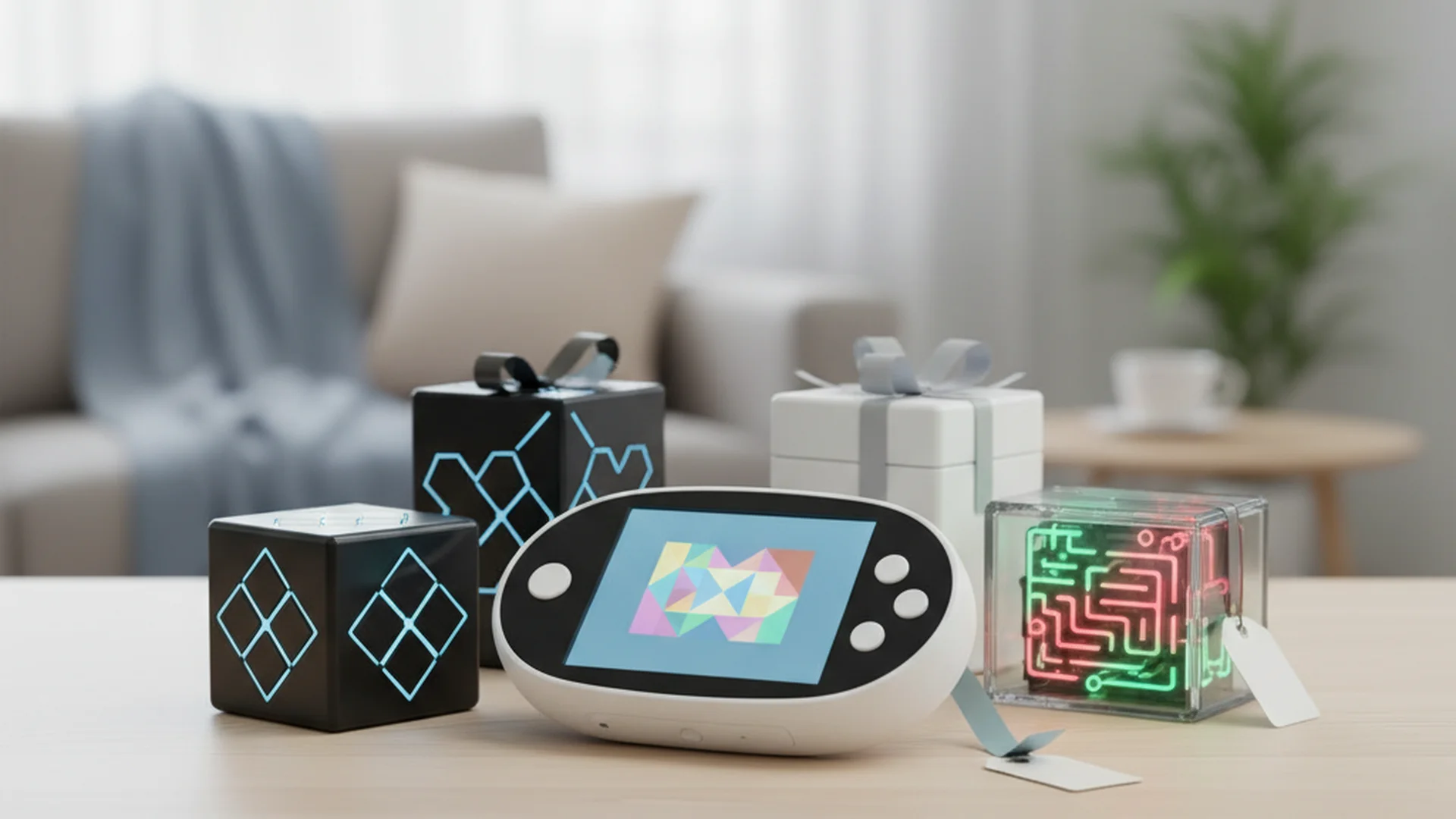
In an era dominated by high-resolution smartphones and constant notifications, a quiet revolution is taking place in the palm of our hands. Handheld puzzle games—once thought to be relics of the 1980s toy aisle—are experiencing a massive resurgence. As we look toward 2026, these dedicated devices are no longer just simple toys; they have evolved into sophisticated, AI-enhanced tools for mental fitness and stress relief.
Whether you are looking for a dedicated electronic sudoku device to escape the "doom-scrolling" of social media or searching for a tactile logic challenge for a child, the current market offers an impressive array of "phygital" experiences. These devices bridge the gap between physical touch and digital intelligence, providing a focused environment that a multitasking smartphone simply cannot replicate.
The Evolution of Handheld Puzzle Games
To understand where we are going in 2026, we must look back at where it all began. As a retro gaming historian, I often point to 1978 as the "Big Bang" for this category. This was the year Parker Brothers released Merlin, a red, telephone-shaped device that featured six different logic games. It sold over 5 million units, proving that consumers had a deep appetite for portable, electronic brain-teasers.
Fast forward to today, and the "red dots" of the 70s have been replaced by magnetic sensors, LED matrices, and adaptive AI. The current trend, dubbed "The Analog Year" of 2026, highlights a shift toward electronics that avoid traditional pixelated screens in favor of physical pieces and light-based feedback. This movement is driven by parents seeking "screen-free" entertainment and adults looking to reclaim their attention spans.
Why Dedicated Handhelds Beat Smartphone Apps
Many people ask, "Why buy a separate device when I can just download a puzzle app?" The answer lies in cognitive psychology and the "flow state."
- Zero Distractions: A dedicated handheld puzzle doesn't have pop-up notifications, emails, or the temptation to check the news.
- Tactile Feedback: The click of a magnetic slide or the press of a silicone button provides sensory satisfaction that a flat glass screen lacks.
- Battery Longevity: These devices are designed for efficiency, often lasting weeks on a single set of batteries compared to the few hours of a high-performance phone.
- Offline Capability: They are the ultimate travel companions, requiring no Wi-Fi or cellular data for full functionality.
The Cognitive Impact: Brain Training for All Ages
One of the most compelling reasons for the growth in the handheld puzzle games market is the emerging research on brain health. A landmark study from the University of York (2023/2024) revealed that older adults who engage with digital puzzle games show memory and concentration levels significantly higher than their peers. In fact, their ability to filter out irrelevant distractions was found to be comparable to that of 20-year-olds.
This is why many of the best electronic sudoku and logic devices are now being marketed directly to the "silver gamer" demographic. These aren't just toys; they are cognitive maintenance tools.
Advertisement
Key Features to Look for in 2025-2026
If you are browsing for a gift or a personal device, the options can be overwhelming. Based on current trends and manufacturing standards, here is what you should prioritize:
AI-Adaptive Difficulty
The newest releases for 2026 are integrating AI that tracks your solve speed. If you solve a sliding puzzle in record time, the device subtly increases the complexity of the next level. This keeps the user in a "flow state"—the sweet spot between boredom and frustration.
Phygital Play
"Phygital" is the blend of Physical and Digital. Modern devices like the GiiKER Super Slide use magnetic sensors to detect where you place physical pieces on a board. The device then provides instant digital feedback via a small side-panel, telling you if you’ve solved the challenge or providing a hint.
Sustainability and Build Quality
We are seeing a shift toward eco-friendly materials. Look for devices utilizing:
- Bamboo or Recycled Plastic Casings: Better for the environment and often more aesthetic for home decor.
- Silicone Buttons: These are quieter for public use and more durable than cheap plastic.
- Auto Shut-Off: Essential for battery-operated devices to prevent drain during inactivity.
| Feature | Importance | Best For |
|---|---|---|
| Level Depth (500+) | High | Long-term value and variety |
| Mute Function | Medium | Commuters and office use |
| Hint Mode | High | Beginners and learning patterns |
| Backlit Display | Medium | Nighttime or low-light play |
Real-World Examples of Top Devices
To help you choose, let's look at three specific types of devices currently dominating the market.
1. The Magnetic Logic Slider (e.g., GiiKER Super Slide)
This device is a modern take on the classic 15-puzzle. It features a magnetic board where you move physical tiles to match a pattern shown on an LED screen. With over 500 built-in levels, it’s a perfect example of a device that scales with the user's skill.
2. The Electronic Sudoku Master
Dedicated electronic sudoku handhelds are a staple for fans of the number-placement game. Unlike paper, these devices allow you to "pencil in" numbers digitally and check for errors instantly. For a great gift idea, check out our Puzzle Gift Guide.
3. The 9-in-1 Multi-Game Cube (e.g., Spark Cubix)
For those who get bored easily, multi-game cubes offer various modes including memory match, speed racing, and "capture the light." These are particularly popular with the 25-44 age group for quick "micro-breaks" during work.
The 2026 "Analog Year" Trend
Why is everyone suddenly obsessed with these devices? The cultural movement known as "The Analog Year" is a reaction to the over-saturation of the "metaverse" and high-refresh-rate screens. Consumers are craving "low-fidelity" tech—devices that use advanced sensors and processors but present the information in a simple, non-emissive way.
This trend has also led to a focus on "Green Gaming." Manufacturers are now competing to see who can create the most sustainable handheld, using recycled ocean plastics and minimizing packaging. When you buy a device in 2026, you aren't just buying a game; you're often supporting a more circular economy.
Advertisement
Common Mistakes to Avoid
When entering the world of electronic handhelds, it is easy to make a few common errors.
1. Ignoring the "Instruction Manual Gap"
Many high-end logic puzzles come from international manufacturers. Sometimes the printed manuals are difficult to follow.
2. Over-Buying Difficulty
It is tempting to buy the most "expert" device available. However, a device that is too hard will quickly end up in a drawer. Look for "Full Range" devices that offer everything from "Beginner" to "Master" levels. This allows for a proper mental warm-up.
3. Thinking They Are "Just for Kids"
The statistics show that 55% of the audience is aged 25–44, and a huge portion of the market is dedicated to seniors. Do not let the colorful buttons fool you; the logic required for some of these devices would stump most computer science professors!
Frequently Asked Questions
Are electronic puzzles better than apps on a phone?
Yes, for many users they are. Dedicated handhelds eliminate the distractions of notifications and "doom-scrolling." They also provide tactile feedback, which has been shown to improve engagement and focus.
How do I reset my progress or skip levels on these devices?
Most modern devices (like the GiiKER or Spark series) use a "long-press" mechanic. Hold the Power or New Game button for 3–5 seconds to reset. To skip a level, there is usually a "Next" or "Arrow" button that can be held down.
Do these devices require an internet connection?
Most dedicated handheld puzzle games are entirely offline. This makes them perfect for long car rides, flights, or areas with poor cellular reception.
Are they too loud for public use?
While older vintage games lacked volume control, almost all 2025 and 2026 models include a "Mute" or volume adjustment function. Always check the product description for a "Silent Mode" if you plan to use it on a commute.
What happens if I lose a piece of a "phygital" puzzle?
This is a common concern. Leading manufacturers now offer replacement piece kits. However, it is always a good idea to choose a device with a built-in storage compartment or a magnetic board that holds the pieces in place during storage.
Conclusion
The resurgence of handheld puzzle games represents a collective desire to disconnect from the digital noise and reconnect with our own cognitive potential. Whether it’s the classic appeal of electronic sudoku or the futuristic challenge of an AI-adaptive logic slider, these devices offer a unique blend of entertainment and mental exercise.
As we move through 2026, expect to see even more innovation in the "Analog Year" space. By choosing devices with high level depth, tactile quality, and sustainable builds, you ensure a rewarding experience that keeps your brain sharp and your stress levels low.
Looking for the perfect gift?
Explore our curated selection of the best brain-teasers for all ages.
Put it into practice

Keep reading
Gift Guides
15 Best Puzzle Gifts Under 20: Budget-Friendly Brain Teasers for 2025
Discover the best puzzle gifts under 20. From sustainable jigsaws to Hanayama metal brain teasers, find high-quality, affordable gifts for adults and kids.
Oct 2, 2026 12 min
Gift Guides
Puzzle Gift Guide: Best Presents for Brain Game Lovers
Explore the ultimate 2025-2026 puzzle gift guide. From 1,000-piece classics to AI-generated patterns and 3D lamps, find the perfect gifts for puzzle lovers.
Feb 7, 2026 12 min

Gift Guides
The Best Word Search Books: A 2025 Guide to Large Print and Themed Collections
Discover the best word search books for 2025. From large print editions to retro-themed puzzles, find the perfect brain-training guide for relaxation and focus.
Oct 4, 2026 12 min
Advertisement