Unlocking Cognitive Potential: The Science Behind Hidden Pictures Printables
Discover the developmental benefits and rich history of hidden pictures printables. Learn how these puzzles enhance visual discrimination, focus, and brain health for all ages.
By Free To Play Puzzles Editorial Team 10 min read
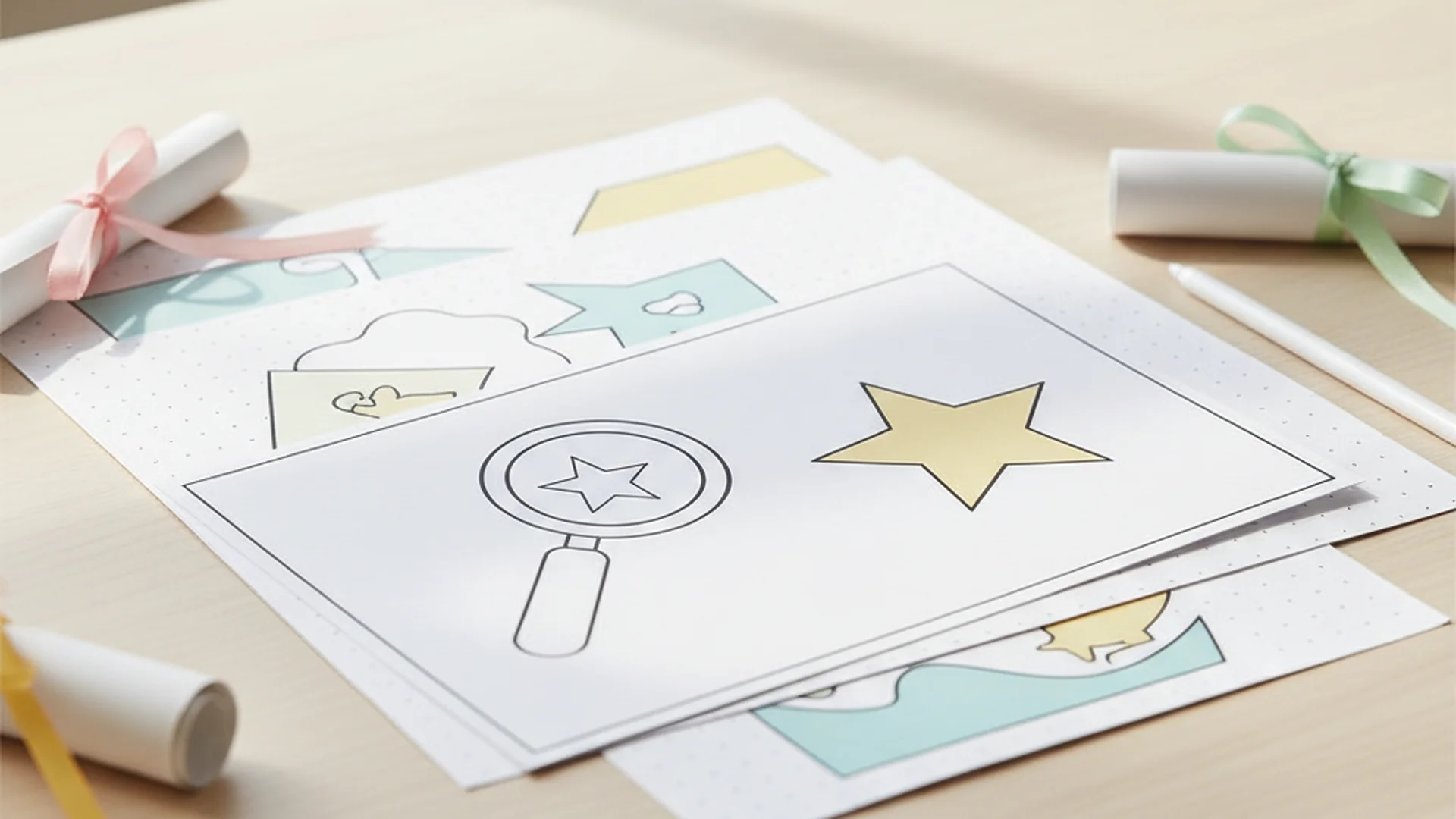
For nearly eight decades, the search for a hidden banana, a misplaced thimble, or a clever crescent moon has been more than just a pastime—it has been a fundamental building block of childhood development. When it comes to exercising how the brain processes visual information, few tools are as effective or accessible as a hidden pictures printable.
While many parents view these puzzles as a simple way to keep children quiet during a car ride, the neurological reality is far more complex. When a child engages with highlights hidden pictures, they aren't just "finding things." They are engaging in high-level pattern recognition, strengthening neural pathways associated with focus, and developing the visual discrimination skills necessary for literacy and mathematical reasoning.
The Historical Legacy of the Search
The concept of the "Hidden Pictures" puzzle is synonymous with Highlights for Children, a magazine founded in June 1946. It is a remarkable feat of editorial consistency: the puzzle has appeared in every single issue for nearly 80 years. With over 1.4 billion magazines delivered globally, these puzzles have shaped the cognitive habits of multiple generations.
In today's digital landscape, the transition to the hidden pictures printable format has allowed this legacy to continue in classrooms and homes worldwide. By moving from the magazine page to a downloadable sheet, educators can now integrate these puzzles into specific lesson plans, focusing on everything from vocabulary building to fine motor skills.
The Neuroscience of Visual Discrimination
Why do we recommend these puzzles so highly in the field of brain health? It comes down to five core developmental benefits that occur every time a person scans a busy illustration.
1. Visual Discrimination and Reading
Visual discrimination is the ability to see letters and numbers as distinct shapes. To a young child, the letter "b" and the letter "d" look remarkably similar. Solving a hidden pictures puzzle requires the brain to distinguish a hidden spoon from a curved tree branch. This training directly translates to the ability to decode text.
2. Attention to Detail and Persistence
We live in an era of "attentional fragmentation." Hidden pictures require "sustained attention," or the ability to focus on a single task despite distractions. Success in these puzzles isn't about speed; it's about the "find," which provides a dopamine reward that encourages persistence.
3. Vocabulary Growth
Each puzzle typically includes a list of "label clues." Finding a "thimble," a "crescent moon," or a "gavel" builds object-word associations that children might not encounter in their daily speech.
4. Therapeutic and Senior Care
The benefits aren't limited to children. Many seniors use these puzzles to help maintain cognitive sharpness. They act as a "mental calisthenics," slowing age-related decline by challenging the brain’s executive functions.
Advertisement
Best Practices for Using Hidden Pictures Printables
To get the most out of your printables, it is helpful to use specific strategies that professional "searchers" and educators employ.
The Quadrant Technique
One of the most common reasons children (and adults) get frustrated is "eye-wandering." To combat this, mentally divide the page into four squares. Focus your search entirely on the top-left quadrant before moving to the next. This systematic approach ensures no area is overlooked.
The "Upside Down" Trick
If you are down to the final object and simply cannot find it, flip the printable upside down. Our brains are hard-wired to see the "big picture"—we see a "house" or a "forest." When you flip the page, the brain stops seeing objects and starts seeing pure lines and shapes. This makes the hidden item "pop" out from the background.
Printing for Success
The quality of your print matters. Because these puzzles rely on fine line art, a low-resolution print can make objects impossible to find.
- Resolution: Always print at a minimum of 300 DPI.
- Contrast: If the puzzle looks "muddy," increase the brightness/contrast in your printer settings to make the black lines sharper.
- Eco-Friendly Tip: Look for "low-ink" designs that use fine-line aesthetics to save on toner while maintaining difficulty.
Recent Trends and the Future of Puzzles (2025–2026)
As we look toward 2026, the world of printables is evolving with technology.
- AI-Generated Personalization: New tools now allow parents to upload photos of their child’s favorite toys to generate a custom hidden pictures printable.
- Hybrid Interactive Printables: A rising trend involves puzzles that you print out but use an Augmented Reality (AR) app to reveal 3D hints or animated clues.
- Extreme Hidden Pictures: There is a burgeoning market for adult-focused puzzles that feature thousands of tiny details, serving as a meditative, screen-free alternative to digital games.
| Puzzle Type | Best For | Cognitive Focus |
|---|---|---|
| Picture Clues | Toddlers (3-5) | Object Recognition |
| Standard Line Art | Kids (6-12) | Persistence & Reading |
| Photo Puzzles | Adults | High-Level Detail |
| Interactive AR | Tech-Savvy Kids | Engagement |
Common Mistakes to Avoid
When using or searching for hidden pictures, there are a few pitfalls to be aware of:
- The "Jason Rekulak" Confusion: Be careful when searching online. Hidden Pictures is also the name of a popular supernatural thriller novel. Educators should ensure they are downloading puzzle sheets and not accidentally purchasing the book, which contains imagery not suitable for children.
- Edge Blindness: Designers know that our eyes naturally gravitate toward the center of the page. They intentionally hide objects along the extreme borders. Always check the very edges first!
- Scaling Issues: In DIY puzzles, sometimes the "clue" is a different size than the hidden object. For a fair challenge, the clue should be a 1:1 scale match.
Advertisement
Frequently Asked Questions
How do hidden pictures help with reading?
They build "visual discrimination" skills. Just as a child must distinguish a "b" from a "d," they must distinguish a hidden spoon from a curved branch in the drawing. This trains the brain to notice subtle variations in shape and orientation.
Are there versions for toddlers who can’t read yet?
Yes. Look for printables designed for ages 3–6 (often found in magazines like High Five). These use "picture clues" instead of word lists, allowing the child to match shapes visually without needing to decode text.
Is it just for kids?
Absolutely not. There is a growing market for "Extreme Hidden Pictures" and adult "Hidden Object Games" (HOGs). These provide a meditative, screen-free alternative to adult coloring books and are excellent for Brain Training.
Why can't I find the last object even when looking right at it?
This is a phenomenon called "inattentional blindness." Your brain has categorized that part of the image as "the background." Using the "Upside Down" trick mentioned above is the best way to break this mental loop.
Conclusion
The hidden pictures printable remains one of the most powerful, low-tech tools for cognitive development available today. Whether you are a teacher looking to build student focus, a parent wanting to prepare a child for reading, or an adult seeking a moment of "analog" zen, these puzzles offer universal benefits. By applying strategies like the Quadrant Technique and ensuring high-quality printing, you can turn a simple search into a significant brain-boosting exercise.
For more puzzles to keep your mind sharp, check out our Daily Challenge or learn more about Cognitive Benefits of various game types.
Ready to Start?
Enhance your focus and brain health with our collection of puzzles.
Put it into practice
Keep reading
Printables
St. Patrick’s Day Puzzles: The Ultimate Guide to Irish-Themed Printables
Explore the best St. Patricks Day puzzles for 2025. From Irish word searches to cognitive benefits and cultural tips, master the luck of the Irish with our guide.
Aug 22, 2025 10 min
Printables
Valentines Day Puzzles: The Ultimate Guide to Romantic and Fun Printables
Explore the best valentines day puzzles for 2025. From romantic word searches to classroom activities, discover how to use printable games to celebrate.
Dec 3, 2024 10 min
Printables
Ultimate Printable Word Search Collection: Themed Puzzles for All Ages
Explore our expert-curated printable word search collection. From educational themes to nostalgia puzzles, find the perfect word search PDF download for your needs.
Aug 24, 2026 12 min
Advertisement