Mastering the Food Word Search: A Culinary Vocabulary Adventure
Discover the cognitive benefits and 2025 trends of food word search puzzles. From cabbage-core to AI-driven games, boost your brain health with culinary vocabulary.
By Free To Play Puzzles Editorial Team 10 min read
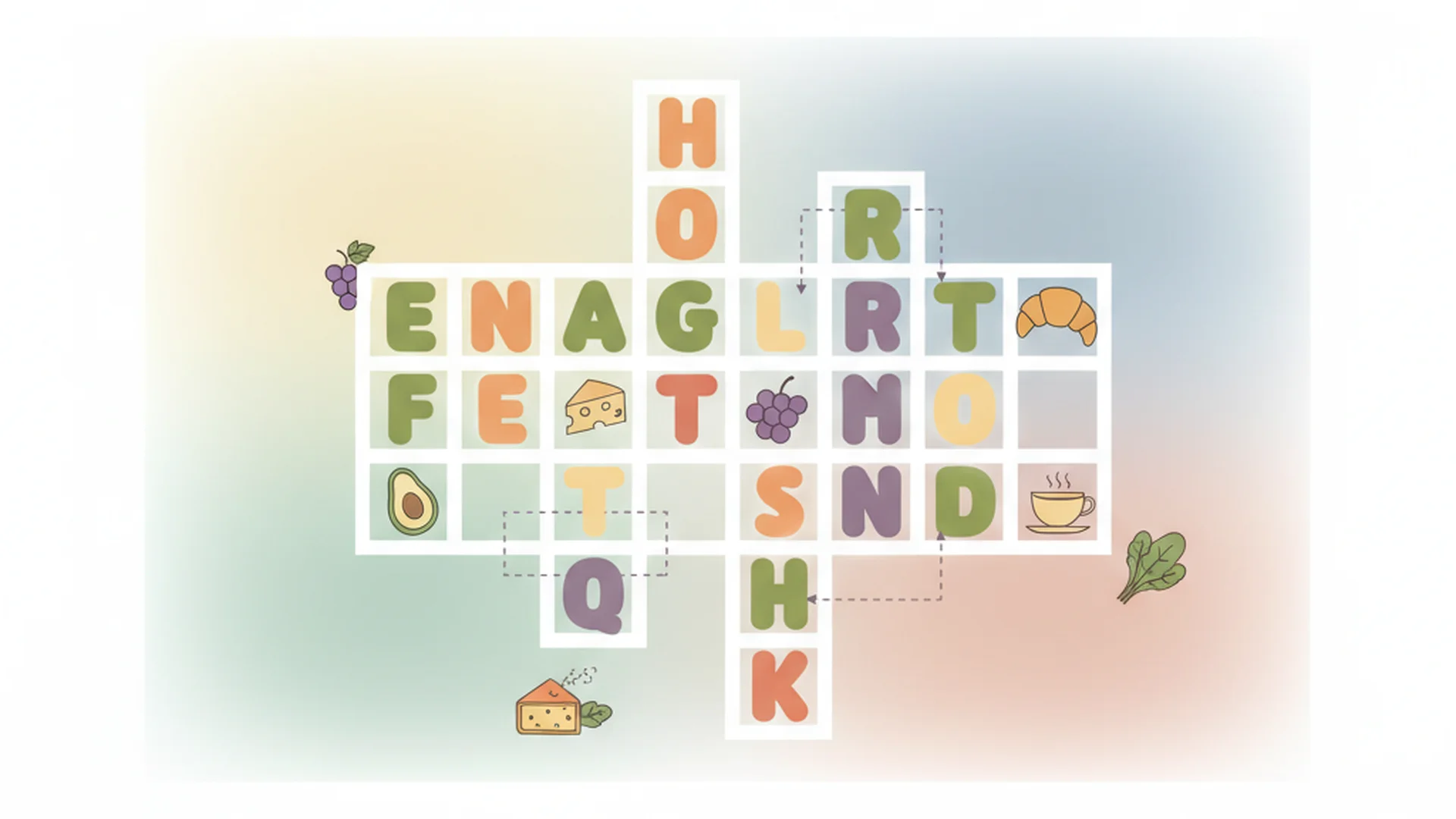
The world is currently experiencing a "Puzzle Renaissance." In an era dominated by rapid-fire digital content, the humble food word search has emerged as a powerhouse of cognitive restoration and culinary education. Whether you are a foodie looking to sharpen your ingredient knowledge or a student exploring a cooking word search for class, these puzzles offer a unique intersection of relaxation and mental stimulation.
The brain responds in interesting ways to structured visual patterns. A word search isn't just "busy work"; it is a sophisticated exercise in pattern recognition and linguistic retrieval. In 2025, the genre has evolved far beyond the back of cereal boxes, integrating into digital ecosystems that reach billions of players globally.
The Science of Searching: Why Food Puzzles Matter
Searching for terms like "Pizza," "Quinoa," or "Chipotle" does more than stimulate your appetite. According to a 2023 study, word searches are scientifically proven to support spelling, word recognition, and reading comprehension. From a neurological perspective, solving a food word search engages three critical areas of the brain simultaneously:
- The Occipital Lobe: Responsible for visual processing, this area works overtime to distinguish the letters from the "noise" of the grid.
- The Temporal Lobe: This region handles language and memory, allowing you to hold the target word in your mind while you scan.
- The Prefrontal Cortex: The brain's "executive," which manages strategy, such as deciding whether to scan horizontally or vertically.
For younger learners, Educational Word Searches are essential tools in 1st–3rd grade curricula. They provide a low-stakes environment to master complex culinary terms, making them a staple in modern vocabulary building.
2025–2026 Trends: Cabbage-Core and "Swicy" Snacks
The vocabulary of food is never static. In the current 2025 landscape, word search themes have shifted to reflect the latest cultural dietary trends. We have seen a massive rise in "Cabbage-core," with the term "Cabbage" experiencing a 110% search increase on social platforms. Consequently, modern puzzles are now packed with high-fiber ingredients like "Konjac," "Lentils," and "Kimchi."
Another dominant trend is the "Swicy" movement—the fusion of Sweet and Spicy. Puzzles today frequently feature keywords like "Hot Honey," "Chili-Maple," and "Tajin."
The Rise of AI and Gamification
The digital evolution of the Free Word Search Online has reached new heights. In 2025, AI is being utilized to create "adaptive puzzles." These systems track how quickly you find the first few words and adjust the difficulty of the remaining hidden terms in real-time.
Furthermore, we are seeing "Restaurant Building" mechanics integrated into word games. In these apps, solving a cooking word search earns you virtual ingredients that you can use to "cook" dishes and upgrade a digital café. This gamification makes the learning process even more addictive and rewarding.
| 2025 Food Trend | Keywords to Look For | Popularity Growth |
|---|---|---|
| Cabbage-Core | Sauerkraut, Slaw | 110% |
| Swicy | Sriracha, Agave | 85% |
| Fibermaxxing | Chia, Barley | 65% |
Advertisement
The Ultimate Guide to Solving Food Puzzles Faster
If you want to beat the clock or compete on digital leaderboards, you need more than just a sharp eye. Advanced solvers use specific cognitive strategies to navigate the grid.
Expert Techniques for Efficiency
- Row Scanning: Instead of wandering aimlessly, look at one row at a time. Scan specifically for the first letter of your target word.
- Unique Letter Hunting: Search for "uncommon" letters like Q, X, Z, or J. In a grid filled with common letters like E, T, and A, these stand out like a bright neon sign.
- The Perimeter First Strategy: Many puzzle creators hide words along the edges (the "fence") to make the center look more crowded. Check the four outer edges first for quick wins.
- The "Finger Trace" Method: Use your non-dominant hand to track the word list while your dominant hand (or cursor) scans the grid. This prevents the "mental skip" where you forget which word you were looking for.
DIY Corner: How to Create Your Own Food Word Search
Creating a puzzle can be just as rewarding as solving one. However, it requires a balance of artistry and logic to ensure the experience is challenging but fair.
Maintain Thematic Consistency
A professional-grade puzzle should have a tight sub-niche. Instead of a generic "Food" theme, try "Italian Herbs," "Street Tacos," or "Molecular Gastronomy." This keeps the player focused and provides a better sense of accomplishment.
The Grid Balance Rule
For a standard 15x15 grid, aim for 10–20 words. Ensure you have a mix of lengths:
- Short words (3–4 letters): These are surprisingly hard to find because they blend into the filler.
- Long words (8+ letters): These provide the "anchor" for the puzzle and are satisfying to cross off.
Common Mistakes to Avoid
Even seasoned puzzle creators and solvers fall into certain traps. Understanding these can elevate your game and your creations.
The "Accidental Profanity" Trap
This is a famous pitfall in the puzzle industry, notably the "Woolworth's debacle," where a children's activity book was published with unintended offensive words hidden in the random filler letters. If you are creating a puzzle, always scan your final grid against a "banned words" list before sharing it.
Over-Reliance on Backwards Words
While Backwards Words in Word Searches add difficulty, they should never make up more than 25% of the total word list. Any more than that, and the puzzle becomes a chore rather than a fun challenge.
The "Busy Work" Misconception
Many people dismiss word searches as mindless activity. However, as we've discussed, the Cognitive Benefits are vast. They require active scanning, linguistic retrieval, and spatial reasoning. They are a legitimate form of "brain training" that can improve your focus in other areas of life.
Advertisement
Frequently Asked Questions
How can I find words faster in a food word search?
The most effective method is "unique letter scanning." Focus on letters that occur less frequently in the English language, such as K, V, or Y. In a food-themed puzzle, look for the 'Z' in "Pizza" or the 'X' in "Flax" first.
Are word searches actually good for your brain?
Yes. Research indicates that they stimulate the occipital and temporal lobes, help reduce stress by lowering cortisol, and improve overall vocabulary and spelling skills. They are frequently used in therapy for patients with early-stage cognitive decline.
What are the "official" rules for hidden words?
Words can be hidden horizontally, vertically, or diagonally. They can be written forward or backward. A high-quality puzzle ensures that words interlink (share letters) but are never entirely contained within another word (e.g., finding "Ham" inside "Hamburger" is generally considered poor design).
Why are food-themed word searches so popular in 2025?
Food is a universal language. With the rise of "foodie" culture and social media trends like "cabbage-core," people enjoy engaging with vocabulary that relates to their daily lives and interests.
Conclusion
The food word search is a timeless classic that continues to adapt to our modern world. From its humble beginnings in 1968 to the AI-driven, "swicy" puzzles of 2025, it remains a premier tool for both entertainment and brain health. Whether you are solving on paper or on a screen, you are giving your brain a much-needed workout while expanding your culinary horizons.
Next time you find "Avocado" or "Zucchini" hidden in a sea of letters, remember that you aren't just playing a game—you are sharpening your mind.
Ready to Play?
Challenge your brain with our latest culinary puzzles today.
Put it into practice

Keep reading
Word Search
Mastering Language: The Ultimate Guide to Vocabulary Word Search Puzzles
Discover how a vocabulary word search can boost memory by 10% and improve IQ. Explore 2025 trends, AI puzzles, and strategies to learn words effectively.
Jan 6, 2025 12 min
Word Search
Mastering the History Word Search: From Ancient Empires to Modern AI
Discover the evolution and educational power of the history word search. Learn how retrieval practice, AI, and gamification are transforming historical learning.
Jul 20, 2026 10 min

Word Search
Mastering Word Search Speed: Professional Techniques for Fast Solving
Boost your word search speed with expert strategies. Learn rare letter hunting, the Boustrophedon scan, and peripheral vision tricks from a professional constructor.
Nov 10, 2025 12 min
Advertisement