Mastering Substitute Teacher Activities: The Ultimate Guide to Sub Lesson Puzzles
Explore effective substitute teacher activities and puzzles to maintain classroom order and engagement. Learn about 2025 trends, digital tools, and best practices.
By Free To Play Puzzles Editorial Team 10 min read
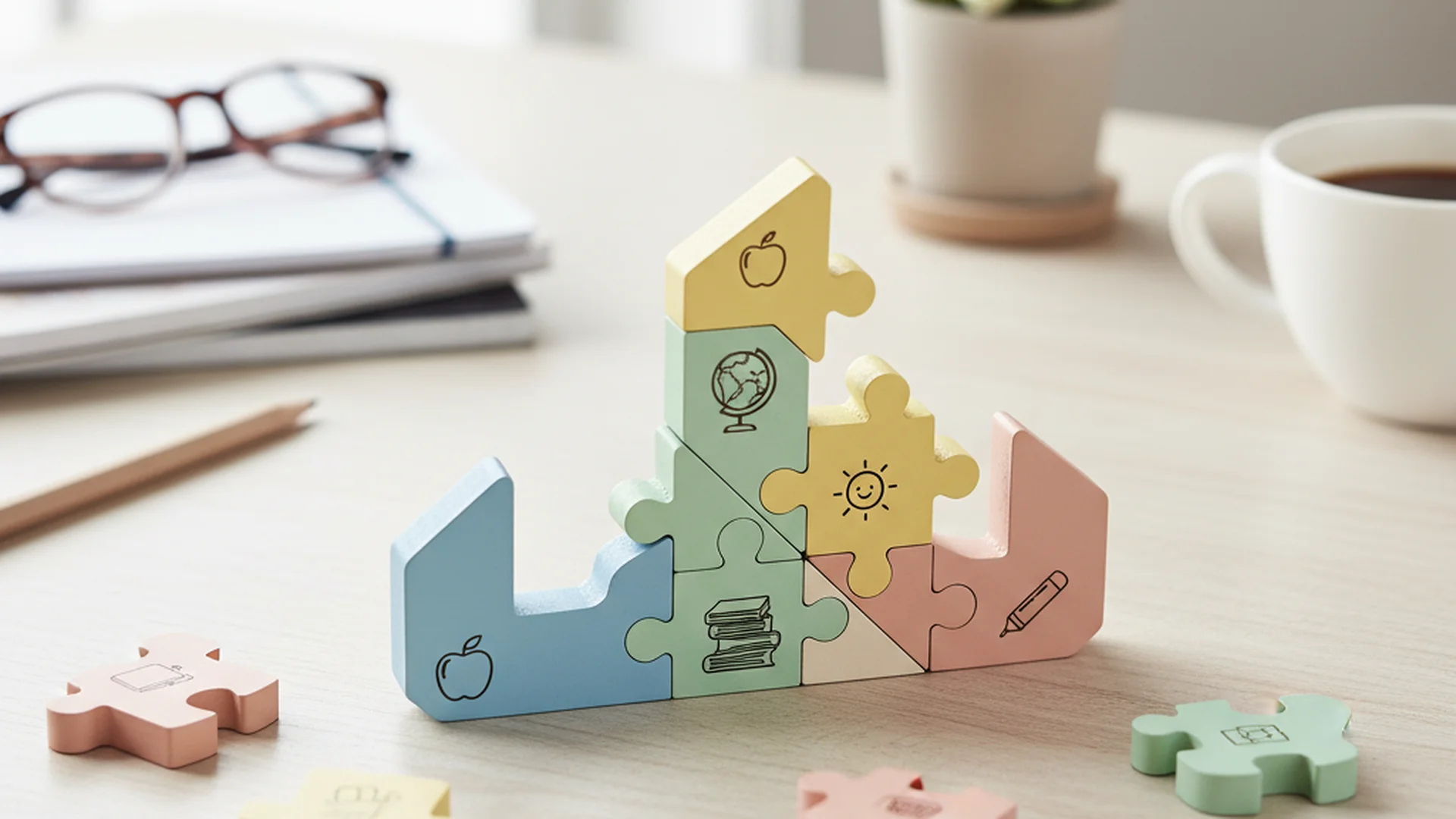
Walking into a new classroom as a substitute teacher can feel like stepping onto a stage without a script. Whether the primary teacher left a detailed binder or absolutely nothing at all, the success of your day often hinges on how you manage the "gaps." These gaps—the ten minutes before lunch, the early finishers during a quiz, or the hour-long void when a lesson plan falls through—are where high-quality substitute teacher activities save the day.
In the 2025-2026 academic landscape, the standard for these activities has evolved. No longer is "busy work" acceptable. Modern sub lesson puzzles are now designed to be curriculum-aligned, high-engagement tools that reinforce logic, spatial reasoning, and vocabulary. A well-placed Sudoku or a Word Search can transform a restless classroom into a focused environment.
The Power of Puzzles in the Modern Classroom
Research in 2025 continues to support the idea that gamified learning is a powerhouse for education. Data suggests that students are six times more likely to retain information when it is presented through interactive activities rather than passive reading. This is particularly crucial for a substitute teacher, who may not have the established rapport to command attention through a lecture alone.
Furthermore, studies from organizations like Swing Education estimate that up to 20% of a school day can be lost to transitions or early finishes. When you utilize puzzles, you aren't just "filling time"—you are recapturing lost learning opportunities. For substitutes, having a dedicated Puzzles for Teachers Guide is essential for maintaining order.
Why Logic and Spatial Puzzles Work
Logic puzzles, such as Logic Puzzles or Tangram challenges, engage the brain's problem-solving centers. This mental engagement serves as an "anchor," preventing the disruption that usually occurs when students have "nothing to do." By providing a challenging task, you transition the student from a state of potential boredom to a state of flow.
Top Strategies for Using Sub Lesson Puzzles
To ensure your activities are effective rather than distracting, veterans follow a specific set of "golden rules." These strategies ensure that the puzzles enhance the day rather than creating more work for you or the permanent teacher.
1. The "Self-Explaining" Rule
The most effective sub lesson puzzles require zero explanation from the teacher. If you have to spend ten minutes teaching the rules of a complex game, you have lost the engagement window. Choose activities that are intuitive or have clear, one-sentence instructions.
2. Tiered Difficulty: Mild, Medium, and Spicy
In any classroom, you will have a wide range of academic abilities. Providing a single puzzle often results in one-third of the class finishing in minutes and another third giving up in frustration.
- Mild: Basic Word Ladder or simple math grids.
- Medium: Standard crosswords or Minesweeper style logic.
- Spicy: Advanced Nonogram puzzles or complex lateral thinking riddles.
3. Provide the Answer Key
This is the single most important recommendation from the field. Whether you are using digital tools or paper handouts, an answer key allows you to provide immediate feedback. Immediate feedback is a core component of Puzzle Assessment Students, helping them learn from mistakes in real-time.
| Activity Type | Best Grade Level | Learning Goal |
|---|---|---|
| Color by Code | Elementary (K-5) | Math Fluency / Fine Motor |
| Digital Escape Rooms | Middle School (6-8) | Collaboration / Problem Solving |
| Create-Your-Own Crossword | High School (9-12) | Vocabulary Retrieval |
| Logic Grids | All Levels | Critical Thinking |
Advertisement
Real-World Examples of Substitute Teacher Activities
Example 1: The Emergency "No-Plan" Grid
Imagine you arrive and there are no instructions. A veteran substitute will quickly write a 5x5 grid on the board for a game of "Word Smith." Students must use a specific set of letters to find as many curriculum-related words as possible. This requires zero materials and keeps the class quiet and competitive.
Example 2: The "Color by Code" Strategy
For elementary students, "Color by Code" math sheets are a lifesaver. These activities combine basic arithmetic with a tactile coloring task. The repetitive nature of coloring has a calming effect on the classroom, making it an excellent tool for the "post-recess" transition.
Example 3: High School "Create Your Own"
Older students often resist simple puzzles. Instead, challenge them to create a crossword for a partner based on their current unit of study (e.g., Biology terms or History dates). This forces them to engage deeply with the material while creating a peer-to-peer Puzzle Lesson Plans experience.
2025-2026 Trends in Educational Puzzles
The landscape of substitute teacher activities is shifting rapidly due to the growth of the EdTech market, which is projected to reach over $348 billion by 2030.
AI-Generated Adaptive Puzzles
New platforms now allow substitutes to input a list of vocabulary words, and an AI instantly generates a logic puzzle that adjusts its difficulty level based on student performance. If a student solves a clue quickly, the next one becomes slightly more challenging.
Immersive Tech and VR
Virtual Reality in education is expected to be a $700 million market by 2025. Substitutes are increasingly using "virtual escape rooms" as high-engagement rewards. These browser-based activities require students to solve a series of curriculum-linked puzzles to "unlock" a final digital prize, all while staying within a safe, monitored digital environment.
Microlearning (The 2-Minute Puzzle)
Also known as "nanolearning," these are short, high-intensity puzzles designed to fill tiny gaps, such as the three minutes between finishing a lesson and the lunch bell. A quick session of 10 Minute Puzzle Games can be adapted into a 2-minute "sprint."
Common Mistakes to Avoid
- Underestimating Pacing: A puzzle you think will take 30 minutes often takes a group of tech-savvy students only 10. Always have a "back-up to the back-up."
- Forgetting Accessibility: Ensure your puzzles are legible. Use high-contrast designs and larger fonts to be inclusive of all students.
- Treating Puzzles as "Just for Fun": Don't be afraid to defend the use of puzzles. They build core STEM skills like spatial reasoning and logic. Using Critical Thinking Puzzles is a legitimate pedagogical strategy.
Advertisement
Frequently Asked Questions
Are puzzles just busy work for students?
No. When puzzles are aligned with the curriculum—such as vocabulary-based crosswords or math logic puzzles—they reinforce "fluency," which is the ability to recall facts quickly and accurately. They transition students from passive observers to active problem solvers.
What should I do if the teacher left no sub plans?
In an emergency, rely on your "Bag of Tricks." This should include versatile activities like logic puzzles, Hangman, or "Color by Code" math sheets. You can also use board-based games that require no paper, such as "Word Ladders."
How do I manage classroom behavior using puzzles?
Puzzles serve as "anchors." By giving early finishers a challenging puzzle, you provide them with a productive task that prevents them from disrupting peers who are still working. They are excellent tools for managing the natural variance in student working speeds.
Can puzzles be used for older high school students?
Absolutely. For older students, focus on "Create Your Own" activities or complex logic grids. High schoolers often enjoy the competitive aspect of digital escape rooms or advanced Sudoku tournaments within the classroom.
Conclusion
Substitute teaching is a challenging but rewarding role that requires flexibility and a deep toolkit of strategies. By integrating substitute teacher activities that focus on logic, curriculum reinforcement, and engagement, you ensure that every minute of the school day is used effectively. Whether you are using a quick Word Search or an elaborate digital escape room, the goal remains the same: keeping students learning, even when their regular teacher is away.
Looking for more ideas?
Explore our full library of classroom-ready games and logic challenges.
Put it into practice

Keep reading
Education
The Ultimate Guide to Puzzle Lesson Plans: Boosting Engagement and Logic
Discover how to integrate puzzle lesson plans into your classroom. Learn research-backed strategies, 2025 trends, and expert tips for teaching with puzzles.
Jul 26, 2026 12 min
Education
Mastering the Classroom: The Ultimate Puzzles for Teachers Guide
Explore how puzzles for teachers transform active learning. Discover classroom puzzle activities, AI integration, and cognitive strategies for the 2025-2026 school year.
Apr 28, 2026 12 min
Education
Mastering Math Skills Through Puzzles: A Guide for 2025 and Beyond
Discover how math puzzles learning outperforms traditional methods. Learn expert strategies, research-backed benefits, and 2025 trends for students and educators.
Aug 17, 2026 12 min
Advertisement