Vocabulary Through Puzzles: The Science of Engaging Word Learning
Discover how vocabulary puzzles learning boosts retention by up to 68%. Explore expert strategies, 2025 trends, and cognitive benefits.
By Free To Play Puzzles Editorial Team 12 min read
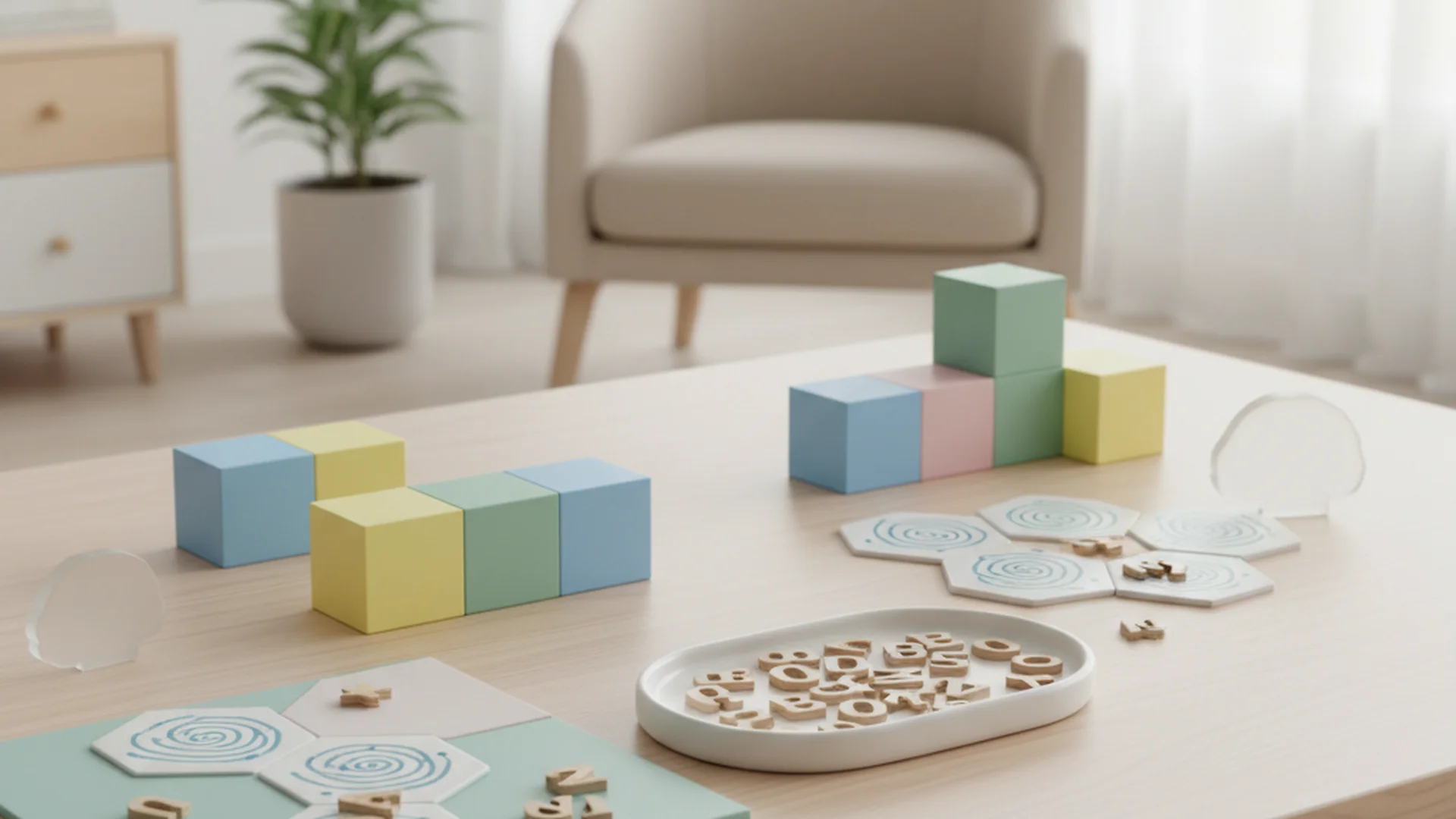
In the field of cognitive neuroscience, we often look for the "sweet spot" of learning—the moment where the brain is sufficiently challenged but remains deeply engaged. For decades, rote memorization was the standard for language acquisition, yet it remains one of the least efficient ways to build a lexicon. Today, we understand that vocabulary puzzles learning represents a far more effective paradigm. By transforming static word lists into dynamic challenges, we tap into the brain's natural affinity for pattern recognition and problem-solving.
As we move through 2025, the data is undeniable: puzzles are no longer just leisure activities; they are high-impact cognitive tools. Whether you are a student trying to [learn words puzzles] style or an educator looking for new ways of teaching with puzzles, the integration of play and linguistics is the key to modern mastery.
The Neurological Impact of Word Puzzles
Why does the brain respond so much better to a crossword than a flashcard? The answer lies in the "form-meaning relationship" processing. When you solve a puzzle, you aren't just looking at a word; you are analyzing its length, its intersecting letters, its definition, and its context. This multi-layered processing engages more neural pathways than simple reading.
According to research published in ResearchGate (August 2025), this active engagement leads to a 58% to 68% improvement in long-term retention. When the brain "struggles" to find a word that fits a specific set of constraints, it releases dopamine upon success. This chemical reward reinforces the memory, making the word much "stickier" than if it were simply read from a list.
Comparing Puzzle Types for Maximum Efficacy
Not all puzzles serve the same educational purpose. To optimize your learning, it is essential to understand which tool to use for specific goals. For instance, if you are focusing on foreign language puzzles, your needs might differ from someone studying for a medical board exam.
| Puzzle Type | Primary Cognitive Benefit | Best For |
|---|---|---|
| Crosswords | Definition Mastery & Logic | Deep conceptual linking and synonyms |
| Word Search | Pattern Recognition & Spelling | Early-stage word familiarity and visual scanning |
| Word Scramble | Orthographic Awareness | Understanding letter frequency and spelling patterns |
| Word Ladder | Morphological Flexibility | Learning how small changes alter word meaning |
The "Wordle Effect" and Global Engagement
As of late 2025, the "Wordle Effect" has transformed from a viral trend into a global standard for daily cognitive maintenance. With over 10 million regular players, the social aspect of solving the same daily puzzle fosters a community of learning. This global engagement results in an estimated 4.8 billion word puzzles being solved annually. This scale of data allows scientists to see exactly how humans process linguistic patterns in real-time.
Advertisement
Professional Strategies for Educators and Learners
To move beyond the casual solve and into true linguistic mastery, we must apply structured methodologies. Here are the top recommendations from the current cognitive science landscape:
The "Student-Creator" Model
One of the most powerful shifts in 2025 pedagogy is moving the learner from the "solver" to the "architect." When students build their own puzzles, they must engage in metacognition. They have to think about the word's meaning, find an appropriate clue that isn't too easy or too hard, and ensure the word fits into a grid. This process requires a much higher level of cognitive load and results in near-perfect retention of the words used.
The Context Rule
Puzzles should never exist in a vacuum. A puzzle about "random words" is far less effective than a themed puzzle. For example, if you are reading a specific novel, a crossword focusing on "Chapters 1-6 Review" provides the brain with a framework of reference. This contextual anchoring is what separates a "time-filler" from a legitimate educational intervention.
Spaced Repetition in Puzzle Form
Don’t use a puzzle once and discard the concept. To truly [learn words puzzles] style, you should reintroduce the same word set in different formats over time.
- Monday: Use a Word Search to introduce the visual form of the words.
- Wednesday: Use a Word Scramble to reinforce spelling.
- Friday: Use a Crossword to test definition and usage.
The Future of Word Puzzles (2025-2026)
We are currently witnessing a technological revolution in how puzzles are delivered. No longer confined to the back of a newspaper, vocabulary puzzles are becoming immersive experiences.
AI-Generated Adaptive Difficulty
New 2025 platforms now utilize AI to monitor your solving speed. If the system detects you are solving a crossword in record time, it will dynamically update the remaining clues to use more advanced synonyms or complex cryptic clues. This ensures the "Flow State"—the balance between challenge and skill—is always maintained.
AR/VR Immersive "Escape Rooms"
One of the most exciting trends for 2026 is the immersive word puzzle. Imagine wearing a VR headset and being placed in a digital library. To unlock the door, you must find "hidden" words in the environment and arrange them into a logic puzzle on the wall. This engages kinesthetic learners and adds a spatial memory component to vocabulary acquisition.
Common Mistakes to Avoid
While puzzles are powerful, they are often misused. Avoid these "learning traps" to ensure your time is well-spent:
- Relying on Word Searches Alone: While great for pattern recognition, word searches are "passive." If you don't have to think about the word's meaning, you aren't truly learning the vocabulary. Always pair word searches with a task that requires using the word in a sentence.
- The "Memorization Equals Mastery" Myth: Just because a student can find the word "Ubiquitous" in a grid doesn't mean they can use it correctly in a professional email. Puzzles are a bridge, not the final destination.
- Ignoring the Difficulty Curve: If a puzzle is too hard, the learner becomes frustrated and shuts down (cortisol spike). If it's too easy, they go on autopilot. Finding the "Goldilocks" zone of difficulty is essential for neural growth.
Advertisement
Frequently Asked Questions
Can I use AI to generate custom vocabulary puzzles?
Yes. As of 2025, tools like Puzzel.org and Worksheetzone offer "Translation AI" and "Context-Based AI." These allow you to upload a PDF or a list of terms, and the AI will generate themed crosswords or word searches with contextually accurate clues in seconds.
Are word searches as effective as crosswords?
It depends on your goal. Word searches are superior for pattern recognition and spelling, making them excellent for younger learners or those starting a new language. Crosswords are better for definition mastery and conceptual linking because they force the brain to retrieve meaning from a clue.
How do I make vocabulary puzzles more challenging for advanced learners?
Instead of providing a word list, provide clues that are synonyms, antonyms, or "fill-in-the-blank" sentences. You can also use "cryptic" clues that require lateral thinking or puns to solve, forcing the learner to engage in deeper cognitive retrieval.
Is there a benefit to solving puzzles in teams?
Absolutely. Collaborative solving encourages "meaningful dialogue." When two people work on a puzzle, they must explain their reasoning and define words for one another. This social interaction utilizes the "Protégé Effect," where teaching or explaining a concept to others leads to better personal understanding.
Conclusion
The evolution of vocabulary puzzles learning has proven that the most effective way to grow our minds is through the marriage of challenge and play. From the 83% improvement in student scores to the neurological retention spikes discovered in 2025, the evidence is clear: puzzles are an essential pillar of modern education. By moving from passive reading to active solving—and eventually to creating—we unlock a level of linguistic mastery that rote memorization simply cannot match.
Whether you are navigating an AR escape room or solving a classic crossword over morning coffee, remember that every solved clue is a new neural connection being forged.
Ready to Start?
Enhance your vocabulary and cognitive health today with our interactive challenges.
Put it into practice

Keep reading
Education
Screen Time and Puzzles: Navigating the Digital vs. Paper Learning Divide
Explore the impact of screen time puzzles on cognitive development. Learn the differences between digital and paper puzzles for kids and seniors in 2025.
Aug 26, 2026 12 min
Education
Mastering Math Skills Through Puzzles: A Guide for 2025 and Beyond
Discover how math puzzles learning outperforms traditional methods. Learn expert strategies, research-backed benefits, and 2025 trends for students and educators.
Aug 17, 2026 12 min
Education
Puzzle Assessment: Measuring Student Progress Through Play-Based Learning
Discover how puzzle assessment is revolutionizing the classroom in 2025. Learn to measure cognitive growth using stealth assessment and strategic data-driven tools.
May 28, 2026 10 min
Advertisement