Puzzle Assessment: Measuring Student Progress Through Play-Based Learning
Discover how puzzle assessment is revolutionizing the classroom in 2025. Learn to measure cognitive growth using stealth assessment and strategic data-driven tools.
By Free To Play Puzzles Editorial Team 10 min read
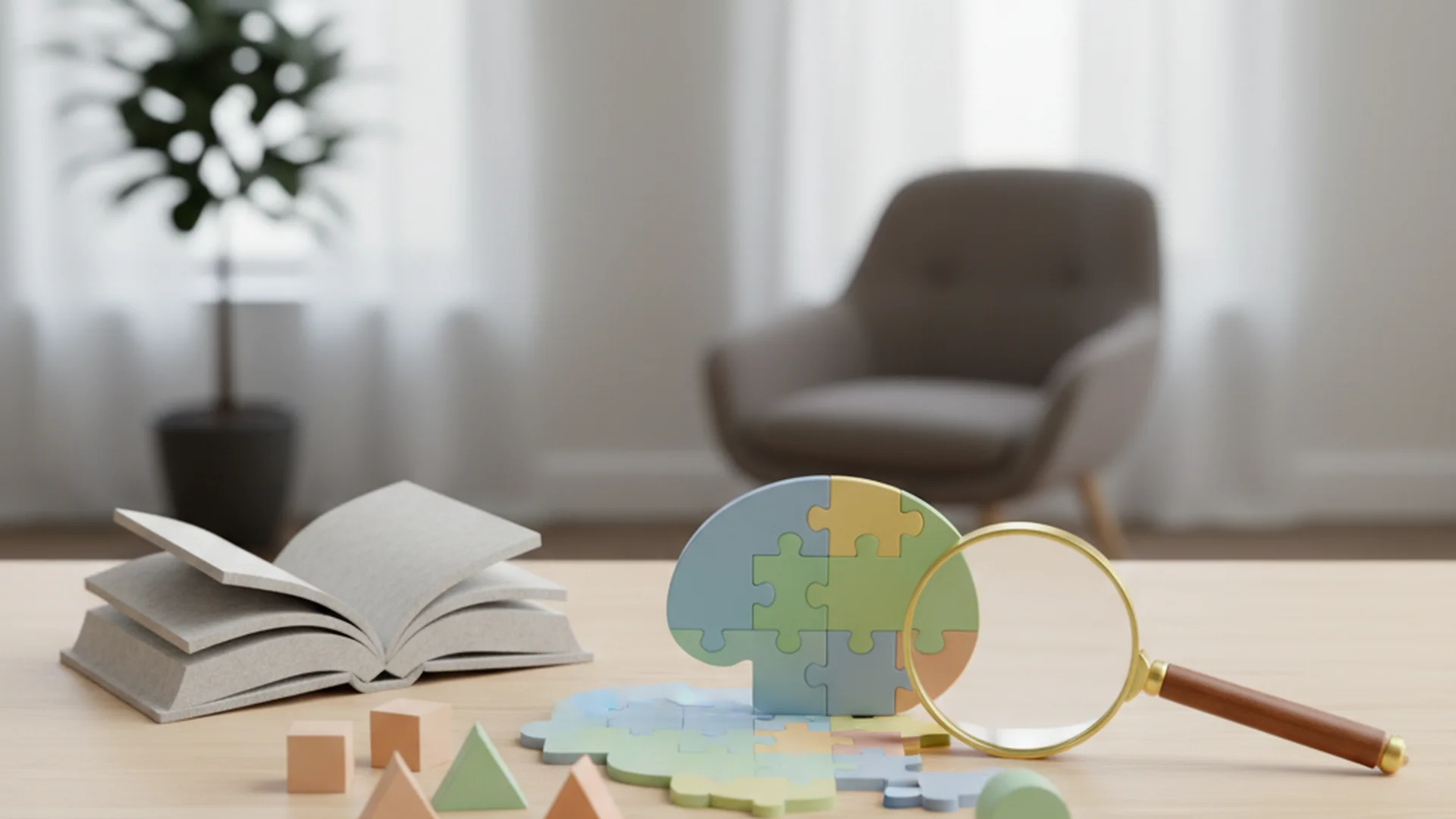
In the modern classroom, the traditional desk-and-paper exam is facing a quiet revolution. As an educator or administrator, you are likely looking for ways to gauge student ability without the crushing weight of high-stakes testing. This is where puzzle assessment enters the frame. Far from being a simple filler activity for early finishers, puzzles have evolved into sophisticated diagnostic tools. By observing how a student interacts with a complex problem, we can gain deep insights into their logic, spatial reasoning, and resilience—often without the student even realizing they are being tested.
The Science of Puzzle Assessment in 2025
Evaluating students through puzzle-based assessments has shifted from a subjective observation to a data-driven science. In the 2025–2026 academic year, the focus has moved toward "stealth assessment." This methodology involves measuring cognitive growth in a natural play state, effectively removing the "test anxiety" that often skews results in traditional settings.
Research conducted over the past year shows that students taught using puzzle-based learning scored an average of 78.9% in mathematics, compared to just 55.5% for those taught via traditional lectures. This gap suggests that the cognitive engagement required for Critical Thinking Puzzles translates directly to academic performance.
Cognitive Scaling and Working Memory
One of the most validated metrics in modern assessment is the shift from a 25-piece to a 64-piece puzzle. While it sounds like a simple increase in quantity, it represents a massive leap in cognitive scaling.
- 25 Pieces: Can often be solved through "brute-force" trial and error.
- 64 Pieces: Requires a transition to strategic planning, such as edge-sorting or color-grouping.
When a student successfully navigates this transition, they are demonstrating an increased working memory capacity and the ability to apply hierarchical logic.
Measuring Puzzle Progress: Efficiency Over Speed
A common misconception in the classroom is that the fastest student is the smartest. When measuring puzzle progress, experts now prioritize efficiency and strategy over raw speed.
If Student A completes a puzzle in five minutes by frantically trying every piece in every hole, and Student B takes seven minutes but sorts all edges first and groups by pattern, Student B is demonstrating higher-level cognitive development.
Key Metrics for Tracking Development
| Metric | Traditional View | Modern Assessment View |
|---|---|---|
| Time-to-completion | Primary Indicator | Secondary Context |
| Move Efficiency | Rarely Tracked | Primary Indicator of Logic |
| Strategy Selection | Subjective | Objective Data Point |
| Frustration Threshold | Ignored | Key Social-Emotional Data |
Advertisement
Implementing Stealth Assessment in the Classroom
To get the most out of Puzzles in Classroom settings, teachers are encouraged to use "Time-Sampling" techniques. Instead of hovering, which can induce stress, check in at the 5, 10, and 15-minute marks. Note whether the child is still engaged, if they have pivoted their strategy, or if they have entered a "Flow State."
Real-World Example: The "Seed Growth" Rubric
For younger learners, a visual rubric can make the assessment feel like a game.
- The Seed: The student is trial-and-error oriented, fitting pieces by luck.
- The Sprout: The student identifies corner pieces and major color blocks.
- The Plant: The student uses edge-logic and systematically works from the outside in.
- The Flower: The student can mentor others and explain why a specific piece fits based on pattern continuity.
2025–2026 Trends: The High-Tech Future of Puzzles
The landscape of Teaching with Puzzles is changing rapidly due to emerging technologies.
AI-Generated Adaptive Puzzles
New platforms now use AI to adjust puzzle difficulty in real-time. If a student solves a pattern too quickly, the AI introduces "distractor pieces" or complex textures. This ensures the student stays in the "Zone of Proximal Development," where the challenge is perfectly balanced with their skill level.
Smart Puzzles and IoT
Physical puzzles are now being embedded with sensors. These "Smart Puzzles" sync with teacher dashboards to track "time-to-fit" and "error rates" automatically. This allows for objective data collection while the student enjoys the tactile benefits of physical play.
AR/VR Integration
Augmented Reality is being used to bridge the gap between abstract puzzles and real-world application. Once a student completes a 3D geometry puzzle, an AR overlay might show how that specific shape is used to reinforce a bridge or a skyscraper, reinforcing the practical utility of their logic skills.
Common Mistakes to Avoid
Even the most well-intentioned puzzle assessment can fail if the focus is misplaced. Here are the most frequent pitfalls educators encounter:
- The "Final Result" Trap: Assessing only the finished product. A completed puzzle tells you nothing about the struggle or the strategy. The data lives in the process.
- Confusing Mistakes with Misconceptions: A mistake is a lapse in concentration (dropping a piece). A misconception is a deep-seated logic error (trying to force a square piece into a round hole because the colors match).
- Over-reliance on Piece Count: A 100-piece puzzle with high-contrast colors is often easier than a 50-piece puzzle with a repetitive, monochromatic pattern. Always consider the visual complexity.
- Neglecting Social-Emotional Data: Puzzles are a prime time to measure frustration tolerance. If a student gives up the moment a piece doesn't fit, that is a critical data point for their Individualized Education Program (IEP).
Advertisement
Frequently Asked Questions
Is speed the best metric for puzzle progress?
No. While speed (time-to-completion) is easily measured, efficiency (number of moves) and strategy selection (sorting by edges vs. patterns) are much better indicators of long-term cognitive development and mastery.
How do puzzles help with IEP (Individualized Education Program) data?
Puzzles provide "objective proof" of progress in domains like sustained attention (stamina) and fine motor control. Because these activities are standardized, they allow for a clear comparison of a student's performance over several months.
Are digital puzzles as effective as physical ones?
Digital puzzles are excellent for data collection and click-stream analytics. However, physical puzzles provide tangibility and 3D spatial awareness that digital screens cannot yet replicate. A balanced classroom should use both.
Can puzzles help with specific subjects like Math or Science?
Absolutely. Research indicates that puzzle-based strategies increase knowledge retention by up to 20% in abstract subjects. For example, using Math Skills Through Puzzles can help students visualize numerical relationships more effectively than rote memorization.
Conclusion
The shift toward puzzle assessment represents a more humane and accurate way of measuring student potential. By moving away from the "Final Result Trap" and focusing on the strategic journey a student takes, we can identify cognitive strengths that traditional tests often miss. Whether you are using high-tech AR overlays or classic wooden jigsaws, the goal remains the same: to understand the logic of the learner.
By incorporating these "stealth assessment" techniques, you are not just grading a student—you are mapping their mind. This leads to better retention, higher achievement, and a classroom environment where every piece eventually finds its place.
Explore More Tools
Discover how to integrate logic games into your daily curriculum.
Put it into practice
Keep reading
Education
The Future of Evaluation: Why Puzzle Assessment Tools are the New Standard
Explore how puzzle assessment tools are revolutionizing hiring and education. Learn about AI-driven cognitive testing, neuro-inclusivity, and leading platforms for 2025.
Apr 18, 2026 12 min
Education
Mastering Math Skills Through Puzzles: A Guide for 2025 and Beyond
Discover how math puzzles learning outperforms traditional methods. Learn expert strategies, research-backed benefits, and 2025 trends for students and educators.
Aug 17, 2026 12 min
Education
The Ultimate Guide to Puzzle Lesson Plans: Boosting Engagement and Logic
Discover how to integrate puzzle lesson plans into your classroom. Learn research-backed strategies, 2025 trends, and expert tips for teaching with puzzles.
Jul 26, 2026 12 min
Advertisement