Puzzles in the Classroom: A Teacher’s Implementation Guide for 2025 and Beyond
Unlock student potential with our comprehensive teacher puzzle guide. Learn how to implement puzzles in the classroom to boost dopamine, memory, and focus.
By Free To Play Puzzles Editorial Team 12 min read
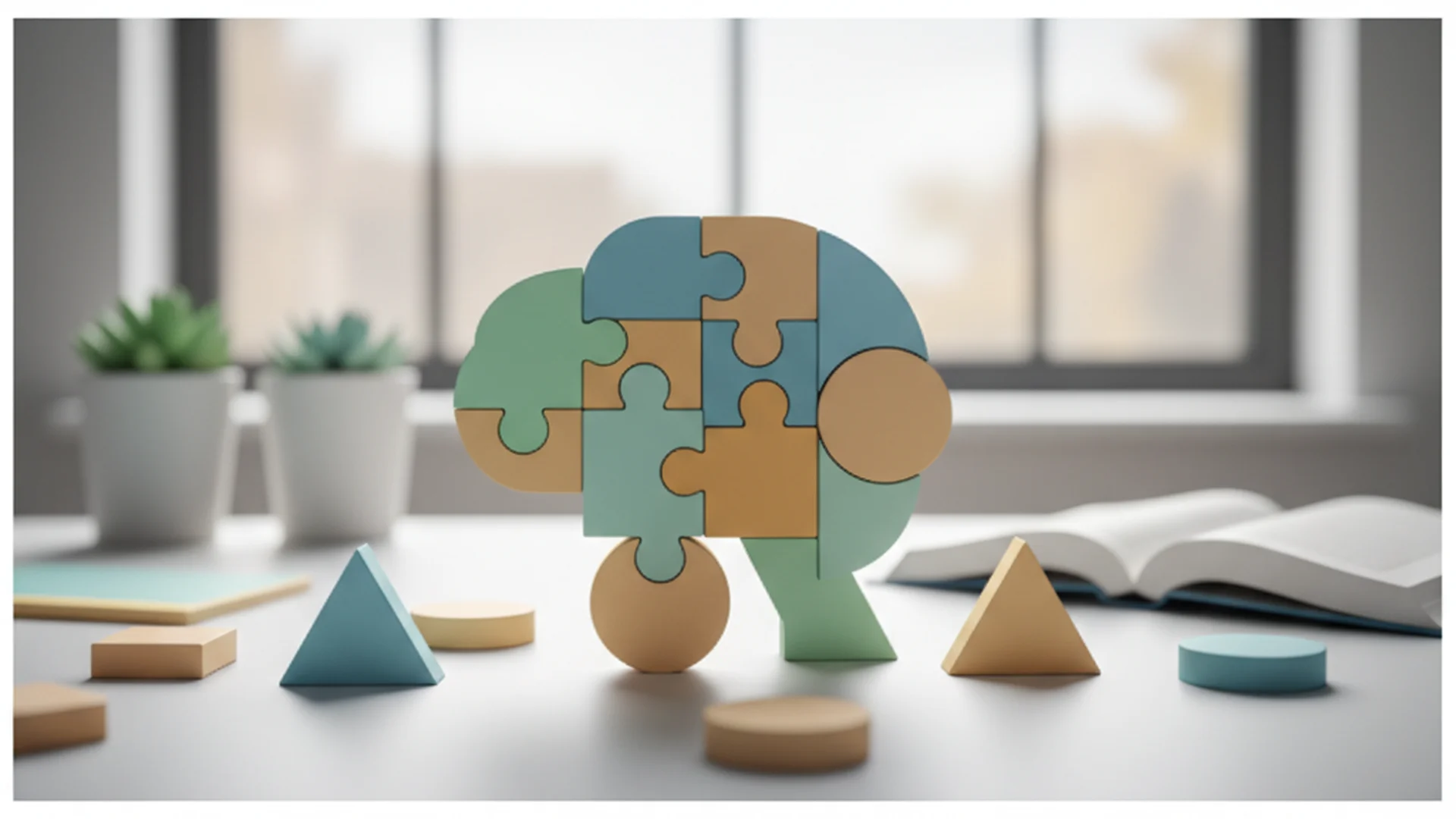
In the modern educational landscape of 2025 and 2026, the humble jigsaw or logic grid is no longer relegated to the "indoor recess" bin. What we are seeing now is a pedagogical shift: the strategic use of puzzles classroom environments is becoming a cornerstone for social-emotional learning (SEL) and curriculum reinforcement.
Integrating a teacher puzzle guide into your daily routine is not just about keeping students quiet; it is about priming the brain for deep learning. When a student engages with a puzzle, they aren't just matching shapes or words—they are building neural pathways, releasing essential neurotransmitters, and developing the "stamina for struggle" required for modern academic success.
The Science of the "Puzzle Brain"
From a neuroscientific perspective, puzzles are one of the most effective tools for cognitive priming. When a student solves a puzzle, the brain's reward system releases dopamine. This neurotransmitter is responsible for regulating mood, memory, and—most importantly for educators—concentration.
This creates what we call a "positive feedback loop." When a student experiences the "aha!" moment of fitting a difficult piece or solving a complex logic grid, the dopamine hit encourages them to seek out the next challenge. In an era where 36% of teachers report student burnout as a primary hurdle, this low-stakes hit of success is vital for maintaining mental health.
Implementing Puzzles in the Classroom: Practical Strategies
If you are looking to integrate these tools, it is best to move beyond random selection. A structured approach ensures that puzzles serve a pedagogical purpose rather than becoming "time-fillers."
The "Bell Ringer" Technique
One of the most effective ways to use puzzles classroom tools is as a transition or "bell ringer." By placing a small logic puzzle or a "Spot the Difference" challenge on each desk before students arrive, you provide a cognitive bridge. This helps the brain shift from the chaos of the hallway into "focus mode" without the immediate pressure of a high-stakes grade.
The Tarsia Method for Math and Science
For subjects that require heavy memorization or procedural knowledge, Tarsia puzzles are transformative. In this method, students match a question on one side of a puzzle piece to an answer on another. As they match more pieces, they eventually form a complex geometric shape, such as a hexagon.
| Subject | Puzzle Type | Learning Goal |
|---|---|---|
| Mathematics | Tarsia / Sudoku | Formula Recall & Logical Deduction |
| Language Arts | Crosswords / Word Scramble | Vocabulary Building & Spelling |
| Science | Data Puzzles | Evidence-Based Conclusion Assembly |
| Social Studies | Jigsaw Method | Collaborative Expert Groups |
Advertisement
Addressing the "Early Finisher" Dilemma
Every teacher knows the question: "I'm done, what do I do now?" Instead of handing out more worksheets, many educators are establishing dedicated "Puzzle Stations."
Experts recommend using early finisher puzzles that are tiered by difficulty. By offering a "mild, medium, and spicy" range of challenges, you ensure that every student—from those needing extra support to gifted student puzzles enthusiasts—can experience success.
Tiered Challenge Examples:
- Mild: Simple 2D jigsaws or basic word searches focusing on current vocabulary.
- Medium: Logic grids (Sudoku) or intermediate Tarsia shapes.
- Spicy: 3D engineering puzzles or complex critical thinking puzzles that require multi-step reasoning.
The "Jigsaw Effect" and Collaborative Learning
The "Jigsaw Method" is a research-backed collaborative technique where each student becomes an "expert" on one portion of a larger topic. They then "assemble" their knowledge with their group to complete the full picture of the lesson.
Studies have shown effect sizes as high as 1.20 (Cohen’s d) for this method. For context, an effect size above 0.40 is considered more effective than typical school-year growth. By treating information as a puzzle, you foster an environment where students are accountable not just for their own learning, but for the success of their peers.
2025-2026 Trends: The Future of Classroom Puzzles
As we look toward 2026, several key trends are reshaping how we view the puzzles classroom experience.
Phygital and Smart Puzzles
We are seeing the rise of "phygital" (physical + digital) puzzles. These involve physical kits that sync with classroom tablets. When a student completes a section of a 3D model, an Augmented Reality (AR) animation might trigger, explaining the historical context of a landmark or the biological function of a cell.
AI-Generated Logic
Teachers are increasingly using AI to create personalized puzzles. Instead of generic crosswords, AI allows for the instant creation of word search or logic tasks tailored to the specific news events of the week or the unique interests of a specific student cohort.
Sustainability and "Bio-Puzzles"
In line with biophilic classroom design, plastic puzzles are being replaced by eco-friendly alternatives. Bamboo 3D puzzles and modular cityscapes made of recycled materials are becoming the standard, teaching sustainability alongside physics and architecture.
Advertisement
Common Mistakes to Avoid
Even the best-intentioned teacher puzzle guide can fail if implemented incorrectly. Here are the most common pitfalls to watch for:
1. The "Too Hard" Trap
If a student is "over-challenged," they will experience a cortisol spike rather than a dopamine release. This leads to shutting down and frustration. Aim for the "Zone of Proximal Development"—puzzles should be just hard enough to require effort but easy enough to remain motivating.
2. Rushing the Solution
It is tempting to jump in and help a struggling student. However, the "productive struggle" is where the actual learning happens. Let the student sit with the frustration for a few minutes; the eventual "aha!" moment is far more rewarding if earned independently.
3. Treating Puzzles as "Time-Fillers"
If a puzzle is used without a debrief, it feels like busywork. Always ask metacognitive questions after the activity, such as: "What strategy did you use when you got stuck?" or "How did you organize your pieces before you started?"
4. Failing to Account for Missing Pieces
Missing pieces are a common source of classroom stress. Turn this into a learning opportunity by having students "engineer" the missing piece using cardboard, measurements, and art supplies.
Real-World Examples of Puzzle Integration
Example 1: The "Data Puzzle" in Science
In a 2025 ecology unit, a teacher provides students with "shredded" data points regarding local water quality over ten years. Students must work in groups to "piece together" the timeline and identify the exact moment a pollutant was introduced, mimicking real-world scientific forensics.
Example 2: The "Escape Room" Exit Ticket
Rather than a standard quiz, a teacher uses exit ticket puzzles. Students must solve three interconnected math puzzles to "unlock" the door (or a small prize). This turns assessment into a high-engagement game.
Example 3: Foreign Language Matching
In a Spanish class, students use foreign language puzzles where they must match verb conjugations to their corresponding pronouns to build a physical structure.
Frequently Asked Questions
What should I do when a student finishes their work early?
Establish a "Puzzle Station" with tiered challenges. This ensures "fast finishers" remain cognitively engaged without disrupting the rest of the class. It also removes the "reward" of simply sitting idle, which can sometimes lead to behavior issues.
Are puzzles only for early childhood?
Absolutely not. While jigsaw puzzles are excellent for Pre-K, middle and high schoolers benefit significantly from logic puzzles, Sudoku, and complex 3D engineering kits. These older students use puzzles to refine abstract thinking and spatial visualization.
How do I handle missing pieces?
Don't throw the puzzle away. Instead, turn it into a "Maker" task. Challenge the student to measure the gap and create a replacement piece using art supplies. This transforms a moment of frustration into a creative problem-solving exercise.
Can puzzles actually help with standardized testing?
Yes. Puzzles build "stamina for struggle." By regularly engaging with difficult tasks that don't have an immediate answer, students learn to stay calm and analytical during high-pressure testing environments.
How do I fund a puzzle library on a budget?
With 33% of teachers reporting funding gaps in 2025, DIY is the way to go. Utilize printable math skills through puzzles or create Tarsia templates that can be reused across different subjects. Many "Escape Room" kits can also be built using standard school supplies like envelopes and basic locks.
Conclusion
Puzzles are far more than games; they are sophisticated cognitive tools that, when implemented correctly, can transform the classroom dynamic. By leveraging the neurological benefits of dopamine, the collaborative power of the Jigsaw Method, and the engagement of 2026's "phygital" trends, teachers can create a learning environment that is both rigorous and joyful.
Remember that the goal is not just the completed picture or the solved grid—it is the mental journey the student takes to get there. As you build your classroom puzzle library, focus on variety, tiered difficulty, and the "productive struggle."
Ready to Start?
Enhance your curriculum with our curated puzzle resources.
Put it into practice

Keep reading
Education
Teaching with Puzzles: Transforming Classrooms into Engines of Discovery
Explore the power of teaching with puzzles. Learn how educational puzzles boost cognitive skills, student engagement, and academic performance in 2025.
May 19, 2025 12 min
Education
Mastering Math Skills Through Puzzles: A Guide for 2025 and Beyond
Discover how math puzzles learning outperforms traditional methods. Learn expert strategies, research-backed benefits, and 2025 trends for students and educators.
Aug 17, 2026 12 min
Education
Mastering the Classroom: The Ultimate Puzzles for Teachers Guide
Explore how puzzles for teachers transform active learning. Discover classroom puzzle activities, AI integration, and cognitive strategies for the 2025-2026 school year.
Apr 28, 2026 12 min
Advertisement