From Dodgeball to Decision-Making: The Rise of PE Brain Games
Explore how PE brain games and active puzzle games are revolutionizing physical education by combining cognitive training with moderate-to-vigorous activity.
By Free To Play Puzzles Editorial Team 9 min read
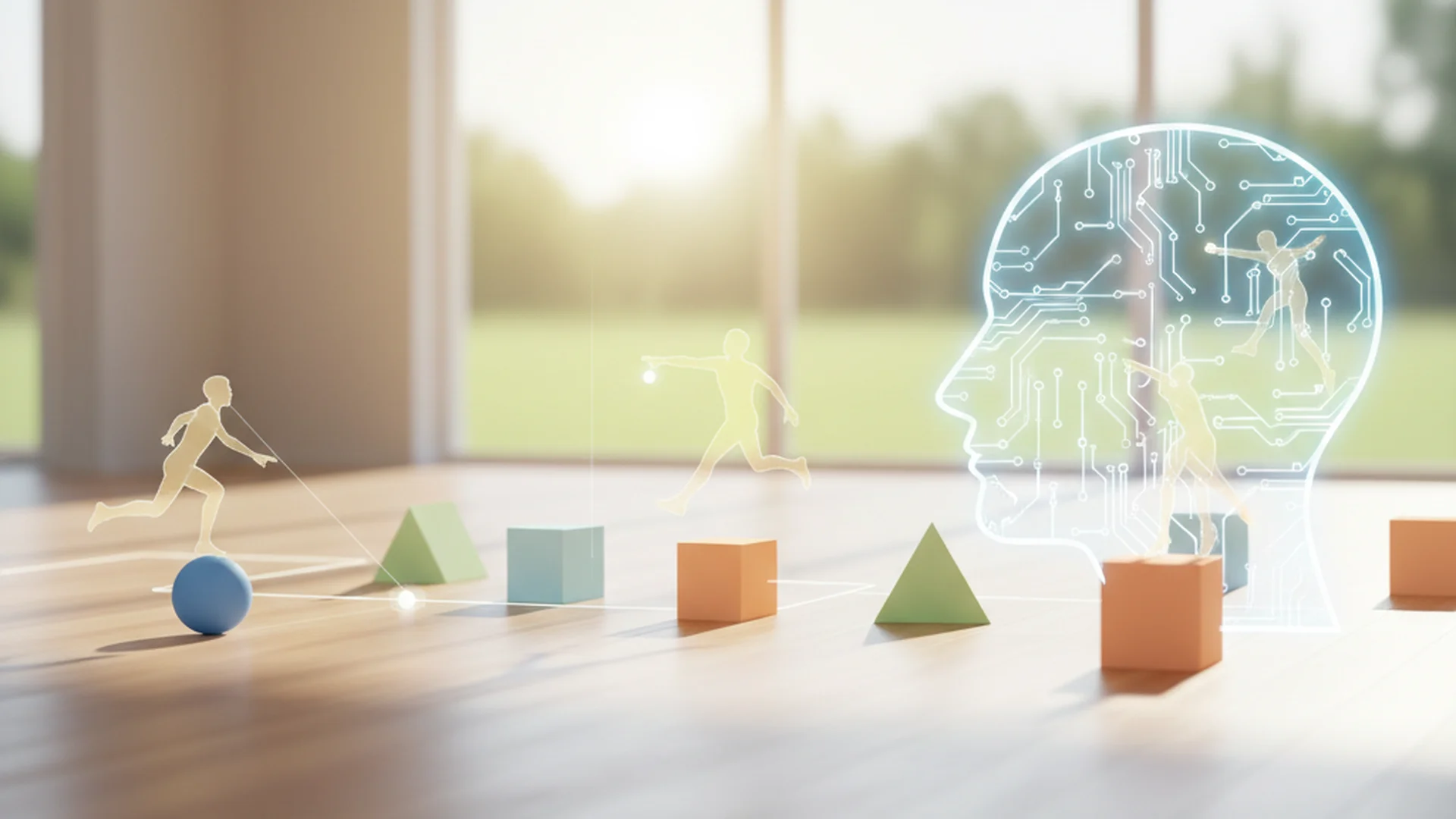
The image of the "traditional" gym class—characterized by a single whistle-blowing instructor and a game of elimination dodgeball—is rapidly fading into history. As we move through the 2025–2026 academic year, a new era of "Active Brain" education has taken center stage. Puzzles have long engaged the mind through logic and vocabulary. However, the most exciting developments in cognitive development aren't happening on a printed page; they are happening on the gymnasium floor through PE brain games.
These active puzzle games are more than just a way to kill time on a rainy day. They represent a fundamental shift in how we approach the "Active 60" rule. Currently, the CDC and WHO recommend that children engage in 60 minutes of daily physical activity, yet according to the Sport England Active Lives Report 2024, only 47.8% of students are meeting this goal. By integrating cognitive challenges with physical movement, educators are finding new ways to engage the "other" 52%—the students who may not identify as athletes but thrive as problem-solvers.
The Science of the "Cognitive Dividend"
Why should we care about solving puzzles while running laps? The answer lies in the biological impact of movement on the brain. When students engage in physical activity, their bodies increase the production of Brain-Derived Neurotrophic Factor (BDNF). This protein acts like "Miracle-Gro" for the brain, supporting the survival of existing neurons and encouraging the growth of new ones.
Recent data from the Engageli 2024 Active Learning Study reveals a "Cognitive Dividend" that is hard to ignore. Schools that implement Physically Active Learning (PAL) report 54% higher test scores compared to traditional lecture-based settings. Furthermore, students who participate in these active environments are 1.5x less likely to fail their courses. By using Brain Training techniques in the gym, we aren't just building stronger muscles; we are building more resilient minds.
3 DIY Active Puzzle Games for Your Gym
You don't need a massive budget or high-tech sensors to start implementing these strategies. Here are three effective ways to turn a standard PE lesson into a mental workout.
1. The Jigsaw Relay
In this game, a standard jigsaw puzzle is placed at one end of the gym. Teams start at the opposite end. One at a time, students must perform a specific movement (e.g., bear crawls, skipping, or high knees) to reach the puzzle, grab a single piece, and return it to their team.
The catch? The team cannot start assembling the puzzle until all pieces are collected. This forces students to use their "lag time" to strategize how the pieces might fit together before they even touch them.
2. Math-Fact Tag
Integrating core subjects into the gym is a hallmark of "Interdisciplinary PE." In Math-Fact Tag, the "it" person calls out a number (e.g., "12!"). To avoid being tagged, the other students must quickly form groups that represent a mathematical equation resulting in that number (e.g., a group of 3 and a group of 4 for multiplication, or a group of 10 and 2 for addition). This requires rapid Math Skills Through Puzzles application under physical pressure.
3. The PE Escape Room
Set up "stations" around the gym. At each station, students must complete a physical task (15 jumping jacks) to unlock a clue. The clue might be a riddle or a Critical Thinking Puzzles challenge that provides a digit for a final combination lock. Only when all stations are cleared and the code is solved is the "escape" complete.
Advertisement
The 2026 Tech Revolution: AI and Wearables
As we look toward 2026, the landscape of PE brain games is being reshaped by technology. We are seeing a move toward "Data-Informed PE," where students wear IoT-integrated heart rate monitors that sync to a central dashboard. These devices don't just measure physical exertion; they are beginning to measure "mental sweat"—the cognitive effort required to solve complex tasks while fatigued.
Generative AI is also playing a role. Teachers can now input a student's current fitness level and academic standing to receive a personalized "fitness prescription." For example, a student struggling with fractions might be assigned an active puzzle game specifically designed to reinforce fractional division through movement patterns.
Furthermore, Virtual Reality (VR) platforms are becoming mainstream. These "exergaming" tools allow students to navigate virtual escape rooms or "box to the beat," bridging the gap for digital natives who may find traditional sports unappealing. This evolution is vital for meeting the WHO global target of reducing physical inactivity by 15% by 2030.
Common Mistakes to Avoid
While the benefits are clear, there are several pitfalls that can undermine the effectiveness of active puzzle games.
- Using Exercise as Punishment: Never use laps or push-ups as a penalty for failing a puzzle. This creates a negative psychological association with movement.
- The "One-Size-Fits-All" Trap: Cognitive training is task-specific. Getting good at "Tic-Tac-Toe Fitness" makes a student better at that specific game, not necessarily a genius in all subjects. Variety is key.
- Over-complicating the Rules: If students have to stand still for 10 minutes to understand the puzzle, you have lost the "Physical" part of Physical Education. Keep instructions "seamless" and deliver them during movement transitions.
- Neglecting Inclusivity: Ensure the "thinking" part of the game is accessible to everyone. If a game relies solely on sprinting speed to "win" the puzzle, you may exclude students with limited mobility. The goal is Cognitive Benefits for all.
Frequently Asked Questions
What exactly is an "active puzzle game"?
An active puzzle game is any activity that requires a student to solve a mental challenge—such as logic, math, or pattern recognition—through physical movement. Examples include relay races to collect puzzle pieces or "Escape Room" circuits in a gym.
Can PE brain games replace traditional sports?
No. Experts suggest they should supplement traditional sports. While sports build teamwork and physical skill, brain games improve "cognitive literacy"—the ability to apply strategy and tactics to movement in real-time.
Do these games require expensive equipment?
Rarely. Most of the best active puzzles use common PE items like hula hoops, cones, and printed cards. While high-tech options like VR are emerging, the core benefits come from the combination of movement and thought, not the price of the gear.
How do I measure progress in these games?
Progress can be measured through a mix of completion time, accuracy of the puzzle solution, and physical engagement levels. For more formal tracking, you can look into Puzzle Assessment Students methods that evaluate both the "process" and the "performance."
Advertisement
Conclusion: Building Lifelong Movers and Thinkers
The goal of 2026 physical education is no longer just about who can run the fastest mile; it is about who can think the most clearly while their heart is racing. By integrating PE brain games into the curriculum, we foster a "growth mindset" and build a "Movement Identity" in students who might otherwise shy away from the gym.
As we strive to meet global health targets, we must remember that the brain and body are not separate entities. They are a single, integrated system that functions best when both are challenged simultaneously. Whether it’s through a high-tech VR simulation or a simple jigsaw relay, the future of education is active, engaged, and mentally stimulating.
Ready to Transform Your Gym?
Discover how to integrate cognitive challenges into your daily routine.
Put it into practice

Keep reading
Brain Health
Brain Games for Leadership: How Executive Brain Training Sharpens Decision-Making
Discover how brain games leadership techniques and executive brain training enhance cognitive flexibility, reduce burnout, and improve decision-making for senior leaders.
Jul 6, 2026 12 min
Education
The Logic of Melody: Why Music Theory Puzzles Are the Ultimate Brain Workout
Discover how music theory puzzles and brain games enhance cognitive reserve, improve math skills, and boost executive function for all ages.
Jan 18, 2026 10 min
Education
Screen Time and Puzzles: Navigating the Digital vs. Paper Learning Divide
Explore the impact of screen time puzzles on cognitive development. Learn the differences between digital and paper puzzles for kids and seniors in 2025.
Aug 26, 2026 12 min
Advertisement