Mastering the Classroom: The Ultimate Puzzles for Teachers Guide
Explore how puzzles for teachers transform active learning. Discover classroom puzzle activities, AI integration, and cognitive strategies for the 2025-2026 school year.
By Free To Play Puzzles Editorial Team 12 min read
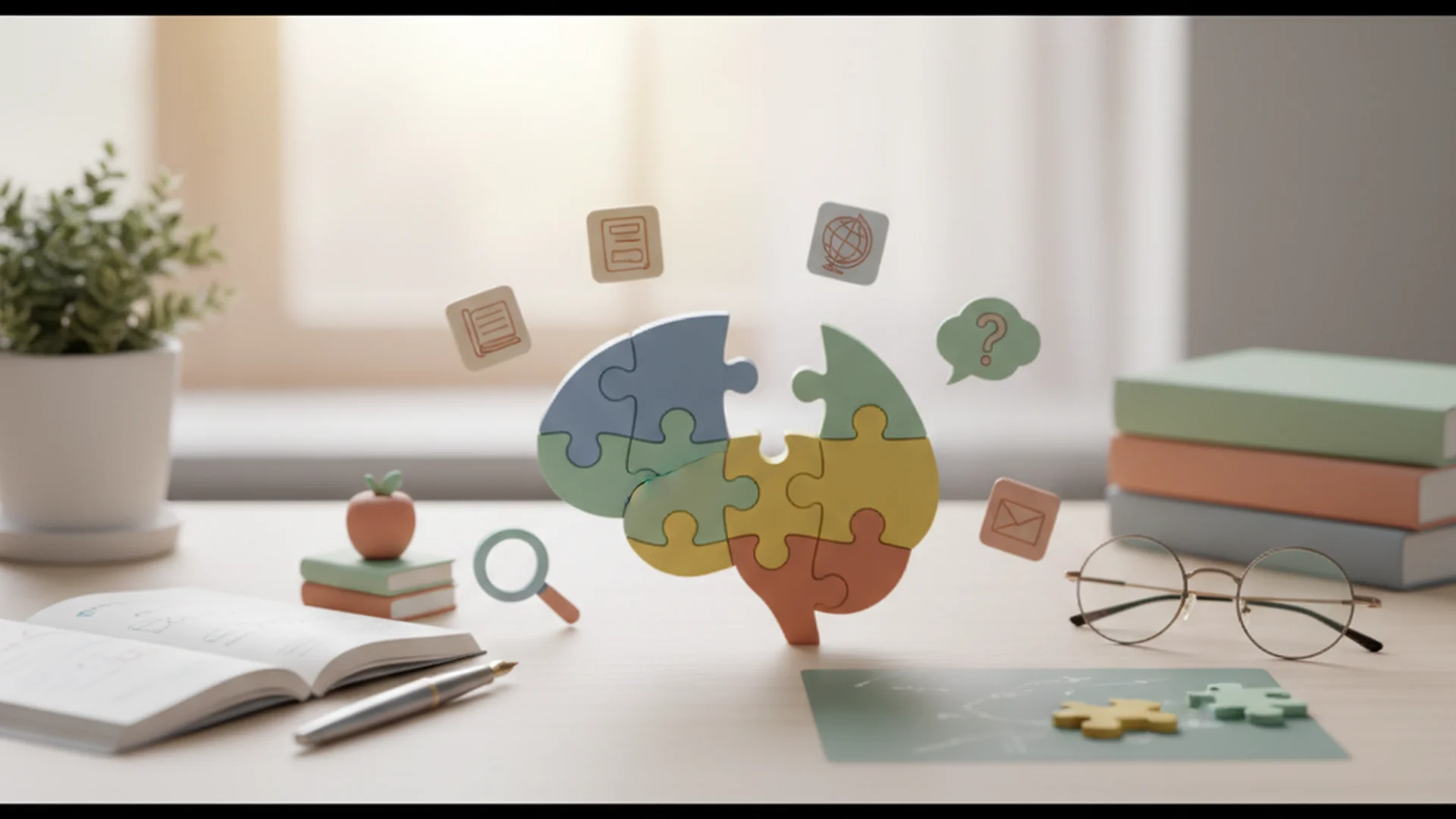
For decades, the standard classroom model has relied on the "chalk-and-talk" method—a lecture-heavy approach that prioritizes rote memorization over active engagement. However, as we move into the 2025-2026 school year, the landscape is shifting. Educators are increasingly turning to puzzles for teachers as a primary tool to foster critical thinking and student agency.
A well-designed puzzle can turn a passive observer into an active problem-solver. Recent data from 2024-2025 suggests that students in specialized fields like nursing and finance give classroom puzzles a 4.53/5 rating for their ability to foster critical thinking. Despite this, a staggering 83% of statistics and economics courses are still taught using traditional methods. This represents a massive opportunity for teachers to differentiate their instruction through classroom puzzle activities.
The Science of the Puzzle Brain
Why are puzzles so effective in a learning environment? The answer lies in how our brains process information during problem-solving. Puzzles trigger what neuroscientists call "diffuse-mode thinking." This is a mental state where the brain continues to work on a problem in the background, making connections that aren't obvious during focused study.
For subjects like Math and Science, diffuse-mode thinking is essential for deep conceptual understanding. When a student steps away from a difficult Sudoku or a complex logic grid, their brain is still synthesizing the rules and patterns. This leads to the "A-ha!" moment—that burst of dopamine and clarity that makes learning addictive.
Building Persistence and Resilience
In an era of instant gratification, puzzles teach a vital soft skill: "productive struggle." A 2025 study showed that 4.45/5 of students felt puzzles helped them self-assess their own understanding. Unlike a standard quiz where a wrong answer is simply "wrong," a puzzle provides immediate feedback. If a piece doesn't fit or a word doesn't cross correctly, the student knows they must rethink their strategy. This builds the resilience needed for complex real-world problem solving.
The 2026 Classroom: AI, AR, and Narrative
The future of education is personalized, and puzzles are leading the charge. We are moving away from the one-size-fits-all worksheet toward dynamic, high-tech engagement tools.
AI-Generated Personalization
In the 2024-2025 school year, 33% of teachers reported using AI tools to create worksheets, while 28% used them to modify and differentiate puzzles. By 2026, this trend is expected to evolve into "Instant Differentiation." Imagine generating three different versions of the same crossword in seconds—one for students reading at grade level, one for English Language Learners (ELL), and one for gifted students—all covering the same core curriculum.
Narrative-Driven Puzzles and "Boss Battles"
The emerging trend for 2026 is "Emotional Design." Instead of solving puzzles for a grade, students solve them to progress through a story. This gamified approach includes "Boss Battle Assessments," where the entire class must work together to solve subject-specific puzzles to "defeat a boss" and complete a unit.
Advertisement
Subject-Specific Classroom Puzzle Activities
Puzzles are not just for language arts. They can be integrated across the curriculum to reinforce standards and improve retention.
Mathematics and Logic
Math is often the subject where students feel the most anxiety. Puzzles can lower this "affective filter" by making numbers feel like play.
- Logic Grids: Great for teaching deductive reasoning.
- Magic Squares: Perfect for practicing mental addition and subtraction.
- Tangrams: Excellent for spatial reasoning and geometry.
Math Skills Through Puzzles can help bridge the gap between abstract formulas and practical application.
Literacy and Language Arts
While word searches are popular, they are often "low-depth" activities. To maximize educational value, teachers should pair them with context.
- Cryptic Crosswords: Use these for high school students to teach nuance and wordplay.
- Word Ladders: Ideal for teaching phonics and spelling patterns to younger learners. Try our Word Ladder for a quick classroom warm-up.
- Contextual Word Scrambles: Instead of just unscrambling words, have students unscramble them to complete a summary of a reading passage.
Science and Social Studies
- Periodic Table Jigsaws: Helps students internalize the layout and groups of elements.
- Map Puzzles: Great for geography and history, helping students visualize the physical relationship between regions.
- Sequence Puzzles: Use these to teach the steps of a scientific process or the timeline of historical events.
| Puzzle Type | Best Subject | Cognitive Benefit |
|---|---|---|
| Sudoku | Math | Pattern Recognition |
| Crossword | Literacy | Vocabulary Retention |
| Logic Grid | Science | Deductive Reasoning |
| Jigsaw | Geography | Spatial Awareness |
How to Implement Puzzles for "Early Finishers"
One of the biggest challenges for teachers is managing "early finishers"—students who complete their work quickly and risk disrupting the rest of the class.
The "Complexity Ladder" Strategy
To keep students engaged, use a scaffolding approach.
- Level 1: Simple mechanics to build confidence (e.g., a simple word search).
- Level 2: Combine concepts (e.g., solve a Word Scramble to find clues for a crossword).
- Level 3: Multi-step problems (e.g., solve a math maze to unlock a code for a digital breakout).
Avoiding the "Frustration Trap"
One of the most common mistakes is giving puzzles that are too advanced. This leads to "learned helplessness." If a student cannot solve even the first step, they will disengage immediately.
The "Flow" State and Omitted Instructions
Modern pedagogy suggests that the most effective puzzles are those that encourage discovery. Much like how children learn to play video games without reading a manual, classroom puzzles should often start with "omitted instructions." This encourages students to experiment and figure out the rules of the game themselves, which is a core component of critical thinking.
Advertisement
Common Mistakes to Avoid
- Over-Explaining: Let the students discover the "how."
- Using Puzzles as "Time-Fillers": If the puzzle isn't aligned with your learning standards, it loses its educational potency.
- Neglecting the Social Aspect: Don't always make puzzles a solo activity. Use them to develop soft skills like communication and patience through intentional grouping.
- Over-valuing Word Searches: Ensure word searches are paired with definitions or context clues to provide actual educational value.
- Giving Up Too Soon: Resilience is a muscle. If students complain that a puzzle is "too hard," offer a different strategy rather than a different activity.
Frequently Asked Questions
How do I grade a puzzle activity?
Focus on the "process" rather than just the final answer. Use reflection journals where students explain their problem-solving strategy or use "difficulty ratings" to assess their persistence. You can learn more about this in our guide on Puzzle Assessment for Students.
Can I use puzzles for high school students?
Absolutely. While younger kids benefit from tactile puzzles, older students thrive on complex logic puzzles, "Digital Breakouts," and "Lateral Thinking" problems. These activities prepare them for the complex reasoning required in college and careers.
Are puzzles just for visual learners?
This is a common misconception. In reality, auditory learners thrive with riddles and verbal logic problems, while kinesthetic learners benefit from 3D manipulatives and "floor puzzles" that require physical movement.
How do I handle students who get frustrated easily?
Scaffold the difficulty. Start with very easy wins to build their confidence. Additionally, use collaborative grouping so that frustrated students can observe the problem-solving strategies of their peers.
How often should I include puzzles in my lesson plans?
While there is no hard rule, integrating a "Puzzle of the Week" or using them as 10-minute warm-ups can keep engagement high without detracting from core instruction. Check out our 10 Minute Puzzle Games for ideas.
Conclusion
Turning your classroom into an "Engagement Hub" doesn't require a complete overhaul of your curriculum. By integrating puzzles for teachers strategically, you can bridge the pedagogy gap, foster deep critical thinking, and help your students achieve that elusive "Flow" state. Whether you are using AI to differentiate a crossword or setting up a Minesweeper challenge to teach probability, you are giving your students the tools to solve the puzzles of the real world.
Ready to Level Up?
Discover more ways to integrate play into your curriculum.
Put it into practice

Keep reading
Education
Mastering Substitute Teacher Activities: The Ultimate Guide to Sub Lesson Puzzles
Explore effective substitute teacher activities and puzzles to maintain classroom order and engagement. Learn about 2025 trends, digital tools, and best practices.
Jun 22, 2025 10 min
Education
Mastering Math Skills Through Puzzles: A Guide for 2025 and Beyond
Discover how math puzzles learning outperforms traditional methods. Learn expert strategies, research-backed benefits, and 2025 trends for students and educators.
Aug 17, 2026 12 min
Education
Puzzles in the Classroom: A Teacher’s Implementation Guide for 2025 and Beyond
Unlock student potential with our comprehensive teacher puzzle guide. Learn how to implement puzzles in the classroom to boost dopamine, memory, and focus.
Apr 27, 2026 12 min
Advertisement