Wordle vs Crossword: Which Daily Word Game Is Best for Your Brain?
Explore the ultimate Wordle vs crossword comparison. Discover cognitive benefits, expert strategies, and 2025 trends in the world of daily word games.
By Free To Play Puzzles Editorial Team 12 min read
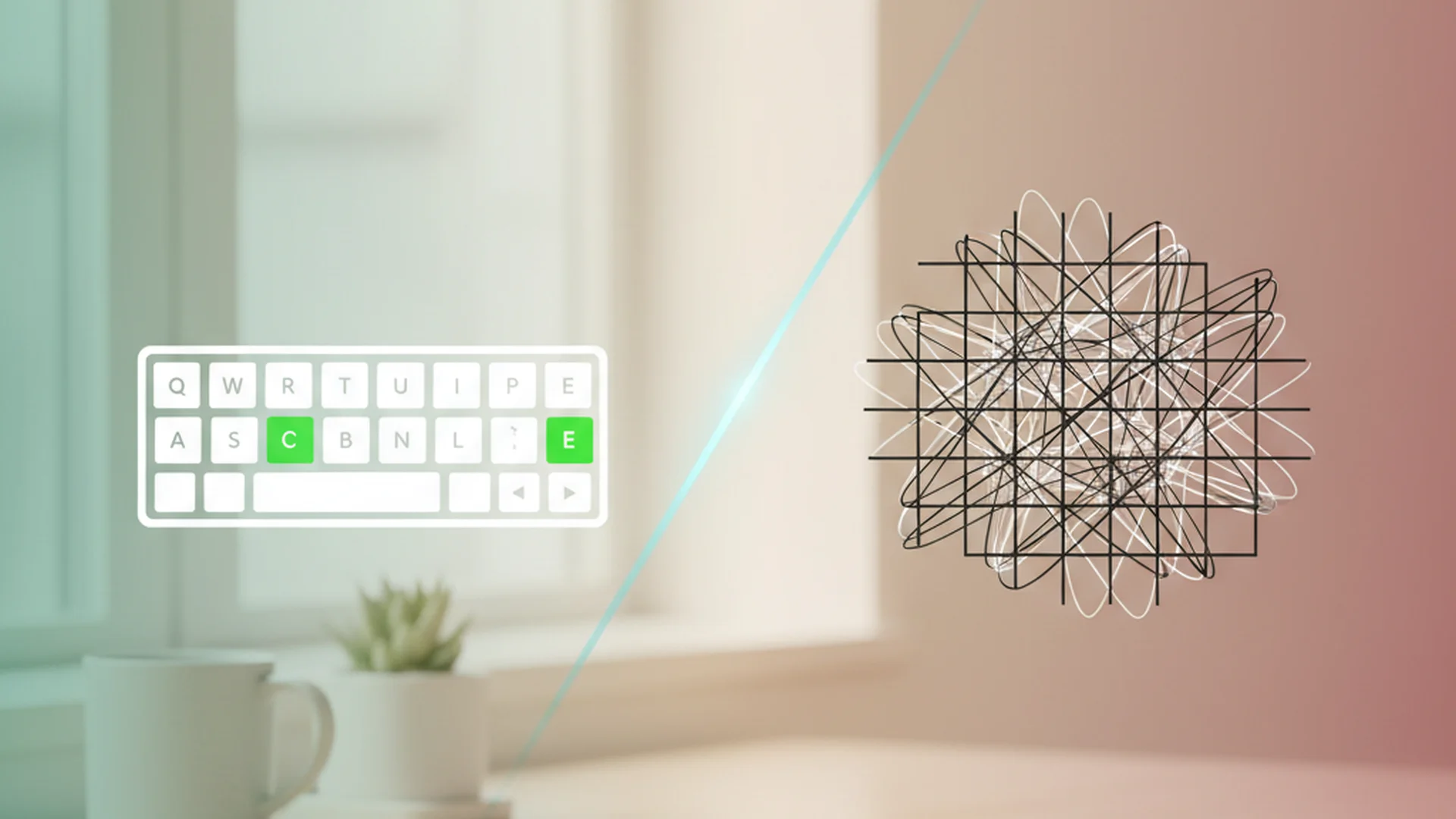
In the modern era of digital entertainment, the battle of wordle vs crossword has become a central topic for puzzle enthusiasts worldwide. Whether you are sipping your morning coffee while tackling a 5-letter mystery or filling out a 15x15 grid on the train, these daily rituals have evolved far beyond simple pastimes. As we move through 2025, the landscape of word games has shifted from a niche hobby to a global phenomenon, with millions of players seeking the perfect balance between quick mental stimulation and deep cognitive challenge.
While Wordle captured the world's attention with its viral social sharing and minimalist design, the traditional crossword remains a titan of the genre, offering a depth of trivia and linguistic complexity that few games can match. In this comprehensive daily word game comparison, we will break down the mechanics, the science of brain health, and the expert strategies you need to master both.
The Rise of the Daily Ritual
The sheer scale of these games is staggering. In 2023, Wordle was played over 4.8 billion times, contributing to a total of 8 billion plays across the New York Times’ suite of games. This isn’t just a trend; it is a fundamental shift in how we consume "micro-entertainment."
Unlike traditional video games, these puzzles offer a "one-and-done" philosophy. You play once a day, share your results, and wait for the next reset. This scarcity creates a sense of community and urgency. Interestingly, while crosswords were once stereotyped as a hobby for retirees, 60% of modern word game players are aged between 25 and 54. Millennials, in particular, have embraced the "Wordle craze," with 1 in 5 reporting daily play.
Wordle: The Logic of Elimination
Wordle is essentially a digital version of the classic game Mastermind, but with letters instead of colored pegs. It relies heavily on logical deduction. You have six tries to guess a five-letter word. Each guess provides feedback: green for the right letter in the right spot, yellow for the right letter in the wrong spot, and gray for letters not in the word.
The Crossword: The Depth of Knowledge
The crossword is a completely different beast. It relies on lateral thinking, vocabulary, and trivia. Instead of eliminating possibilities through trial and error, you must retrieve information from your long-term memory based on cryptic or direct clues.
Cognitive Health: Wordle vs Crossword
One of the most frequent questions players ask is: "Which is better for my brain?" The answer depends on which "mental muscles" you want to flex.
Executive Function vs. Long-term Memory
Wordle is a workout for your executive function. It requires you to hold multiple pieces of information in your working memory—which letters are out, which are in, and where they might fit. It is about strategy and the process of elimination.
Crosswords, however, are the champions of long-term memory and "cognitive reserve." A landmark 78-week study conducted by Columbia University and Duke University (published in NEJM Evidence) found that participants with mild cognitive impairment who played crosswords showed less brain shrinkage and less functional decline compared to those playing other digital games.
The "Varied Diet" Recommendation
Neurologists increasingly suggest that for maximum brain health, you shouldn't pick just one. To keep the brain "plastic" (capable of forming new neural connections), you need variety. Combining the logic of Wordle with the vocabulary retrieval of crosswords provides a holistic mental workout.
Advertisement
Expert Strategies for Wordle
To move from a "lucky winner" to a strategic master, you must treat Wordle as a mathematical problem rather than just a vocabulary test.
1. Optimize Your Starting Word
Your first guess is the only time you are truly guessing. To maximize your chances, use words with high-frequency vowels (A, E, I) and consonants (R, S, T).
- RAISE
- TRACE
- ADIEU (highly popular for clearing out vowels)
- RATES
2. Master Pattern Recognition
Instead of looking for words, look for common English structures. Many 5-letter words end in -Y, -ER, or -ED. If you find a "G" and an "H" near each other, look for "OUGHT" or "IGHT" patterns.
3. Avoid Reusing Grays
This is the most common mistake beginners make. Reusing a letter that has already been marked gray is a wasted guess. In "Hard Mode," the game forces you to use the hints you've found, but in standard mode, you must be disciplined enough to avoid discarded letters.
Mastering the Crossword Grid
Crosswords require a different set of skills. If you're transitioning from Wordle to the grid, the sheer size can be intimidating.
1. Start with "Fill-in-the-Blanks"
These are generally considered the easiest clues in any crossword. For example: "___ and cheese" (MAC). These provide "anchor" letters that help you solve the more difficult intersecting clues.
2. The "Short Word" Skeleton
Focus on 3- and 4-letter words first. Crossword constructors are limited by the English language, so they often use "crosswordese"—words like "AREA," "ERA," "ALOE," or "ORE"—to fill tight spots. Learning these common fillers is essential.
3. The Take a Break Strategy
If you are stuck on a clue, step away. This is a scientifically backed method. Your brain continues to work on the problem in the background (incubation). Often, when you return 15 minutes later, the answer will seem obvious.
Real-World Examples of Daily Play
Example 1: The Multi-Generational Connection
In many families, Wordle has become a social bridge. A grandmother in New York and her grandson in London share their "green box" grids every morning via WhatsApp. For them, Wordle isn't just a game; it's a daily "I'm thinking of you" that bridges the generation gap and maintains social engagement, which is vital for mental health.
Example 2: The Cognitive Recovery Journey
A patient recovering from a mild stroke used crosswords as part of their speech and language therapy. By forcing the brain to retrieve specific words based on definitions, the patient was able to rebuild neural pathways associated with vocabulary, demonstrating the clinical utility of traditional word games.
Example 3: The Productivity Hack
A software engineer uses the "NYT Mini" crossword as a "mental primer" before starting work. Because the Mini takes roughly 2–3 minutes, it acts as a low-stakes way to transition the brain from a resting state to a problem-solving state without the burnout of a full-size Saturday puzzle.
Advertisement
2025–2026 Trends in Word Games
The world of word games is not static. As we look toward 2026, several key trends are emerging:
| Trend | Description | Impact |
|---|---|---|
| Meta-Layers | Games adding "building" elements (e.g., building a city by solving puzzles). | Increases long-term retention. |
| AI-Enhanced Design | AI creates personalized puzzles based on your specific vocabulary level. | Puzzles remain "perfectly challenging." |
| Hybrid Puzzles | Games like "Crosswordle" mix Wordle logic with a crossword grid. | Offers a "best of both worlds" experience. |
| Calm Gaming | A shift away from high-pressure leaderboards toward meditative play. | Reduces stress and promotes wellness. |
Developers are increasingly focusing on "Consistency over Competition." The goal is no longer to be the fastest in the world, but to maintain a daily "streak" that serves as a morning mental warm-up.
Common Mistakes to Avoid
Whether you are playing Word Scramble or the New York Times Sunday Crossword, avoid these pitfalls:
- Playing on Autopilot: If you can solve the puzzle without really thinking, you aren't getting the cognitive benefits. For a puzzle to "count" as brain exercise, it must remain challenging. If Wordle is too easy, try a 15 Minute Puzzle Challenge.
- Ignoring the Theme: Most large crosswords have a "theme" revealed in the longest clues or the title. Ignoring this makes the puzzle significantly harder.
- Wasting Guesses in Wordle: Many players use their 4th or 5th guess to try "possible" words that they know aren't likely, just to see if a letter turns yellow. Instead, take a moment to look at the remaining letters and visualize the structure.
Frequently Asked Questions
Which is better for my brain, Wordle or Crosswords?
While both are beneficial, they target different areas. Wordle improves executive function and logical strategy. Crosswords are superior for long-term memory, vocabulary, and delaying the symptoms of cognitive decline. For best results, play both.
Is Wordle harder than a crossword?
They use different types of difficulty. Wordle's difficulty is mathematical and involves narrow logic. Crosswords vary by day; a Monday crossword is usually easier than a Wordle, but a Saturday crossword is significantly more difficult than any Wordle could be.
Can I use the same letter twice in Wordle?
Yes! This is a major point of confusion for new players. The target word can contain double or even triple letters (like "MUMMY" or "EERIE").
How long should a crossword take compared to Wordle?
A Wordle typically takes 3–5 minutes. A "Mini" crossword also takes about 2–5 minutes. However, a full-sized 15x15 crossword can take anywhere from 15 minutes to over an hour, depending on the day's difficulty.
Conclusion: Finding Your Perfect Balance
In the debate of wordle vs crossword, there is no objective "winner." Wordle offers a sleek, social, and logically satisfying experience that fits perfectly into a busy schedule. Crosswords offer a deep, culturally rich, and linguistically challenging experience that provides proven long-term benefits for brain health.
As a Mathematical Logic Instructor, my recommendation is to treat these games like a workout routine. You wouldn't just do bicep curls every day; you'd mix in cardio and flexibility training. Treat Wordle as your "mental cardio" and the crossword as your "heavy lifting." By diversifying your daily play, you ensure that your mind remains sharp, your vocabulary grows, and your daily ritual remains a joy rather than a chore.
Ready to test your skills across different puzzle types? Explore our variety of games to find your next daily habit.
Ready to Start?
Challenge yourself with our curated daily puzzles and boost your brain power today.
Put it into practice
Keep reading
Comparisons
Word Puzzles vs Number Puzzles: Which Is Best for Your Brain?
Explore the ultimate debate of word vs number puzzles. Discover which cognitive benefits suit your goals, from verbal intelligence to logical reasoning.
Dec 15, 2025 12 min
Comparisons
Puzzles vs Language Learning: Which Is Better for Your Brain Health?
Explore the ultimate brain training comparison: puzzles vs languages. Discover which activity offers the best protection against cognitive decline and dementia.
Mar 18, 2026 12 min
Comparisons
Puzzles vs Reading: Which Is the Ultimate Workout for Your Brain?
Compare the cognitive benefits of puzzles vs reading. Discover how crosswords and books impact memory, stress, and dementia risk based on 2025 research.
Feb 20, 2026 12 min
Advertisement