Word Puzzles: The Complete Overview for 2025 and Beyond
Explore the world of word puzzles, from cognitive health benefits and market trends to expert strategies for winning in the digital age.
By Free To Play Puzzles Editorial Team 12 min read
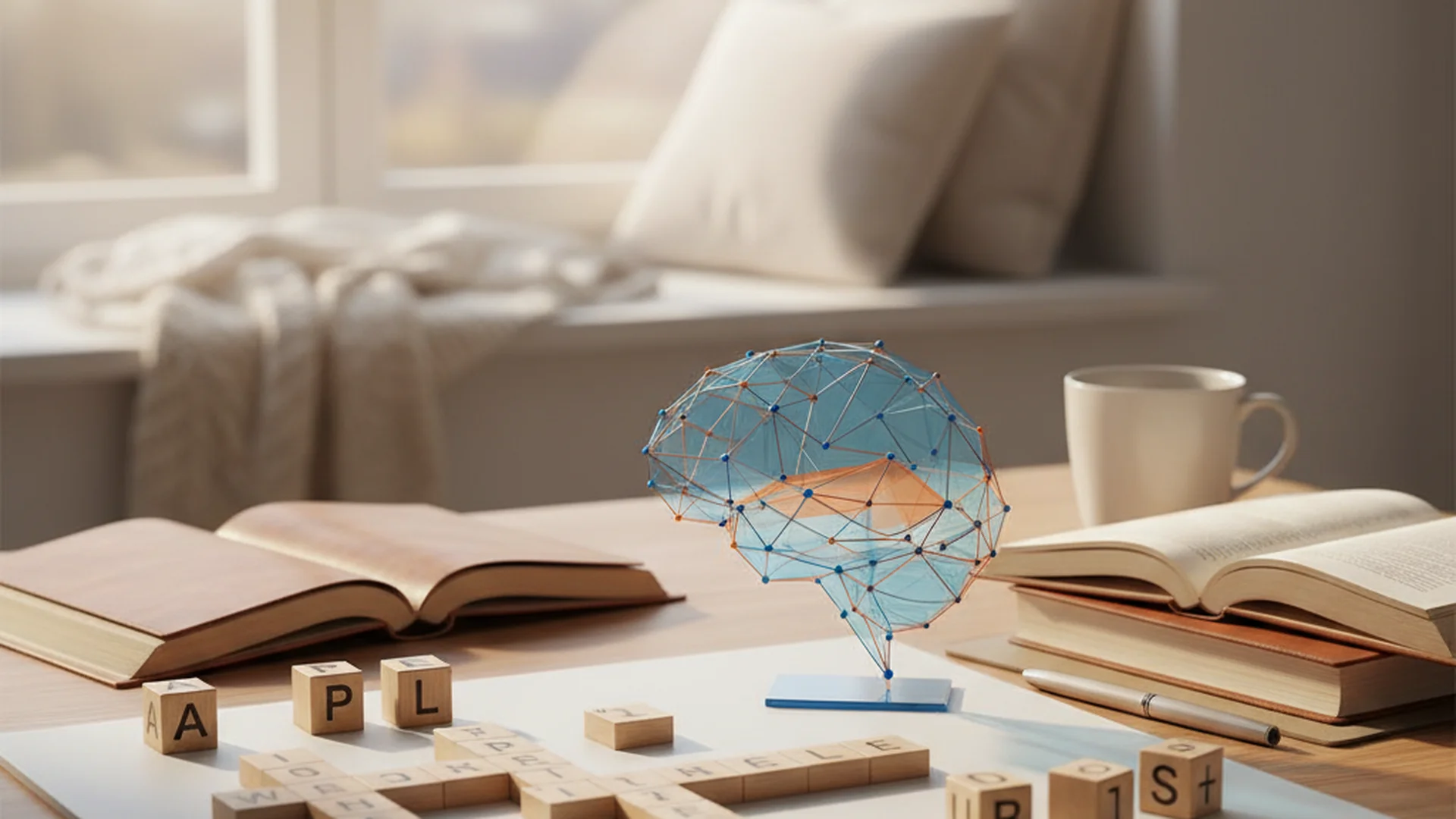
In the early 20th century, a word puzzle was something you found in the back of a Sunday newspaper, solved with a lead pencil and a cup of coffee. Fast forward to 2025, and word puzzles have transformed into a multi-billion-dollar digital industry that dictates social media trends and morning routines for millions. As a gaming historian, I have watched these "time-fillers" evolve from simple grids into sophisticated, AI-driven experiences that are as much about social connection as they are about vocabulary.
The resurgence of word puzzles isn't just a fluke of the digital age; it is a response to our growing desire for "productive play." In an era of mindless scrolling, the structured challenge of a crossword or a word search provides a much-needed cognitive anchor. Whether you are a casual player of the daily Wordle or a competitive Scrabble enthusiast, understanding the current landscape of word puzzles is essential for maximizing both your enjoyment and your mental health.
The Explosive Growth of the Puzzle Market
The word puzzle industry is currently experiencing a "Golden Age." While traditional print media has faced challenges, the digital puzzle sector is thriving. According to recent market data, the global crossword market was valued at $1,508 million in 2024 and is on a trajectory to reach nearly $2.8 billion by 2031. This 8.3% compound annual growth rate (CAGR) is driven by two main factors: mobile accessibility and the gamification of brain health.
The way we consume these puzzles has also shifted. Roughly 78% of enthusiasts in the United States now play primarily on mobile devices. The New York Times Games suite, featuring hits like Wordle and Connections, reached a staggering peak of 1.87 million active users in early 2025. This transition from paper to screen has allowed puzzles to become more interactive, social, and adaptive than ever before.
The Science of Solvers: Cognitive Benefits
One of the most compelling reasons for the continued popularity of word puzzles is their documented impact on brain health. We are no longer just guessing; we have the data to prove that these games keep the mind sharp.
Reversing the Clock
A landmark study involving over 19,000 participants (University of Exeter/King’s College London) revealed that adults over the age of 50 who regularly engage in word and number puzzles show brain function equivalent to individuals 10 years younger. This "age-reversal" effect is most prominent in areas of short-term memory and problem-solving speed. To learn more about how this works, you can read about Are Puzzles Good for Brain.
Delaying Dementia
The Alzheimer’s Society has highlighted research suggesting that consistent crossword solving can delay the onset of dementia symptoms by an average of 2.5 years. By building "cognitive reserve"—a type of mental resilience—puzzles help the brain find alternative ways to function even when physical changes begin to occur. For a deeper dive into this medical research, see our review on Can Puzzles Prevent Dementia.
Advertisement
A Vocabulary Puzzles Overview: Types and Techniques
To truly master the world of word puzzles, one must understand the different mechanics at play. Not all puzzles test the same parts of the brain.
The Standard Crossword
Crosswords are the ultimate test of "active recall." They require you to retrieve a specific word based on a definition or wordplay. This strengthens the neural pathways between your vocabulary and your retrieval systems. If you're looking to improve, check out 10 Crossword Solving Strategies the Pros Use.
Word Searches and Visual-Spatial Reasoning
A common misconception is that word searches are "easier" or "lazy" compared to crosswords. However, they engage visual-spatial reasoning and pattern recognition. Finding a word hidden diagonally or backwards requires the brain to rotate shapes and filter out "noise" (distractor letters).
Modern Hybrid Games
In 2025, we are seeing a rise in "Word Logic" games. These aren't just about knowing words; they are about understanding the relationship between them. Games like Connections or Word Logic Games require players to categorize words by hidden themes, which builds lateral thinking.
| Puzzle Type | Primary Skill | Cognitive Benefit |
|---|---|---|
| Crossword | Active Recall | Verbal Intelligence |
| Word Search | Pattern Recognition | Visual-Spatial Focus |
| Wordle-likes | Deductive Reasoning | Working Memory |
| Scrabble | Strategy/Math | Positional Thinking |
Expert Strategies for Masterful Solving
If you want to move from a casual solver to a strategic analyst, you need to change how you look at the grid. Here are the top recommendations from professional puzzlers:
- The "Perimeter First" Rule: In word searches, start by scanning the outer edges. Creators often hide words along the borders to exploit the player's tendency to look toward the center.
- Focus on Rare Letters: When scanning a messy grid, don't look for "E" or "A." Look for Q, X, Z, and J. These letters have distinct shapes and appear less frequently, making them much easier for the eye to isolate.
- The "Subconscious Prime": Before you start solving a word search, read the entire word list. This "primes" your brain, allowing your subconscious to scan for multiple words simultaneously as your eyes move across the grid.
- Active Recall vs. Recognition: In crosswords, try to solve the clues without looking at any available word banks first. This forces your brain to work harder, which is exactly How to Get Better at Puzzles.
Modern Trends: Word Puzzles in 2025–2026
The landscape of word puzzles is being reshaped by technology and cultural shifts. We are currently seeing four major trends:
1. AI-Adaptive Difficulty
Modern puzzle apps now use AI to adjust difficulty in real-time. If the system detects you are solving a Word Scramble too quickly, it will generate more complex letter patterns for the next round. Conversely, if you are struggling, it provides "nudge" hints that guide you without giving the answer away.
2. Smart Puzzles and QR Integration
We are seeing a resurgence of paper puzzles that bridge the gap to the digital world. "Smart" puzzle books now feature QR codes on every page. Once you solve the paper version, you scan the code to upload your time to a global leaderboard or unlock a special animation.
3. "Social Puzzling"
2025 has seen the rise of "Puzzle Jam" events and collaborative "raids." In these games, teams of players work together to solve massive grids or race against other teams in real-time. Puzzling has moved from a solitary activity to a competitive team sport.
4. Immersive Themes
The "minimalist" look of the 2010s is being replaced by rich, immersive aesthetics. Today's word puzzles are often wrapped in Victorian mysteries, futuristic space missions, or chilling gothic tales. The goal is to provide an "escape" rather than just a grid.
Advertisement
Common Mistakes to Avoid
Even seasoned players fall into certain traps. Avoid these common pitfalls to keep your game sharp:
- Rushing the Start: Beginners often dive into the grid immediately. Take 30 seconds to survey the layout and read the rules or word list.
- The "Big Word" Fallacy: In games like Scrabble or Wordle, many think they need a massive vocabulary. In reality, knowing 2-letter words and common consonant clusters is much more important.
- Ignoring Directionality: Don't forget that words can go backwards. If you can't find a word, look specifically for its last letter and scan outwards from there.
- Assuming Luck: In competitive word games, luck is a factor, but strategy wins. Focus on "positional play"—blocking your opponent's access to high-score tiles—rather than just finding the longest word.
Frequently Asked Questions
Do word puzzles actually increase IQ?
While they don't necessarily raise your "raw" or fluid IQ (your innate ability to solve new problems), they significantly improve verbal intelligence and "cognitive reserve." This makes your brain more resilient to the effects of aging and improves your ability to communicate and process information.
Are word searches "lazy" compared to crosswords?
Not at all. While crosswords focus on retrieval and definitions, word searches build visual-spatial reasoning and pattern recognition. They use different neural circuits, and a balanced "brain diet" should include both.
Can word puzzles help with language learning?
Yes. Educators frequently use word puzzles for active recall and to reinforce subject-specific vocabulary. They provide a low-stress environment where students can interact with new words multiple times.
How often should I play to see benefits?
Research suggests that consistency is more important than duration. Playing for 15–30 minutes a day is generally more effective for brain health than a five-hour marathon once a week. For more details, see How Long to See Puzzle Benefits.
Is there a "best" type of word puzzle?
The "best" puzzle is the one you enjoy enough to play daily. However, for maximum cognitive growth, it is recommended to switch between different types—such as Word Search, Word Ladder, and Sudoku—to challenge different areas of the brain.
Conclusion
Word puzzles have come a long way from the newspaper "funny pages." Today, they are a vibrant, technologically advanced medium that offers a unique blend of entertainment and life-changing health benefits. By understanding the science behind the solve and employing professional strategies, you can turn your daily puzzle habit into a powerful tool for cognitive longevity.
As we look toward 2026, the trend is clear: puzzles will become more social, more adaptive, and more integrated into our daily digital lives. Whether you are searching for a hidden word in a Gothic-themed mystery or racing a friend to solve a daily challenge, you are participating in a tradition of mental excellence that spans over a century.
Ready to Sharpen Your Mind?
Explore our collection of brain-boosting word games and start your daily challenge.
Put it into practice
Keep reading
Reference
Physical Puzzles Overview: The Complete Guide to Mechanical Challenges
Explore the 2025 tactile revival with our physical puzzles overview. Learn about mechanical puzzle types, maintenance tips, and the latest trends in functional art.
Mar 25, 2026 12 min
Reference
The Ultimate Guide to Types of Puzzles: A 2025–2026 Industry Overview
Discover the complete landscape of puzzle categories, from mechanical and logic grids to modern digital hybrids. Expert analysis for 2025.
Jan 7, 2025 15 min
Reference
The Ultimate Visual Puzzles Overview: Science, Trends, and Mastery
A complete overview of visual puzzles. Discover market trends for 2025-2026, cognitive benefits, and expert strategies for solving and design.
Dec 16, 2025 12 min
Advertisement