Sudoku World Records: Inside the World of the Fastest Solvers
Discover the incredible world of sudoku world records. From 54-second solves to legendary champions, explore the strategies used by the world's best players.
By Free To Play Puzzles Editorial Team 12 min read
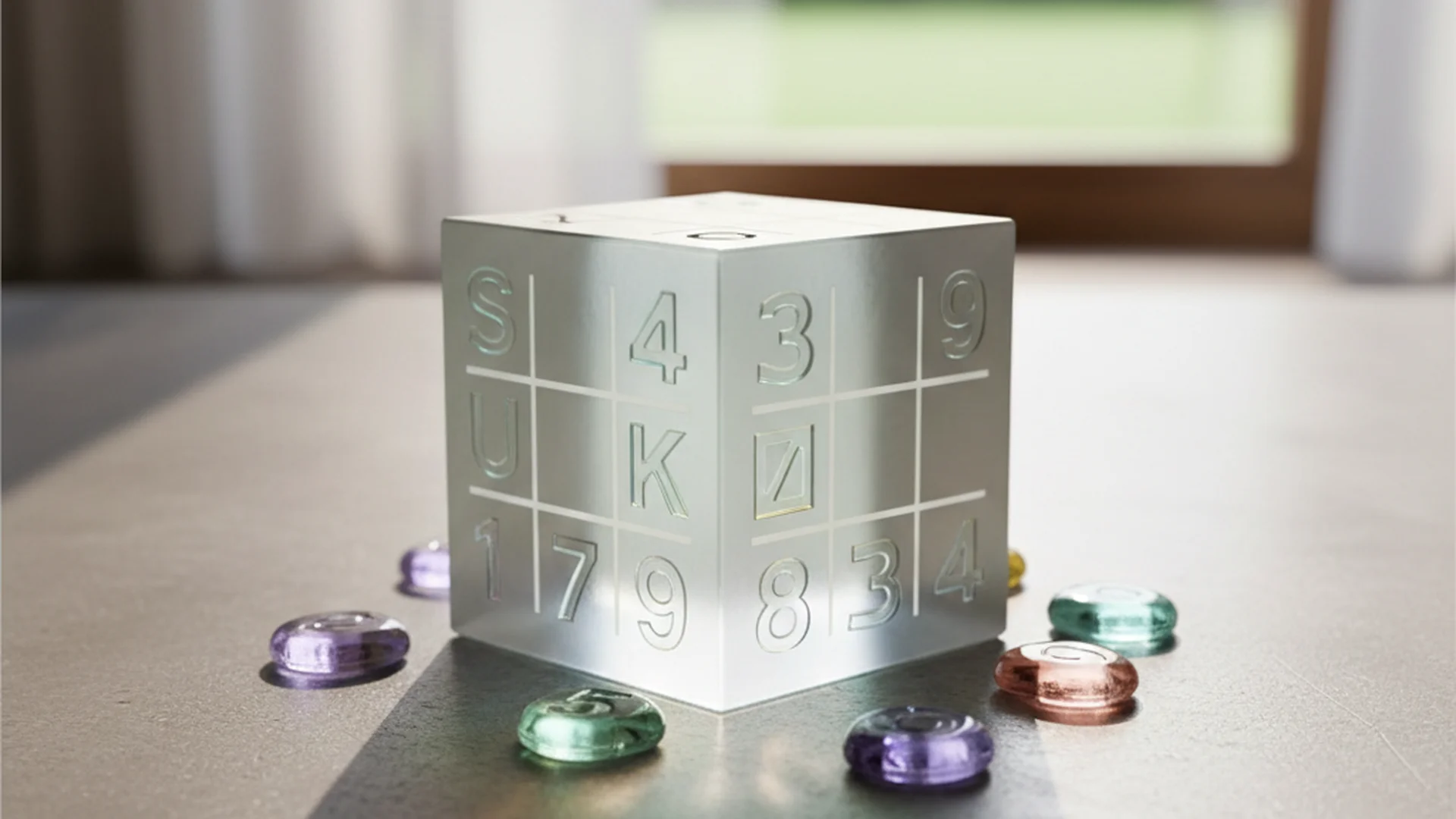
For many, a Sudoku puzzle is a relaxing companion to a morning cup of coffee or a quiet way to unwind before bed. But in the world of competitive logic sports, Sudoku is a high-speed, high-stakes battle of mental acuity. When we talk about sudoku world records, we aren't just looking at people who are "good at puzzles"; we are looking at elite mental athletes who can process patterns faster than most people can read a sentence.
The way the human brain decodes grids is endlessly fascinating. While crosswords rely on linguistics, Sudoku is the ultimate test of pure logic and pattern recognition. In this guide, we will dive deep into the staggering statistics of the world’s fastest solvers, the legendary sudoku champions who have defined the game, and the cutting-edge techniques you can use to shave minutes off your own times.
The Speed Demons: Breaking Down Sudoku World Records
The numbers involved in elite Sudoku solving are often difficult to wrap the mind around. While an average player might feel a sense of accomplishment finishing a "Hard" puzzle in 30 minutes, the world's elite operate in a different temporal dimension.
The Ultimate Speed Record
The undisputed world record for the fastest solve of a standard, competition-grade 9x9 Sudoku puzzle is 54.44 seconds. This feat was achieved by Wang Shiyao of China during the 2018 World Sudoku & Puzzle Championship (WSC) in Prague. To put this in perspective, Shiyao had to identify the logic for and physically write 50 to 60 digits in less than a minute—leaving less than one second per digit for both thought and execution.
Guinness World Records and Specific Tiers
Guinness World Records maintains several categories for Sudoku solving to account for varying difficulty levels and conditions:
- "Very Easy" Level: The record stands at 1:23.93, set by the legendary American solver Thomas Snyder in 2006.
- "Easy" Level: Thomas Snyder also holds this record with a time of 2:08.53.
- Blindfolded (Oral): One of the most mind-bending records was set in 2023 by Dhruv Gupta of India. He memorized a complete Sudoku grid and dictated the solution in just 6:31.39 without once looking back at the puzzle.
The Hall of Fame: Legendary Sudoku Champions
While speed is the most visible metric, consistency across multiple rounds of varying difficulty defines a true champion. Over the last two decades, a few names have dominated the podium at the World Sudoku Championship.
1. Kota Morinishi (Japan)
Morinishi is widely considered one of the greatest to ever play the game. He holds four individual world titles (2014, 2015, 2017, and 2018). His style is characterized by a "scanning loop" technique that allows him to see the entire grid as a single cohesive unit rather than a collection of boxes.
2. Thomas Snyder (USA)
A scientist by trade, Snyder (often known as "Dr. Sudoku") revolutionized the game in the mid-2000s. With three individual titles (2007, 2008, 2011), he is also the inventor of the "Snyder Notation," a marking system used by almost every competitive solver today.
3. Jan Mrozowski (Poland)
Mrozowski dominated the transition into the 2010s, securing three consecutive individual titles (2009, 2010, and 2012). His ability to maintain focus during the grueling multi-hour team rounds made him a powerhouse in the European circuit.
Advertisement
The Mathematics of a Record-Breaking Grid
What makes a Sudoku puzzle valid for a world record? It comes down to the number 17. For years, mathematicians and enthusiasts debated the minimum number of clues needed to ensure a Sudoku puzzle has one—and only one—unique solution.
In 2012, a team led by Gary McGuire at University College Dublin used a complex "hitting set" algorithm and millions of CPU hours to prove that a unique Sudoku solution is impossible with only 16 clues. Every valid competitive puzzle must have at least 17 clues, though most "Extreme" puzzles in championships use between 22 and 26 to allow for more complex logical chains like Advanced Sudoku Techniques: X-Wing and Swordfish.
Modern Competitive Landscape: 2025-2026 Trends
The world of competitive Sudoku is currently experiencing a massive shift. As we look toward the 2025-2026 season, several trends are emerging that are redefining how sudoku champions are made.
The Rise of China
Recent years have seen a definitive shift in the global leaderboard. The Chinese national team has become an absolute juggernaut. Tantan Dai, the reigning 2025 Individual Gold medalist, and Ming Letian (2024 winner) have established a new standard for speed. Their training involves high-intensity digital simulations and AI-driven analysis.
WSC 2026: The Road to Kolkata
The 2025 World Sudoku Championship in Eger, Hungary, served as a precursor to the highly anticipated 2026 event. The 2026 WSC is scheduled to be held in Kolkata, India. This is a significant move, as India has seen a massive surge in Sudoku popularity, partly due to the record-breaking feats of local heroes like Dhruv Gupta.
AI Integration and Training
In 2025, top-tier competitors are no longer just practicing on paper. They use AI-driven training tools to find the "optimal logic path." Platforms like "Cracking the Cryptic" have popularized the use of software that can tell a player exactly when they missed a "logic-only" deduction, helping them eliminate the habit of guessing.
Expert Techniques: How to Solve Like a Pro
To even dream of touching sudoku world records, you must move beyond basic row and column checking. Here are the core strategies used by the elite:
The Snyder Notation
Developed by champion Thomas Snyder, this is the gold standard for pencil marks. Instead of writing every possible candidate in a cell, you only place a small mark if a number can go in exactly two possible cells within a 3x3 box.
- Why it works: It keeps the grid clean.
- The benefit: It makes spotting "Hidden Pairs" and "Triples" almost instantaneous.
Scanning in Loops
Beginners tend to jump around the grid. Champions scan in a rhythmic cycle:
- Scan Rows 1-3.
- Scan Columns 1-3.
- Scan the 3x3 Boxes in that sector.
- Move to the next sector. This systematic approach ensures you never miss a Hidden Single.
Mastering the "Naked Single"
Before diving into complex strategies, you must be able to instantly recognize a cell where only one number is possible because all other numbers (1-9) are already present in its row, column, or box. In a sub-60-second solve, these are found in milliseconds.
| Technique | Difficulty | Impact on Speed |
|---|---|---|
| Snyder Notation | Medium | High |
| Naked Singles | Easy | Essential |
| X-Wing | Hard | Medium |
| Swordfish | Very Hard | Low (Niche) |
Advertisement
Common Mistakes to Avoid
Even the best sudoku champions make errors. However, at the professional level, a single mistake usually means a score of zero for that entire round. If you're looking to improve, check out our guide on Common Sudoku Mistakes to Avoid, or keep these top three in mind:
- Focusing on a Single 3x3 Box: Beginners often get "tunnel vision" trying to finish one box. The solution for Box 1 almost always relies on a deduction made in Box 7 or 9.
- The "Guessing" Trap: If you find yourself saying "I'll just try a 5 here and see if it works," you have already lost the speed game.
- Ignoring the "Pencil" Cleanup: If you use pencil marks, you must erase or update them immediately as you fill in numbers. Outdated marks lead to "Ghost Pairs" that don't actually exist.
Frequently Asked Questions
Who is the best Sudoku player in the world right now?
As of 2025, Tantan Dai from China is considered the top-ranked player. He is the reigning World Sudoku Champion and currently leads the WPF (World Puzzle Federation) Sudoku Grand Prix standings.
How fast can an average person solve a Sudoku?
For a standard "Easy" puzzle, an average casual player typically takes 5 to 10 minutes. "Hard" or "Expert" puzzles can take anywhere from 20 to 40 minutes for someone not using advanced competitive techniques.
Is there a world record for the hardest Sudoku?
In 2010, a puzzle called "AI Escargot," created by Finnish mathematician Arto Inkala, was branded the "world's hardest Sudoku." Since then, even more complex grids like "Everest" have been generated. These puzzles often require complex techniques like "Nishio" or "Forcing Chains" that are rarely seen in standard speed competitions.
Does playing Sudoku improve IQ?
While playing Sudoku does not necessarily increase your general IQ, research suggests it significantly improves cognitive flexibility, memory, and pattern recognition. It is an excellent tool for maintaining brain health, especially for seniors.
Is Sudoku a math game?
No. This is a common misconception. Sudoku is a game of logic and placement. You could replace the numbers 1-9 with nine different colors, letters, or symbols, and the game would play exactly the same way. No arithmetic is involved.
The Future of Sudoku Records
As we move toward the 2026 World Championship in India, the ceiling for sudoku world records continues to get lower. With the integration of "Hybrid" competitions—where players qualify online via high-speed digital interfaces before meeting for in-person finals—the barrier to entry is disappearing. We are seeing younger and younger champions, some as young as 12 or 13, entering the ranks of the world's elite.
If you are just starting your journey, don't be intimidated by the sub-minute solve times. Every champion started by learning How to Play Sudoku: Step-by-Step. From there, it's just a matter of practice, pattern recognition, and finding your own rhythm.
Ready to Start?
Challenge yourself with our daily puzzles and start your journey toward the leaderboard.
Put it into practice
Keep reading
Sudoku
Sudoku Tournaments: How Competitive Sudoku Works and How to Enter
Explore the world of professional sudoku tournaments. Learn about the World Sudoku Championship, elite strategies, and how to transition from hobbyist to pro.
Dec 23, 2024 12 min
Sudoku
What is Sudoku? The Complete Introduction to the World’s Favorite Logic Puzzle
Discover what is Sudoku, from its mathematical origins to its brain health benefits. Learn rules, expert strategies, and 2025 trends in this complete guide.
Jul 11, 2025 12 min

Sudoku
Best Sudoku Apps 2025: Top-Rated Mobile Puzzles for Brain Health
Explore the best sudoku apps of 2025. Expert reviews of top-rated mobile puzzles featuring AI tools, competitive modes, and cognitive health benefits.
Sep 21, 2026 12 min
Advertisement