How Long to Solve Sudoku? Benchmarks and Speed Strategies
Discover the average sudoku solving time for every skill level. Learn world records, expert benchmarks, and strategies to improve your speed.
By Free To Play Puzzles Editorial Team 9 min read
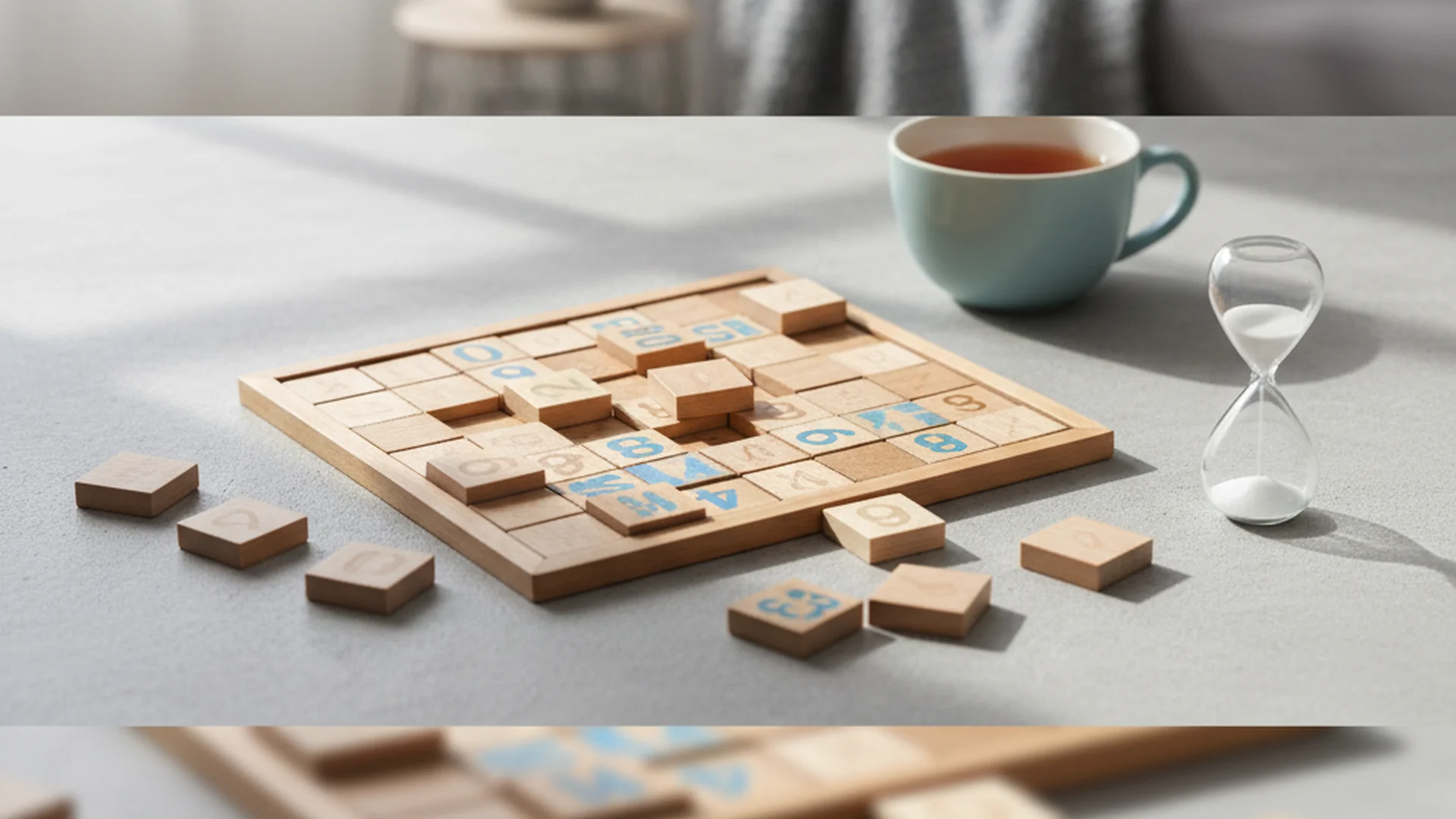
Whether you are staring at a newspaper grid over your morning coffee or competing in a high-stakes digital tournament, one question inevitably arises: how fast should I be? Understanding the average sudoku solving time is more than just a matter of ego; it is a vital metric for tracking your cognitive growth and mastering the nuances of logic-based puzzles. In the world of competitive play, seconds are the difference between a podium finish and obscurity, but for the casual enthusiast, benchmarks provide a roadmap for improvement.
Understanding Sudoku Solving Time Benchmarks
The time it takes to complete a puzzle is influenced by three primary factors: the difficulty of the logic required, the player's familiarity with patterns, and the physical speed of entry. If you are just learning how to play Sudoku: step-by-step, your initial times will naturally be higher as your brain builds the necessary neural pathways for "scanning."
Average Times by Skill Level
To see where you stand, compare your current performance against these researched averages for a standard 9x9 grid:
| Difficulty Level | Beginner Solver | Experienced/Average | Expert/Pro Solver |
|---|---|---|---|
| Easy | 10–20 minutes | 5–10 minutes | 2–5 minutes |
| Medium | 20–40 minutes | 10–20 minutes | 5–10 minutes |
| Hard/Expert | 40–60+ minutes | 30–45 minutes | 10–20 minutes |
The Elite: World Records and Professional Speed
To understand the upper limits of human capability, we must look at the professional circuit. As of the 2025-2026 season, the boundaries of human speed continue to be pushed.
- The Sprint Record: Wang Shiyao of China holds the official World Sudoku Championship (WSC) record for a standard 9x9 puzzle at 54.44 seconds.
- The Standardized Benchmark: Thomas Snyder (USA) holds a Guinness World Record for an "Easy" puzzle at 1:23.93. This record is particularly notable because it uses a specific, standardized puzzle to ensure fairness across decades of attempts.
- Recent Dominance: At the 18th WSC in Eger, Hungary (October 2025), Tantan Dai of China reclaimed the individual gold. During the finals, Dai was observed solving championship-level "Hard" puzzles in under 90 seconds—a feat that leaves even seasoned hobbyists in awe.
Advertisement
Factors That Influence How Long Sudoku Takes
It is a common misconception that fewer clues mean a harder puzzle. In reality, the complexity of a Sudoku is defined by the logical techniques required to find the next number.
The 17-Clue Minimum
Mathematically, a valid Sudoku must have at least 17 clues to ensure a unique solution. However, a 17-clue puzzle can sometimes be easier than a 30-clue puzzle. If the 30-clue puzzle requires expert Sudoku techniques like "XY-Wings" or "Swordfish," it will take significantly longer than a sparse puzzle that only requires simple "Naked Singles."
Scanning vs. Deduction
Solving time is split between two phases:
- Scanning: Moving your eyes across rows, columns, and boxes to find immediate placements.
- Deduction: Using logic to eliminate candidates when no immediate placements are visible.
As you advance, your scanning becomes subconscious, allowing you to spend more "brain cycles" on complex deductions.
Expert Strategies to Reduce Your Time
If you find yourself stuck at the 20-minute mark, these professional techniques used in the 2025 competitive circuit can help you shave minutes off your personal best.
1. Snyder Notation
Named after champion Thomas Snyder, this is the "gold standard" for speed. Only write pencil marks (candidates) in a 3x3 box if a number can fit in exactly two cells.
- Why it works: It prevents "grid clutter," which is a primary cause of visual fatigue and slow solve times.
- The Benefit: It automatically highlights "pointing pairs" and "claiming pairs," allowing you to skip the tedious process of re-scanning the same box.
2. The "Heavy House" Focus
Always prioritize "Heavy Houses"—rows, columns, or boxes that already contain 5 or more digits. The fewer empty cells a house has, the higher the mathematical probability of finding a "Naked Single."
3. Double Scanning
Instead of searching for all 1s, then all 2s, practice scanning for two numbers simultaneously (e.g., 1 and 7). This helps you identify "Hidden Pairs" much faster, which is a key barrier to breaking the 10-minute mark on Hard puzzles.
4. High-Intensity Practice (The 5-Minute Sprint)
Set a timer for exactly five minutes and attempt an Easy or Medium puzzle. The goal isn't necessarily to finish, but to force your brain to make decisions without second-guessing. This reduces "analysis paralysis," a common trait in intermediate players.
2025–2026 Trends in Solving Speed
The landscape of Sudoku is changing thanks to technology and global competition.
- AI-Enhanced Learning: In 2025, the rise of AI assistants in apps like SudokuPad has revolutionized how players improve. Rather than just giving the answer, these tools explain the specific logic (e.g., "This cell is a 5 because of a Jellyfish pattern"). This educational feedback loop has significantly lowered the average solve times for the "Hard" tier.
- Variant Training: Professional solvers are increasingly turning to Killer Sudoku: rules and strategies to sharpen their mental arithmetic. The logic required for variants translates back to classic Sudoku, making the standard grid feel "slower" and easier to manage.
- Live-Streamed Competitions: Events like SudokuCon 2025 in Boston have popularized real-time "digit tracking." Solvers can now see exactly how many seconds they spend on each number, allowing for data-driven improvement.
Advertisement
Common Mistakes to Avoid
Even the most logical minds can fall into traps that bloat their sudoku solving time.
- Over-marking: Filling every cell with every possible candidate (the "brute force" method) creates visual noise. This often leads to missing simple moves because the grid is too "loud."
- The "Guessing" Trap: Every legitimate Sudoku is solvable through pure logic. If you guess and get it wrong, you may spend 20 minutes trying to find where the error occurred. It is always faster to pause and look for a new technique than to guess.
- Underscanning: Focusing too intensely on a single 3x3 box while ignoring the intersecting rows and columns. This "tunnel vision" is a leading cause of getting "stuck."
- Ignoring Mental Health: Logic puzzles require high cognitive load. If you are tired or stressed, your time will naturally increase. Learn more about the brain health and puzzles: science of cognitive gaming to understand how rest affects your performance.
Frequently Asked Questions
How long should it take to solve a Sudoku?
For a casual player, completing a standard daily puzzle in under 15 minutes is a great goal. Anything under 10 minutes is considered "proficient," and under 5 minutes is "expert" level for general populations.
Is a 5-minute Sudoku solve good?
Yes! If you are solving a Medium or Hard puzzle in 5 minutes, you are performing at a near-professional level. For an Easy puzzle, 5 minutes shows a very strong grasp of basic patterns.
Does the number of clues determine speed?
Not directly. Difficulty is determined by the complexity of the logic needed. A 17-clue puzzle might be solved faster than a 30-clue puzzle if the latter requires advanced strategies like X-Wings.
Can I solve Sudoku without notes?
Yes, this is called "no-notes" solving. While it is generally slower because it relies heavily on short-term memory, it is a fantastic way to train your brain. Many experts use no-notes on Easy and Medium puzzles to build mental discipline.
Why am I not getting any faster?
You likely have hit a "technique ceiling." If you only use basic scanning, you will plateau. To break through, you must study common Sudoku mistakes to avoid and integrate higher-level logical patterns.
Conclusion
Sudoku solving time is a personal journey of mental refinement. Whether you are aiming to break the 1-minute barrier like the titans in the 2026 World Sudoku Championship in Kolkata or simply looking to finish your Sunday paper before the coffee gets cold, the key is consistent, mindful practice. By moving away from brute-force note-taking and toward elegant systems like Snyder Notation, you transform the puzzle from a chore into a high-speed exercise in logic.
Want to Master the Grid?
Take your skills to the next level with our expert strategy guides.
Put it into practice

Keep reading
Sudoku
Diagonal Sudoku Guide: Mastering the Rules and Solving Strategies
Learn how to master Diagonal Sudoku (Sudoku X). Discover essential rules, advanced solving strategies, and the mathematics behind this popular Sudoku variant.
Jul 17, 2026 12 min
Sudoku
Sudoku Common Patterns: How to Recognize and Solve Complex Grids
Unlock the secrets of sudoku patterns. Learn to identify X-Wings, Swordfish, and deadly rectangles to solve even the most challenging puzzles with ease.
Sep 9, 2025 12 min
Sudoku
Sudoku for Couples: How to Solve Together and Strengthen Your Bond
Discover why sudoku for couples is the ultimate logic-based date night. Learn collaborative strategies, competitive apps, and 2026 trends to master the grid.
Feb 9, 2025 10 min
Advertisement