Mini Sudoku: The Ultimate Quick Puzzle for Fast Brain Training
Explore the science behind Mini Sudoku and 4x4 puzzles. Learn how these 'brain snacks' improve memory by 18% and discover expert strategies for 60-second solves.
By Free To Play Puzzles Editorial Team 10 min read
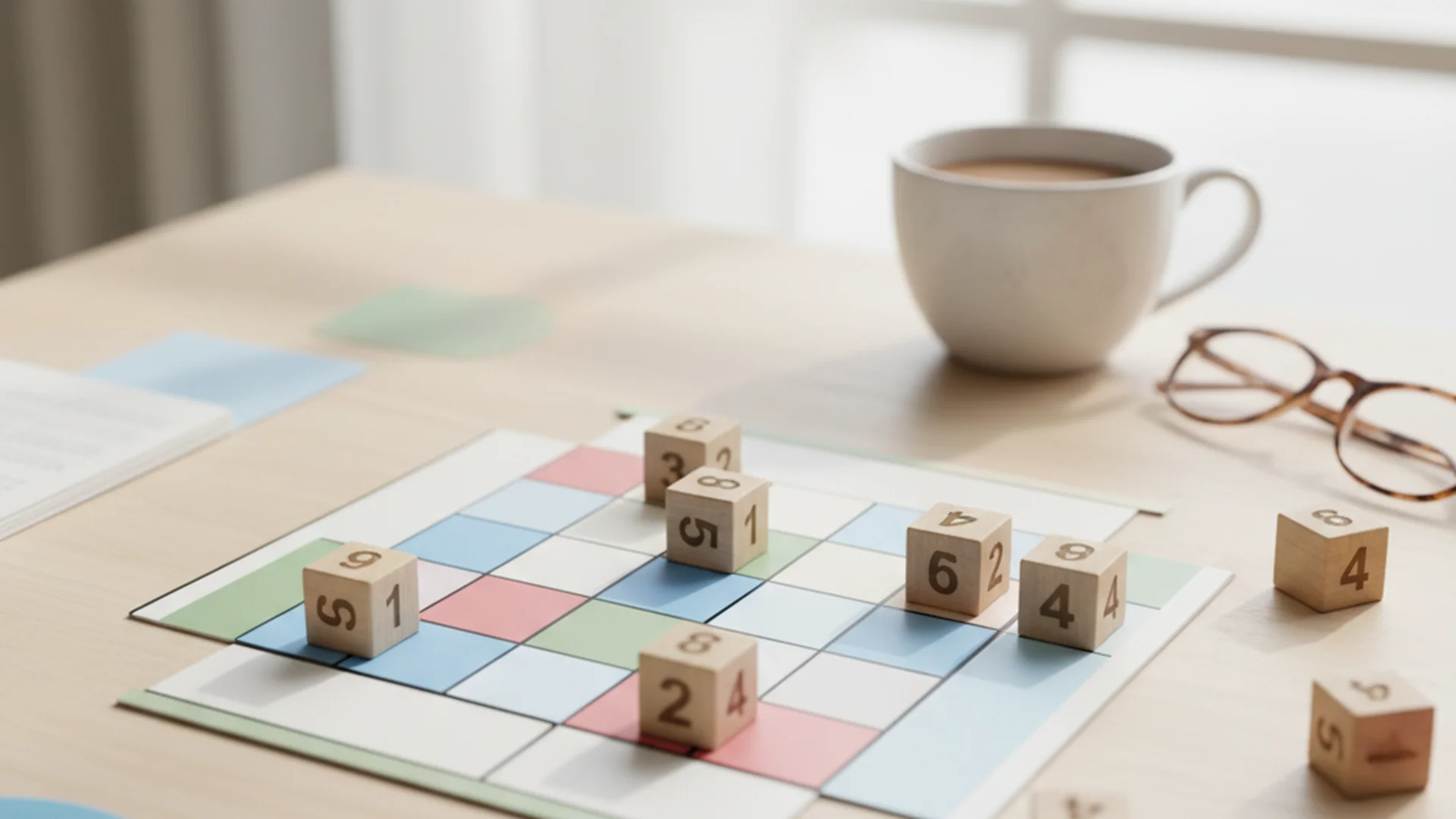
In the modern digital landscape, our attention spans are increasingly fragmented. Many people struggle to maintain focus during complex tasks. However, a revolutionary shift is occurring in the world of cognitive gaming. The rise of mini sudoku—specifically the 4x4 and 6x6 variants—has transformed brain training from a grueling marathon into a series of "brain snacks." These bite-sized challenges provide all the neurological benefits of their 9x9 counterparts but are designed to fit perfectly into a 90-second coffee break.
The Science of the Grid: Why Small is Powerful
Many enthusiasts believe that a smaller grid means a lesser challenge. In reality, the cognitive load of a 4x4 grid is perfectly tuned for "state-transitioning"—helping the brain move from a distracted state to one of high-focus "flow."
A landmark 2024 UCLA study revealed that adults who engaged with mini sudoku puzzles just three times a week showed an 18% improvement in working memory over a six-month period. This is because the brain must still hold multiple variables in suspension, even if the total count of numbers is reduced. For more on the neurological impact of these games, see our guide on Brain Health and Puzzles: Science of Cognitive Gaming.
The Mathematical Profile of 4x4 Sudoku
While a standard 9x9 Sudoku requires at least 17 clues to be uniquely solvable, the 4x4 sudoku is surprisingly efficient. It requires a minimum of only 4 clues to ensure a unique solution.
| Feature | 4x4 Mini Sudoku | 9x9 Classic Sudoku |
|---|---|---|
| Total Cells | 16 | 81 |
| Minimum Clues | 4 | 17 |
| Distinct Solutions | 288 | 6.67 × 10^21 |
| Avg. Solve Time | 60 Seconds | 15-30 Minutes |
Interestingly, while there are 288 distinct solutions, if you account for symmetry (rotations and reflections) and digit relabeling, there are only 2 "essentially different" grids in existence. This makes the 4x4 format an incredible tool for studying pattern recognition.
Why 4x4 is the Perfect Starting Line
For those new to logic puzzles, the standard grid can be intimidating. The 4x4 format serves as the "gold standard" for introductory logic. It is particularly effective for:
- Children (Ages 4–8): Teaching the fundamentals of non-repeating sequences.
- Seniors: Acting as a low-barrier tool for dementia prevention.
- Professionals: Serving as a "micro-break" tool to reset the prefrontal cortex during a busy workday.
If you are just beginning your journey, we recommend starting with Easy Sudoku Puzzles for Beginners to build your confidence before moving to timed challenges.
Advertisement
The LinkedIn Influence and 2025 Trends
We are currently witnessing a "short-form gaming boom." In 2025, the professional networking platform LinkedIn integrated a 6x6 Mini Sudoku into its daily gaming suite. This move skyrocketed the popularity of the format, with 86% of players returning daily to compete with colleagues.
This trend reflects a broader shift in the puzzle market, which grew 15% year-over-year into 2025. Players now prefer a 2-minute "brain snack" over a 30-minute 9x9 session. We are also seeing the rise of:
- AI-Adaptive Puzzles: Modern apps now use AI to generate grids that adjust clue placement based on your individual solving speed, keeping you in a constant "flow state."
- Mini-Variations: Enthusiasts are now flocking to 4x4 Killer Sudoku (using math cages) and 4x4 Sudoku X (where diagonals must also contain unique numbers).
Pro Tips for 60-Second Solves
To achieve elite speeds in mini sudoku, you must move beyond simple counting. You need a systematic approach to scanning the grid.
1. The "Most Constrained" Strategy
Always start where the most information is already provided. If a row, column, or 2x2 block has 3 out of 4 numbers filled in, the final number is a "Naked Single." By filling these in first, you create a "domino effect" across the rest of the grid.
2. Systematic Scanning (Cross-Hatching)
Don't look at a single empty box in isolation. Instead, scan the intersecting row and column simultaneously. This technique, known as cross-hatching, allows you to eliminate possibilities instantly. For a deeper dive into these methods, check out our article on Hidden Singles in Sudoku.
3. The "Pencil First" Rule
Even in a 4x4 grid, using "note mode" or a pencil is vital. It builds the habit of candidate elimination. While you might be able to solve a 4x4 in your head, the mental discipline of marking candidates is what allows you to eventually tackle Expert Sudoku Techniques.
Common Mistakes to Avoid
Even seasoned players can fall into traps when the grid is small. Because there are fewer cells, a single error propagates much faster.
- The Guessing Mistake: In a 4x4 grid, one wrong guess will break the entire puzzle within seconds. Always rely on logic only.
- The "Math Game" Myth: Many avoid Sudoku because they "aren't good at math." Remember: Sudoku is a pattern recognition game. You could replace the numbers 1–4 with emoji or colors, and the logic would remain identical.
- Overlooking 2x2 Regions: Beginners often focus so much on rows and columns that they forget each 2x2 "mini-box" must also contain the numbers 1–4.
- Ignoring the Clock: If you want the maximum cognitive benefit, you must time yourself. Timing forces the brain to optimize its scanning efficiency. Curious about how you compare? Read How Long to Solve Sudoku?.
Advertisement
Frequently Asked Questions
Is Mini Sudoku only for kids?
While 4x4 grids are excellent for children, they are increasingly used by seniors for cognitive maintenance and by professionals as a high-speed mental reset. The logic is identical to the 9x9 version, just delivered in a more concentrated format.
How long should it take to solve a 4x4 puzzle?
A typical 4x4 puzzle should take between 30 and 90 seconds. If you are taking longer than two minutes, you may need to practice your scanning techniques.
Does it require math skills?
No. Sudoku is a game of pure logic and spatial reasoning. No arithmetic or "math" is involved in the standard version of the game.
Can there be more than one solution?
A "well-formed" or "proper" Sudoku puzzle is mathematically defined as having only one unique solution. If you find two ways to finish a grid, the puzzle design is likely flawed.
Conclusion: Start Your 90-Second Habit
Mini Sudoku is more than just a simpler version of a classic; it is a precision tool for modern cognitive health. By incorporating a 4x4 or 6x6 grid into your daily routine, you are not just passing time—you are actively strengthening your working memory and logical processing speed.
I challenge you to solve one 4x4 puzzle today. Focus on your scanning speed, avoid the temptation to guess, and see if you can hit the sub-60-second mark. For more tips on avoiding pitfalls, see Common Sudoku Mistakes to Avoid.
Ready to Train Your Brain?
Start your first Mini Sudoku challenge today and boost your focus.
Put it into practice


Keep reading

Logic Puzzles
Mastering the IQ Puzzle: The Ultimate Guide to Logic and SmartGames (2025-2026)
Discover the cognitive benefits and expert strategies for solving the IQ puzzle. Learn about 2025 trends, SmartGames, and how to sharpen your mind effectively.
Jun 20, 2026 12 min
Sudoku
Sudoku vs Kakuro: Which Number Puzzle is Right for Your Brain?
Compare Sudoku vs Kakuro in this comprehensive guide. Discover strategies, cognitive benefits, and 2026 puzzle trends from a brain health specialist.
Jul 25, 2025 12 min

Brain Health
5-Minute Brain Games: Quick Mental Workouts for Peak Performance
Discover the power of quick brain games. Learn how 5-minute mental workouts can boost memory, attention, and cognitive health based on 2025 research.
Jul 30, 2026 12 min
Advertisement