Brain Games for Waiting Rooms: Turning Downtime Into Productive Mental Exercise
Discover how brain games for waiting rooms reduce anxiety and perceived wait times. Explore the benefits of puzzles, AR, and digital games for patient satisfaction.
By Free To Play Puzzles Editorial Team 10 min read
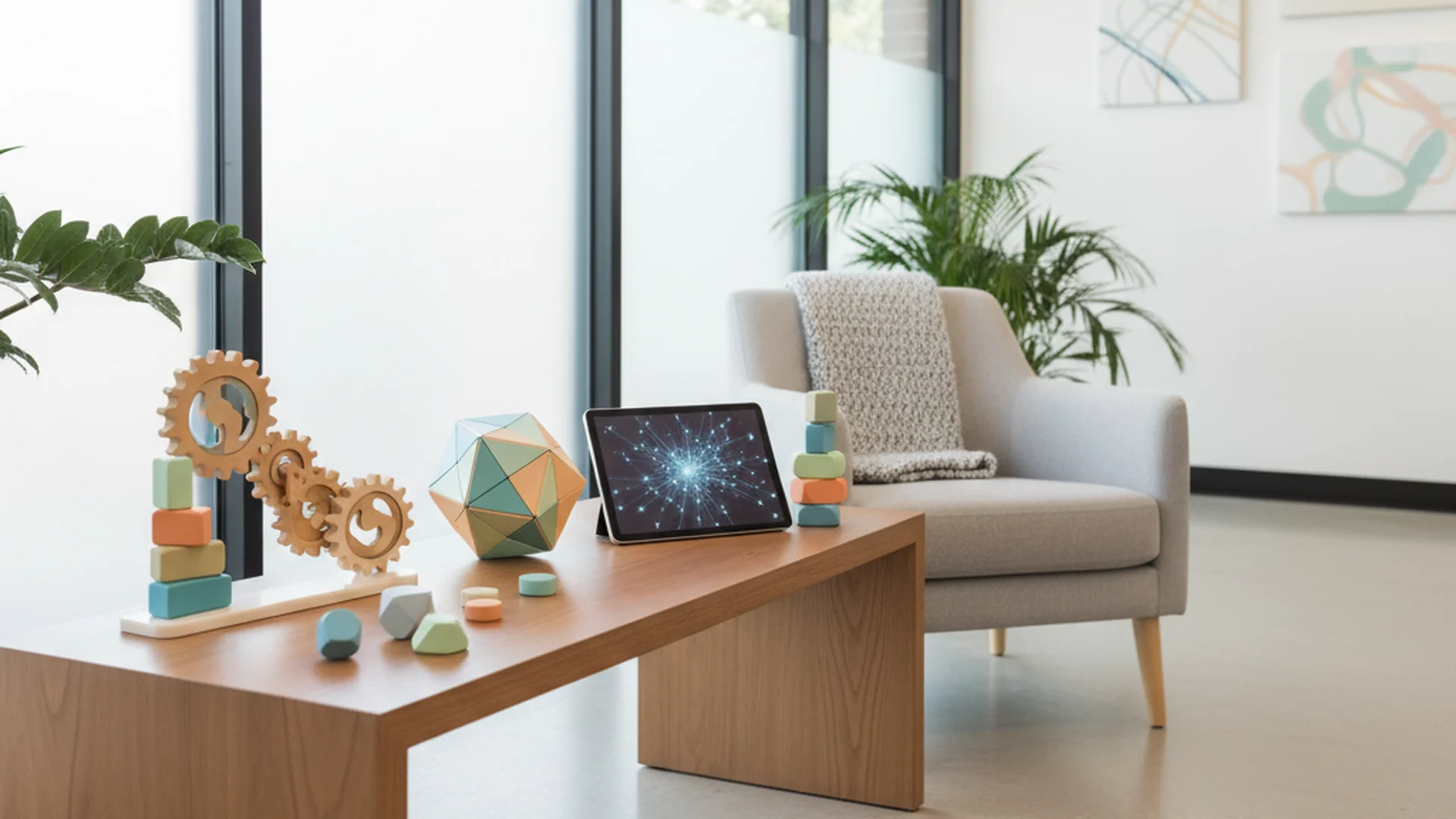
We have all been there: sitting in a sterile room, staring at a stack of three-year-old magazines, and listening to the rhythmic ticking of a wall clock. Waiting rooms are often the first point of contact between a client and a professional service, yet they are traditionally associated with anxiety and boredom. However, recent shifts in healthcare and professional services show that integrating brain games waiting areas can transform this "dead time" into a period of cognitive growth and relaxation.
As a crossword constructor, I’ve seen firsthand how a well-crafted puzzle can transport a person out of a stressful environment and into a state of "flow." By shifting the focus from the wait to the activity, businesses can significantly improve patient satisfaction and mental well-being.
The Psychology of the "Elasticity of Time"
Why does five minutes on a treadmill feel like an hour, while five minutes of a high-stakes puzzle feels like seconds? This is known as the "Elasticity of Time." In a waiting room setting, "unoccupied time" feels significantly longer than "occupied time." When a patient is left with nothing but their thoughts, their anxiety regarding the upcoming appointment often amplifies.
By introducing waiting room puzzles, administrators tap into a psychological distraction technique. Research indicates that perceived wait time is a much stronger predictor of satisfaction than the actual number of minutes spent in the chair. If a patient is engrossed in a Sudoku grid or a challenging Word Search, their brain registers the time as being spent productively, rather than wasted.
The Cognitive and Health Benefits of Waiting Room Puzzles
Beyond simply killing time, brain games offer tangible health benefits that can prepare a patient for their consultation.
1. Stress and Anxiety Reduction
"Positive distractions" like puzzles, art, or nature-based media can physically reduce blood pressure and heart rate. In clinical settings, where white-coat syndrome is common, a simple puzzle can act as a non-pharmacological sedative.
2. Memory and Brain Health
An 18-month study found that crossword puzzles outperform many other brain games in boosting memory and even reducing brain shrinkage for older adults with mild cognitive impairment. For seniors, providing these activities is more than a courtesy; it is a form of cognitive maintenance. You can learn more about this in our guide on the Best Brain Games for Seniors.
3. Gamified Education
Interactive apps that explain medical procedures through mini-games have been shown to increase patient knowledge by 20%. When patients understand what is about to happen, their nervousness decreases, leading to more productive conversations with their providers.
Advertisement
Managing the "Germ Factor": Physical vs. Digital Games
In a post-pandemic world, the hygiene of shared items is a top priority. Industry reports suggest that nearly 60% of people avoid physical waiting room toys due to hygiene concerns. This has led to a shift in how games are delivered.
| Game Type | Pros | Cons |
|---|---|---|
| Physical Puzzles | Tactile, no screen fatigue, easy to use. | Hard to sanitize, pieces go missing. |
| Digital Tablets | Endless variety, easy to wipe down, high engagement. | Expensive, requires charging/updates. |
| No-Touch Projections | 100% germ-free, engaging for children/families. | High initial cost, requires specific lighting. |
| QR Code (BYOD) | Zero contact, personalized to patient phone. | Requires patient to have a smartphone/data. |
Implementing Brain Games: Best Practices for 2025-2026
If you are an office manager or business owner looking to upgrade your waiting experience, consider these expert recommendations:
Curate for Age Diversity
A one-size-fits-all approach rarely works. For adults, offer sophisticated challenges like 10 Crossword Solving Strategies the Pros Use. For children, interactive wall panels or "EyeClick" floor projections keep them physically anchored in one area, preventing them from running around the room.
The "Low-Stress" Challenge Rule
The goal of brain games waiting is to relax the patient, not frustrate them. Avoid puzzles that are "Expert" level unless you provide a clear way to see hints. Stick to "Medium" difficulty levels to ensure a sense of accomplishment.
Use AI for Hyper-Personalization
The latest trend for 2026 involves AI-driven kiosks. These systems can suggest a game based on the estimated wait time. If the system knows the doctor is running 15 minutes behind, it might suggest a more involved logic puzzle. If the wait is only 5 minutes, it might offer a quick daily riddle.
Common Mistakes to Avoid
- Playing the News on TV: Negative news segments trigger immediate stress and cortisol spikes. Experts recommend swapping news for silent puzzle loops or nature documentaries.
- Overcomplicating the Instructions: If a game takes more than 30 seconds to understand, people will give up. Puzzles should be intuitive, such as "Tap to match" or "Drag the piece."
- Neglecting the "Perception of Fairness": Patients can get so engrossed in a game that they lose track of their place in line. Always pair games with a digital display that shows "Current Patient Being Seen" to maintain trust.
- Assuming Everyone Wants Their Phone: While many people "doom-scroll" social media, this often increases anxiety. Providing a "prescribed" distraction feels more therapeutic and intentional.
Advertisement
Real-World Examples of Waiting Room Innovation
The AR Scavenger Hunt
Some progressive pediatric and orthodontic offices now use QR codes placed strategically around the room. Patients use their own phones to launch an Augmented Reality (AR) scavenger hunt, finding "hidden" 3D characters or health facts. This keeps them moving in a controlled way and provides a high level of engagement without touching shared surfaces.
Story-Living Installations
A 2026 trend in luxury waiting rooms involves interactive digital murals. Patients can "add a stroke" to a collaborative digital painting on a large touch-screen or via their mobile device. This creates a sense of community and shared purpose while they wait.
Generative AI Puzzles
Some systems now generate a unique, one-of-a-kind word search for every patient. These can be themed around the patient’s specific interests or the reason for their visit, making the experience feel personalized rather than clinical.
Frequently Asked Questions
What are the best games for an adult-only waiting room?
Strategic, solo activities are best. We recommend Sudoku, high-quality acrylic mazes, or word-based challenges. These provide a sense of accomplishment and are widely accepted by all adult age groups. You can see how these rank in our Best Brain Games Ranked article.
Are digital tablets or physical puzzles better?
A mix is ideal. Tablets offer variety and are easy to clean with hospital-grade wipes. However, tactile puzzles (like wooden jigsaws or "Uzzle" frenzy boards) provide a much-needed break from screen time, which many patients appreciate.
How do I keep waiting room games sanitary?
Focus on non-porous materials like acrylic, metal, or treated wood. For the highest safety, use "no-touch" projection games (like Obie) that allow patients to interact with light on a table surface.
Do brain games actually make the wait feel shorter?
Yes. Because the brain is focused on solving a problem, it enters a state of "flow" where time tracking becomes less of a priority. This significantly reduces the psychological burden of waiting.
What is the best age to start using brain games?
It is never too early or too late! For children, games help with motor skills and pattern recognition. For adults, they maintain cognitive reserve. Check out our deep dive on the Best Age for Brain Training.
Conclusion
The waiting room doesn't have to be a place of dread. By integrating brain games waiting solutions, you can turn a necessary delay into a valuable service. Whether through a simple paper Crossword or a high-tech AR experience, providing mental stimulation shows patients that you value their time and their mental well-being.
Enhance Your Wait Experience
Explore our full library of interactive puzzles and brain games.
Put it into practice

Keep reading
Brain Health
5-Minute Brain Games: Quick Mental Workouts for Peak Performance
Discover the power of quick brain games. Learn how 5-minute mental workouts can boost memory, attention, and cognitive health based on 2025 research.
Jul 30, 2026 12 min
Brain Health
Brain Games for Problem Solving: Sharpen Your Critical Thinking in 2025
Unlock your cognitive potential with the best brain games for problem solving. Explore science-backed strategies, trends for 2025, and expert tips to boost logic.
Sep 4, 2026 12 min
Brain Health
Brain Teasers vs Puzzles: Key Differences for Brain Health
Explore the vital differences between brain teasers vs puzzles. Discover which cognitive exercises offer the best benefits for mental longevity and focus in 2025.
Apr 17, 2026 10 min
Advertisement