Working Memory Training: The Science-Backed Guide to Optimizing Your Mental Workspace
Unlock your brain's potential with working memory training. Learn the latest 2025 research, adaptive techniques, and how to improve focus and academic success.
By Free To Play Puzzles Editorial Team 12 min read
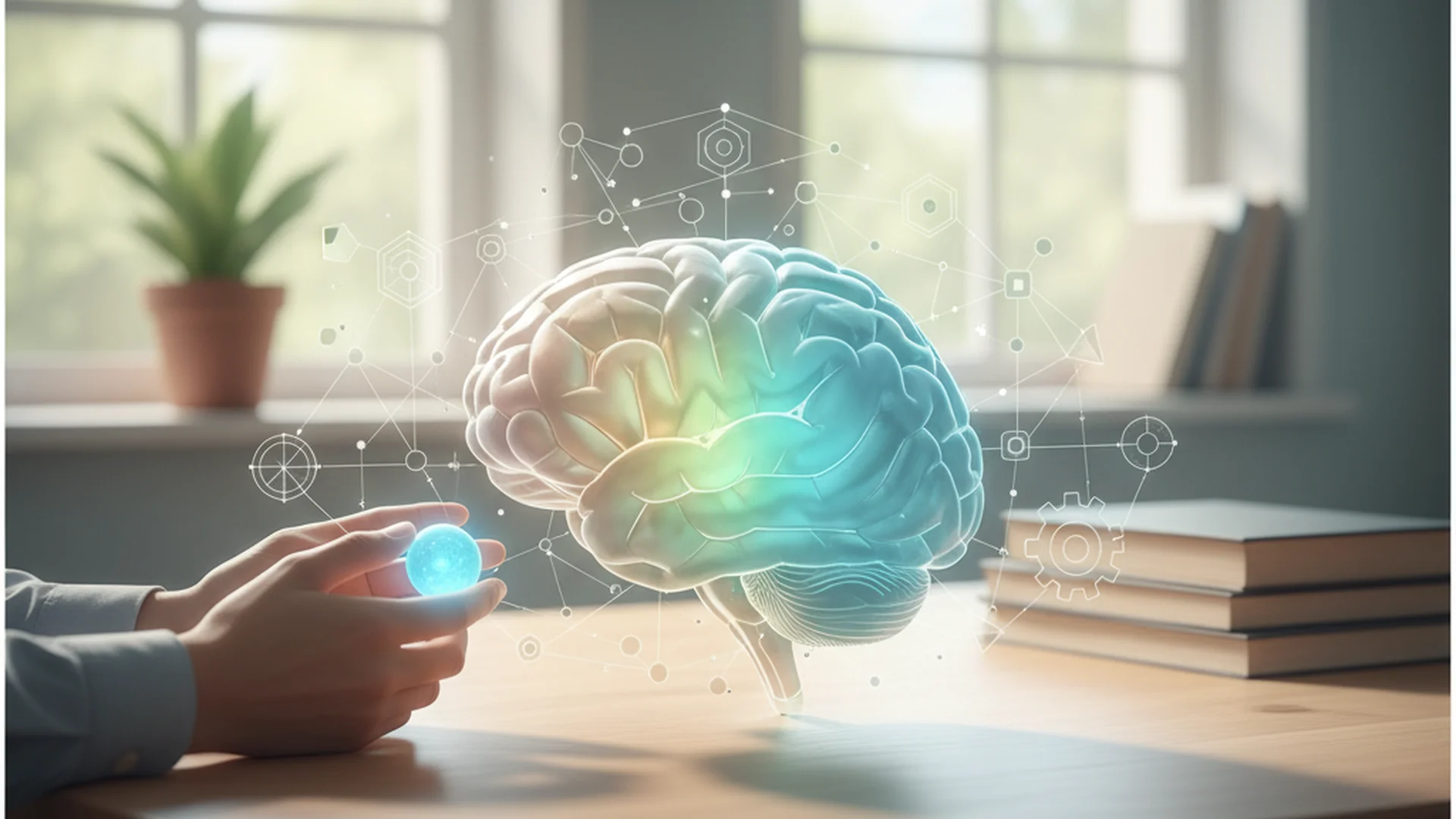
Working memory is often described as the "mental workspace" or the "RAM" of the human brain. It is the system responsible for holding and manipulating information in real-time. Whether you are a student attempting to solve a multi-step calculus problem, a professional juggling three different project streams, or simply trying to remember a set of directions while driving, your working memory capacity is the primary driver of your success. In recent years, working memory training has moved from the laboratory into the mainstream, promising to help individuals optimize this limited mental space.
The surge of interest in this field is well-founded: working memory capacity can account for up to 60% of the variation in academic performance. However, not all training is created equal. To see real results, one must move beyond casual "brain games" and into structured, science-based protocols.
The Science of the Mental Workspace
To understand why working memory training is so vital, we must first look at its natural limitations. Most adults can only hold between five and nine items—famously known as the "Magical Number Seven"—in their conscious mind at once. When we exceed this limit, information begins to "leak," leading to errors, forgotten tasks, and mental fatigue.
Unlike long-term memory, which is nearly infinite, working memory is a narrow bottleneck. Training does not necessarily "expand" the physical size of this bottleneck in a permanent, structural sense for everyone. Instead, it optimizes how we use the space we have, making the retrieval and manipulation of data more efficient.
The Near-Transfer Effect
One of the most debated topics in neuroscience is "transfer." Does getting better at a memory game make you better at real-life tasks? Meta-analyses of clinical studies consistently show a "near-transfer" effectiveness. This means that training produces improvements on tasks similar to the training itself, with a standardized mean difference (SMD) of 0.33 to 0.42. While this might seem modest, in the context of cognitive performance, it is a significant margin that can be the difference between a passing and failing grade, or a promotion and a plateau.
Academic and Professional Impact
The real-world implications of working memory capacity are staggering. A landmark study from early 2025 found that just 12 hours of targeted training in primary school children led to a 50% increase in admission rates to advanced secondary schools. This suggests that working memory isn't just an "extra" skill—it is a foundational pillar of intelligence and learning.
In the professional world, the cognitive assessment and training market was valued at nearly $3 billion in 2024. Projections suggest it will surge to $169 billion by 2034. This 30.5% CAGR is driven by a corporate world that realizes "brain fog" and memory lapses are not just personal annoyances—they are productivity killers.
Case Study: High-Stress Environments
Consider the role of an air traffic controller or an emergency room surgeon. These professionals must hold multiple variables in their heads simultaneously while making split-second decisions. Recent 2025 research has shown that adaptive training can help these professionals manage "cognitive load," allowing them to maintain accuracy even under extreme stress. This is why many Brain Training modules are now being integrated into high-stakes vocational schooling.
Advertisement
Core Strategies for Effective Training
If you are looking to start your own regimen, you must move beyond passive consumption. Many people mistakenly believe that any "brainy" activity—like a crossword or Sudoku—qualifies as working memory training. While these are excellent for mental activity, they often lack the "adaptive" nature required to change the brain.
1. The Power of Adaptive Training
For neuroplasticity to occur, the brain must be challenged at the edge of its capability. If a task is too easy, the brain stays in "autopilot." If it is too hard, the brain shuts down due to frustration. Adaptive programs use machine learning to adjust the difficulty in real-time. As you get faster and more accurate, the game adds more variables.
2. Implementing "Chunking"
Chunking is a cognitive strategy where you group individual pieces of information into larger, familiar units. For example, instead of trying to remember the ten digits 2-0-2-4-1-1-2-1, you remember them as "2024" and "11-21." This effectively reduces the number of "slots" used in your mental workspace. This is a skill that can be practiced through various short term memory games and logic puzzles.
3. The Method of Loci (Memory Palace)
For those needing to remember long lists or complex sequences, the Method of Loci is a gold-standard technique. By mentally "placing" items in a familiar physical environment—like your childhood home—you leverage spatial memory. Spatial memory is often much more robust than verbal memory, allowing you to bypass some of the traditional limitations of the prefrontal cortex.
| Technique | Primary Benefit | Best For |
|---|---|---|
| Dual N-Back | Focus & Fluid Intelligence | ADHD & Professional Focus |
| Chunking | Increased Capacity | Numbers & Lists |
| Method of Loci | Long-term Retrieval | Speeches & Complex Sequences |
| Visualization | Mental Manipulation | Math & Engineering |
Recent Trends in Cognitive Science (2025–2026)
The landscape of brain health is shifting rapidly. We are moving away from "one-size-fits-all" apps and toward highly personalized, multimodal interventions.
AI-Driven Personalization
2025 saw the rise of next-generation platforms like Nuroe and updated clinical versions of Cogmed. These tools use AI to predict your specific learning curve. If the algorithm detects that your performance dips after 15 minutes due to fatigue, it will shift the task type to keep you in the "flow state" for maximum ROI.
Precision Stimulation
One of the most exciting breakthroughs came from Stanford in January 2025. Researchers demonstrated that combining tDCS (transcranial Direct Current Stimulation)—a form of mild electrical brain stimulation—with real-time fMRI feedback led to a 24% improvement in working memory compared to traditional training alone. While this is currently limited to clinical settings, it paves the way for future wearable tech.
Multimodal Training (Cognitive Training 2.0)
A major trend for 2026 is the integration of physical movement with mental tasks. Using VR (Virtual Reality), users might be asked to solve complex puzzles while navigating a physical obstacle course. This "dual-tasking" mirrors real-world demands much more closely than sitting at a desk.
The Biological Foundation: Sleep and Exercise
No amount of Memory Match or N-back training can overcome a neglected biological foundation. Your brain is a physical organ, and its performance is dictated by its health.
The "Sleep First" Rule
Sleep is not just for rest; it is the only time the brain performs "glymphatic drainage," clearing out metabolic waste that causes brain fog. More importantly, sleep is when the brain consolidates working memory into long-term storage. Experts recommend 7–9 hours of quality sleep to ensure that the gains you make during training are actually "locked in."
Aerobic Exercise and BDNF
Just 20 minutes of daily brisk walking or cardio triggers the release of BDNF (brain-derived neurotrophic factor). Think of BDNF as "fertilizer" for your neurons. It nourishes existing brain cells and supports the growth of new ones, creating the perfect environment for the neuroplasticity required by working memory training.
Advertisement
Common Mistakes to Avoid
Many well-intentioned individuals fail to see results because they fall into common traps.
- Confusing "Activity" with "Accomplishment": Playing a casual game for five minutes while watching TV is not training. Real change requires 30–60 minutes of deliberate, difficult practice.
- The "Cognitive Ceiling" Trap: Most people hit a plateau where they get better at the game but stop seeing real-world benefits. This is the difference between "state" (a trained skill) and "trait" (genetic capacity). If you hit a plateau, it’s time to switch to a different type of training.
- Ignoring Lifestyle: As mentioned, trying to train a sleep-deprived, stressed brain is like trying to run a marathon in sand. Fix your foundations first.
- Unrealistic Expectations: Be wary of marketing that promises to raise your IQ by 20 points. While you can certainly improve your Cognitive Benefits and task efficiency, training usually enhances specific functions rather than transforming your entire baseline intelligence.
Frequently Asked Questions
Does working memory training increase IQ?
The verdict is nuanced. While some 2025 studies suggest modest gains in fluid intelligence (the ability to solve new problems), most research indicates that training primarily improves specific task performance. You will become much more efficient at processing information, which may make you feel smarter and perform better on tests, but your "baseline" IQ is generally more stable.
Is the improvement permanent?
Unfortunately, no. Benefits often require "maintenance" sessions. Much like physical fitness, if you stop using these neural pathways, the gains can fade within months. The best way to maintain gains is to apply your improved memory to real-world tasks, like learning a new language or a complex hobby.
Can it help with ADHD?
Yes. Recent 2025 research has shown that adaptive dual N-back training significantly improves verbal working memory in adults with ADHD. By strengthening the prefrontal cortex, individuals are better able to manage focus and filter out mental "clutter" that leads to distractibility.
What are the best short term memory games to start with?
If you are a beginner, starting with simple games like Simon Says or Memory Match can help build the habit of focus. However, to see clinical-grade results, you should eventually move toward adaptive programs designed specifically for cognitive remediation.
Conclusion
Working memory training is not a "magic pill," but it is a powerful tool for anyone looking to sharpen their mental edge. By combining adaptive, difficult mental exercises with a solid foundation of sleep and exercise, you can significantly improve your ability to hold and manipulate information. Whether you are looking for a 30-Day Brain Training Challenge or a long-term lifestyle shift, the science is clear: your mental workspace is more flexible than you think.
Stop settling for "brain fog" and start treating your cognitive health with the same rigor you apply to your physical fitness. The results—in your career, your studies, and your daily life—will be well worth the effort.
Ready to Start?
Begin your cognitive improvement journey today with our scientifically-backed resources.
Put it into practice

Keep reading
Brain Health
Mastering the Mind: The Science-Backed Guide to Long Term Memory Games
Explore the latest 2025-2026 research on long term memory games. Discover how strategy games, AI tutors, and recall training can reverse brain age by up to 10 years.
May 1, 2026 12 min
Brain Health
Brain Training Myths Debunked: What Really Works for Your Mind in 2025?
Explore the science behind brain training myths. Learn why most apps fail at far transfer and discover the 2025 trends that actually improve cognitive health.
Aug 20, 2026 12 min

Brain Health
Mastering Divided Attention Games: Science, Strategy, and 2025 Brain Training Trends
Explore how divided attention games can improve cognitive processing speed and help mitigate the 40% multitasking productivity tax in 2025.
Jun 9, 2026 12 min
Advertisement