Quick Brain Teasers: The 30-Second Science of Mental Agility
Boost your cognitive health with quick brain teasers. Discover the 3-2-1 productivity method, 2025 trends in AI puzzles, and how fast puzzles delay dementia.
By Free To Play Puzzles Editorial Team 10 min read
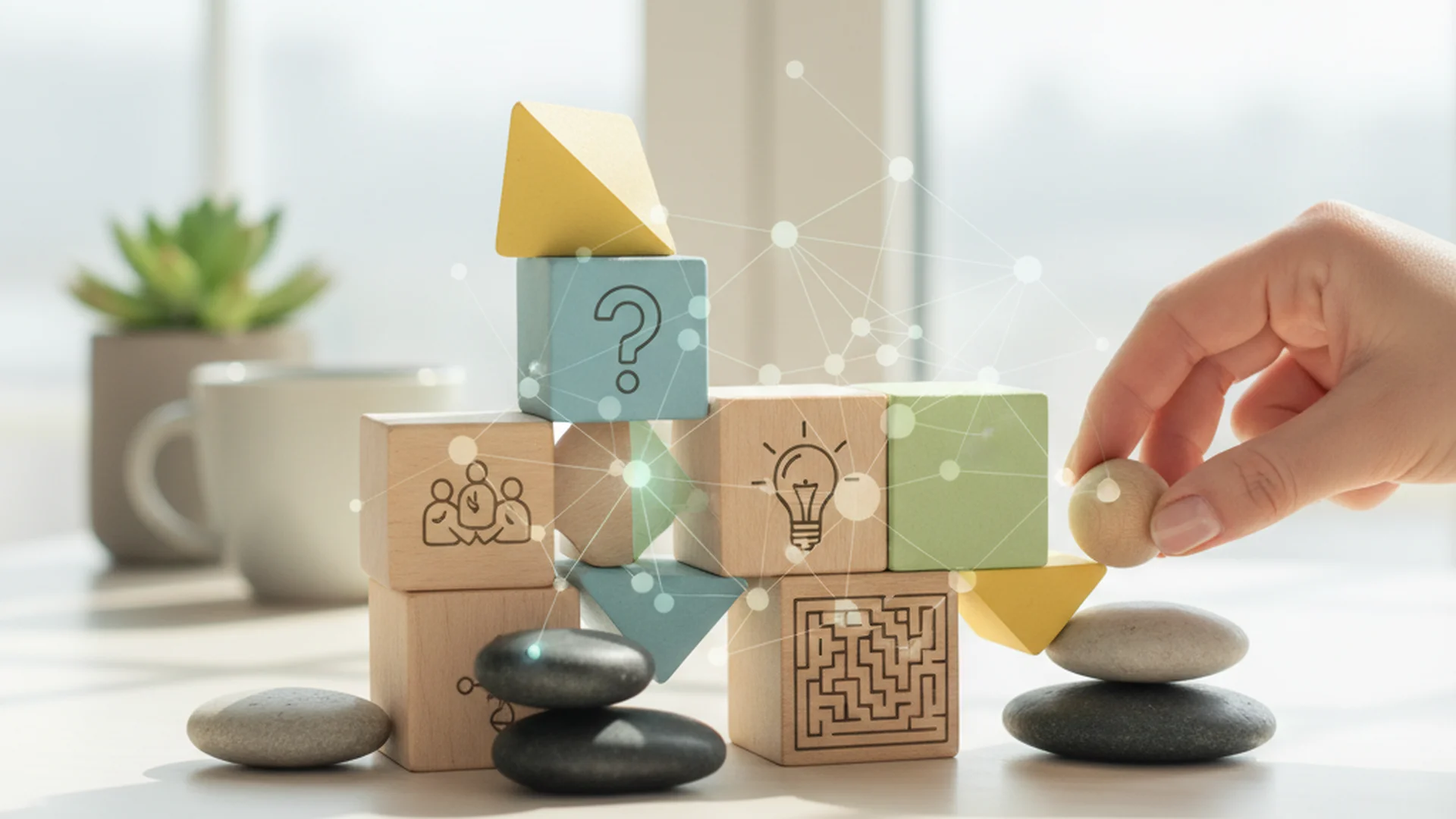
In the fast-paced world of 2025, our attention is a premium commodity. Recent studies have confirmed a startling reality: the average student's focus begins to "wobble" after just five minutes of sustained concentration. Professionals and students alike often struggle to maintain the mental stamina required for deep work. The solution isn't necessarily longer breaks, but smarter ones. Integrating quick brain teasers into your daily routine is the ultimate 2026 productivity hack, offering a rapid "reset" that sharpens the mind without the fatigue of a long study session.
These fast puzzles are more than just a momentary distraction. They are precision-engineered exercises for your neurons. Whether you are solving a 30-second riddle or navigating a complex visual pattern, you are engaging in a form of mental "interval training" that keeps your cognitive gears lubricated and ready for action.
The Science of the "Brain Break"
Why does a 30-second challenge have such a profound impact on our long-term health? It comes down to two primary concepts: Vigilance Decrement and Cognitive Reserve.
Combating the Vigilance Wobble
2025 research into human vigilance—the ability to maintain concentrated attention—shows that our "sustained attention" systems are remarkably fragile. When we push through a task for hours without a break, our error rate climbs while our creativity plummets. By introducing quick brain teasers, we provide the brain with a "novelty spike." This burst of new activity re-engages the prefrontal cortex, effectively resetting our focus timer.
Building Cognitive Reserve
Perhaps most importantly, regular engagement with various puzzles helps build what we call "cognitive reserve." Think of this as a mental savings account. By consistently challenging your brain with new logic problems, you strengthen the synaptic connections between neurons. Data from 2025-2026 indicates that this practice can delay the onset of dementia symptoms by an average of 2.5 years. You aren't just solving a puzzle; you are future-proofing your mind.
The 2025-2026 Trend Report: The Future of Puzzles
The landscape of mental exercise is shifting rapidly. We are moving away from the high-pressure IQ tests of the past toward more integrated, adaptive experiences.
AI-Enhanced and Biometric Puzzles
2025 has seen the rise of "Agentic AI" in the gaming world. New digital platforms now use biometric signals—like your heart rate or the speed of your cursor movements—to adapt puzzle difficulty in real-time. If the AI senses you are becoming overly stressed, it subtly shifts the challenge to a more "meditative" state.
The "Cozy Gaming" Movement
As we head into 2026, there is a significant trend toward "Cozy & Wholesome Puzzles." These are low-stress, high-visual-quality challenges designed for anxiety relief. Instead of a ticking clock, these games focus on the aesthetic pleasure of organization and pattern recognition, making them perfect for a mid-afternoon reset.
Micro-Storytelling Challenges
Viral social media trends have popularized "20-second mysteries." These are short video clips where a crime or logic scenario is presented, and the viewer must solve it before the video ends. This format taps into our natural love for narrative, making fast puzzles more social and engaging than ever before.
Advertisement
5 Quick Brain Teasers to Try Right Now
To get your mental gears turning, try these five varied challenges. Each targets a different area of the brain.
- The Linguistic Riddle (Left Hemisphere): I have cities, but no houses. I have mountains, but no trees. I have water, but no fish. What am I? (Answer: A map).
- The Lateral Thinking Challenge (Right Hemisphere): A man pushes his car to a hotel and tells the owner he is bankrupt. Why? (Answer: He is playing Monopoly).
- The Pattern Logic Sequence: What comes next in this sequence: 1, 11, 21, 1211, 111221, ___? (Answer: 312211 – each term describes the previous one: "three 1s, two 2s, one 1").
- The Visual Perception Trick: Close your eyes and name the four colors of the Google logo in the correct order from left to right. (Answer: Blue, Red, Yellow, Blue, Green, Red).
- The Digital Speed Test: Head over to a quick game of Sudoku or 2048 and see if you can make five moves in under ten seconds.
Expert Strategies: The 3-2-1 Method
To turn these teasers into a lasting habit, we recommend the 3-2-1 Method for Productivity. This is a five-minute structured break designed to maximize the transition between deep work tasks:
- 3 Minutes of Focused Solving: Choose a puzzle that is entirely different from your work. If you are an accountant (numbers), try a Word Scramble.
- 2 Minutes of Reflection: Don't jump straight back into work. Spend two minutes reflecting on the solution or visualizing your top priorities for the next hour.
- 1 Minute of Movement: Stand up, stretch, or grab a glass of water.
This method utilizes the Zeigarnik Effect, where the brain remains subconsciously engaged with uncompleted tasks, often leading to "Aha!" moments while you are away from your desk.
Common Mistakes to Avoid
Many people engage with puzzles in ways that minimize their benefits. Avoid these common pitfalls to ensure your "brain training" is actually effective:
1. Repetition Burnout
Doing the same level of Sudoku every morning for five years won't continue to help your brain. Once a puzzle type becomes "automatic," its cognitive benefit drops significantly. You must practice "cross-training"—alternating between Logic Puzzles, Math Puzzles, and Word Logic Games.
2. Rushing the Answer
A common mistake is looking at the solution too quickly. The actual neural growth happens during the struggle. If you give up after 10 seconds, you've missed the workout.
3. The Multitasking Trap
Trying to solve a brain teaser while on a conference call is counterproductive. Research shows that "multitasking" is actually rapid-task switching, which causes cognitive fatigue. Dedicate five minutes of pure, uninterrupted focus to your puzzle.
| Puzzle Type | Brain Region Engaged | Primary Benefit |
|---|---|---|
| Riddles | Temporal Lobe | Verbal Fluency |
| Sudoku | Parietal Lobe | Logical Deduction |
| Visual Illusions | Occipital Lobe | Spatial Awareness |
| Lateral Thinking | Frontal Lobe | Creative Strategy |
Advertisement
Frequently Asked Questions
Do quick brain teasers actually make you smarter?
They improve specific skills, such as pattern recognition and processing speed (near-transfer). However, they don't necessarily increase your general IQ (far-transfer). They are best viewed as a tool for maintaining mental agility and building cognitive reserve rather than "upgrading" your baseline intelligence.
How long should a "quick" session be?
The "sweet spot" is 10–15 minutes daily. This is enough to stimulate the brain without causing the mental exhaustion that comes from high-intensity focus.
What is the best time of day for a brain teaser?
Many professionals find the most success using them as a "transition ritual"—either between major work projects or immediately after lunch to combat the mid-day "slump."
Are digital puzzles as good as physical ones?
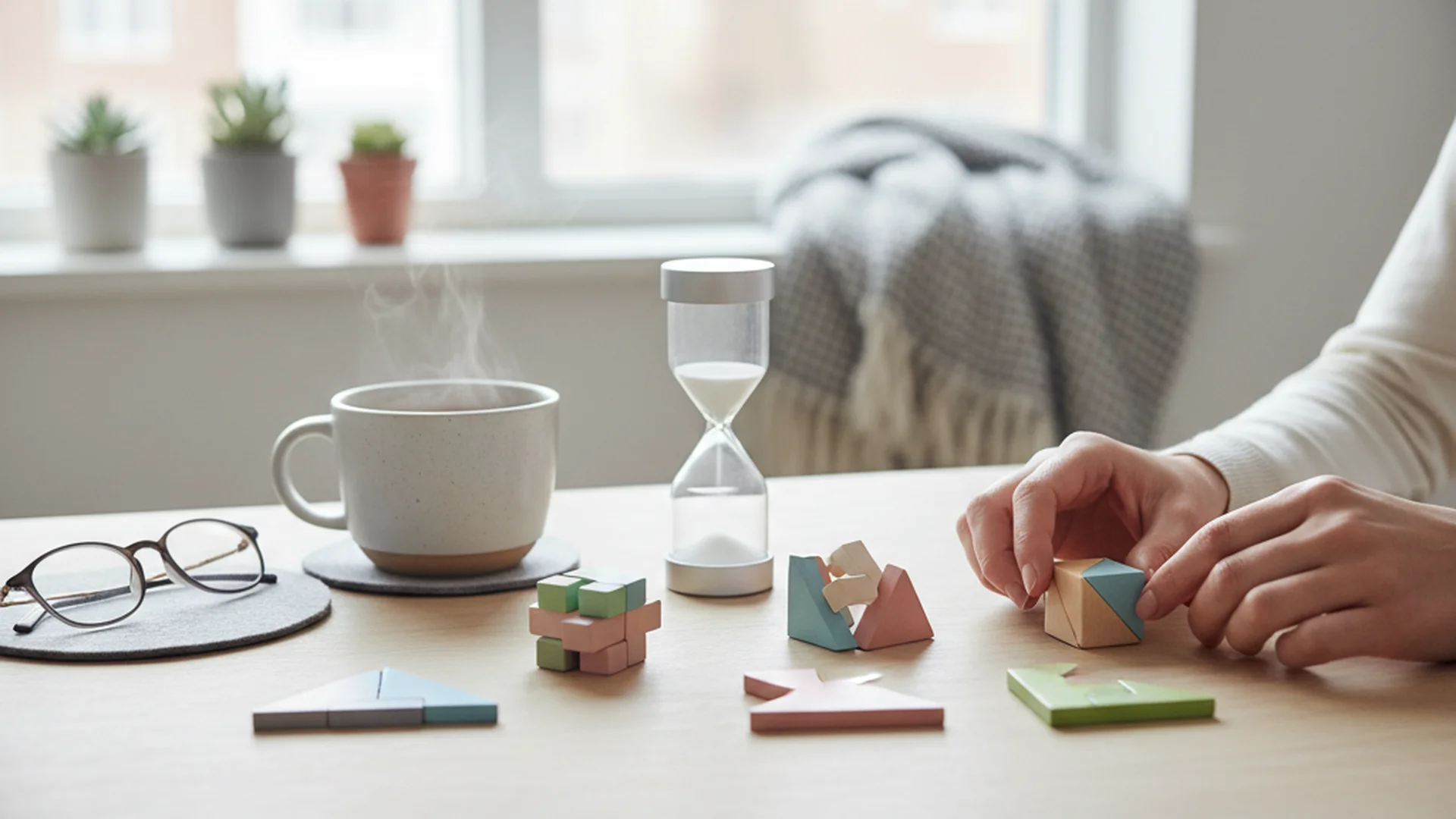
Both have benefits. Digital puzzles, like those found in Brain Training apps, offer adaptive difficulty. However, physical 3D modular puzzles provide tactile stimulation that is excellent for sensory-motor integration.
Conclusion
The evidence is clear: swapping just five minutes of "doom-scrolling" for five minutes of quick brain teasers can have a transformative effect on your cognitive longevity and daily productivity. By engaging in a variety of challenges—from Daily Challenges to complex logic problems—you are not just passing time; you are investing in the most valuable asset you own: your mind.
Start today by challenging yourself to one new puzzle every afternoon. Your future self will thank you for the extra 2.5 years of mental clarity.
Ready to Start?
Challenge your mind with our latest collection.
Put it into practice

Keep reading
Brain Health
5-Minute Brain Games: Quick Mental Workouts for Peak Performance
Discover the power of quick brain games. Learn how 5-minute mental workouts can boost memory, attention, and cognitive health based on 2025 research.
Jul 30, 2026 12 min
Time Based
Quick Puzzles Under 5 Minutes: The Science of the Micro-Mental Reset
Discover how quick puzzles under 5 minutes can boost focus, delay dementia, and raise IQ. Expert insights on 5 minute brain games for daily cognitive health.
Jul 24, 2026 12 min
Brain Teasers
Hard Brain Teasers: Expert-Level Challenges for 2025-2026
Explore the science and strategy behind hard brain teasers. Discover 2026 trends, expert tips, and challenges that only 13% of people solve.
Jun 26, 2026 12 min
Advertisement