Hard Brain Teasers: Expert-Level Challenges for 2025-2026
Explore the science and strategy behind hard brain teasers. Discover 2026 trends, expert tips, and challenges that only 13% of people solve.
By Free To Play Puzzles Editorial Team 12 min read
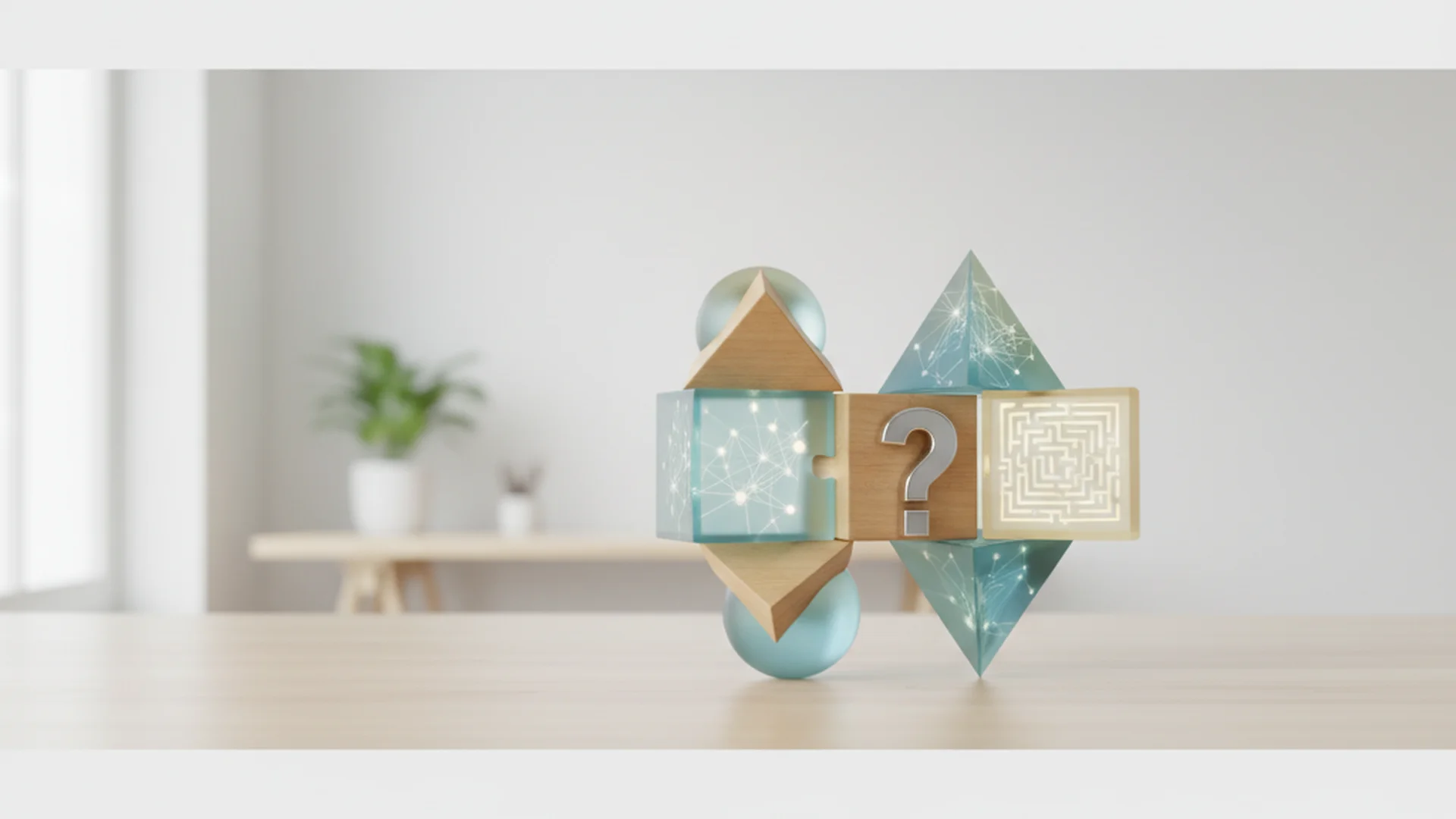
In the fast-paced digital landscape of 2025, a surprising trend has emerged: the "Puzzle Renaissance." As we navigate an era of instant gratification, many of us are intentionally seeking out hard brain teasers to test the limits of our cognitive endurance. This shift isn't just about entertainment; it is a movement toward cognitive longevity. More and more people are using difficult puzzles not just to pass the time, but to build what we call "cognitive reserve."
The world of puzzles is evolving rapidly. We are moving beyond simple riddles into the realm of 4D mechanical complexities and augmented reality (AR) integrations. Whether you are a seasoned enthusiast or a newcomer looking to sharpen your mind, understanding the mechanics of these expert-level challenges is the first step toward mastering them.
The Science of the "Aha!" Moment
Why do we find hard brain teasers so addictive? The answer lies in the neurobiology of the "Aha!" moment—the instant when a previously incomprehensible problem suddenly makes sense. This moment triggers a significant release of dopamine in the brain’s reward system, specifically the nucleus accumbens.
However, the benefits go much deeper than a temporary mood boost. Engaging with high-complexity puzzles forces the brain to utilize multiple regions simultaneously. When you tackle a difficult logic problem, your prefrontal cortex (responsible for executive function) works in tandem with your parietal lobe (spatial processing) and temporal lobe (language and memory).
Building Cognitive Reserve
Recent studies from 2024 and 2025 have provided compelling evidence that frequent engagement with word and number puzzles can delay the onset of dementia symptoms by up to 2.5 years. This doesn't mean the physical pathology of the disease is stopped, but rather that the brain becomes more resilient. By constantly challenging yourself with logic puzzles, you create a "back-up" system of neural pathways that keeps you sharp for longer.
Trends to Watch: The Future of Puzzles in 2026
The landscape of difficult puzzles is being transformed by technology and sustainability. If you are looking for the next level of challenge, here is what is trending in the 2025–2026 market.
The "Phygital" Revolution and AR
The most significant trend of 2025 is the "Phygital" revolution—the merging of physical puzzles with digital layers. Brands are now releasing AR-integrated escape room kits. Once you assemble a physical set or solve a series of paper-based clues, you scan the scene with your smartphone to unlock 3D animations, hidden digital riddles, or interactive narrative paths.
3D Mechanical Complexity
Mechanical puzzles have moved far beyond the Rubik’s Cube. New metal alloy puzzles, such as the Three-Color Alloy Magic Scroll, utilize precision engineering to create movements that seem physically impossible. These devices often require "4D spatial thinking," where the solver must account for hidden internal mechanisms that change state as the puzzle is rotated.
Sustainable "Heirloom" Puzzles
There is a growing shift away from disposable plastic puzzles. In 2026, enthusiasts are gravitating toward sustainable materials like eco-friendly bamboo and recycled wood. These "heirloom" puzzles, produced by brands like Nautilus, are designed to be solved, framed as art, and passed down through generations.
| Puzzle Type | Difficulty Rating | Key Skill Required |
|---|---|---|
| 4D Metal Interlocks | Level 5+ | Spatial Reasoning |
| AR Escape Kits | Level 4 | Narrative Logic |
| Infinite-Pattern | Level 5 | Pattern Recognition |
| Cryptic Crosswords | Level 4 | Linguistic Lateral Thinking |
Advertisement
Expert Strategy Guide: How to Think Like a Master Puzzler
Solving hard brain teasers is less about raw IQ and more about the "Toolkit" you bring to the problem. If you feel stuck, it is likely because you are applying the wrong type of logic to the challenge.
The Neurologist’s "Rule of Three"
To maintain peak cognitive performance when solving difficult puzzles, I recommend a holistic approach:
- Prioritize Sleep (7–9 Hours): Sleep is when the brain clears toxins through the glymphatic system. It also consolidates the logic patterns you learned during the day.
- Learn a "New Language of Logic": If you are a master of Sudoku, your brain has likely become efficient at that specific task. To continue growing, you must switch to something different, like cryptic crosswords or mechanical interlocks.
- Physical-Cognitive Integration: In 2026, movement-based puzzles are gaining traction. Activities that require coordination and logic simultaneously, like complex dance routines or "active" escape rooms, enhance neuroplasticity more than sitting still.
The Riddle Solver's Toolkit
- The Second Read: Never trust your first interpretation of a hard riddle. They are designed to exploit your brain's tendency to take the path of least resistance.
- Reverse Engineering: For logic-based puzzles, work backward from a hypothetical solution. If the conclusion violates even one clue, you know that entire path is incorrect.
- Identify Trigger Words: In linguistic puzzles, certain words are "triggers." For example, references to "keys" often refer to a piano or a computer keyboard rather than a door lock.
The 2026 Challenge: Test Your Skills
To put these strategies into practice, let’s look at a few examples of hard brain teasers that frequently stump even the most dedicated enthusiasts.
Example 1: The Alphabet Trap
Question: How many letters are in the alphabet? Common Mistake: Most people instinctively answer "26." Expert Solution: Look at the question literally. The words "the alphabet" contain exactly 11 letters.
Example 2: The Clock Logic
Question: How can 8 + 8 = 4? Common Mistake: Trying to use standard arithmetic. Expert Solution: Shift your perspective to a different system of measurement. In this case, 8:00 plus 8 hours equals 4:00 on a standard clock.
Example 3: The Mechanical 13%
Specialized metal brain teasers, like the Four-Dimensional Triangle Puzzle, currently have a success rate of only 13%. These require you to visualize the internal cavity of the metal without being able to see it. Success here requires a combination of tactile feedback and spatial memory.
Common Mistakes to Avoid
Even the smartest solvers fall into these common traps when facing difficult puzzles:
- Overcomplicating the Simple: Many solvers assume a puzzle requires advanced mathematics when it actually requires a lateral shift in perspective.
- Pattern Entrenchment: This happens when you get so used to solving Medium Brain Teasers that you try to apply those same "easier" patterns to expert-level challenges.
- Ignoring the Environment: In AR or "Phygital" puzzles, the answer is often hidden in the environment around the puzzle, not just the puzzle pieces themselves.
- The "Fast Solver" Myth: Research shows that "deep thinkers"—those who take their time to consider multiple abstractions—often build stronger neural pathways than those who rely on fast pattern-matching.
Advertisement
Frequently Asked Questions
Do brain teasers actually increase IQ?
While puzzles improve "near transfer" skills—meaning you get much better at specific tasks like spatial reasoning or word recall—they do not necessarily raise your general intelligence (g-factor). However, they are essential for building cognitive reserve, which protects your brain against age-related decline.
How do I solve hard riddles without getting frustrated?
The key is to use the "Fresh Eyes" protocol. When frustration sets in, your brain's "fight or flight" response can narrow your focus, making it harder to think laterally. Walking away for even five minutes allows your dopamine levels to reset, which is often when the "Aha!" moment occurs.
What are the hardest types of brain teasers in 2026?
Current favorites among experts include 4D metal interlocks, infinite-pattern puzzles (which have no edges and repeating images), and AR-integrated escape room kits that combine physical objects with digital mystery-solving.
Can kids solve "hard" brain teasers?
Yes, but they require "scaffolding." Experts suggest starting with Easy Brain Teasers to build confidence and basic logic patterns before moving to Level 5+ complexity. This prevents the "frustration shutdown" that can occur when a challenge is too far beyond a child's current cognitive stage.
Conclusion
Mastering hard brain teasers is a journey that pays dividends in both entertainment and long-term brain health. By embracing the "Puzzle Renaissance" of 2025 and 2026, you are doing more than just solving a riddle—you are fortifying your mind against the challenges of aging and enhancing your daily problem-solving abilities.
Remember that consistency beats intensity. It is better to spend 15 minutes a day on a Brain Teasers Collection than to spend five hours once a month. Make these challenges a daily ritual, and you will soon find that the "impossible" becomes achievable.
Ready to Challenge Your Mind?
Dive into our curated collection of expert-level puzzles and start building your cognitive reserve today.
Put it into practice


Keep reading
Brain Teasers
Quick Brain Teasers: The 30-Second Science of Mental Agility
Boost your cognitive health with quick brain teasers. Discover the 3-2-1 productivity method, 2025 trends in AI puzzles, and how fast puzzles delay dementia.
May 31, 2026 10 min
Brain Health
Brain Teasers vs Puzzles: Key Differences for Brain Health
Explore the vital differences between brain teasers vs puzzles. Discover which cognitive exercises offer the best benefits for mental longevity and focus in 2025.
Apr 17, 2026 10 min
Brain Health
How Often Should You Train Your Brain? Expert Frequency Recommendations for 2026
Discover the optimal brain training frequency backed by 2025-2026 research. Learn why 60-90 minutes a week is the "Golden Window" for long-term cognitive health.
Mar 23, 2026 12 min
Advertisement