Puzzles for Dementia Prevention: Brain Health Guide
Discover how puzzles build cognitive reserve and may delay dementia onset by 2.5 years. Research-backed strategies for brain health through mental stimulation.
By Free To Play Puzzles Editorial Team 12 min read
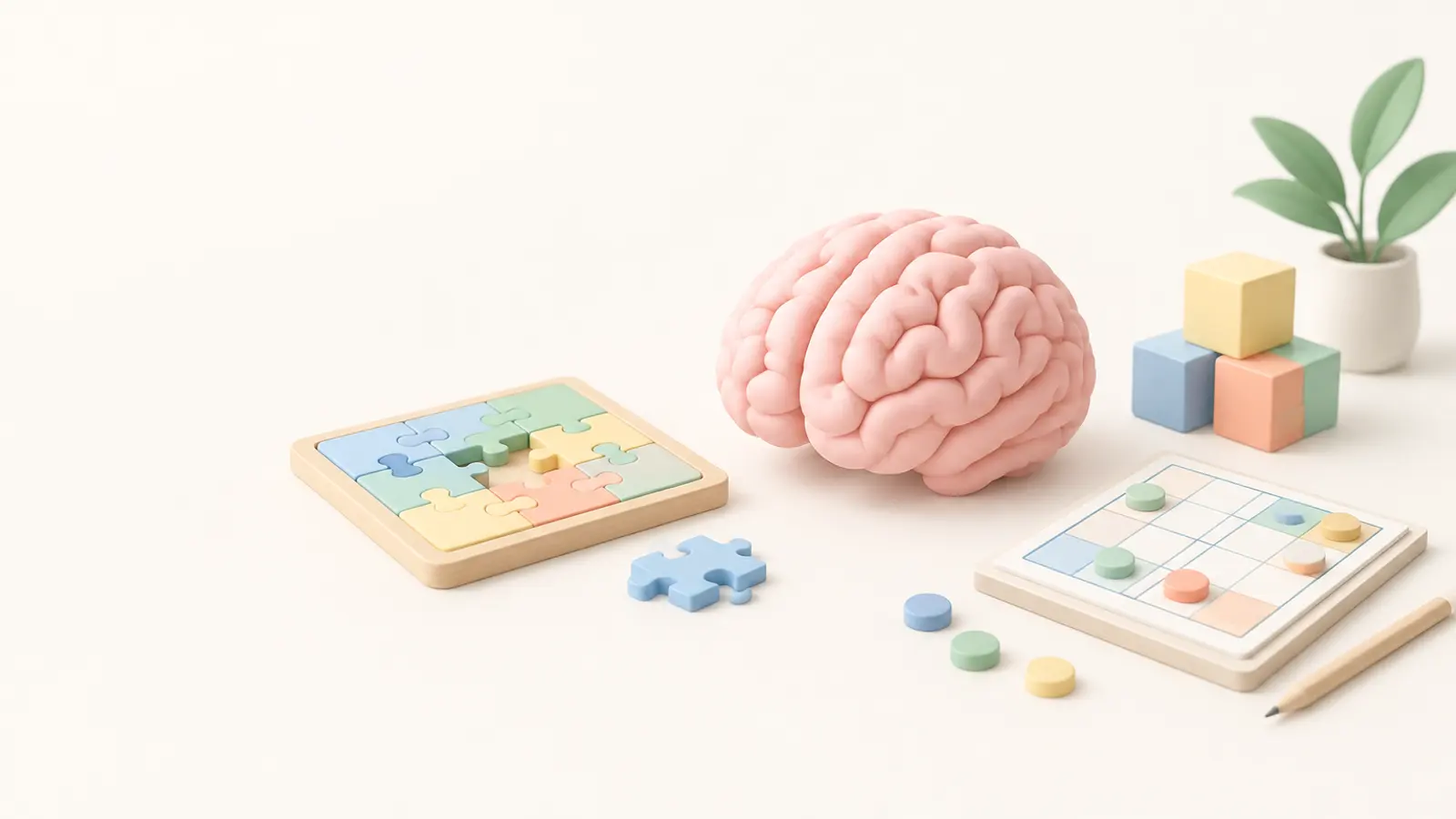
As our global population ages, dementia has become one of the most pressing health challenges of our time. With over 55 million people worldwide living with dementia and no cure in sight, prevention has never been more critical. But here's the encouraging news: emerging research suggests that up to 45% of dementia cases could be prevented or delayed through lifestyle modifications, with mentally stimulating activities like puzzles playing a crucial protective role.
The relationship between puzzles and brain health isn't just folklore passed down through generations. It's backed by decades of rigorous scientific research demonstrating that regular engagement with mentally challenging activities can build cognitive reserve, delay the onset of memory decline, and potentially add years of sharp mental function to your life.
Whether you're in your 30s looking to invest in your future brain health, caring for aging parents, or personally concerned about cognitive decline, understanding how puzzles contribute to dementia prevention can empower you to make informed decisions about your daily habits. Let's explore the science, strategies, and specific puzzle types that research shows offer the most significant protective benefits.
Understanding Cognitive Reserve: Your Brain's Hidden Shield
Before diving into specific puzzles, it's essential to understand the concept that makes them so powerful: cognitive reserve.
Think of cognitive reserve as your brain's savings account. Just as financial reserves help you weather economic storms, cognitive reserve helps your brain maintain function even when disease processes like Alzheimer's begin to damage neural tissue. Two people might have identical amounts of brain pathology, but the person with greater cognitive reserve will show symptoms much later—or potentially not at all during their lifetime.
How Cognitive Reserve Develops
Cognitive reserve builds throughout your life based on your engagement in mentally stimulating activities. Your brain responds to intellectual challenges by creating new neural connections, strengthening existing pathways, and developing compensatory networks that can take over when primary systems fail.
Research from the University of California, Berkeley found that people who engaged in mentally stimulating activities most often had brains comparable to those of younger people, with significantly less buildup of beta-amyloid—a key protein marker of Alzheimer's disease. Notably, engaging in mentally challenging tasks during early and middle years seemed especially important for long-term protection.
The 2025 Scientific Reports study on cognitive reserve found that individuals can be classified into clusters based on their risk and protective factors, which are associated with different levels of wellbeing. This stratification highlights that it's possible to proactively manage multiple factors simultaneously throughout the entire lifespan to reduce dementia risk.
The Critical Role of Lifelong Learning
Cognitive reserve isn't built overnight. It accumulates through years of education, occupational complexity, social engagement, and—crucially—leisure activities that challenge your brain. This is where puzzles become particularly valuable: they're accessible, enjoyable, and can be practiced daily regardless of age or physical ability.
The concept of cognitive reserve explains a fascinating phenomenon researchers observe: autopsy studies sometimes reveal extensive Alzheimer's pathology in individuals who showed minimal symptoms during life. Their cognitive reserve allowed them to function normally despite underlying disease, effectively buying them years of quality life.
The Research: What Science Says About Puzzles and Dementia
The connection between puzzles and reduced dementia risk isn't speculative—it's supported by extensive longitudinal research and clinical trials.
Crossword Puzzles: A 2.5-Year Delay
One of the most compelling studies comes from the Bronx 20-year longitudinal Aging Study, which found that regular crossword puzzle participation was associated with a remarkable 2.54-year delay in dementia onset. This means that people who consistently engaged with crossword puzzles experienced the accelerated memory decline characteristic of dementia more than two years later than those who didn't.
A 2024 Duke University study comparing crossword puzzles to computer games found even more encouraging results. Participants using crossword puzzles showed less brain shrinkage (measured with MRI) at 78 weeks compared to those using computerized brain training. As the lead researcher noted, "Hitting the trifecta of cognitive improvement, improvement in daily functioning and slowing brain shrinkage is like a holy grail in the field."
Want to experience these benefits yourself? Try our Crossword Puzzles and start building your cognitive reserve today.
Word and Number Puzzles Improve Function
A November 2024 study covered by the Alzheimer's Society involving more than 19,000 participants from the University of Exeter and King's College London found that adults aged 50 and over who regularly played puzzles like crosswords and Sudoku showed significantly better brain function. The more regularly they played, the better their performance on assessments measuring attention, reasoning, and memory.
The researchers emphasized that word and number puzzles improve multiple cognitive domains simultaneously—not just the specific skills practiced during the games but broader executive function and processing speed.
Our Sudoku puzzles offer the perfect daily challenge to keep your numerical reasoning and pattern recognition sharp.
Memory Games and Cognitive Training
A September 2024 Texas A&M University School of Public Health study found that older adults with mild cognitive impairment who engaged in high levels of activities like word games and hobbies demonstrated better memory, working memory, attention, and processing speed compared to those with lower engagement.
These findings suggest that mentally stimulating activities may be particularly beneficial even after cognitive decline has begun, potentially slowing progression from mild cognitive impairment to full dementia.
Engage your visual-spatial memory with our Memory Match game, specifically designed to challenge the memory systems most vulnerable to aging.
Important Caveats: Puzzles as Part of a Holistic Approach
While the research is encouraging, experts emphasize an important caveat: puzzles alone don't guarantee dementia prevention. As the Alzheimer's Society notes, "it doesn't yet mean that regular games of Sudoku or jigsaw puzzles will definitely prevent dementia."
The most effective approach combines mentally stimulating activities with other lifestyle factors—physical exercise, social engagement, cardiovascular health management, quality sleep, and a healthy diet. Think of puzzles as one crucial pillar in a comprehensive brain health strategy, not a magic bullet.
Advertisement
The 14 Modifiable Risk Factors for Dementia
The 2024 Lancet Commission on Dementia Prevention identified 14 lifestyle risk factors that, if fully addressed, could prevent up to 45% of dementia cases. Understanding these factors helps you see where puzzles fit into the bigger picture:
Early Life (under 18):
- Less education
Midlife (45-65):
- Hearing loss
- High blood pressure
- Obesity
- Excessive alcohol consumption
- Traumatic brain injury
Later Life (over 65):
- Smoking
- Depression
- Social isolation
- Physical inactivity
- Diabetes
- Air pollution
- High cholesterol
- Vision loss
Engaging in puzzles directly addresses several of these factors—they combat social isolation when played with others, reduce depression through engagement and accomplishment, and obviously prevent cognitive inactivity. Moreover, the mental stimulation from puzzles can compensate for lower educational attainment in early life, helping build the cognitive reserve you might have missed earlier.
Best Types of Puzzles for Dementia Prevention
Not all puzzles offer equal cognitive benefits. Research suggests that puzzles requiring varied cognitive skills provide the most comprehensive brain training.
Word-Based Puzzles
Crossword Puzzles: These engage language processing, memory retrieval, executive function, and problem-solving. The varied difficulty of clues keeps your brain working at different levels simultaneously. Solve crosswords daily to build vocabulary and semantic memory.
Word Search: While simpler than crosswords, word searches enhance visual scanning, attention to detail, and pattern recognition—skills that decline with age. Try our Word Search puzzles for accessible daily practice.
Word Ladder: These puzzles require transforming one word into another by changing one letter at a time, challenging your vocabulary, spelling, and strategic planning. Play Word Ladder for a unique linguistic workout.
Word Scramble: Unscrambling letters engages anagram-solving skills and phonological processing, keeping language centers sharp. Challenge yourself with Word Scramble.
Number and Logic Puzzles
Sudoku: This classic number-placement puzzle requires logical deduction, pattern recognition, and working memory. The satisfaction of completing a grid provides positive reinforcement that encourages consistent practice. Master Sudoku to sharpen your reasoning skills.
Math Puzzles: Numerical challenges keep your quantitative reasoning active and engage the prefrontal cortex responsible for executive function. Explore Math Puzzles for varied mathematical challenges.
Logic Puzzles: These require deductive reasoning, hypothesis testing, and systematic thinking—cognitive skills that translate to real-world problem-solving. Solve Logic Puzzles to build analytical abilities.
Visual-Spatial Puzzles
Memory Match: These games specifically target short-term and working memory systems, training the hippocampus—the brain region most affected by Alzheimer's disease. Play Memory Match for targeted memory training.
Tangram: These ancient Chinese dissection puzzles engage spatial reasoning, mental rotation, and creative problem-solving. Try Tangram puzzles for unique visual-spatial challenges.
Nonogram: Also called picture logic puzzles, these require you to reveal hidden images using numerical clues, combining logical deduction with visual-spatial reasoning. Solve Nonograms for comprehensive brain training.
Strategic Games
2048: This sliding tile game requires planning several moves ahead, pattern recognition, and strategic thinking. Play 2048 to challenge your executive function and forward planning.
Tetris: Research has shown that Tetris gameplay increases cortical thickness and cognitive efficiency. The game demands spatial visualization, rapid decision-making, and motor planning. Stack blocks in Tetris for dynamic cognitive engagement.
The key to maximum benefit is variety. Rotating through different puzzle types ensures you're exercising multiple cognitive domains rather than becoming too specialized in one narrow skill.
Creating Your Dementia Prevention Puzzle Routine
Knowledge without action won't protect your brain. Here's how to transform research into a practical daily routine.
Start Where You Are
Don't feel pressured to tackle expert-level puzzles immediately. Research shows that the cognitive benefits come from challenge—not frustration. Start with puzzles that feel engaging but achievable, then gradually increase difficulty as your skills improve.
The 15-Minute Daily Habit
Studies have found measurable cognitive benefits from just 15 minutes of daily puzzle engagement. This modest time commitment makes the practice sustainable for decades—the timeframe needed to build significant cognitive reserve.
Consider linking your puzzle time to an existing daily habit: morning coffee, lunch break, or evening wind-down. This "habit stacking" dramatically increases adherence.
Progressive Challenge
Your brain adapts to repeated challenges, so what seems difficult today will feel easier in weeks. Continuously adjust difficulty to maintain that sweet spot where you're challenged but not overwhelmed. Most puzzle platforms, including our games, offer multiple difficulty levels to support this progression.
Social Puzzle Engagement
While solo puzzle-solving builds cognitive reserve, adding a social component provides additional protective benefits. Depression and social isolation are independent dementia risk factors, so puzzles that bring people together offer compound benefits.
Consider:
- Weekly crossword sessions with friends or family
- Online puzzle competitions that create community
- Teaching puzzle-solving strategies to grandchildren (intergenerational social connection is particularly protective)
- Joining puzzle clubs or groups, either in-person or virtual
Track Your Progress
Monitoring improvement provides motivation and helps you identify which puzzle types you find most engaging. Many digital platforms automatically track completion times, accuracy, and difficulty progression.
This data serves another purpose: noticing unexpected decline in puzzle performance could be an early warning sign worth discussing with your healthcare provider. While everyone has off days, persistent unexplained deterioration merits medical attention.
Variety Is Protective
Alternate between word puzzles, number puzzles, spatial puzzles, and logic challenges throughout the week. This ensures comprehensive cognitive stimulation rather than narrow skill development.
A sample week might include:
- Monday: Crossword puzzle
- Tuesday: Sudoku
- Wednesday: Memory Match
- Thursday: Word Ladder
- Friday: Logic puzzle
- Weekend: Longer engagement with Tangram or Nonogram
Explore our complete collection of brain training games to discover the variety that keeps your routine engaging.
Advertisement
Beyond Puzzles: Comprehensive Dementia Prevention
While this article focuses on puzzles, the most effective dementia prevention strategy addresses multiple lifestyle factors simultaneously. Here's how to integrate puzzles into a holistic brain health plan:
Physical Exercise
Physical activity has been consistently associated with delayed or slower age-related cognitive decline. Exercise improves blood circulation to the brain, increases oxygen and nutrient supply, promotes neurogenesis (new neuron growth), and supports the health of existing brain cells.
Doctors recommend at least 150 minutes of moderate exercise weekly—essentially 30 minutes on most days. Activities like brisk walking, swimming, cycling, or dancing all provide protective benefits.
Interestingly, while physical activity preserves neuronal structural integrity and brain volume (the "hardware"), cognitive activities like puzzles strengthen the functioning and plasticity of neural circuits (the "software"). They support cognitive reserve in complementary ways.
Mediterranean Diet
Although no single dietary intervention has been definitively proven to prevent dementia in randomized controlled trials, extensive epidemiological evidence supports the Mediterranean diet's protective effects.
This eating pattern emphasizes:
- Abundant fruits and vegetables
- Whole grains and legumes
- Healthy fats (olive oil, nuts, fatty fish)
- Moderate fish and poultry
- Limited red meat and processed foods
- Moderate wine consumption (if you drink alcohol)
The Mediterranean diet addresses multiple dementia risk factors simultaneously—it reduces cardiovascular disease risk, controls blood pressure and cholesterol, manages diabetes, and reduces inflammation.
Quality Sleep
Sleep isn't merely rest for your body—it's critical for brain health. During sleep, your brain clears out metabolic waste products, including beta-amyloid and tau proteins associated with Alzheimer's disease. This clearance happens through the glymphatic system, which is most active during deep sleep.
Chronic sleep dysfunction has been linked to increased dementia risk, with amyloid deposition being a possible mediator. Prioritize 7-9 hours of quality sleep nightly, and address sleep disorders like sleep apnea, which independently increase dementia risk.
Social Engagement
Staying socially active may reduce dementia risk by providing mental stimulation, reducing stress, combating depression and loneliness, and creating a sense of purpose and belonging.
Regular social interactions—whether through clubs, volunteering, group activities, religious communities, or simply maintaining close friendships—stimulate your brain and help preserve cognitive function.
Meaningful conversations, collaborative activities, and strong relationships create cognitive demands that build reserve. This is another reason why social puzzle engagement offers compound benefits.
Cardiovascular Health Management
What's good for your heart is good for your brain. Managing high blood pressure, high cholesterol, and diabetes significantly reduces dementia risk.
These conditions damage blood vessels throughout your body, including those supplying your brain. Vascular damage accelerates cognitive decline and increases Alzheimer's risk. Work with your healthcare provider to monitor and manage these factors through lifestyle modifications and medication when necessary.
Hearing and Vision Protection
The 2024 Lancet Commission added vision loss to its list of modifiable dementia risk factors, joining hearing loss which was identified earlier. Both sensory impairments increase dementia risk, possibly by reducing cognitive stimulation, increasing social isolation, and demanding more cognitive resources for basic perception.
Use hearing aids when needed, protect your hearing from excessive noise, get regular vision screenings, and address correctable vision problems promptly. These simple steps may have outsized protective benefits.
When to Seek Professional Guidance
While lifestyle modifications including puzzle engagement are valuable preventive strategies, certain situations warrant professional medical evaluation:
- Persistent memory problems affecting daily function
- Difficulty completing familiar tasks
- Confusion about time or place
- Trouble with words in speaking or writing
- Misplacing things and losing the ability to retrace steps
- Decreased or poor judgment
- Withdrawal from work or social activities
- Changes in mood or personality
These symptoms could indicate mild cognitive impairment or early dementia, conditions where medical intervention and targeted cognitive training may slow progression.
Don't dismiss cognitive changes as "normal aging" without professional evaluation. Early diagnosis allows for earlier intervention, including participation in clinical trials for promising new treatments.
The Best Time to Start Is Now
One of the most important findings from dementia research is that cognitive reserve builds over decades. The neuroprotective benefits of mentally stimulating activities accumulate throughout your life, with engagement in midlife being particularly important.
This means that:
If you're in your 20s-40s: You're in the prime window to build cognitive reserve that will protect you decades from now. Daily puzzle engagement now is an investment in your future self.
If you're in your 50s-60s: You can still build significant protective reserve. This is actually the critical period when Alzheimer's pathology may be beginning in your brain while you're still asymptomatic—exactly when cognitive reserve is most protective.
If you're 70+: It's absolutely not too late. Studies show cognitive benefits from mental stimulation even in older adults. You can still build reserve, slow decline, and potentially delay symptom onset.
The Bronx Aging Study found that people who began frequent puzzle engagement even in later life showed protective benefits. Your brain retains neuroplasticity—the ability to form new connections—throughout life.
Making It Sustainable: The Joy Factor
Here's a crucial insight that research sometimes overlooks: the best dementia prevention strategy is one you'll actually maintain for years or decades.
This means finding puzzles you genuinely enjoy. If you dread your daily crossword, you won't stick with it long enough to build meaningful cognitive reserve. But if you love the satisfaction of completing a Sudoku grid or the challenge of beating your Memory Match personal best, you'll naturally incorporate these activities into your life.
Experiment with different puzzle types to discover what resonates with you. Some people love words, others prefer numbers, and still others gravitate toward visual-spatial challenges. The cognitive benefits are comparable across types—choose based on enjoyment.
Our diverse collection of free puzzles ensures you'll find challenges that engage your mind and spark joy, making long-term commitment effortless.
Conclusion: Building Your Cognitive Legacy
Dementia prevention isn't about a single magic intervention—it's about the cumulative effect of healthy choices made consistently over years. Puzzles represent an accessible, enjoyable, and scientifically-validated component of this preventive approach.
The evidence is compelling: regular puzzle engagement can delay dementia onset by years, build cognitive reserve that protects against age-related decline, and maintain the mental sharpness that defines quality of life as we age.
Combined with physical exercise, social engagement, cardiovascular health management, quality sleep, and a healthy diet, puzzles contribute to a comprehensive strategy that research suggests could prevent up to 45% of dementia cases.
Every crossword puzzle you complete, every Sudoku grid you solve, every memory game you play is a deposit into your brain's reserve account. These aren't just pleasant pastimes—they're investments in your cognitive future.
The brain you'll have at 70, 80, or 90 is being shaped by the choices you make today. Make those choices count.
Ready to start building your cognitive reserve? Explore our complete collection of free brain training puzzles and discover challenges that will engage your mind today and protect your brain for decades to come.
Sources
- Association of Crossword Puzzle Participation with Memory Decline in Persons Who Develop Dementia - PMC
- A data-driven cluster analysis to explore cognitive reserve and modifiable risk factors - Scientific Reports
- How Cognitive Reserve Could Protect from Dementia - MDPI
- Study Shows Crossword Puzzles Beat Computer Games in Slowing Memory Loss - Duke University
- Cognitive Reserve and the Prevention of Dementia - PMC
- Games, Puzzles And Reading Can Slow Cognitive Decline - Texas A&M
- Word and number puzzles improve adult cognitive function - Alzheimer's Society
- Best Brain and Memory Games for Dementia - Healthline
- Targeting 14 lifestyle factors may prevent up to 45% of dementia cases - Alzheimer's Drug Discovery Foundation
- Nutrition, Physical Activity, and Other Lifestyle Factors - PMC
- Dietary Patterns, Physical Activity, Sleep, and Risk for Dementia - PubMed
Put it into practice


Keep reading
Brain Training
Puzzles and Neuroplasticity: How Brain Games Reshape Your Mind
Discover how puzzles leverage neuroplasticity to rewire your brain. Science-backed insights on cognitive enhancement through Sudoku, crosswords, and more.
Jan 19, 2025 12 min

Psychology
The Neuroscience of Solving: Why Dopamine Puzzles Are the Ultimate Brain Hack
Explore how dopamine puzzles trigger the brain's reward system. Learn about cognitive age reversal, the Zeigarnik Effect, and 2025 trends in brain health.
Jan 11, 2026 9 min
Brain Training
Best Brain Games for Seniors: Keep Your Mind Sharp at Any Age
Discover the best brain games for seniors to maintain cognitive health. Expert recommendations, scientific benefits, and accessibility tips for aging adults.
Jan 19, 2025 11 min
Advertisement