Best Brain Games for Seniors: Keep Your Mind Sharp at Any Age
Discover the best brain games for seniors to maintain cognitive health. Expert recommendations, scientific benefits, and accessibility tips for aging adults.
By Free To Play Puzzles Editorial Team 11 min read
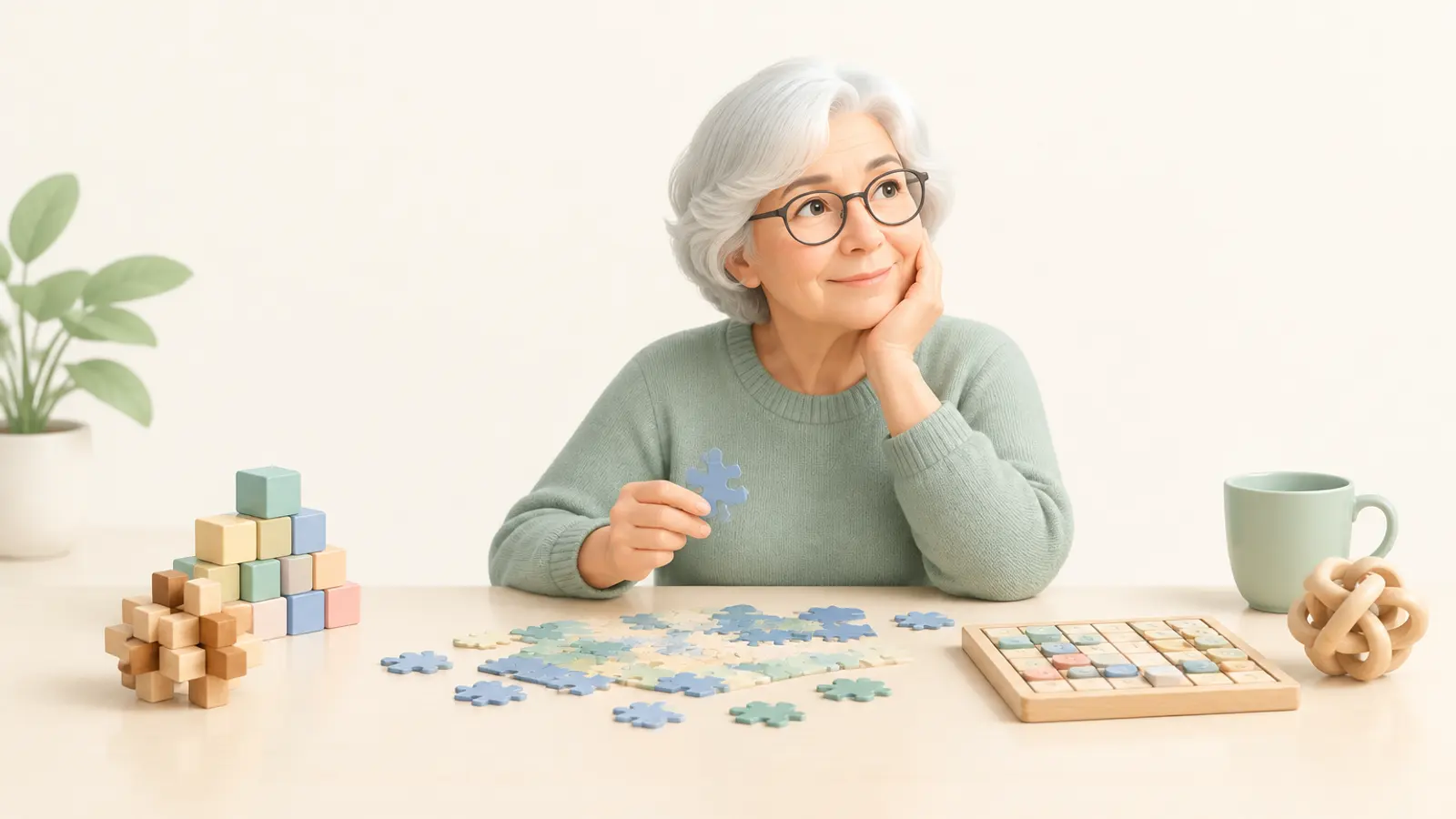
The golden years should be just that—golden. Yet for many seniors, the fear of cognitive decline looms large, casting shadows over what should be a time of wisdom, leisure, and fulfillment. The good news? Science increasingly shows that keeping your brain active through strategic mental exercise can significantly impact how well your mind ages.
Brain games aren't just entertainment—they're a powerful tool for maintaining cognitive vitality well into your 70s, 80s, and beyond. Whether you're looking to stay sharp, support a loved one's mental health, or simply enjoy challenging activities that happen to be good for you, this comprehensive guide will help you understand which brain games work best for seniors and why.
Why Brain Games Matter More as We Age
As we age, our brains naturally undergo changes. Processing speed may slow, multitasking becomes more challenging, and memory occasionally falters. But here's what many people don't realize: cognitive decline isn't inevitable, and when it does occur, its severity can be significantly influenced by our lifestyle choices.
The Science of Cognitive Reserve
Cognitive reserve is your brain's resilience—its ability to maintain function despite age-related changes or even pathological damage. Think of it as a buffer zone that protects against cognitive decline. People with higher cognitive reserve can sustain more brain changes before showing symptoms of memory loss or confusion.
How do you build this reserve? Through a lifetime of learning, mental challenges, and cognitive engagement. Brain games are one of the most accessible and enjoyable ways to contribute to this protective reserve.
The landmark ACTIVE study (Advanced Cognitive Training for Independent and Vital Elderly) followed nearly 3,000 seniors over 10 years. Participants who engaged in structured cognitive training—including puzzle-solving and strategic games—showed improvements that lasted up to a decade. Even more impressive, they reported better ability to handle daily tasks like managing medications, cooking, and handling finances.
Neuroplasticity Doesn't Retire When You Do
One of neuroscience's most encouraging discoveries is that neuroplasticity—the brain's ability to form new neural connections—continues throughout life. Your 75-year-old brain can still learn, adapt, and grow stronger.
Every time you engage with a challenging puzzle or game, you're not just passing time—you're actively reshaping your brain's architecture. New synaptic connections form, existing pathways strengthen, and dormant neural networks reactivate. This biological reality makes brain games far more than a pleasant pastime.
Beyond Cognition: Mental Health Benefits
The benefits of brain games extend well beyond pure cognitive function. Seniors who regularly engage with puzzles and games report:
- Reduced anxiety and depression: Focused activity provides a mental break from worries and rumination
- Increased sense of accomplishment: Successfully completing challenges boosts self-esteem and confidence
- Social connection: Many games can be enjoyed with family, friends, or online communities, combating isolation
- Purpose and routine: Regular gaming provides structure to the day and a sense of ongoing purpose
Having important life decisions documented can also contribute to peace of mind. Resources like the free Digital Legacy Checklist help seniors organize their digital accounts and final wishes, reducing background anxiety and allowing them to fully enjoy leisure activities like brain games.
A 2024 study published in The Journals of Gerontology found that seniors who spent just 15 minutes daily on brain games showed significantly lower rates of depression and anxiety compared to control groups, independent of the cognitive benefits.
The Best Brain Games for Seniors
Not all brain games are created equal, especially when considering the specific needs and abilities of older adults. The best games for seniors strike a balance between challenge and accessibility, providing cognitive stimulation without causing frustration.
Sudoku: Logic Without the Math Anxiety
Despite its numerical appearance, Sudoku requires zero mathematical ability—it's pure logic and pattern recognition. This makes it perfect for seniors who may have math anxiety but still want a robust mental workout.
Cognitive Benefits:
- Enhances logical reasoning and deductive thinking
- Improves concentration and sustained attention
- Strengthens pattern recognition skills
- Provides clear goals and satisfaction upon completion
Why It's Great for Seniors: Sudoku puzzles come in clearly defined difficulty levels, allowing you to start easy and progress gradually. The rules are straightforward and never change, reducing cognitive load while still providing challenge. The visual grid is typically large and easy to see, and many digital versions offer helpful features like automatic error-checking and hint systems.
Accessibility Tip: Look for large-print Sudoku books or digital versions where you can adjust grid size and number size for easier viewing. Many apps also include color-coding options for visual clarity.
Start sharpening your logical mind today with our free Sudoku puzzles, designed with clear, easy-to-read grids suitable for all ages.
Crossword Puzzles: Vocabulary and Memory Combined
Crossword puzzles have been a beloved pastime for generations, and with good reason. They offer a unique combination of vocabulary retrieval, general knowledge, and problem-solving that exercises multiple cognitive domains simultaneously.
Cognitive Benefits:
- Maintains and expands vocabulary
- Exercises semantic memory (knowledge of words and facts)
- Improves verbal fluency
- Enhances problem-solving and lateral thinking
- May delay onset of dementia symptoms according to recent research
Why It's Great for Seniors: Crosswords tap into lifetime accumulated knowledge, allowing seniors to leverage their experience and wisdom. This creates a sense of competence and accomplishment that's particularly valuable for maintaining self-esteem. The difficulty can be adjusted based on the puzzle source, from easy Monday puzzles to challenging Saturday editions.
Accessibility Tip: Digital crossword apps often feature adjustable text sizes, zoom capabilities, and the option to use a keyboard rather than handwriting. Some offer word banks or reveal letters as hints for those who need extra support.
Challenge your vocabulary and recall with our collection of daily crossword puzzles, featuring various difficulty levels and themes.
Word Search: Simple Yet Effective
Don't underestimate the humble word search. While it may seem simple compared to crosswords or Sudoku, word search puzzles provide valuable cognitive exercise, especially for seniors experiencing more significant cognitive challenges.
Cognitive Benefits:
- Enhances visual scanning and processing speed
- Improves pattern recognition
- Exercises selective attention
- Provides gentle cognitive stimulation without frustration
- Builds confidence through achievable challenges
Why It's Great for Seniors: Word searches are intuitive and require no special knowledge beyond reading. They're excellent for seniors with memory concerns because success doesn't depend on recall—you're searching for words that are printed right there. This makes them less frustrating than games requiring extensive memory or knowledge.
Accessibility Tip: Choose puzzles with larger grids and bigger letters. Themed word searches (gardening, cooking, classic movies) add interest and can trigger pleasant memories and conversations.
Engage your visual processing and pattern recognition with our word search puzzles, designed for comfortable viewing and enjoyable challenge.
Memory Match: Targeted Memory Training
Memory match games (also called concentration or pairs) are specifically designed to exercise working memory and visual-spatial memory—two cognitive functions particularly vulnerable to aging.
Cognitive Benefits:
- Directly trains short-term and working memory
- Enhances visual-spatial processing
- Improves attention control and focus
- Builds cognitive reserve specifically in memory systems
- Provides immediate feedback on performance
Why It's Great for Seniors: Memory match games offer adjustable difficulty through grid size—start with 12 cards (6 pairs) and gradually increase as ability improves. The rules are simple and intuitive, requiring no learning curve. Games are typically short (5-10 minutes), making them perfect for seniors with limited attention spans or energy.
Accessibility Tip: Choose versions with high-contrast images and avoid overly similar patterns that might confuse rather than challenge. Digital versions can offer larger cards and clearer images than physical decks.
Give your memory a targeted workout with our memory match game, featuring adjustable difficulty and senior-friendly design.
2048: Number Puzzle with Strategic Depth
This modern classic combines simple rules with deep strategic thinking. You slide numbered tiles on a grid, combining matching numbers to create larger values, with the goal of reaching 2048 (or beyond).
Cognitive Benefits:
- Exercises planning and forward-thinking
- Enhances spatial reasoning
- Improves numerical processing
- Teaches consequence-based decision making
- Provides both short-term and long-term goal setting
Why It's Great for Seniors: The sliding tile mechanic is intuitive and easy to learn. Unlike timed games, 2048 allows players to think as long as needed before making a move, reducing pressure and anxiety. Each game provides a clear score, offering measurable progress over time.
Accessibility Tip: Look for versions with larger tiles and high-contrast colors. Some variations use letters or symbols instead of numbers if numerical processing is challenging.
Exercise your strategic planning skills with our accessible 2048 puzzle game, designed for thoughtful, unhurried play.
Tangram Puzzles: Spatial Reasoning and Creativity
Tangrams—ancient Chinese puzzles involving arranging geometric shapes to form specific silhouettes—offer a refreshing alternative to number and word games.
Cognitive Benefits:
- Strengthens visual-spatial reasoning
- Enhances mental rotation abilities
- Exercises creative problem-solving
- Improves hand-eye coordination
- Engages both analytical and creative thinking
Why It's Great for Seniors: Tangrams provide a welcome break from language and numbers, engaging different neural networks. They're highly visual and tactile (especially with physical sets), which can be easier for seniors who struggle with text-based puzzles. The same seven pieces create hundreds of different challenges, providing variety without new rules to learn.
Accessibility Tip: Physical tangram sets with larger, thick pieces are easier to manipulate than small sets. Digital versions should offer drag-and-drop functionality with snap-to-grid features.
Explore spatial thinking and geometric creativity with our tangram puzzle collection, featuring both classic and modern challenges.
Nonogram (Picross): Logic Meets Art
Nonograms are grid-based logic puzzles where you fill in squares based on numerical clues to reveal a hidden picture. They combine the logical rigor of Sudoku with the visual satisfaction of revealing an image.
Cognitive Benefits:
- Exercises deductive reasoning
- Enhances pattern recognition
- Improves sustained attention and focus
- Provides visual-spatial training
- Offers both analytical challenge and creative satisfaction
Why It's Great for Seniors: The reveal of a recognizable picture provides extra motivation and satisfaction beyond simply completing the puzzle. The logic is methodical and can be approached systematically, making it accessible even to those new to logic puzzles. Difficulty scales gradually from small, simple grids to large, complex ones.
Accessibility Tip: Start with 5×5 or 10×10 grids before advancing to larger puzzles. Look for versions with grid lines every five squares to make counting easier, and ensure the interface allows marking both filled and empty squares.
Challenge your logical thinking while revealing hidden images with our nonogram puzzles.
Word Scramble: Quick Mental Exercise
Word scramble games present jumbled letters that need to be rearranged into words. They're quick, satisfying, and excellent for short bursts of cognitive exercise.
Cognitive Benefits:
- Enhances verbal fluency and word retrieval
- Exercises anagram-solving skills
- Improves processing speed
- Provides quick wins that build confidence
- Activates language centers of the brain
Why It's Great for Seniors: Word scrambles offer bite-sized challenges perfect for seniors who tire easily or have limited time. Success comes quickly with easier puzzles, providing positive reinforcement. They can be done individually or socially, making them versatile.
Accessibility Tip: Choose scrambles with 4-6 letter words to start, progressing to longer words as skill improves. Digital versions that allow letter dragging are easier than typing for those with dexterity challenges.
Exercise your vocabulary and letter manipulation skills with our word scramble puzzles.
Advertisement
Creating an Effective Brain Game Routine
Having the right games is only half the equation—how you engage with them matters just as much.
The Power of Consistency Over Intensity
Research consistently shows that regular, moderate engagement beats occasional intensive sessions. Aim for 15-30 minutes daily rather than marathon weekend sessions. This daily practice:
- Reinforces neural pathways more effectively
- Prevents mental fatigue and burnout
- Creates a sustainable habit that lasts
- Provides structure and routine to the day
Variety Is the Spice of Cognitive Health
While it's fine to have favorite games, variety ensures comprehensive brain training. Different games exercise different cognitive skills:
Monday/Wednesday/Friday: Language-based games (crosswords, word search, word scramble) Tuesday/Thursday/Saturday: Logic puzzles (Sudoku, nonograms, 2048) Sunday: Visual-spatial games (tangrams, memory match)
This rotation ensures all cognitive domains receive attention.
Progressive Challenge: The Goldilocks Zone
The sweet spot for brain training is what researchers call "desirable difficulty"—not too easy, not too hard, but just right. If puzzles feel effortless, your brain isn't growing. If they feel impossible, you'll become frustrated and quit.
Aim for about 70-80% success rate. You should complete most challenges successfully but occasionally struggle or fail. This keeps you in the "growth zone" where neuroplasticity is maximized.
Social Gaming: Doubling the Benefits
Whenever possible, incorporate social elements:
- Play with a spouse, friend, or family member
- Join online communities of puzzle enthusiasts
- Attend senior center puzzle clubs
- Share progress and compete friendly with others
Social interaction provides its own cognitive benefits and significantly enhances motivation and enjoyment.
Addressing Common Concerns and Challenges
"I'm Not Good at Puzzles"
Many seniors resist brain games because they don't consider themselves "puzzle people." This mindset is worth challenging. Puzzle-solving ability isn't a fixed trait you're born with—it's a skill that improves with practice.
Start with the easiest difficulty levels available. Success breeds confidence and motivation. As you improve—and you will—gradually increase difficulty. Remember, the goal isn't to be the best; it's to challenge your brain consistently.
Dealing with Frustration
Frustration is normal, especially when starting new types of puzzles. Here's how to manage it:
- Set time limits: If stuck after 10-15 minutes, take a break or move to a different puzzle
- Use hints strategically: There's no shame in using hints—they're learning tools
- Remember the goal: You're exercising your brain, not proving anything to anyone
- Celebrate effort: Acknowledge the attempt, not just successful completion
Physical Limitations and Adaptations
Arthritis, vision changes, and tremors can make traditional puzzles challenging, but solutions exist:
For Vision Issues:
- Use digital versions with adjustable text/image sizes
- Choose high-contrast displays
- Consider large-print puzzle books
- Ensure adequate lighting when playing
For Dexterity Challenges:
- Digital puzzles with large touch targets
- Voice-controlled puzzle apps
- Adaptive styluses for touchscreens
- Physical puzzle pieces with large, easy-grip handles
For Hearing Impairments:
- Visual-based games (Sudoku, nonograms, tangrams)
- Ensure audio feedback has visual equivalents
- Adjust volume on digital versions
When Cognitive Decline Is Already Present
For seniors experiencing mild cognitive impairment or early dementia, brain games remain valuable but may need adjustment:
- Choose simpler versions of games
- Focus on familiar game types rather than learning new ones
- Prioritize enjoyment over difficulty
- Consider reminiscence-themed puzzles (1950s-60s content)
- Embrace assisted play with caregivers
Importantly, brain games aren't a cure for dementia, but they can help maintain function and quality of life longer.
Beyond Digital: The Role of Physical Puzzles
While this guide focuses primarily on games available on our website, don't overlook physical puzzles:
Jigsaw Puzzles provide tactile engagement and can be social activities. They exercise visual-spatial skills and can be worked on incrementally over days or weeks.
Physical Card Games like bridge, pinochle, or rummy offer cognitive challenge combined with essential social interaction.
Board Games such as Scrabble, chess, or checkers provide structured mental exercise with human connection.
The ideal approach combines both digital and physical puzzle engagement, maximizing variety and benefits.
Advertisement
Measuring Progress and Celebrating Wins
While the intrinsic benefits of brain games don't require measurement, tracking progress can boost motivation:
- Keep a simple log: Note which games you play and general difficulty level
- Observe real-world impacts: Are you remembering names better? Finding words more easily?
- Celebrate milestones: First completed hard puzzle, 30-day streak, etc.
- Share achievements: Tell family about your progress—their encouragement matters
Remember, cognitive improvement is often subtle and gradual. You might not notice day-to-day changes, but over months, the cumulative effect can be significant.
Getting Started: Your First Week
Ready to begin your brain game journey? Here's a gentle introduction:
Day 1-2: Try our word search puzzles. Start with easy difficulty. Aim to complete 2-3 puzzles. Notice how your scanning speed improves even within one session.
Day 3-4: Move to Sudoku. Choose beginner level. Complete one puzzle, using hints if needed. Don't worry about time—focus on understanding the logic.
Day 5-6: Play memory match. Start with the smallest grid (12 cards). Play 3-4 games. Notice your scores improving as your brain adapts.
Day 7: Try a crossword puzzle or word scramble. See which feels more enjoyable. That enjoyment is important—it predicts consistency.
After this first week, you'll have sampled different game types and can design a routine around your preferences.
The Bottom Line: It's Never Too Late
The most important message of this guide is simple but profound: it's never too late to start caring for your cognitive health through brain games. Whether you're 65 or 95, whether you've always loved puzzles or never tried them, your brain retains the capacity to benefit from mental exercise.
Brain games won't make you superhuman, and they aren't a guaranteed shield against all cognitive decline. But they represent one of the most enjoyable, accessible, and scientifically supported tools available for maintaining mental sharpness and vitality as you age.
The best brain game is the one you'll actually play. The best routine is the one you'll actually stick with. Start small, be consistent, celebrate progress, and most importantly—have fun. Your brain will thank you.
Frequently Asked Questions
How long should seniors spend on brain games daily?
Research suggests 15-30 minutes daily provides optimal benefits without causing mental fatigue. This duration is long enough to challenge the brain but short enough to maintain consistency. Some seniors prefer two 15-minute sessions spread throughout the day. Quality matters more than quantity—focused, engaged practice beats distracted marathon sessions.
Can brain games prevent Alzheimer's disease?
Brain games cannot prevent Alzheimer's disease, which has complex genetic and biological causes. However, they contribute to cognitive reserve—the brain's resilience against damage. People with higher cognitive reserve tend to experience symptoms of dementia later and less severely. Think of brain games as one component of a comprehensive approach to brain health, alongside physical exercise, social engagement, healthy diet, and cardiovascular care.
Are free online brain games as effective as paid programs?
Yes. Research shows the cognitive benefits come from the mental challenge itself, not from proprietary algorithms or expensive programs. Free games on trusted platforms like Free To Play Puzzles provide the same fundamental brain training as expensive commercial programs. What matters most is consistent engagement with appropriately challenging activities. Save your money and use free resources.
What if I have arthritis or vision problems?
Many adaptations exist. For vision issues, use digital games with adjustable font sizes, high-contrast displays, and adequate screen brightness. For arthritis or dexterity challenges, choose games with large buttons, simple controls, and no time pressure. Touchscreen devices with a stylus can be easier than mouse control. Physical puzzle books in large print remain excellent options. The key is finding formats that accommodate your needs while still providing cognitive challenge.
How quickly will I see cognitive improvements?
Most seniors notice subjective improvements—feeling sharper, recalling names more easily—within 2-4 weeks of consistent daily practice. Measurable improvements on cognitive assessments typically appear after 8-12 weeks. However, benefits vary based on starting point, consistency, and individual factors. Focus on the enjoyment and daily routine rather than rushing results. Cognitive health is a marathon, not a sprint.
Should I stick with one game or try many different types?
Variety is ideal. Different games exercise different cognitive skills—crosswords for language, Sudoku for logic, memory match for visual memory, tangrams for spatial reasoning. A varied routine provides comprehensive brain training and prevents boredom. That said, it's fine to have favorites you return to regularly. Aim for a mix: 2-3 game types you rotate through regularly, with occasional experimentation with new games.
Can brain games help with depression and anxiety in seniors?
While brain games aren't a replacement for professional mental health treatment, research shows they can support emotional wellbeing. The focused attention required creates a mindful break from rumination and worry. Successful completion builds confidence and self-efficacy. Regular gaming provides structure and purpose to the day. Social versions combat isolation. Many seniors report brain games as a valuable component of their overall mental health strategy, particularly when combined with other interventions.
Ready to start your brain training journey? Visit our brain training collection to explore all our senior-friendly puzzles, or jump right in with our Sudoku puzzles, word searches, or memory match games. Your mind is waiting for the challenge.
Put it into practice

Keep reading
Memory Visual
Memory Games for Seniors: Brain Training for Healthy Aging
Discover the best memory games for seniors to maintain cognitive health. Learn benefits, strategies, and accessible games designed for older adults.
Jan 19, 2025 12 min
Brain Training
Puzzles and Neuroplasticity: How Brain Games Reshape Your Mind
Discover how puzzles leverage neuroplasticity to rewire your brain. Science-backed insights on cognitive enhancement through Sudoku, crosswords, and more.
Jan 19, 2025 12 min
Brain Health
How Often Should You Train Your Brain? Expert Frequency Recommendations for 2026
Discover the optimal brain training frequency backed by 2025-2026 research. Learn why 60-90 minutes a week is the "Golden Window" for long-term cognitive health.
Mar 23, 2026 12 min
Advertisement