Crime Scene Puzzles: The Science and Strategy of Modern Forensic Sleuthing
Explore the world of crime scene puzzles. Learn professional forensic search patterns, the ABC principle, and the latest 2025 trends in mystery gaming.
By Free To Play Puzzles Editorial Team 10 min read
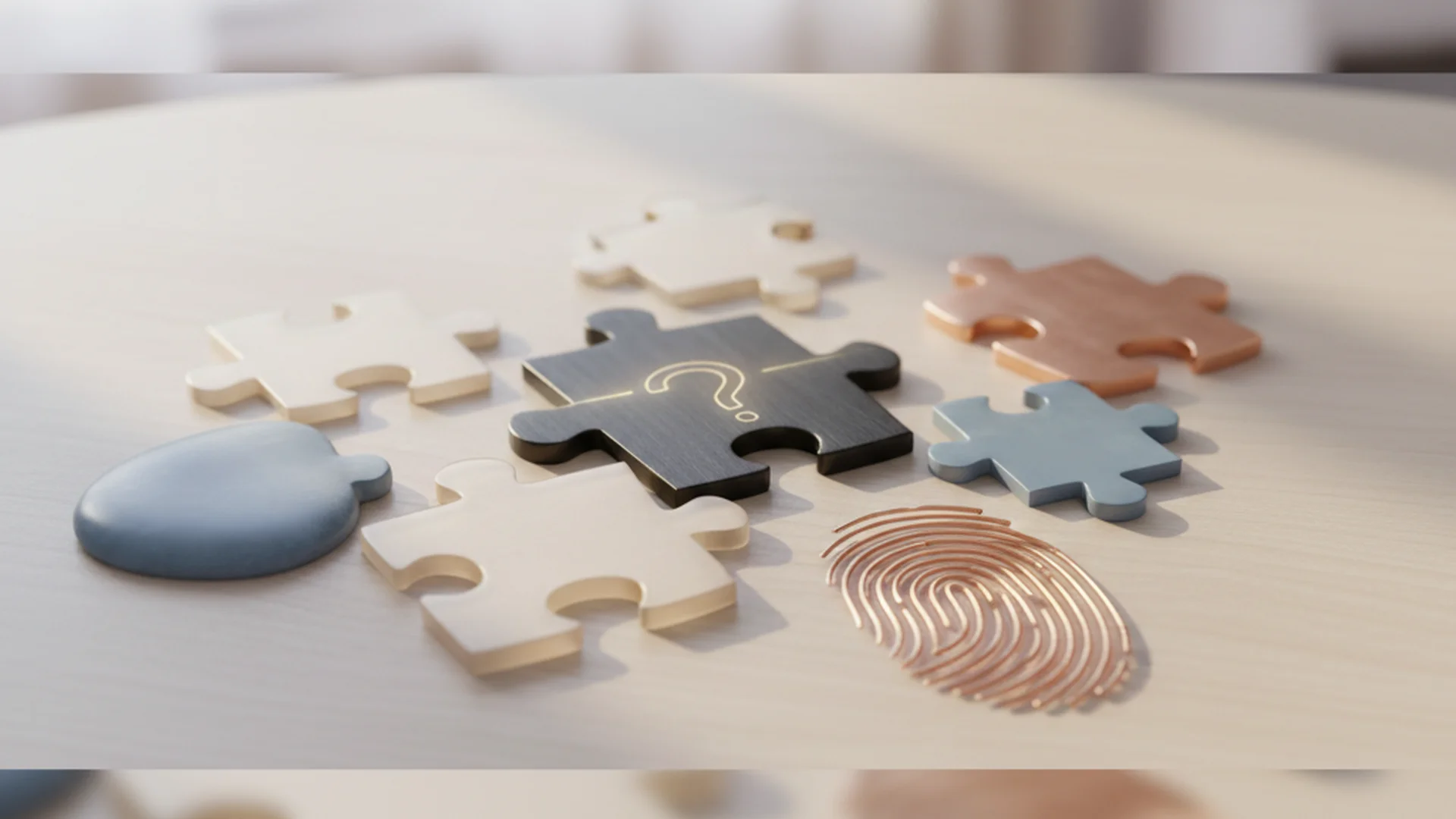
The lure of the "whodunit" has evolved far beyond the pages of Agatha Christie novels. In 2025, the world of crime scene puzzles has transformed into a multi-billion dollar industry that blends narrative storytelling with rigorous scientific methodology. These challenges stimulate the prefrontal cortex—the area of the brain responsible for complex planning, decision-making, and moderating social behavior.
When you engage with forensic puzzles, you aren't just playing a game; you are engaging in a high-level cognitive exercise that demands attention to detail, pattern recognition, and the ability to synthesize disparate pieces of information into a cohesive narrative. Whether you are unboxing a subscription mystery or navigating a digital reconstruction, understanding the science behind the sleuthing is the first step to becoming a master investigator.
The Rise of the Detective Economy
The explosion of true crime media has birthed a massive "detective economy." No longer content with being passive observers, audiences now want to hold the evidence in their own hands. Recent data suggests that the global murder mystery games market is projected to reach $3.21 billion by 2029, growing at a staggering rate of 12.2%.
This shift is largely driven by a demographic that seeks mental stimulation. Interestingly, 75% of puzzle game players are women, who are also 2.5 times more likely than men to consume true crime content. For many, the appeal lies in the "puzzle-solving" aspect rather than the crime itself. This engagement offers significant cognitive benefits as it requires the player to maintain a high level of mental agility and focus.
Think Like a Pro: The Investigative Mindset
To solve complex forensic puzzles, you must move past gut feelings and adopt a structured, scientific approach. Professional investigators rely on specific frameworks to ensure their biases do not cloud their judgment.
The ABC Principle
The cornerstone of any investigation is the ABC principle:
- Assume nothing.
- Believe nothing.
- Challenge and check everything.
In many crime scene puzzles, the most obvious suspect is a "red herring" designed to lead you astray. By challenging every piece of "fact" presented, you force your brain to find corroborating evidence rather than relying on assumptions.
Systematic Search Patterns
Experts don't look at a scene randomly; they use search patterns to ensure total coverage. When looking at a high-resolution photo of a crime scene or a physical 3D kit, try these methods:
- Grid Search: This involves moving in overlapping paths at 90-degree angles. This ensures that a small fiber or a discarded receipt in a corner isn't overlooked.
- Zone Search: Divide the scene into quadrants (A, B, C, and D). Clear each quadrant entirely before moving to the next. This is particularly useful in complex DIY escape room scenarios.
Advertisement
Forensic Reality Check: Debunking the Myths
While forensic puzzles strive for realism, they often run into the "CSI Effect"—a phenomenon where the public has unrealistic expectations of forensic science due to television. To be a better sleuth, you must understand the limitations of real-world science.
| Feature | TV / Fiction Version | Real-World Reality |
|---|---|---|
| DNA Results | Instant / Same day | 30+ days (minimum) |
| Fingerprints | Instant computer match | Requires expert manual verification |
| Blood | Glows blue under UV | Appears black; requires Luminol to glow |
| Roles | One person does everything | Technicians collect; Detectives interrogate |
The Luminol Myth
Many enthusiasts believe blood naturally fluoresces under a blacklight. In reality, blood absorbs light and appears dark. It only exhibits a blue glow if a chemical reagent like Luminol is applied first. Many modern smart puzzles now simulate this by requiring players to use an "AR spray" on their mobile devices to reveal hidden stains.
Beyond the Jigsaw: The New Era of Puzzles (2025–2026)
The year 2025 has introduced a technological shift in how we process logic puzzles. We are moving beyond paper files into "Hybrid Play Models."
- AR/VR Integration: New titles like I Am Ripper (2025) allow players to use VR headsets to walk through digital reconstructions of historical crime scenes. This allows for a 360-degree spatial analysis that was previously impossible.
- Smart Puzzles: These kits sync physical evidence—like a paper autopsy report—with a mobile app. When you "scan" the report, an AI-driven virtual lab provides real-time results, simulating the wait times and protocols of a real forensic lab.
- Sustainable Sleuthing: As the market grows, so does the demand for eco-friendly materials. 2026 will see a surge in 3D crime scene kits made from bamboo and recycled plastics, similar to the trends seen in the 3D puzzles guide.
Common Mistakes to Avoid
Even seasoned puzzle solvers can fall into traps. Here are the most common errors to watch for:
- Ignoring the "Chain of Custody": In complex mystery boxes, pay attention to who handled an object last. A fingerprint on a glass doesn't mean the owner of that print was there during the crime; it only means they touched the glass at some point.
- Over-relying on DNA: In reality, heat, moisture, and "touch DNA" (minuscule amounts) often mean no usable profile can be extracted. If a puzzle provides a "partial profile," don't treat it as a 100% match.
- Confusing the Technician with the Detective: Remember that the person who finds the hair (CSI) is rarely the one who catches the killer in an interrogation room. Look for the narrative gap between physical evidence and human motive.
- Neglecting the "Murder Board": Do not try to keep all the facts in your head. Like a professional investigator, create a visual map of suspects, timelines, and evidence.
Advertisement
Frequently Asked Questions
How long does it actually take to process forensic evidence?
Unlike the 60-minute window shown on TV, real-world DNA results typically take upwards of 30 days. Lab backlogs in many jurisdictions can extend this to 6–12 months. Modern forensic puzzles often simulate this delay to add a layer of realism and tension.
Are fingerprints enough to convict someone?
Rarely. Fingerprints are often partial or smudged. They usually provide a list of potential candidates from a database, which a human fingerprint expert must then manually verify. In puzzles, look for fingerprints to be one piece of a larger puzzle rather than the final answer.
Can you really solve a crime just from a photo of a scene?
Photos are vital for documenting the spatial relationship between objects, but physical evidence (like trace fibers, toxicology, and ballistics) is what provides the scientific proof. A photo can tell you where someone was, but science tells you how they died.
What is the "CSI Effect"?
It is a phenomenon where jurors (and puzzle players) have unrealistic expectations of forensic evidence. This leads people to expect high-tech DNA or digital "enhancement" of blurry photos in every scenario, which isn't always possible in real life or well-designed puzzles.
Conclusion
Crime scene puzzles represent a unique intersection of entertainment, science, and cognitive development. By applying the ABC principle and systematic search patterns, you can sharpen your mind and enjoy a much deeper level of immersion. Whether you are deciphering cryptograms or analyzing virtual blood spatter, remember that the true joy of the hunt lies in the process of discovery.
As we move into 2026, the tools at our disposal will only become more sophisticated. From AR reconstructions to AI lab assistants, the world of forensic puzzles is ready for its next generation of detectives.
Ready to Test Your Skills?
Dive into our collection of logic and strategy challenges today.
Put it into practice



Keep reading
Puzzle Types
Optical Illusion Puzzles: The Science and Strategy of Visual Brain Teasers
Explore the world of optical illusion puzzles. Learn why our brains fall for visual deceptions, expert solving strategies, and the latest 2026 trends in perceptual art.
Jul 23, 2026 12 min
Puzzle Types
Invisible Ink Puzzles: The Art and Science of Secret Messages
Explore the world of invisible ink puzzles. From historical spy techniques to modern escape room logic, learn how to design and solve secret message puzzles.
Jun 28, 2026 10 min
Puzzle Types
The Science of Multistable Perception: A Guide to Ambiguous Image Puzzles
Explore the fascinating world of ambiguous images. Learn the history, psychology, and modern 2026 trends of dual image puzzles that challenge your brain.
Jun 17, 2026 10 min
Advertisement