Brain Games That Teach Math: Unlocking Number Skills Through Play
Discover how brain games teach math and transform cognitive health. Explore the science, top 2026 game picks, and strategies to boost mathematical reasoning today.
By Free To Play Puzzles Editorial Team 12 min read
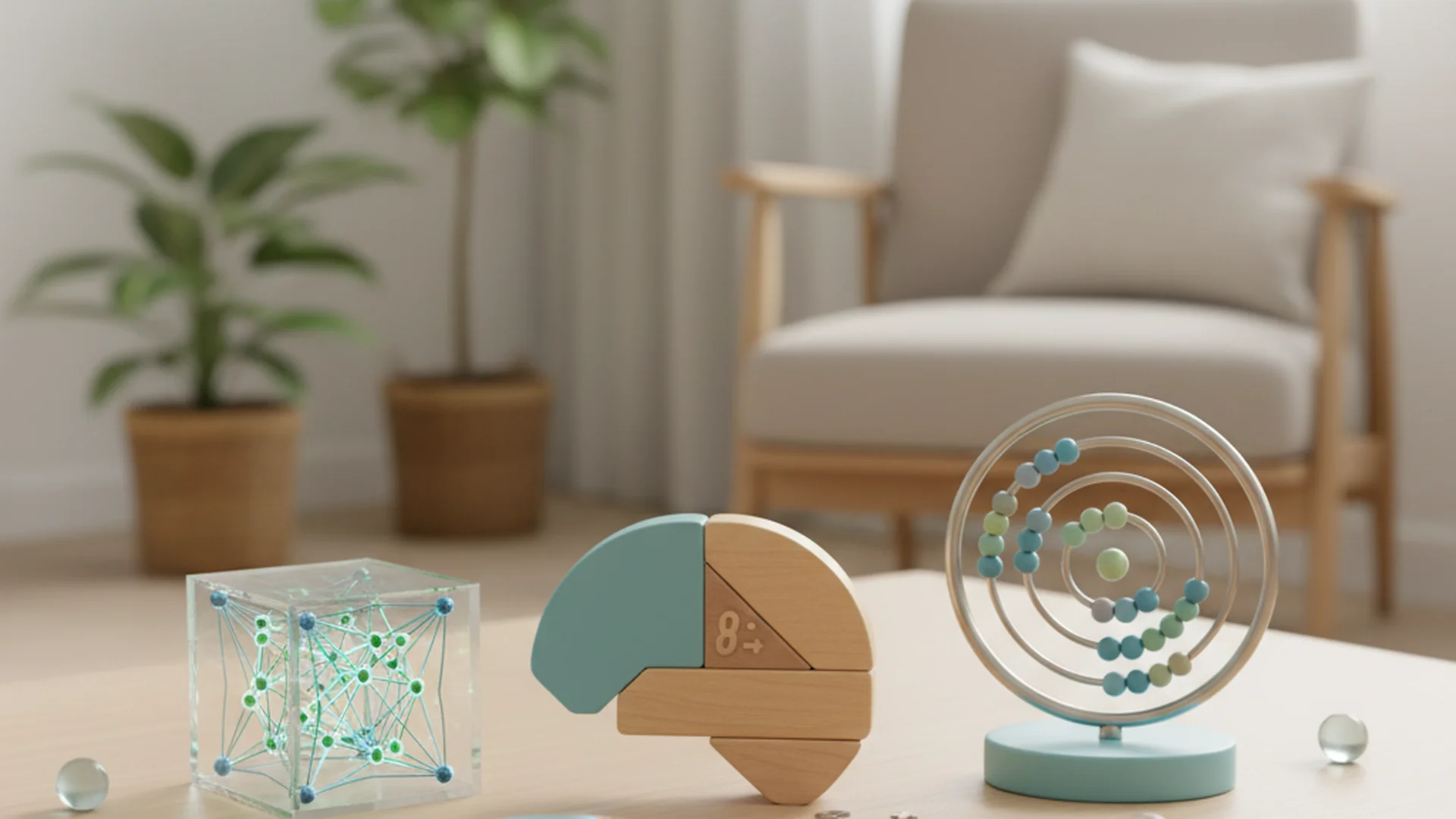
For decades, the "math person" myth has persisted in classrooms and households alike—the idea that you are either born with a "numbers brain" or you aren't. However, as we move through 2025 and into 2026, cognitive neuroscience is dismantling this outdated belief. The reality is that brain games teach math by leveraging the brain's inherent neuroplasticity, turning what was once a source of anxiety into a rewarding "flow state" of discovery.
Traditional rote memorization often fails because it lacks context. In contrast, modern [math learning games]({path: '/math-puzzles'}) provide a sandbox where numbers aren't just symbols on a page but tools to solve puzzles, defeat enemies, or build civilizations. By engaging with these interactive environments, players of all ages can rewire their logical foundations.
The Science of Mathematical Play and Neuroplasticity
When you engage in "mathematical play," your brain undergoes a physical transformation. Unlike passive learning, where information is simply stored in short-term memory, brain games require active retrieval and strategic application. This process triggers the release of dopamine, a neurotransmitter associated with reward and motivation, which helps solidify new neural pathways.
The University of Colorado found in 2025 that gamified learning enhances knowledge retention by 25–30%. This is largely because games create a "low-stakes" environment. In a game, a mistake isn't a failing grade; it is a data point. This shift in perspective is crucial for mastering complex subjects like algebra or calculus. By treating math as a game mechanic, we lower the "affective filter"—the emotional block that prevents learning when a student feels stressed or threatened.
Top Brain Games for Math in 2026
The landscape of [brain training]({path: '/brain-training'}) has evolved. We are no longer limited to simple flashcards. Today’s tools use "agentic" AI and immersive technology to tailor the experience to the individual.
For Kids: Building Foundations
- Legends of Learning: This platform has revolutionized the classroom by offering thousands of curriculum-aligned games where math is the primary tool for progression.
- ABCmouse New Era: Utilizing AI-driven paths, this 2026 update detects specific misconceptions—like a struggle with place value—within minutes and adjusts the game world to address those gaps.
- DragonBox Algebra: A classic that remains a powerhouse, teaching complex algebraic logic through visual puzzles before students even see a single variable.
For Adults and Seniors: Maintaining Agility
- Elevate & Lumosity: These apps remain leaders in the "Senior Agility" movement, focusing on mental arithmetic and logical estimation to delay cognitive decline.
- Prime Climb: A beautiful, color-coded board game that forces players to use prime factorization and the four basic operations to navigate a spiral board.
- Math Seniors: A new 2026 entry focused specifically on real-world math—calculating tips, splitting bills, and managing investments—to keep the aging brain sharp.
Advertisement
Digital vs. Physical: Which is Better?
A common question is whether parents and educators should prioritize digital apps or traditional board games. The truth is that both play vital roles in cognitive development.
| Feature | Digital Math Games | Physical Board Games |
|---|---|---|
| Feedback | Instant & Automated | Delayed (Self-Corrected) |
| Difficulty | Adaptive (AI-driven) | Fixed (Set by rules) |
| Social | Mostly Solo/Online | High Social-Emotional Learning |
| Skill Focus | Fluency & Speed | Collaboration & Strategy |
Digital games are unparalleled for building fluency. Apps like [2048]({path: '/2048'}) or specialized math trainers provide the high-repetition practice needed for number sense. Conversely, physical games like Monopoly or Math Jenga foster critical social-emotional skills, teaching players how to negotiate and collaborate while performing mental calculations.
The "Math as Engine" Rule: How to Choose Wisely
Not all games are created equal. Many "educational" games fall into the trap of being "chocolate-covered broccoli"—the math is boring and the game is a distraction. To ensure brain games teach math effectively, look for the following criteria:
- Meaningful Choice: Does the player have to make a strategic decision based on a mathematical property? If the game is just "answer 5 + 5 to jump over this pit," it's just a digital worksheet.
- The Simple & Quick Rule: For daily brain health, games should take under 2 minutes to learn and 5–15 minutes to play. This prevents cognitive burnout and encourages daily habits.
- Concept Over Speed: While many parents think "fast" equals "smart," speed is actually a result of fluency, not the goal. The best games focus on why numbers behave the way they do (e.g., how multiplication by a fraction makes a number smaller).
Addressing Math Anxiety Through Stealth Assessment
One of the most exciting trends in 2026 is the rise of "stealth assessments." Schools are increasingly replacing high-stakes timed tests with games that track a student's progress in the background. When a student doesn't know they are being "tested," their performance often skyrockets.
By using [number games]({path: '/number-games'}), we can identify "learning gaps" without the trauma of a red pen. For example, if a player consistently struggles to balance a scale in a game like Multiblocks!, the AI recognizes a misunderstanding of the "equal sign" as a balance rather than an "answer button." This allows for immediate, gentle intervention.
Advertisement
Common Mistakes to Avoid
- Over-reliance on Speed: As mentioned, prioritizing the timer over the logic can backfire. Let the player find the pattern first; the speed will follow naturally.
- Ignoring Conceptual Hurdles: Many students believe multiplication always makes a number bigger. Games like Fractional Fruitland (2025) are essential because they visualize how multiplying by a fraction results in a smaller number.
- Thinking "Fun" Means "Easy": Neuroplasticity is highest when the brain is in a state of "flow"—a balance between a high skill level and a high challenge. If a game is too easy, the brain switches off.
- Treating the Equal Sign as an Operation: Ensure the games you choose treat "=" as a sign of equivalence. This is a foundational skill for algebra.
Frequently Asked Questions
Can brain games actually make me better at math?
Yes. Research indicates that "mathematical play" rewires the brain to approach problems logically rather than through rote memorization. Games like Prime Climb force players to use operations strategically, which builds deep conceptual understanding.
At what age should children start using math learning games?
Basic number recognition games can start as early as age 3–4. Formal math fact games (addition and subtraction) are typically most effective starting around ages 6–7, once the child has a basic grasp of one-to-one correspondence.
Are digital games better than physical board games for math?
Both have unique benefits. Digital games provide instant feedback and adaptive difficulty, which is great for fluency. Physical games foster collaboration and critical social-emotional skills. A balanced approach is usually best for [brain health]({path: '/blog/best-brain-games-ranked-science-says-works'}).
How can games help students with math anxiety?
Games lower the "affective filter." In a game setting, a mistake is just "losing a life" or "restarting a level," which reduces the fear of failure that is so common in traditional classroom testing environments.
Conclusion: Turning Your Home into a Brain Gym
The shift toward game-based learning isn't just a trend; it's a reflection of how our brains are naturally wired to learn. Whether you are a parent looking to support your child, a teacher aiming for 88% engagement, or a senior looking to keep your mind sharp, brain games teach math in a way that is both effective and enjoyable.
By choosing games where math is the engine of discovery, we can move away from the "myth of suffering" and toward a future where everyone can confidently call themselves a "math person." For more strategies on keeping your mind sharp, check out our [30-Day Brain Training Challenge]({path: '/blog/30-day-brain-training-challenge-transform-mind'}) or explore our list of the [Best Brain Games for Seniors]({path: '/blog/best-brain-games-seniors-keep-mind-sharp'}).
Ready to Level Up?
Start your journey to mathematical mastery with our interactive puzzles today.
Put it into practice
Keep reading
Brain Health
Brain Games for Leadership: How Executive Brain Training Sharpens Decision-Making
Discover how brain games leadership techniques and executive brain training enhance cognitive flexibility, reduce burnout, and improve decision-making for senior leaders.
Jul 6, 2026 12 min
Brain Health
Brain Wars Review: Is This Competitive Brain Trainer Still King in 2026?
Looking for a competitive edge? Read our in-depth Brain Wars review to see if this fast-paced cognitive trainer still dominates the app stores in 2026.
Oct 17, 2026 10 min
Brain Health
Puzzles for Depression: Can Brain Games Help Your Mood?
Explore how puzzles for depression and brain games can act as digital therapeutics. Learn about dopamine loops, cortisol reduction, and the latest 2025 mental health trends.
Oct 15, 2026 12 min
Advertisement