Timed vs Untimed Puzzles: Finding Your Perfect Puzzling Pace
Explore the differences between timed vs untimed puzzles. Learn about cognitive impacts, relaxation benefits, and 2025 trends in strategic gameplay.
By Free To Play Puzzles Editorial Team 12 min read
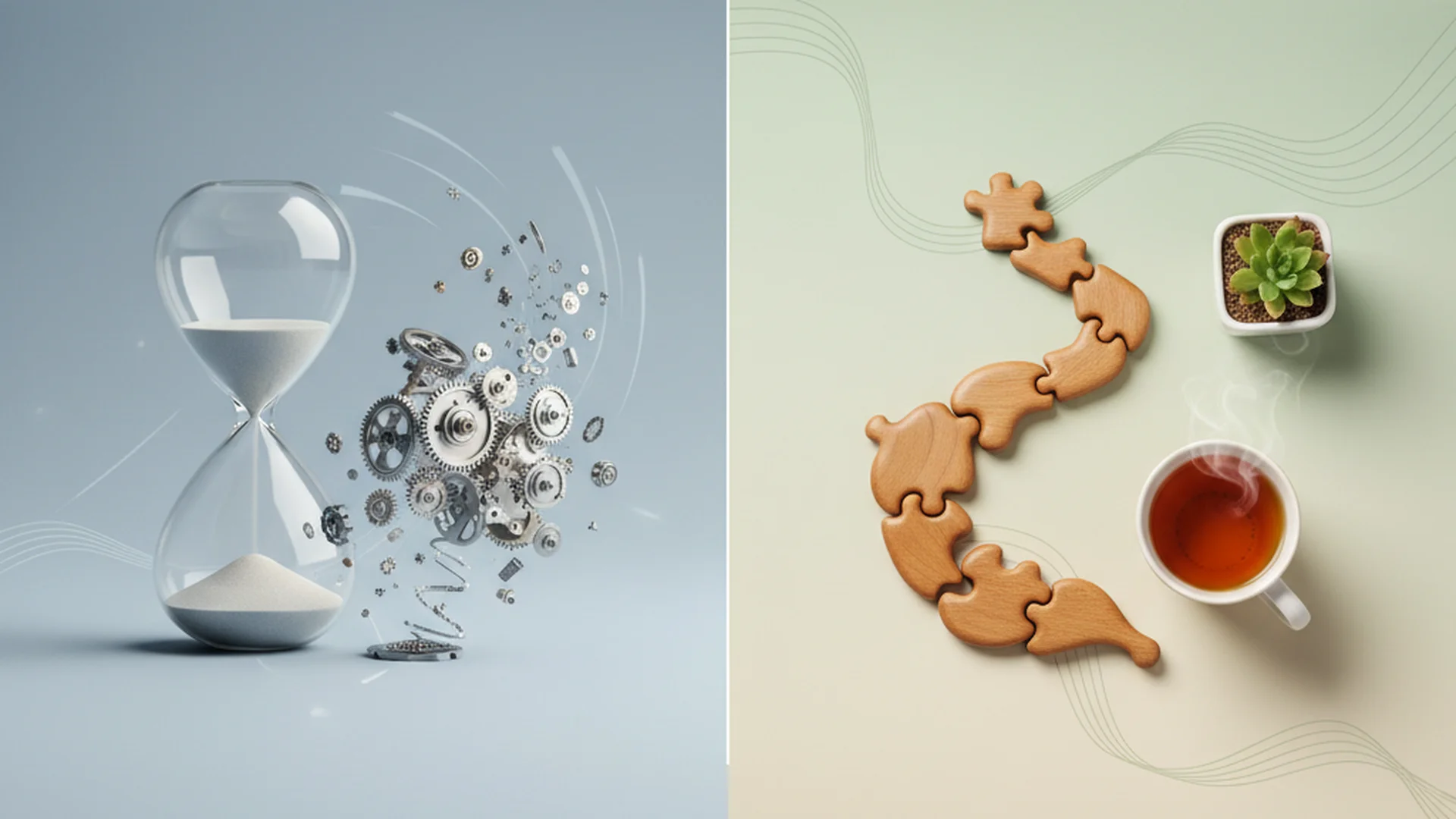
In the vast landscape of cognitive entertainment, a fundamental divide exists that dictates the entire player experience: the presence of the ticking clock. For some, the countdown is a source of exhilarating "flow," a high-octane challenge that pushes the limits of human reaction. For others, it is an unwelcome intrusion into a sacred space of logic and serenity. When we look at timed vs untimed puzzles, we aren't just looking at a game mechanic; we are looking at two distinct ways the human brain interacts with problem-solving.
As we move through 2025, the puzzle industry has reached a staggering market valuation of nearly $26 billion USD. This growth is driven by a demographic that is increasingly looking for balance. Whether you are navigating the high-pressure grids of Minesweeper or the meditative rows of a complex Sudoku, understanding the cognitive implications of your choice can significantly enhance your mental performance and well-being.
The Psychology of Relaxation: Why Untimed Puzzles Dominate
According to a comprehensive January 2025 survey of over 4,500 gamers, a massive 84% of puzzle players cite relaxation as their primary motivation for playing. This explains why untimed, relaxed puzzles remain the "gold standard" for the majority of the market, particularly among the core demographic of women over the age of 35, who make up roughly 81% of the genre's audience.
Untimed puzzles allow for what psychologists call "diffuse-mode" thinking. Unlike "focus-mode," which is intense and concentrated, the diffuse mode occurs when the brain is relaxed, allowing it to see the "big picture" and make creative connections between disparate pieces of information. This is why you often find the solution to a difficult crossword or a Sliding Puzzle only after you stop staring at it for a few minutes.
The Benefits of Serenity
- Lower Cortisol Levels: Without the threat of a "Game Over" screen triggered by a timer, the body remains in a parasympathetic state, making puzzles an excellent tool for Puzzles vs Meditation.
- Pattern Recognition: Deep analysis encourages the brain to look for structural logic rather than superficial shortcuts.
- Accuracy Over Speed: Clinical studies from the NIH show that untimed formats promote slower, more accurate processing, which is vital for complex logical deduction.
The Thrill of the Clock: When Speed Becomes a Weapon
On the other side of the spectrum, timed puzzles (or "speed puzzles") serve a very different purpose. In games like Tetris or high-stakes 2048 sessions, the clock acts as a catalyst for "flow." Flow is a state of intense engagement where the challenge perfectly matches the player's skill level, making time seem to disappear.
Timed puzzles specifically target processing speed and working memory. These are the "RAM" of the human brain—the ability to hold information in your head while performing a task. When you solve a puzzle under pressure, you are training your brain to ignore distractions and execute decisions with lightning-fast intuition.
Real-World Example: Chess Puzzles
In the world of competitive chess, there is a clear distinction in training methods. Grandmasters use untimed puzzles to study complex theoretical positions. However, they use "Puzzle Rush" (timed streaks) to sharpen their "tactical vision." The former builds the knowledge base; the latter ensures that knowledge can be accessed instantly during a real match.
Advertisement
Cognitive Impact: How Pacing Affects Your Brain
The choice between speed vs relaxed puzzles isn't just about preference; it has measurable effects on brain health and development.
| Feature | Untimed Puzzles | Timed Puzzles |
|---|---|---|
| Primary Brain Region | Prefrontal Cortex (Logic) | Parietal Lobe (Spatial/Speed) |
| Skill Developed | Deep Strategy & Accuracy | Processing Speed & Intuition |
| Stress Impact | Decreases Cortisol | Increases Adrenaline (Short-term) |
| Learning Phase | Best for New Concepts | Best for Mastery & Drill |
Research indicates that regularly engaging in word and number puzzles can delay the onset of dementia symptoms by an average of 2.5 years. The dual-activation of the left hemisphere (analytics) and the right hemisphere (creativity) occurs in both timed and untimed formats, but the "intensity" of that activation varies.
2025-2026 Trends: The Rise of Hybrid and XR Puzzling
The puzzle world is not static. As we look toward 2026, several key trends are blurring the lines between timed and untimed experiences.
Hybrid-Casual Gaming
One of the most significant shifts in 2025 is the rise of "Hybrid-Casual" games. These titles, such as "Screw Jam" or various "Block Jam" iterations, combine the simple, untimed mechanics of classic puzzles with high-pressure, timed "meta-layers" or competitive leaderboards. This allows players to choose their level of intensity within the same app.
AI Personalization and XR
Modern Brain Training apps are now using AI to adapt difficulty in real-time. If the AI detects you are solving a Nonogram too quickly, it might introduce a "challenge timer" to keep you in the flow zone. Furthermore, the integration of XR (Extended Reality) allows players to physically walk through 3D logic mazes, adding a physical dimension to the speed-accuracy trade-off.
Sustainable Physical Puzzling
Even in the physical world, 2025 trends show a movement toward sustainable materials. 3D puzzles made from bamboo and recycled ocean plastics are becoming popular, often marketed as "mindful" untimed activities designed to be displayed as art after completion.
Best Practices: The "Slow-to-Fast" Learning Path
If you want to maximize the cognitive benefits of puzzling, experts recommend a specific hierarchy of play.
- The Learning Phase (Untimed): When starting a new game type, such as Tangram or Word Scramble, turn the timer off. Focus entirely on the "why" and "how" of the mechanics.
- The Accuracy Phase (Untimed): Continue playing without pressure until your accuracy rate is consistently above 90%.
- The Mastery Phase (Timed): Introduce a timer to build speed. This forces your brain to move from "calculated logic" to "intuitive recognition."
- The Mindful Phase (Untimed): Periodically return to untimed play for stress relief, pairing the session with calm music or tea to promote the Puzzles vs Reading Benefits of relaxation.
Advertisement
Common Mistakes to Avoid
Even seasoned puzzlers fall into traps that hinder their progress or enjoyment.
- The "IQ Myth": Do not fall for the marketing that says one specific puzzle will raise your general IQ by 20 points. Puzzles improve specific skills. Solving Sudoku makes you better at Sudoku and related logical deductions, but it won't necessarily make you a better cook or driver.
- Over-Focusing on Speed: Rushing through a Crossword just to beat a clock can prevent you from learning new vocabulary or understanding clever wordplay.
- Assuming a Hard Puzzle is "Broken": If you are stuck, you are likely trapped in "focus-mode." Take a 15-minute break. Your brain will continue to work on the problem in the background (diffuse-mode), and the answer will often "pop" into your head when you return.
- Instruction Overload: Using "hints" too early kills the dopamine hit associated with independent problem-solving. Use hints only as a last resort.
Frequently Asked Questions
Do timed puzzles improve IQ more than untimed ones?
Timed puzzles specifically measure and train processing speed and working memory, which are components of IQ. However, they do not necessarily increase "raw" intelligence more than deep, untimed problem-solving. The best approach is a mix of both.
Why are some puzzles untimed?
Untimed formats are designed to promote deep analysis and pattern recognition. They allow the player to enter a "diffuse-mode" of thinking, which is essential for creative problem-solving and long-term learning.
Is it better to solve chess puzzles with or without a timer?
Experts suggest that untimed puzzles are superior for learning new tactical themes and deep calculation. Timed puzzles (like Puzzle Rush) are better for reinforcing pattern recognition and building the intuition needed for fast-paced blitz games.
Does time pressure help or hinder focus?
Moderate time pressure can induce a state of "flow," leading to intense focus. However, if the pressure is too high relative to the player's skill level, it triggers a stress response that impairs the prefrontal cortex, making it harder to think logically.
Are puzzle games really a $26 billion industry?
Yes, by 2025, the mobile and digital puzzle market is projected to reach between $23 billion and $26 billion USD. This is fueled by the high engagement rates of the "Hybrid-Casual" genre and the increasing use of puzzles for mental health and cognitive maintenance.
Conclusion
Whether you prefer the frantic rush of a countdown or the quiet contemplation of a Sunday afternoon logic grid, the debate of timed vs untimed puzzles ultimately comes down to your personal goals. If you seek to sharpen your reflexes and improve your mental "RAM," set the timer. If you seek to destress, learn a new skill, or protect your long-term cognitive health, let the clock run out—or better yet, ignore it entirely.
By diversifying your puzzling habits and moving from "slow to fast," you can enjoy the best of both worlds. For more insights into how puzzles compare to other activities, check out our guide on Puzzle vs Video Games Benefits.
Ready to Challenge Your Mind?
Explore our full library of timed and untimed games.
Put it into practice
Keep reading
Comparisons
Word Puzzles vs Number Puzzles: Which Is Best for Your Brain?
Explore the ultimate debate of word vs number puzzles. Discover which cognitive benefits suit your goals, from verbal intelligence to logical reasoning.
Dec 15, 2025 12 min
Comparisons
Puzzles vs Language Learning: Which Is Better for Your Brain Health?
Explore the ultimate brain training comparison: puzzles vs languages. Discover which activity offers the best protection against cognitive decline and dementia.
Mar 18, 2026 12 min
Comparisons
Puzzles vs Reading: Which Is the Ultimate Workout for Your Brain?
Compare the cognitive benefits of puzzles vs reading. Discover how crosswords and books impact memory, stress, and dementia risk based on 2025 research.
Feb 20, 2026 12 min
Advertisement