Summer Puzzles: The Ultimate Guide to Vacation Word Searches & Printable Games
Discover the top summer puzzles and vacation word search trends for 2025-2026. Learn expert solving strategies, cognitive benefits, and the latest in puzzle tech.
By Free To Play Puzzles Editorial Team 9 min read
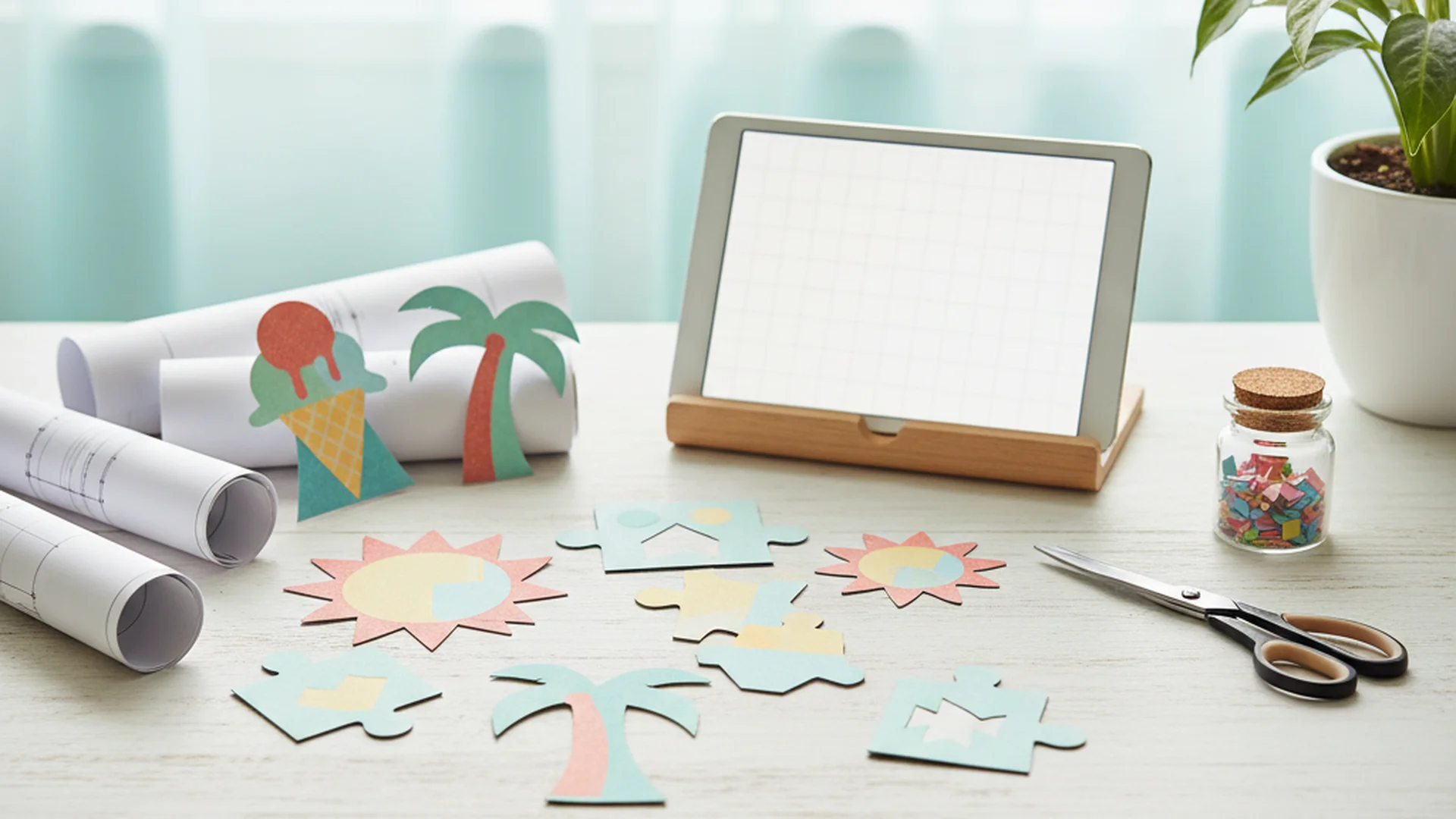
As we approach the height of the 2025-2026 travel season, a fascinating shift is occurring in how we spend our leisure time. The frantic pace of traditional sightseeing is being replaced by "Quietcations"—vacations centered around mindfulness, digital detox, and slow entertainment. At the heart of this movement are summer puzzles. Whether it is a complex jigsaw on a rainy cabin afternoon or a vacation word search enjoyed poolside, these activities have transitioned from simple pastimes to essential tools for mental well-being and strategic brain training.
As a strategic gameplay analyst, I have watched the "puzzle economy" evolve. What was once seen as a niche hobby is now a global powerhouse, with the market projected to hit a staggering $105 billion by 2034. This summer, puzzling isn't just about passing the time; it’s about engaging with a tradition that blends retro charm with modern cognitive science.
The Science of Summer Puzzles: More Than Just Fun
While many view a word search as a simple way to stay occupied during a flight, the neurological benefits are profound. Recent research (2023–2025) highlights that frequent puzzling is one of the strongest predictors of reasoning skills in adults.
Building Cognitive Reserve
A 2024 study involving over 9,000 participants identified puzzles as a primary "non-pharmacological" tool for maintaining neuroplasticity. By engaging in diverse challenges—from Sudoku to thematic word games—you are essentially building a "cognitive reserve" that helps the brain stay resilient against age-related decline.
Preventing the "Summer Slide"
For younger solvers, summer puzzles serve a more immediate academic purpose. Educational experts use these games to combat the "summer slide," where students lose significant progress in literacy and spelling over the break. Incorporating a vacation word search into a child’s daily routine reinforces vocabulary mastery without the pressure of a classroom environment.
Top Puzzle Trends for 2025-2026
The industry is currently undergoing a massive wave of innovation. If you haven't picked up a puzzle since your last childhood rainy day, the landscape will look remarkably different this year.
1. The Rise of "Experience-Led" Puzzling
We are seeing the birth of "puzzle tourism." In 2026, events like the International Puzzle Camp in Scotland and specialized Speed Puzzling Cruises in the Caribbean are becoming bucket-list items for enthusiasts. This shift turns a solitary activity into a major social event.
2. Augmented Reality (AR) Integration
One of the most exciting trends for 2025 is the interactive tech puzzle. Once you complete a physical jigsaw, you can scan it with your smartphone to see the image come to life through 3D animations or to unlock hidden digital clues. This "Hybrid-casual" approach bridges the gap between tactile satisfaction and digital engagement.
3. The "Puzzle Lamp" and 3D Decor
For 2026, puzzles are moving off the table and onto the walls—or into the light fixtures. The "Puzzle Lamp" trend features translucent 3D pieces that, when assembled, function as fully operational LED home lighting. It’s the ultimate way to display your strategic success.
4. Sustainable Innovation
Eco-conscious brands are pivoting to bamboo and recycled materials. For example, bamboo 3D puzzles have become the industry standard for 2026, offering a premium feel while maintaining a low carbon footprint.
| Puzzle Type | Best Use Case | Trend Level |
|---|---|---|
| 1000-Piece Jigsaw | Long Cabin Stay | Gold Standard |
| AR-Enhanced Sets | Families with Tech-Savvy Kids | High Growth |
| Travel Word Search | Planes, Trains, and Beaches | Essential |
| Bamboo 3D Puzzles | Home Decor / Gifts | Emerging |
Advertisement
Expert Strategies: Solving Like a Pro
To maximize the benefits of your summer puzzles, you should approach them with the mindset of a strategic analyst. Whether you are tackling a Word Search or a complex logic grid, these techniques can improve your speed and pattern recognition.
Scanning Patterns for Word Searches
Don’t just look for words randomly. Experts use specific scanning patterns:
- The Bottom-Up Sweep: Our eyes are trained to read top-to-bottom. Reversing this forces the brain to focus more intently on letter clusters.
- The Unique Letter Search: Scan specifically for "uncommon" letters like Q, X, Z, or J. Because these appear less frequently, they act as anchor points for finding difficult words.
- The Circular Scan: Once you find the first letter of a word, scan in a clockwise circle around it to find the second letter.
Contextual Puzzling
Match your puzzle theme to your environment. Solving a "Tropical Beach" themed word search while actually sitting on a beach creates a sensory link that helps children and ESL learners connect new words to immediate physical experiences.
Common Mistakes to Avoid
Even seasoned puzzlers fall into certain traps that can turn a relaxing vacation activity into a source of frustration.
Choosing Over-Difficult Sets
A common mistake parents make is buying puzzles that are too complex. If a child makes no progress within the first 10 minutes, the difficulty level is likely too high, leading to a negative association with the activity. Experts recommend starting with "Easy" word searches (10 words, no diagonals) for ages 5-6.
The "All Luck" Misconception
Many believe that finishing a jigsaw or a word game is down to luck—getting the right pieces or stumbling upon a word. In reality, strategy accounts for over 80% of success. Using edge-first logic in jigsaws and systematic scanning in word games is a trainable skill.
Ignoring the Social Aspect
While puzzles are great for "quiet time," they are also superior social bonding tools. In jigsaw puzzling, "noisy groups" actually tend to finish faster. Assigning roles—such as an "edge finder" and a "color sorter"—streamlines the process and fosters communication.
Frequently Asked Questions
What age is appropriate for word searches?
Word searches are highly adaptable. "Easy" versions with 10 words and no diagonals are perfect for children as young as 5 or 6. For teens and adults, "Hard" versions with 30+ words, backwards placements, and overlapping diagonals provide a sufficient challenge. You can find various difficulty levels in our Printable Puzzles: Complete Collection.
Do puzzles really prevent cognitive decline?
While they are not a cure for conditions like dementia, puzzles are recognized by neurologists as a "weightlifting session for the mind." They exercise both the analytical left brain and the creative right brain, helping to maintain neuroplasticity and mental agility throughout adulthood.
Are digital puzzles as good as physical ones?
Both have their place. Digital puzzles, like those found on our Daily Challenge page, offer infinite variety and portability for travel. However, physical puzzles provide tactile and visuospatial exercise that digital versions cannot replicate.
Can word searches be educational for adults?
Absolutely. They are increasingly used in ESL (English as a Second Language) and high school settings to reinforce subject-specific vocabulary. They provide a low-stress way to familiarize the brain with complex terminology without the pressure of formal testing.
Advertisement
Making Memories One Piece at a Time
As we look toward the summer of 2026, it is clear that summer puzzles are more than just a way to kill time. They are a bridge between generations, a shield against cognitive decline, and a cornerstone of the modern "quietcation."
Whether you are downloading a vacation word search for your next flight or gathering the family around a 1000-piece landscape, remember that every piece placed and every word found is a small victory for your brain. For more resources to keep your mind sharp this season, explore our Printable Crossword Collection or learn more about the Cognitive Benefits of regular play.
Ready to Start?
Enhance your vacation with our premium printable games today.
Put it into practice
Keep reading
Printables
Easter Puzzles: The Ultimate Guide to Spring-Themed Printable Games
Discover the best easter puzzles for 2025. From cognitive benefits to creative egg hunt ideas, explore how printable games enhance holiday learning and fun.
Jul 14, 2026 10 min
Printables
Ultimate Printable Word Search Collection: Themed Puzzles for All Ages
Explore our expert-curated printable word search collection. From educational themes to nostalgia puzzles, find the perfect word search PDF download for your needs.
Aug 24, 2026 12 min
Printables
The Ultimate 2026 Guide to Printable Road Trip Games: Screen-Free Fun for Every Mile
Discover the best printable road trip games for 2025-2026. From scavenger hunts to travel games pdf, keep the family entertained and screen-free on your next trip.
Aug 22, 2026 12 min
Advertisement