Spot the Difference Games: Visual Perception Training for All Ages
Explore the science and strategy of spot the difference games. Learn how these visual puzzles boost selective attention and short-term memory with expert tips.
By Free To Play Puzzles Editorial Team 12 min read
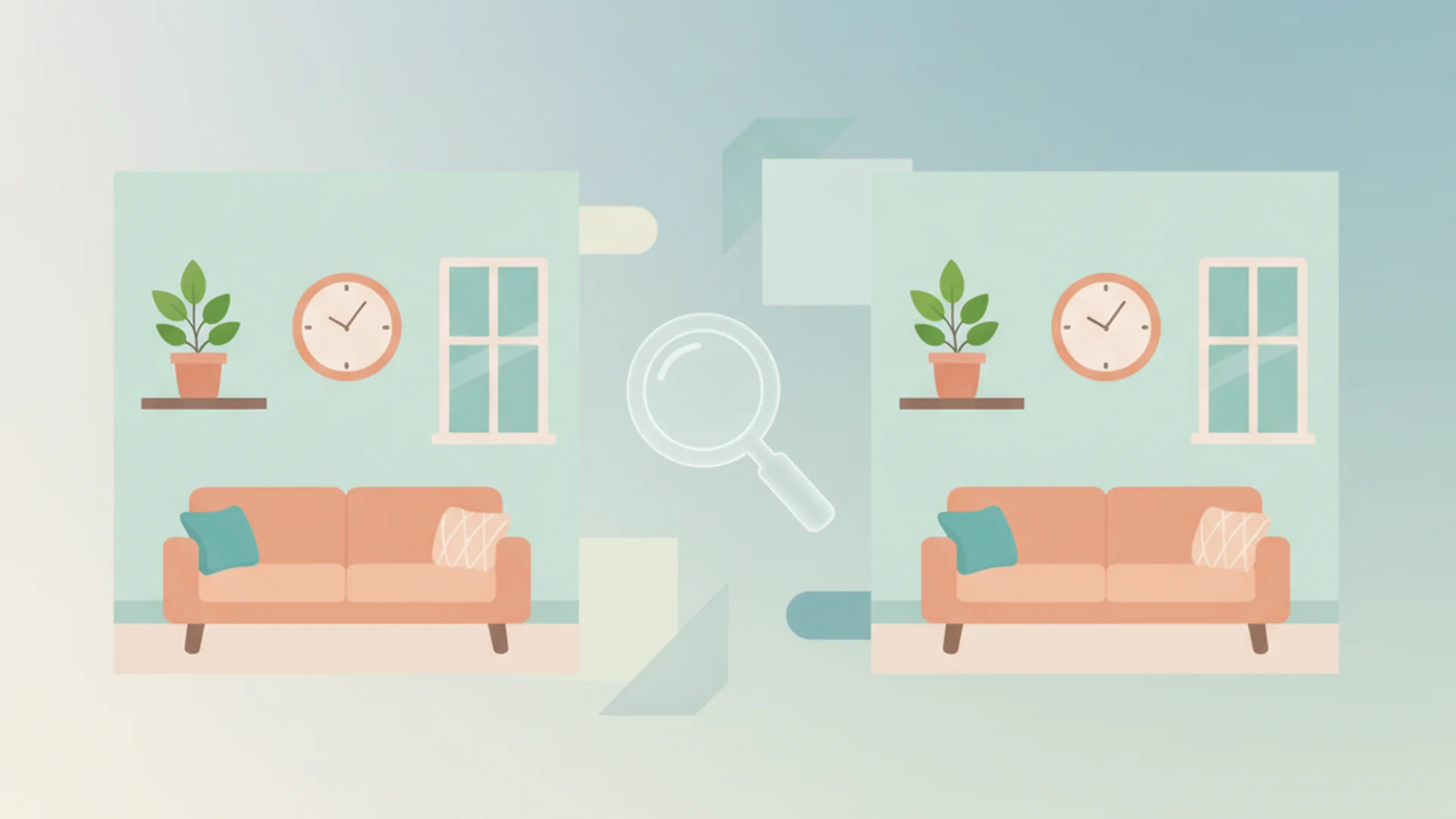
In a world saturated with high-octane video games and rapid-fire social media feeds, the enduring popularity of the spot the difference game remains a fascinating phenomenon. At first glance, these puzzles seem simple: you are presented with two nearly identical images and tasked with identifying the minute discrepancies between them. However, these challenges are more than just a pastime. They are a sophisticated workout for the human visual system, engaging the brain's ability to filter noise, retain short-term visual data, and execute precise ocular movements.
The origins of these puzzles trace back to the late 19th and early 20th centuries. Originally appearing as a staple in illustrated newspapers and children's books, they eventually found a permanent home in Sunday "funnies" and dedicated puzzle magazines. Today, they have evolved from ink-on-paper curiosities into a multi-billion dollar digital industry. Whether you call them "find the difference games" or visual discrimination tasks, they represent one of the purest forms of cognitive training available at your fingertips.
The Evolution of Visual Discovery
The journey of the spot the difference genre is a testament to the human love for pattern recognition. In the early 1900s, these puzzles were hand-drawn by illustrators who would painstakingly recreate a scene twice, intentionally omitting a button on a coat or shortening a chimney. These were often used to engage children in literacy and observation.
As we moved into the digital era, the format exploded. In the early 2000s, "Spot the Difference Daily" (created by Rob Gordon) became a cultural touchstone on the web. It famously secured its place as the second-most-played game on Shockwave.com and maintained a remarkable 15-year streak on top-20 gaming lists. This transition from print to pixels allowed for new mechanics, such as timers, global leaderboards, and "hint" systems that weren't possible in a newspaper.
Today, the player base is more diverse than ever. While many perceive these games as being for children, the data tells a different story. In 2025, casual and puzzle gaming has reached near parity in gender distribution, with approximately 47% female and 52% male players in the US. The average player age is 36, but the most dedicated demographic is seniors. Approximately 73% of Boomers and Seniors report using "find the difference games" specifically as a tool to maintain mental sharpness and slow age-related cognitive decline.
The Science of Seeing: How Your Brain Spots the Difference
Why is it sometimes so difficult to find a missing cloud or a shifted flower petal? The answer lies in two neurological concepts: selective attention and change blindness.
When you look at a spot the difference puzzle, your brain isn't just "seeing"—it is processing. Selective attention is the cognitive process of focusing on a specific stimulus while filtering out irrelevant background information. In these games, your brain must decide what constitutes a "detail" worth remembering as your eyes dart from the left image to the right.
Strengthening Eye-Brain Connections
Research from institutions like the University of Michigan has shown that regular practice with visual puzzles can strengthen the neural pathways associated with visual processing. Studies indicate that consistent engagement can increase visual processing speed by up to 20%. This has real-world applications, such as improving the ability to scan a busy street while driving or finding a specific item on a cluttered supermarket shelf.
Moreover, these games are a direct workout for your short-term memory. To find a difference, you must hold the image of one section of the puzzle in your mind's eye while shifting your gaze to the corresponding section of the second image. If your short-term "buffer" is weak, the detail is lost before the comparison can be made.
Advertisement
Professional Strategies for Master Spotters
If you find yourself stuck on a difficult level, it’s likely because you are relying on "random searching." To master spot the difference challenges, you need a systematic approach.
1. The Systematic Scan (Grid Method)
Instead of looking at the image as a whole, mentally divide it into a 3x3 or 4x4 grid. Focus your attention entirely on the top-left square, comparing it across both images. Only once you are certain that square is identical should you move to the next. This prevents your eyes from being "distracted" by the central subject of the photo.
2. The "Cross-Eye" Method
This is a popular "hack" among puzzle enthusiasts. By crossing your eyes slightly until the two images overlap into a single, third image in the center, the differences will appear to "flicker," "shimmer," or look blurry. This happens because your brain is receiving conflicting information from each eye for those specific spots, making them stand out instantly.
3. Check the Periphery
Game designers know that the human eye is naturally drawn to the center of an image (the "subject"). Consequently, they often hide the most difficult differences in the extreme corners, edges, or background textures.
4. Categorize the Changes
Most differences fall into the "Big Three" categories:
- Added/Removed Objects: A missing bird in the sky or an extra button on a shirt.
- Color/Shade Shifts: A red car becoming a slightly darker shade of maroon.
- Tweaked Proportions: A squirrel's tail that is 10% longer or a window that is slightly wider.
| Difference Type | Difficulty Level | Strategy |
|---|---|---|
| Missing Object | Easy | Quick visual sweep |
| Color Shift | Medium | Focus on saturation levels |
| Proportions | Hard | Use the "Cross-Eye" method |
Common Mistakes to Avoid
Even seasoned players can fall into cognitive traps. Understanding these can help you overcome "plateaus" in your performance.
- The Center Bias: We spend too much time staring at the faces of people or the main action in the center. In professional-grade puzzles, the main subject is almost always identical; the differences are in the "boring" background.
- Rushing the Scan: Under time pressure, players often "dart" their eyes randomly. This triggers change blindness, where the brain ignores a change even if the eyes are looking directly at it, simply because the eye movement was too fast for the brain to update its internal "map" of the image.
- Ignoring Mirroring: In advanced expert puzzles, the second image might be mirrored (flipped horizontally). This forces the brain to perform a "mental rotation," which drastically increases the difficulty of comparing spatial relationships.
Trends and The Future of Finding (2025–2026)
The world of find the difference games is currently undergoing a massive technological shift. As we look toward 2026, several key trends are emerging:
AI-Generated Infinite Challenges
Developers are now utilizing AI to create virtually infinite levels. Instead of relying on a human illustrator to manually change 10 items, AI can take any high-definition photograph and generate dozens of subtle, realistic variations instantly. This ensures that players never run out of fresh content.
Story-Driven "Meta" Gameplay
New 2025 titles like Differences - Find & Spot It are moving away from isolated puzzles. They are integrating "Story Modes" where each found difference serves as a clue in a larger detective mystery or narrative plot. This adds a layer of motivation beyond just "clearing the screen."
Multiplayer "Battle" Modes
We are seeing a surge in real-time 1v1 battles. Players compete head-to-head to find five differences faster than their opponent. This has turned a traditionally solitary, "cozy" activity into a competitive e-sport with global leaderboards.
5G & AR Integration
By 2026, we expect to see Augmented Reality (AR) "scavenger hunt" versions. Imagine holding your phone up to a real-world landmark and having to spot the differences between the actual building and a "digital twin" displayed on your screen.
Advertisement
Frequently Asked Questions
Is this game only for children?
No. While it is excellent for early childhood development, "adult" versions utilize high-resolution photography, extremely subtle color shifts, and complex textures. These serve as a sophisticated tool for Puzzle Benefits and maintaining cognitive health in older adults.
Does it really help prevent cognitive decline?
Yes. Research suggests that regular engagement with visual puzzles supports mental sharpness. By strengthening the eye-brain connection and improving selective attention, players can help slow age-related decline in thinking skills and visual processing.
How long should a puzzle take?
Beginner puzzles usually have a 15–30 second limit for each discovery. Expert levels or "Difference of the Day" challenges can take several minutes of intense concentration to find a single, well-hidden discrepancy.
Can I play these offline?
Most modern mobile apps allow for offline play once the initial level pack is downloaded. This makes them one of the most popular choices for commuters or travelers who want to engage in some Logic Puzzles without needing a constant internet connection.
Conclusion
Whether you are looking to kill five minutes on the train or seeking a legitimate way to keep your brain sharp as you age, spot the difference games offer a unique blend of relaxation and cognitive challenge. By moving beyond a random search and employing systematic strategies like the grid method or the cross-eye hack, you can transform these puzzles from a frustrating hunt into a rewarding mental exercise.
As we head into 2026, the integration of AI and AR ensures that this century-old game format will remain relevant, challenging, and fun for generations to come. So, the next time you see two "identical" pictures, don't just look—observe. Your brain will thank you for it.
Ready for a Challenge?
Test your visual perception with our daily brain-teasing puzzles.
Put it into practice

Keep reading
Puzzle Types
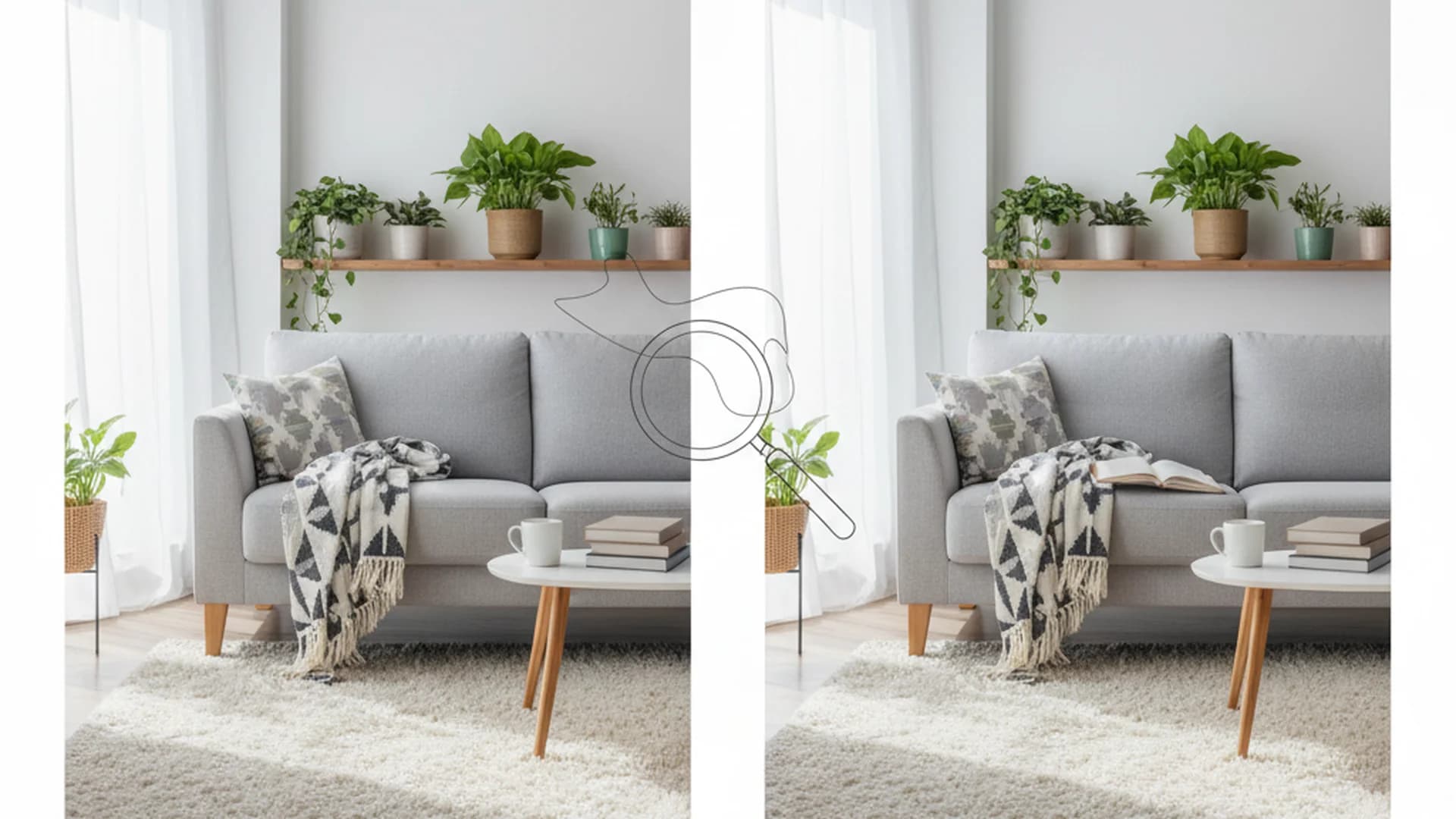
Mastering the Hunt: Expert Spot the Difference Tips to Find Changes Faster
Unlock pro-level spot the difference tips and techniques. Learn the "Magic Eye" method, improve visual processing, and discover how to find changes faster.
Oct 5, 2025 10 min
Puzzle Types
20 Best Hidden Object Games: A Cognitive Scientist’s Guide for 2025-2026
Discover the best hidden object games for brain health and relaxation. Expert reviews of top hidden object games, strategy tips, and 2026 trends for all ages.
Aug 3, 2026 12 min
Puzzle Types
Optical Illusion Puzzles: The Science and Strategy of Visual Brain Teasers
Explore the world of optical illusion puzzles. Learn why our brains fall for visual deceptions, expert solving strategies, and the latest 2026 trends in perceptual art.
Jul 23, 2026 12 min
Advertisement