The Ultimate Guide to Puzzles for Preschoolers: Strategies for Ages 3-5
Discover how puzzles for preschoolers boost STEM skills and cognitive development. Learn age-specific piece counts, 2025 trends, and expert teaching strategies.
By Free To Play Puzzles Editorial Team 12 min read
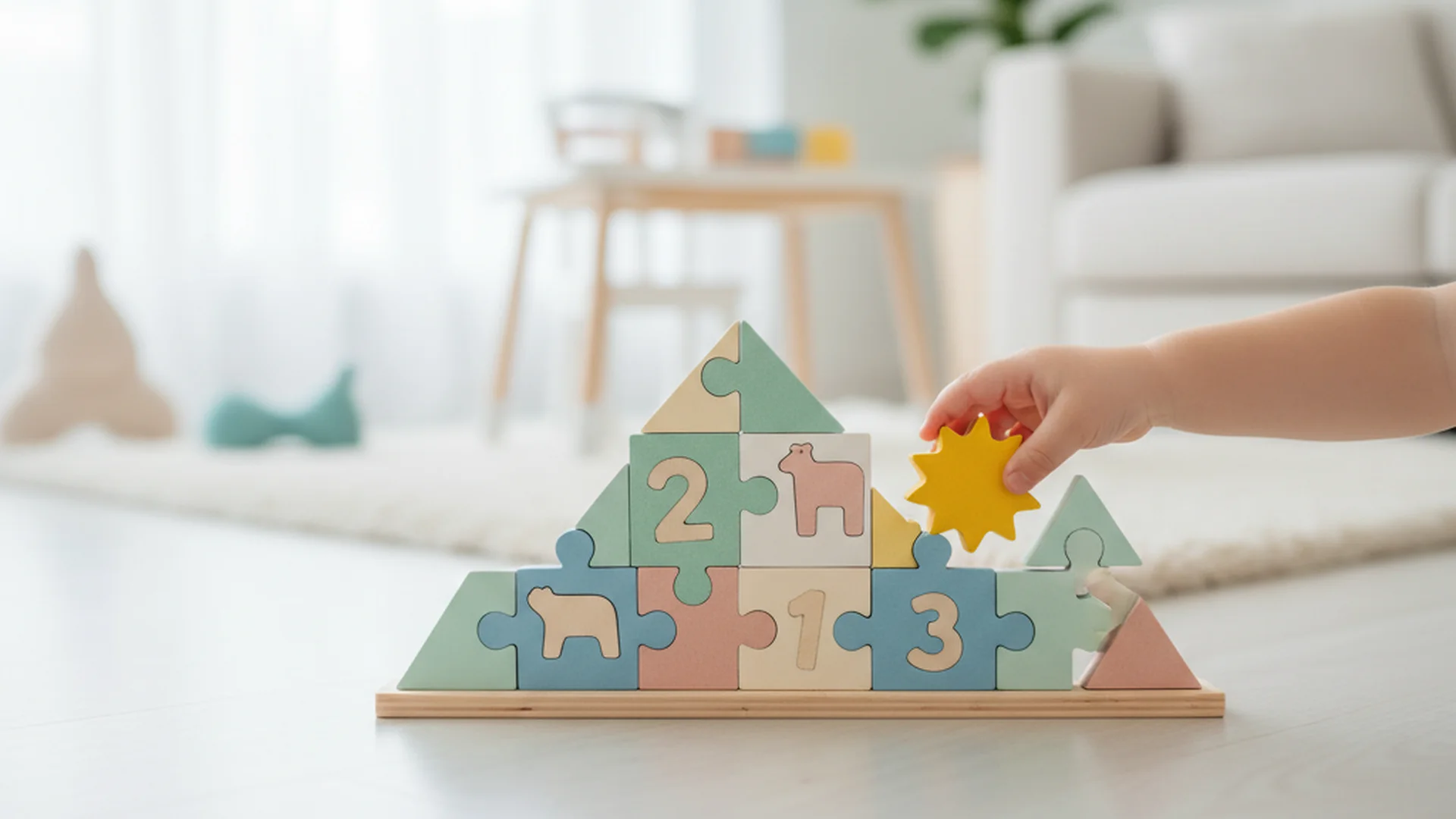
In the rapidly evolving landscape of early childhood education, few tools have stood the test of time as effectively as the humble jigsaw. As we navigate the 2025-2026 school years, puzzles for preschoolers have transitioned from simple distraction toys to intentional, high-impact learning instruments. For a child between the ages of 3 and 5, a puzzle isn't just a picture to be assembled; it is a complex battlefield of spatial logic, fine motor refinement, and persistence training.
As a strategic gameplay analyst, I often look at how gaming mechanics translate to real-world development. Puzzles represent a child’s first encounter with "win conditions" and "resource management" (in this case, the pieces at their disposal). Understanding the science behind these games can help parents and educators unlock significant cognitive potential during these formative years.
The Science of the "Puzzle Brain"
Recent research has elevated the status of puzzle-play from a rainy-day activity to a cognitive necessity. A landmark 2025 study focused on early intervention showed a statistically significant improvement in children's cognitive development, specifically noting a t-value of -10.721 after regular puzzle-play sessions. This isn't just about keeping hands busy; it's about re-wiring the brain for complex problem-solving.
According to the University of Chicago, preschoolers who engage with 3-5 year old puzzles develop superior spatial skills. These skills—the ability to mentally rotate objects and understand how shapes fit into a broader environment—are the single best predictors of later success in Science, Technology, Engineering, and Math (STEM) fields.
Fine Motor Milestones and the Pincer Grasp
Beyond the "thinking" part of the brain, puzzles are the ultimate gym for a preschooler’s hands. Navigating small interlocking pieces requires the pincer grasp (the coordination of the thumb and index finger). This is the same grip required for holding a pencil. Furthermore, puzzles encourage bilateral coordination, teaching a child to use both hands together—one to hold the board and the other to navigate the piece.
Age-by-Age Guide: Finding the "Flow State"
One of the most common reasons children abandon puzzles is a mismatch between their current developmental stage and the complexity of the toy. To keep a child in the "flow state"—where they are challenged but not overwhelmed—follow these piece-count guidelines updated for 2025 standards.
| Age Group | Piece Count | Recommended Type | Skills Developed |
|---|---|---|---|
| Age 3 | 12–24 Pieces | Large floor puzzles, wooden jigsaws | Shape recognition, basic matching |
| Age 4 | 24–48 Pieces | Interlocking cardboard, themed sets | Fine motor control, pattern grouping |
| Age 5 | 50–100 Pieces | Complex imagery, world maps | Strategic planning, persistence |
3-Year-Olds: Transitioning to Jigsaws
At age 3, most children move away from knob puzzles (where each piece has a peg) to "real" interlocking jigsaws. This transition usually happens between 30 and 36 months. Look for puzzles with high-contrast images and very distinct characters to help them identify where pieces belong.
4-Year-Olds: The Logic Leap
By age 4, the child’s brain is ready for more visual "noise." They can handle puzzles where the background might be similar (like a large patch of grass or sky), requiring them to look at the shape of the piece rather than just the color.
5-Year-Olds: The Mastery Phase
Five-year-olds are often ready for "Giant" puzzles or those with up to 100 pieces. At this stage, they are no longer just reacting to pieces; they are beginning to use strategies. This is the perfect time to introduce Logic Puzzles or even basic Tangram sets to diversify their spatial thinking.
Advertisement
Strategic Play: Teaching the "Pro" Moves
As a gameplay analyst, I believe in teaching children the "meta" of the game early on. Don't just dump the pieces and watch; teach them the organizational systems used by expert puzzlers.
The "Face-Up" Rule
The first strategy to teach any preschooler is the Face-Up Rule. Before a single piece is fitted, every piece must be turned over so the image is visible. This reduces visual overwhelm and trains "visual scanning"—the ability to find a specific item in a crowded field.
The "Edge-First" Strategy
Introduce the concept of a "border." Show the child that pieces with flat edges are special. By building the frame first, they create a physical boundary for the rest of the game, which provides a sense of security and a clear "map" of the remaining task.
The "Section Method" for 4-5 Year Olds
For more complex 48-to-100-piece puzzles, teach them to group pieces by color or object. "Let's find all the pieces for the red fire truck first," or "Let's put all the blue sky pieces in this pile." This breaks a daunting 100-piece task into five manageable 20-piece tasks.
What’s New in 2025: Trends and Innovation
The puzzle market has seen a massive shift in the last year toward sustainability and technology integration. If you are looking for the latest in puzzles for preschoolers, keep an eye on these three trends.
1. Eco-Awareness and Sustainability
Modern parents are demanding better materials. Leading brands like Bigjigs Toys and Hape have moved toward bamboo, recycled plastics, and soy-based inks. 2025 has also seen the near-total elimination of plastic "shrink wrap" in favor of clever paper-seal packaging.
2. Hybrid "Phygital" Play
The rise of Augmented Reality (AR) puzzles has been the biggest story of 2025. Once a child completes a physical puzzle, they can scan it with a tablet. The characters they just built might come to life to tell a story or launch a secondary logic game. This rewards the physical effort with a digital "encore."
3. STEM-Storytelling
New "Giant Road" and "Maze Puzzles" (pioneered by brands like Orchard Toys) are trending. These allow children to build a track or path and then use physical vehicles or magnetic pens to navigate a story they just constructed. It combines the spatial challenge of a puzzle with the imaginative play of a toy car set.
Common Mistakes to Avoid
Even well-meaning parents can accidentally stifle a child's love for puzzles. Avoid these four common pitfalls to keep the experience positive.
1. Skipping the "Boring" Puzzles
Parents often jump to 48-piece puzzles because their 3-year-old is "advanced." However, skipping the 12-piece stage can be detrimental. In the easier stages, the child isn't just finishing a picture; they are mastering the strategy (like edge-finding). If the puzzle is too hard, they rely on trial and error (guessing) rather than strategic thinking.
2. Rushing the Solution
It is incredibly tempting to reach out and rotate a piece for a struggling child. Don't do it. Instead, use verbal cues. Ask, "What happens if we pivot that piece like a clock?" or "Does that flat edge belong on the outside or the inside?" This builds spatial reasoning; doing it for them only builds a reliance on others.
3. Treating Puzzles as Solo-Only Work
While puzzles are great for independent play, they are also excellent tools for social-emotional learning. Working on a puzzle with a sibling teaches turn-taking, collaborative problem-solving, and how to handle it when someone else finds the piece you were looking for.
4. Ignoring "Visual Noise"
If a child rejects puzzles, it isn't always because they "aren't good at it." Often, the artwork is simply too "busy" or has too little contrast. Try starting with high-contrast, simple backgrounds. A white background with a bright red tractor is much easier to process than a busy jungle scene where everything is shades of green.
Advertisement
Frequently Asked Questions
What age should my child start 'real' jigsaws?
While knob puzzles start at age 1, "interlocking" jigsaw puzzles are usually introduced between 30–36 months. If they can match shapes in a sorter, they are likely ready for a basic 12-piece jigsaw.
Why does my child get frustrated and walk away?
Frustration usually stems from a "cognitive gap." Either the puzzle has too many pieces, or the artwork has too much detail. If this happens, try a "scaffolding" approach: do the edges for them, and let them fill in the middle.
Should I help them or let them struggle?
Experts recommend "scaffolding"—don't do it for them, but offer "just enough" help. For example, point to a specific color on the board and ask, "Can you find a piece with the red car's wheel?" This prevents a total shutdown while keeping the child in the driver's seat.
Are digital puzzle apps as good as physical ones?
Digital apps are excellent for teaching logic and sequence, but they lack the tactile discrimination and fine motor benefits of physical pieces. Use them as a supplement, not a replacement. For a balanced approach, consider games that bridge the gap, like Memory Match or Simon Says.
My child only wants to do the same puzzle over and over. Is that okay?
Absolutely. This is called "mastery play." By repeating the same puzzle, the child is moving from "solving" to "optimizing." They are building confidence and speed, much like an adult might try to beat a high score in a game.
Conclusion
Puzzles for preschoolers are more than just a way to pass the time; they are a fundamental building block for future academic and motor success. By selecting the right piece counts, teaching organizational strategies, and embracing the new eco-friendly and "phygital" trends of 2025, you are giving your child a massive head start in spatial reasoning and STEM readiness.
Remember that the goal isn't just a completed picture—it’s the process of discovery along the way. Whether they are tackling a 12-piece wooden set or a 100-piece AR-enhanced map, every piece they click into place is a win for their developing brain.
Ready to Start?
Explore our collection of brain-boosting games designed for all ages.
Put it into practice
Keep reading
Demographics
Mastering the Impossible: A Comprehensive Guide to Expert Puzzles
Explore the world of expert puzzles. Learn strategies for the most difficult logic, jigsaw, and crossword challenges of 2025-2026.
Oct 8, 2026 12 min
Demographics
The Ultimate Guide to Puzzle Games for Teens 14-17: Logic, Strategy, and Digital Detox
Discover the best puzzles for teenagers aged 14-17. From high-complexity jigsaws to AR/VR logic games, explore how puzzling builds college-ready cognitive skills.
May 27, 2026 12 min
Demographics
The Ultimate Guide to Puzzle Games for Tweens 11-13: 2025 Edition
Explore the best puzzles for tweens ages 11-13. From 3D logic games to tech-integrated challenges, discover how middle school puzzles boost brain power and focus.
May 13, 2026 12 min
Advertisement