Mastering Art Puzzles: Cognitive Benefits and Creative Activities
Explore the world of art puzzles. Learn how creative visual puzzles improve brain health, spatial reasoning, and mental well-being.
By Free To Play Puzzles Editorial Team 10 min read
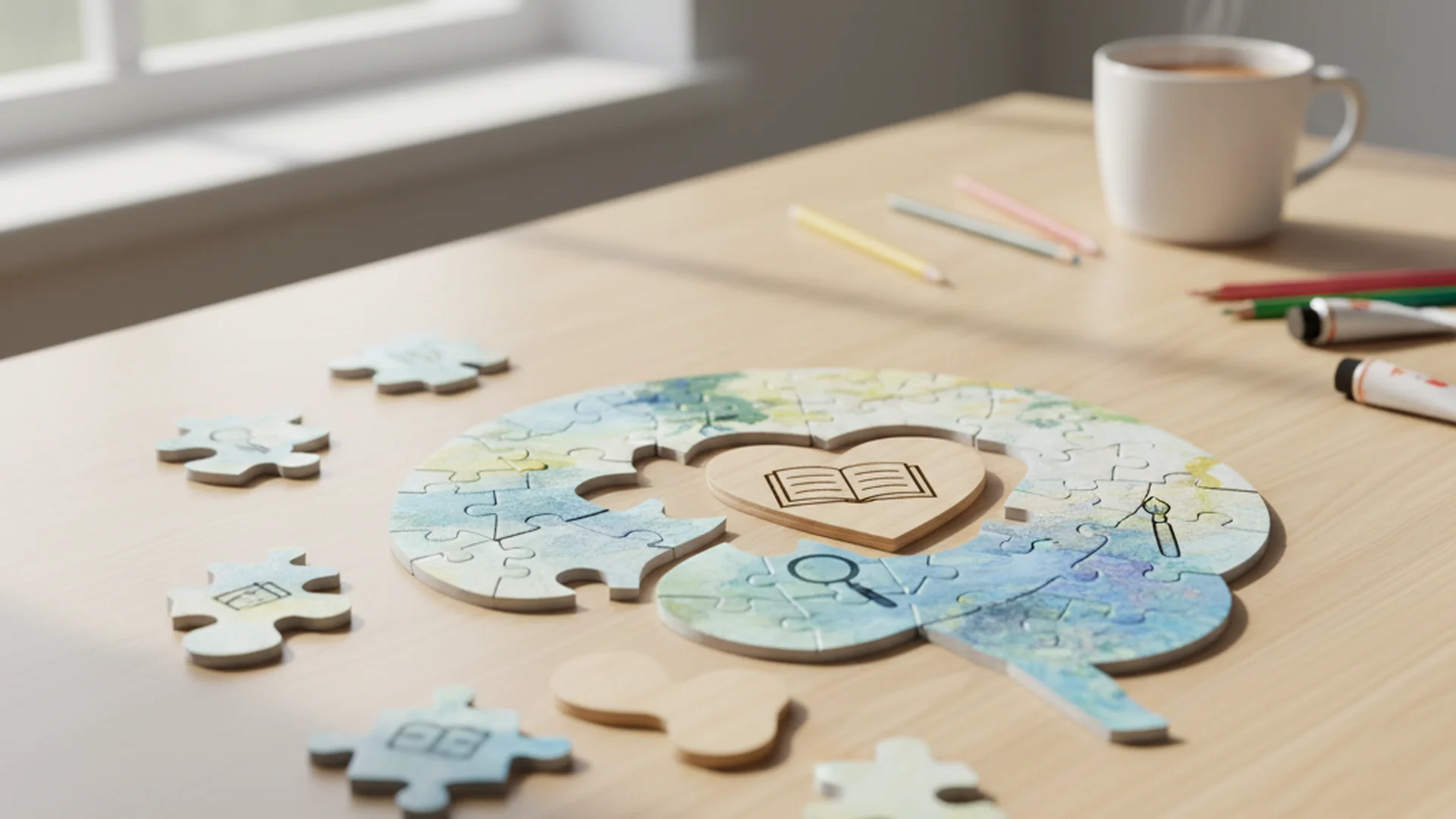
There are countless tools for mental longevity, but few are as tactile, rewarding, and accessible as art puzzles. What was once considered a quiet Sunday afternoon hobby has evolved into a sophisticated global phenomenon valued at nearly $10 billion. These aren't just toys; they are complex visual systems that challenge our neural pathways, improve spatial reasoning, and offer a much-needed "digital detox" in an increasingly screen-heavy world.
Engaging with creative visual puzzles allows the brain to enter a state of "flow"—a psychological condition where time seems to disappear, and focus becomes effortless. Whether you are a student looking to sharpen your mind or an adult seeking a therapeutic outlet, the intersection of fine art and puzzle-solving offers a unique cognitive advantage that traditional logic games sometimes lack.
The Neuroscience of Art Puzzles
When you sit down to solve one of these intricate challenges, your brain undergoes a remarkable "full-brain workout." Unlike simple repetitive tasks, art puzzles require the left hemisphere (the analytical side) to manage the logic of piece shapes and sorting, while the right hemisphere (the creative side) focuses on color gradients, brushstroke patterns, and the "big picture" intuition.
Research indicates that this dual engagement is vital for long-term health. A study highlighted by UNSW Sydney suggests that individuals who regularly engage in complex mental activities, such as crossword puzzles or jigsaw-based creative visual puzzles, can delay the onset of dementia symptoms by up to 2.5 years. This delay is attributed to the building of "cognitive reserve," which makes the brain more resilient against age-related decline.
Furthermore, every time you find a matching piece, your brain releases a small burst of dopamine. This "reward" neurotransmitter not only improves your mood but also enhances concentration and short-term memory. It is a biological reinforcement loop that keeps you engaged until the final piece is clicked into place.
Beyond the Jigsaw: Types of Creative Visual Puzzles
While most people immediately think of 1,000-piece cardboard boxes, the category of art puzzles is much broader. In 2025, we are seeing a diversification of formats that cater to different learning styles and artistic interests.
| Puzzle Type | Cognitive Focus | Best For |
|---|---|---|
| Droodles | Abstract Reasoning | Encouraging lateral thinking |
| Rebus Puzzles | Semantic Processing | Vocabulary and wordplay |
| Spot the Difference | Visual Discrimination | Detail-oriented focus |
| Fine Art Jigsaws | Spatial Synthesis | Color theory and patience |
Droodles and Abstract Thinking
Droodles are minimalist line drawings that depict a scene from an unusual perspective. These require high-level abstract thinking. For example, a simple circle with a line through it might be "a bird's-eye view of a person wearing a sombrero riding a bicycle." These encourage the brain to look beyond the literal and find creative solutions.
Rebus Challenges
These combine visual symbols with letters to create words or phrases. They are excellent for students who are developing literacy and logic skills simultaneously. For more on how these help in educational settings, read our post on Math Skills Through Puzzles.
Advertisement
The "Art Therapy Directive": A Practical Activity
For those using puzzles for mental health or as a therapeutic tool, we often recommend the "Art Therapy Directive." This is a three-step process designed to help individuals—particularly children with ADHD or anxiety—manage fragmented emotions through a tactile metaphor.
- Creation: Create a unique drawing or painting using bold colors. Don't worry about perfection; focus on the expression.
- Fragmentation: Carefully cut your artwork into irregular pieces. This represents the "shattering" of stress or complex emotions.
- Reconstruction: Reassemble the pieces. This metaphorical process helps the brain visualize "putting things back together," providing a sense of control and accomplishment.
Trends Shaping the Future (2025-2026)
The world of puzzles is not stagnant. As we move through 2025, several key trends are redefining how we interact with art:
AR-Integrated Puzzles
Modern art puzzles now often come with dedicated mobile apps. Once the puzzle is complete, you can scan it with your smartphone to unlock 3D animations or "living" stories related to the artwork. This bridges the gap between physical play and digital innovation.
Sustainability and Materials
High-end brands are pivoting away from plastic coatings and non-recyclable cardboard. We are seeing a surge in puzzles made from bamboo, recycled wood, and plant-based inks. These materials not only feel better to the touch but are also better for the environment.
Functional 3D Art
Trends are shifting from "flat" puzzles to 3D builds that serve a purpose. We now see functioning mechanical clocks or LED puzzle lamps that, once completed, become permanent fixtures in home decor.
Expert Recommendations for Success
To get the most out of your experience, we recommend following these best practices derived from professional puzzlers and cognitive specialists:
- Lighting is Crucial: Always use a dedicated workspace with "cool white" LED lighting. This specific color temperature helps you distinguish subtle color gradients in artistic pieces that might look identical under warm yellow light.
- Select High-Contrast Art: For a less frustrating experience, choose images with bold, saturated colors and sharp edges. Avoid "soft art" or blurry images, which can lead to eye strain.
- Invest in Quality Brands: Look for brands like Art & Fable, which utilize a velvet finish to reduce glare, or Pomegranate, known for their high-quality fine art licensing.
Advertisement
Common Mistakes to Avoid
Even seasoned enthusiasts fall into certain traps. To maintain the cognitive benefit without the stress, avoid these common errors:
- Sorting Only by Color: In complex abstract art puzzles, color can be deceptive. Experts suggest looking for texture and line direction as your primary guide.
- The "Cheating" Misconception: Many believe looking at the box cover is "cheating." In reality, puzzling is about spatial recognition and tactile process, not a memory test. Using the reference image is a standard and healthy practice.
- Ignoring the "Kidult" Market: Don't assume puzzles are just for kids or seniors. The "kidult" segment is the fastest-growing part of the industry, with adults using art puzzles as a primary tool for stress relief.
- Viewing it as a "Waste of Space": With modern puzzle glue and specialized frames, finished pieces are modular home decor. You can rotate your "gallery" seasonally.
Frequently Asked Questions
Are visual puzzles actually "good" for your brain?
Yes. They provide a "full-brain workout" by engaging the left hemisphere (logic/analytical) and the right hemisphere (creativity/intuition). This helps build cognitive reserve and improves spatial reasoning.
What is the difference between a jigsaw puzzle and a visual brainteaser?
While jigsaws are a subset, visual puzzles include broader categories like Droodles (abstract line drawings), Rebus puzzles (word-picture combinations), and Spot the Difference challenges.
Can a finished puzzle be considered real art?
The industry trend is moving toward "puzzles worth framing." Many modern puzzles feature licensed works from emerging contemporary artists, making them affordable alternatives to gallery prints.
How do I choose the right difficulty level?
Experts suggest starting with 500 pieces for beginners and moving to 1,000+ once you master the basics of sorting by color, edge, and texture.
Conclusion
Art puzzles are far more than a simple pastime; they are a bridge between cognitive science and creative expression. By engaging with these activities, you are not just building a picture—you are building a healthier, more resilient brain. Whether you are using them to teach Critical Thinking Puzzles to students or as a personal escape from the digital world, the benefits are profound and lasting.
Ready to Start?
Explore our collection of brain-boosting challenges and start your journey today.
Put it into practice

Keep reading
Education
Mastering Substitute Teacher Activities: The Ultimate Guide to Sub Lesson Puzzles
Explore effective substitute teacher activities and puzzles to maintain classroom order and engagement. Learn about 2025 trends, digital tools, and best practices.
Jun 22, 2025 10 min
Education
Mastering Math Skills Through Puzzles: A Guide for 2025 and Beyond
Discover how math puzzles learning outperforms traditional methods. Learn expert strategies, research-backed benefits, and 2025 trends for students and educators.
Aug 17, 2026 12 min
Time Based
Quick Puzzles Under 5 Minutes: The Science of the Micro-Mental Reset
Discover how quick puzzles under 5 minutes can boost focus, delay dementia, and raise IQ. Expert insights on 5 minute brain games for daily cognitive health.
Jul 24, 2026 12 min
Advertisement