Word Search for ESL Students: More Than Just Busy Work
Discover how word search ESL activities boost vocabulary retention by 83%. Explore evidence-based strategies, AI trends, and expert tips for the language classroom.
By Free To Play Puzzles Editorial Team 12 min read
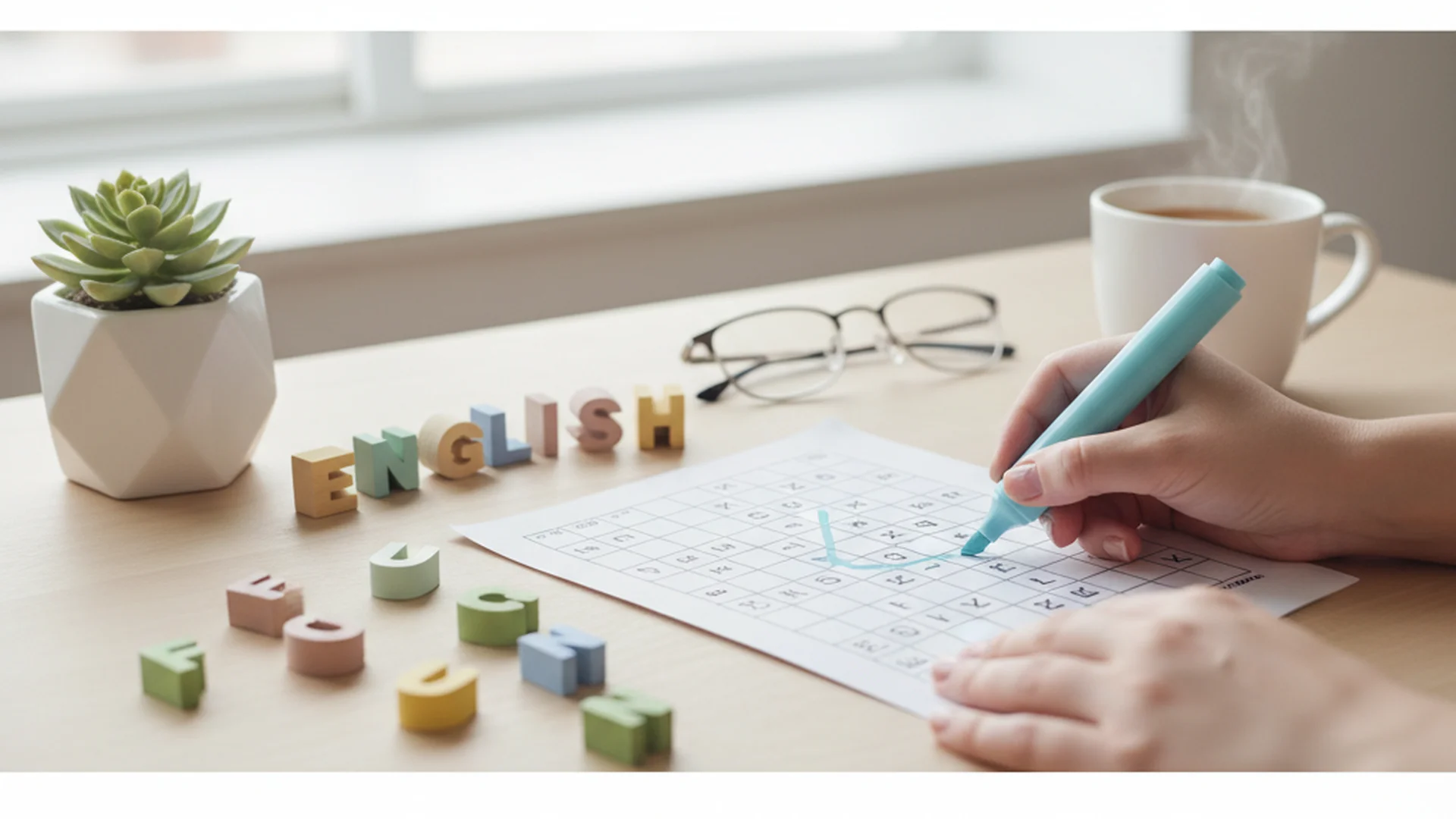
For years, the humble word search was relegated to the "filler" folder—a way to keep students quiet while the teacher finished grading or prepared the next lesson. However, letter grids have a lot of untapped potential. In the modern English as a Second Language (ESL) classroom, the word search ESL approach is undergoing a scientific renaissance.
New research suggests that when implemented with intentionality, these puzzles are powerhouses for vocabulary acquisition, visual tracking, and cognitive strengthening. For students navigating the complexities of a new language, a well-designed ESL vocabulary word search provides a low-stress environment to master the building blocks of English.
The Science of Vocabulary Acquisition
Why does searching for a string of letters in a chaotic grid actually help a student learn? The answer lies in how our brains process patterns. A 2024 meta-analysis published in the Journal of Language and Literature Studies found that word search games have an 83% significant effect on improving student vocabulary. This places the activity in the "high effectiveness" category for language pedagogy.
In controlled classroom environments, researchers observed that students using word search puzzles saw their post-test mean scores rise from 66.47 to 82.65. This is a critical jump, moving students well above the standard Minimum Mastery Criteria of 75.
Cognitive Strengthening and Memory
Searching for words stimulates the hippocampus, the area of the brain responsible for memory formation. When an ESL student scans a grid for the word "Environment," they aren't just looking for a shape; they are performing "active retrieval." They must hold the spelling in their short-term memory while visually filtering out "noise" (distractor letters). This process aids in both short-term recall and the long-term retention of complex spelling patterns.
Visual Tracking for Non-Roman Alphabets
For students whose native languages use non-Roman scripts—such as Mandarin, Arabic, or Hindi—the challenge of English is as much visual as it is linguistic. A word search ESL puzzle provides essential practice in visual discrimination. It trains the eye to distinguish between similar-looking English letters (like p, b, d, and q) and common letter clusters (like th, ch, or ion).
Moving Beyond Recognition: The "Clue-First" Approach
The biggest mistake a teacher can make is providing a simple list of words at the bottom of the page. This only tests "letter matching," which sits at the lowest level of Bloom’s Taxonomy. To make an ESL vocabulary word search truly effective, we must move toward "Analysis."
High-Impact Design Strategies
Instead of a word list, provide clues, synonyms, or even pictures.
| Traditional Word Search | High-Impact ESL Word Search |
|---|---|
| Word List: "Apple, Banana" | Clue: "A long yellow fruit" |
| Only Horizontal Words | Mixed Directions (Level Dependent) |
| Random Word Selection | Contextual Theme (e.g., "At the Bank") |
| Individual Work | Collaborative "Relay Races" |
By requiring students to solve a clue before they can hunt for the word, you force them to access their mental lexicon. This "retrieval practice" is what cements the word in their long-term memory. If you are looking for more ways to integrate these into a curriculum, check out our guide on Educational Word Searches.
Advertisement
Practical Classroom Strategies for 2025 and 2026
As we move into a new era of digital education, the way we use puzzles is shifting. Static paper is being replaced by dynamic, adaptive tools.
AI-Powered Personalization
By 2025, tools like ChatGPT-5 and Gemini 2.5 have become standard for educators. Teachers can now paste a reading passage into an AI and instantly generate a word search based on the specific vocabulary the students struggled with that morning. This ensures the activity is never "random" but always aligned with the current curriculum.
Multimedia-Embedded Puzzles
Modern platforms now allow for "Interactive Gems." In these digital puzzles, the "clue" isn't a word—it’s a GIF of someone running, an audio clip of a bird chirping, or a short video. This multimodal approach is essential for ESL learners, as it connects the visual spelling of a word directly to its sound and meaning. For students who prefer practicing on their own time, Free Word Search Online offers various ways to engage with digital grids.
The "Relay Race" Method
To add a social element, turn the puzzle into a classroom game. Divide the class into teams. One student runs to the board (or a shared tablet), finds a word, and then must write a complete, original sentence using that word before the next teammate can take their turn. This moves the activity from passive recognition to active production.
Level-Appropriate Difficulty Calibration
The "difficulty" of a puzzle is a lever that must be pulled carefully. For ESL students, the wrong difficulty level can lead to "affective filter" shutdown—where the student becomes too frustrated to learn.
For Beginners (A1-A2)
- Grid Size: Keep it small (10x10 or 12x12).
- Directions: Use only horizontal (left-to-right) and vertical (top-to-bottom) words.
- Word List: Provide the words clearly, often accompanied by icons or images.
For Intermediate/Advanced (B1-C1)
- Directions: Introduce diagonal and reverse words to challenge their pattern recognition.
- Clue Style: Use definitions, antonyms, or "fill-in-the-blank" sentences.
- Distractors: Include "decoy" words that are spelled similarly to the target words to force closer attention to detail.
Common Mistakes to Avoid
- Neglecting the "Pre-Teach" Phase: Handing out a word search with 20 new words is overwhelming. Always pronounce the words and discuss their meanings before the students start the puzzle.
- Using Random Word Generators: Avoid "Word Search of the Day" sites that pull random nouns. If the words "Ocelot," "Toaster," and "Democracy" are in the same grid, the student isn't building a cohesive mental map.
- Stopping at the "Found" Word: The learning shouldn't stop when the word is circled. The puzzle is the start of the lesson, not the end.
- Excessive Length: A word search with 30 words becomes a chore. Aim for 10–15 high-quality, relevant terms.
Advertisement
Frequently Asked Questions
Are word searches just a waste of time for ESL students?
No, they are not a waste of time if used strategically. Research shows they lower the "affective filter," a psychological barrier that can inhibit language learning. By providing a low-stress, game-like environment, word searches make students more receptive to new vocabulary and improve visual tracking skills.
Should I always give students the word list?
For beginners (A1-A2), yes, a word list helps with letter recognition. However, for intermediate and advanced students, you should replace the word list with clues, definitions, or synonyms. This requires "retrieval practice," which is much more effective for long-term memory retention.
Can word searches help with English grammar?
Surprisingly, yes. Teachers can design "Grammar Word Searches" where the list consists of base-form verbs, but the grid contains their irregular past-tense forms (e.g., the list says "GO," but they must find "WENT"). You can also use them for pluralizing irregular nouns or finding comparative adjectives.
How do I make a word search more challenging for advanced learners?
You can increase difficulty by adding diagonal and reverse words, using a larger grid, or removing the word list entirely and using only complex definitions as clues. You can also include "distractor" words—words that are spelled almost like the target word but are off by one letter.
Do adult ESL students find word searches childish?
Most adults actually enjoy word searches as a "brain break" after intensive grammar or speaking sessions. The key is to ensure the vocabulary is age-appropriate. Instead of "Animals," use "Corporate Phrasal Verbs," "Sustainability Terms," or "Medical Vocabulary" to keep the content relevant to their goals.
Conclusion
The word search ESL strategy is a bridge between rote memorization and active language use. By leveraging the cognitive benefits of pattern recognition and the emotional benefits of gamification, teachers can transform a simple grid into a powerful diagnostic and pedagogical tool.
As we look toward 2026, the integration of AI and multimodal clues will only make these puzzles more central to the language-learning experience. Remember: the goal isn't just to find the word—it's to own it.
Ready to Level Up Your Teaching?
Explore our full library of themed puzzles and expert strategies to engage your students today.
Put it into practice

Keep reading
Word Search
The Ultimate Guide to Printable Word Search Puzzles for Kids: Education Meets Play
Discover why printable word search kids love are essential for development. Learn about 2025 trends, age-appropriate designs, and cognitive benefits.
Aug 20, 2026 10 min

Word Search
Hollywood at Your Fingertips: The Ultimate Guide to Movie Word Search Puzzles
Explore the world of movie word search puzzles. Learn about cognitive benefits, 2026 film trends, and expert design tips for the ultimate Hollywood experience.
Aug 12, 2026 10 min

Word Search
Music Word Search: Instruments, Genres, and Artists
Explore the world of music word searches. Learn how these puzzles boost cognitive skills, aid music education, and stay ahead with 2025 multimedia trends.
Aug 1, 2026 10 min
Advertisement