UK vs US Puzzle Culture: A Deep Dive into Grids, Cuts, and Cryptics
Explore the fascinating world of uk vs us puzzles. Learn about grid architecture, jigsaw cut styles, and why British and American puzzling cultures differ so much.
By Free To Play Puzzles Editorial Team 12 min read
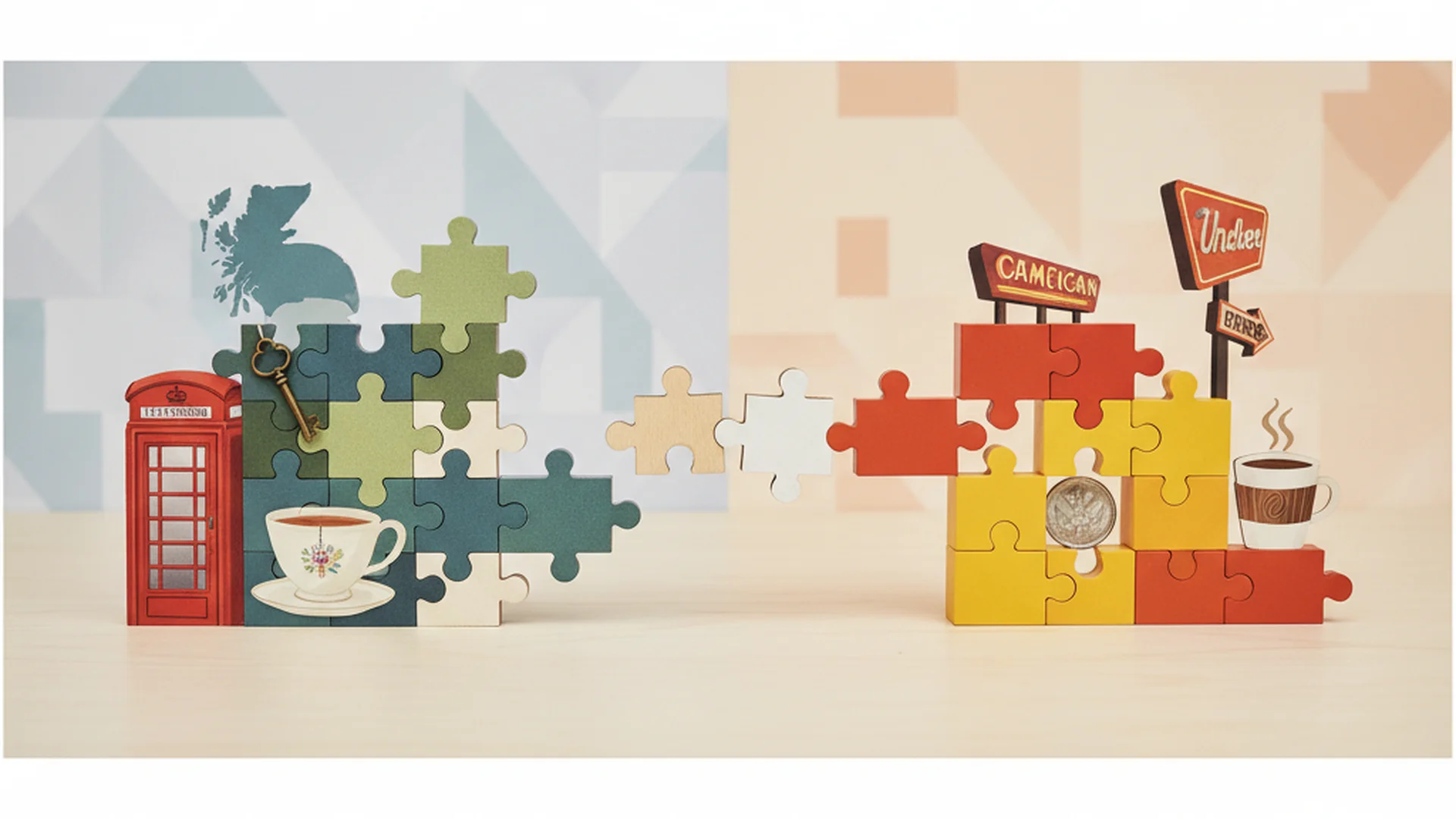
When it comes to the world of recreational logic, the Atlantic Ocean is more than just a geographical divide; it is a boundary between two distinct mental landscapes. While we might be "nations separated by a common language," the way we approach uk vs us puzzles reveals deep cultural differences in how we challenge our brains. From the skeletal, mysterious architecture of a London-style crossword to the sprawling, whimsical random-cut jigsaws found in an American living room, the nuances are as significant as the differences between tea and coffee.
As a Sudoku tournament director and logic instructor, I have watched these two cultures evolve. While the core goal—solving the mystery—remains the same, the "rules of engagement" vary wildly. Whether you are a fan of Logic Puzzles or a dedicated jigsaw hobbyist, understanding these transatlantic variations will not only make you a better solver but also a more appreciative student of global culture.
The Architecture of the Grid: Crossword Philosophy
The most visible manifestation of british american puzzle differences is found on the crossword page. If you pick up The Guardian and compare it to The New York Times, the visual contrast is immediate.
British Skeletal Grids vs. American Checked Grids
In the UK, crosswords typically utilize a "skeletal" grid. These grids are characterized by a high percentage of black squares—usually between 25% and 35%. The defining feature, however, is that they are "unchecked." This means that roughly half of the letters in a word do not intersect with another word. If you are stuck on a 10-letter answer and only have four letters from intersecting clues, you are largely on your own.
Conversely, American grids are "fully checked." Every single white square must belong to both an "Across" and a "Down" word. Only about 16% (one-sixth) of the grid is black. This architecture is designed to give the solver a fighting chance through "brute force"—if you can’t solve a difficult "Across" clue, you can solve all the intersecting "Down" clues to reveal the answer.
Clue Styles: The Cryptic Divide
In the UK, the "Cryptic" crossword is the gold standard. These clues are essentially mini-puzzles themselves, consisting of a definition and a piece of wordplay (like an anagram, a hidden word, or a double definition). In the US, while "Variety" puzzles exist, the standard crossword relies on "straight" clues or puns. While US puzzles are by no means easy, the British cryptic requires a specific type of lateral thinking that can take years to master.
Jigsaw Mechanics: Ribbon Cut vs. Random Cut
The physical construction of jigsaw puzzles is another area where the two regions diverge. If you have ever felt a sense of "wrongness" when trying a new brand, it is likely due to the cut style.
The European Ribbon Cut
Most puzzles sold in the UK and across Europe (produced by giants like Ravensburger) use a Ribbon Cut (also known as a Grid Cut). The pieces are cut in a predictable pattern of rows and columns. While some might find this "boring," it is the preferred choice for those involved in Fastest Sudoku Solvers and speed puzzling competitions.
The predictability of the Ribbon Cut allows for efficient sorting. You can categorize pieces by their "knobs and holes" (e.g., two-hole, two-knob pieces vs. four-knob pieces). This level of organization is essential for competitive play.
The American Random Cut
In the US, brands like Cobble Hill and Springbok have popularized the Random Cut. These puzzles are cut with irregular, "wacky" shapes that don’t follow a grid. You might find a piece that is long and thin next to one that is circular or zig-zagged.
American solvers often find this style more engaging because it prevents "false fits"—the frustrating moment when a piece seems to fit perfectly but actually belongs elsewhere. Because every piece shape is unique in a random-cut puzzle, the fit is unmistakable.
| Feature | UK Preferred Style | US Preferred Style |
|---|---|---|
| Jigsaw Cut | Ribbon / Grid Cut | Random / Irregular Cut |
| Crossword Intersections | Partially Unchecked | Fully Checked |
| Answer Indicators | Letter counts (7,5) | Grid Boundaries |
| Top Brand | Ravensburger / Gibsons | White Mountain / Cobble Hill |
Advertisement
Cultural Premium Brands and "Whimsies"
The luxury market for puzzles also shows distinct regional personalities. In the UK, Wentworth Wooden Puzzles is a household name for high-end gifting. They are famous for their "whimsy" pieces—pieces cut into recognizable shapes like birds, trees, or landmarks that match the puzzle's theme.
In the US, the premium market is often dominated by collage-style brands like White Mountain. These puzzles often feature nostalgic Americana, such as vintage cereal boxes, movie posters, or historical maps. While the UK favors the artistic and the abstract (like the popular Wasgij line), the US market thrives on pop culture and nostalgia.
The Wasgij Phenomenon
A uniquely British success story is Wasgij (jigsaw spelled backward). In these puzzles, the image you build is NOT the image on the box. Instead, you must piece together what a character in the box art is currently looking at. This "twist" requires a high level of deductive reasoning, which aligns with the UK's historical love for Barber Paradox style logic and complex riddles.
2025–2026 Trends: Speed Puzzling and Tech
The landscape of uk vs us puzzles is currently being reshaped by new trends that emerged in 2025.
Speed Puzzling Fever
While the US has long hosted the USA Jigsaw Nationals, the UK caught the "fever" recently. The inaugural UK Jigsaw Puzzle Nationals were held in Bradford in April 2025. This move toward competitive puzzling has increased demand for high-quality, Ribbon-cut puzzles that allow for rapid assembly.
Eco-Conscious vs. AR Integration
UK brands like Gibsons are leading the charge in sustainability. Their 2025 releases are 100% plastic-free, using biodegradable inks and paper seals instead of shrink-wrap.
In the US, the trend is shifting toward Augmented Reality (AR). Several major American manufacturers have released puzzles that, once completed, can be scanned with a smartphone to trigger 3D animations or hidden-object games. It reflects a broader American trend of blending analog hobbies with digital entertainment, similar to the rise of 10 Minute Puzzle Games.
Common Mistakes to Avoid
Even seasoned solvers can get tripped up when crossing the "puzzle pond." Here are the most common pitfalls:
- Underestimating the "Black Square" Rule: Don't assume that more black squares in a British crossword mean it is easier. The lack of intersections makes it significantly more difficult than a "white-heavy" American grid.
- Ignoring the "Whimsies": In high-end UK wooden puzzles, don't leave the strangely shaped pieces for last. They are often the anchors that help you build the internal structure of the puzzle.
- Forcing the Fit: If you are used to US Random Cuts, you might try to force pieces into a UK Ribbon Cut. If it doesn't "Softclick" (a term popularized by Ravensburger), it doesn't fit.
- Clue Misinterpretation: In British cryptics, the definition is always at the very beginning or the very end of the clue. Never in the middle.
Advertisement
Frequently Asked Questions
Why are British crosswords so much harder for Americans?
The difficulty stems from the Cryptic clue style and the skeletal grid. In a British puzzle, you don't get as many "free" letters from intersecting words, meaning you must solve the clue primarily through its own wordplay rather than through the surrounding answers.
What is the best brand for a "standard" experience?
Ravensburger is widely considered the global standard. While it is a German brand, its Ribbon Cut and "Softclick" technology are the benchmarks against which both British and American manufacturers measure themselves.
Do American puzzles use letter counts?
No. American puzzles rely on the physical boundaries of the grid to tell the solver how many letters are needed. British puzzles list the answer length in brackets (e.g., 5, 4) to help the solver navigate the unchecked squares.
Is speed puzzling more popular in the US or UK?
Historically, it was more popular in the US, but 2025 has seen a massive surge in the UK, culminating in the first national championship in Bradford. Both regions now have thriving competitive scenes.
Conclusion
The differences between uk vs us puzzles are a testament to how culture shapes our leisure time. The British preference for cryptic complexity and sustainable, structured manufacturing contrasts beautifully with the American love for nostalgia, "wacky" random shapes, and technological integration.
Whether you are looking for 10 Crossword Solving Strategies the Pros Use or simply want to try a new Sudoku challenge, exploring puzzles from "the other side" is a fantastic way to broaden your mental horizons. Next time you see a Wasgij or a random-cut landscape, give it a try—you might just find a new favorite way to solve.
Ready to Challenge Your Brain?
Explore our collection of crosswords and logic games today.
Put it into practice
Keep reading
Culture
The Global Tapestry of Logic: A Journey Through World Puzzle Traditions
Explore the rich history and future of world puzzle traditions. From ancient Tangrams to 2026 AR trends, discover how puzzles shape international culture.
May 9, 2026 12 min
Culture
The Four Color Theorem: Decoding the Ultimate Map Coloring Puzzle
Explore the history, logic, and controversy of the Four Color Theorem. From Victorian puzzles to computer-assisted proofs, learn why this math law changed everything.
Apr 27, 2026 12 min

Culture
The Ship of Theseus: Deciphering the Ultimate Identity Paradox Puzzle
Explore the Ship of Theseus, a mind-bending identity paradox puzzle that challenges our understanding of persistence, matter, and the nature of the self.
Apr 5, 2026 12 min
Advertisement