Mastering Fillomino Puzzles: The Ultimate 2025 Strategy Guide
Unlock the secrets of Fillomino puzzles. Learn expert strategies, regional connectivity rules, and the latest 2026 trends for these complex logic games.
By Free To Play Puzzles Editorial Team 10 min read

In the rapidly evolving landscape of mental athletics, few games offer the depth and spatial complexity of fillomino puzzles. As we move through 2025 and into 2026, these logic-based region-filling games have seen a massive resurgence in popularity, particularly among competitive solvers and those looking to enhance their cognitive flexibility. Unlike the fixed constraints of a standard Sudoku grid, Fillomino offers a fluid, topological challenge that tasks the brain with understanding area, connectivity, and boundaries simultaneously.
Polyomino number puzzles like Fillomino provide a unique "full-brain" workout. They require the activation of the parietal lobe for spatial processing and the prefrontal cortex for deductive reasoning. Whether you are a veteran of the World Puzzle Championships or a casual enthusiast looking for your next challenge, this guide will provide the framework needed to master the grid.
What are Fillomino Puzzles?
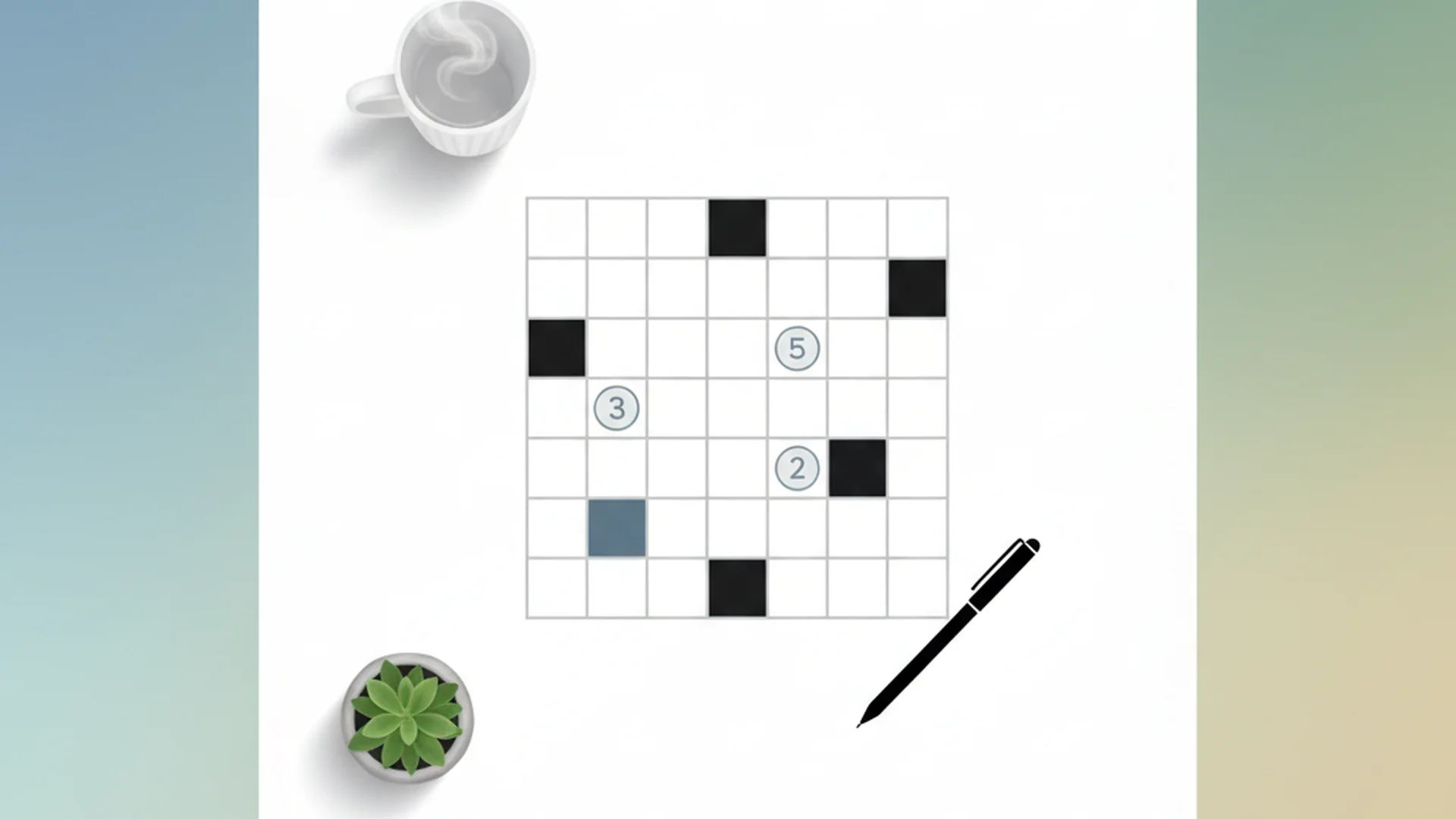
Fillomino (フィルオミノ) is a logic puzzle that involves partitioning a rectangular grid into various regions, known as polyominoes. Each region must contain a number of cells equal to the value of the number written inside those cells.
First introduced in 1994 by the legendary Japanese puzzle company Nikoli, Fillomino was the brainchild of a creator known by the pen name "Suranta." The name itself is a clever portmanteau of the English word "Fill" and "Polyomino" (a geometric shape composed of joined squares).
While many logic games rely on a "one of each number" rule, Fillomino is different. You can have multiple regions of size 3, dozens of regions of size 1, and so on. The only catch? No two regions of the same size can share an edge.
The Core Rules of the Grid
To solve fillomino puzzles successfully, you must strictly adhere to three fundamental rules:
- Region Equality: A region containing the number "N" must consist of exactly "N" connected cells. For example, if you see a "4," it must be part of a group of four squares.
- The No-Touch Rule: Two regions of the same size cannot be adjacent horizontally or vertically (orthogonally). However, they can touch at the corners (diagonally).
- Complete Coverage: Every single cell in the grid must belong to a region. There are no "empty" squares left over.
Advertisement
Expert Strategies for Beginners
Starting a blank Fillomino grid can be daunting. Unlike Sudoku, where the numbers are your primary focus, Fillomino is about the walls you build between them.
1. Identify the "1s" and Forced Borders
The easiest starting point is the number "1." Since a region of size 1 is just a single cell, it is complete the moment you see it. Immediately draw borders around all "1" clues. Next, look for adjacent cells that contain different numbers (e.g., a "2" next to a "5"). Since they belong to different-sized regions, a border must exist between them.
2. Corner and Edge Constraints
Cells located in corners are highly restricted. If a "3" is placed in a corner, it only has two directions to grow. If one of those directions is blocked by a different number or a completed region, the "3" is forced to expand in the only remaining direction.
3. Mark Every Cell
Professional solvers rarely leave a cell blank. As you deduce that a cell belongs to a specific region, write the number in that cell. If you know a cell is part of a 4-omino, write "4" in it. This makes it significantly easier to spot "illegal" touches where two regions of the same size might accidentally meet.
Advanced Solving: Overload Logic and Hidden Regions
Once you move past the basics, you will encounter grids that require more sophisticated spatial reasoning. This is where polyomino number puzzles become truly academic.
The Overload Principle
If adding a cell to a specific region would cause that region to exceed its required size, you must place a border. For example, if a 3-omino already has three cells and it is touching an empty cell, you must evaluate if that empty cell could be a 3. If making it a 3 would force it to connect to your existing 3-omino (creating a 4-omino), then that empty cell must be something else entirely.
Deducing Hidden Regions
In high-level competition, such as the 2026 Grandmaster Puzzles circuit, grids often contain "dead zones"—areas with no numbers at all. You must deduce the existence of a region that has no "given" clue. If you have a 2x1 pocket of empty cells surrounded by borders, you have just discovered a hidden "2" region.
| Technique | Difficulty | Best For |
|---|---|---|
| Border Drawing | Easy | Early game/identifying 1s |
| Path Forcing | Medium | Edges and narrow corridors |
| Hidden Region Deduction | Hard | Late game/empty grid sections |
| Connectivity Analysis | Expert | Multi-region interaction |
Fillomino vs. Other Logic Puzzles
It is important to distinguish Fillomino from its cousins. While it shares some DNA with the Akari Light Up Puzzles or Battleship Logic Puzzles, its closest relative is Shikaku.
- Shikaku: Every region must be a rectangle.
- Fillomino: Regions can be any shape (L-shapes, T-shapes, zig-zags) as long as the cell count is correct.
Because of this freedom of shape, Fillomino is often used in operations research and mathematics education to teach "lazy constraints" and "integer programming" as of 2025.
Advertisement
Recent Trends and the 2026 Outlook
The world of logic puzzles has changed significantly in the last year. In 2025, we saw the rise of Hybrid Fillomino. These include Checkered Fillomino, where regions must be shadeable like a chessboard, and Fractional Fillomino, which introduces non-integer values to the grid.
Furthermore, logic puzzles are now being integrated into AI training datasets in 2026. Developers use fillomino puzzles to test the "spatial reasoning" and "long-term planning" capabilities of Large Language Models, as the puzzles cannot be solved by simple pattern matching alone.
Common Mistakes to Avoid
- The "Same Number" Assumption: Just because two 4s are near each other doesn't mean they belong to the same region. They could be two separate 4-ominoes that touch only at the corners.
- Ignoring the Diagonals: Remember, the "no-touch" rule only applies to sharing a side. Many solvers get stuck because they think they can't place two 3s diagonally from each other.
- Forgetting Hidden Regions: If you are stuck, look for empty pockets. Not every region will have a number printed in it at the start.
Frequently Asked Questions
Can regions of the same size touch diagonally?
Yes. The rules of Fillomino only prohibit same-sized polyominoes from touching orthogonally (sharing an edge). They can safely touch at the corners without violating any rules.
Does every region need to have a "given" starting number?
No. One of the most challenging aspects of Fillomino is the "hidden" region. You may have to deduce the existence of a region that has no numbers provided in the initial grid. This is a common feature in expert-level puzzles.
Can a single region contain more than one given number?
Yes. If you see two "3s" near each other, they might belong to two separate 3-cell regions, or they might both be part of the same 3-cell region. You must use the surrounding context to determine which it is.
What is the difference between Fillomino and Shikaku?
In Shikaku, every region must be a rectangle. In Fillomino, regions can be any shape (L-shapes, T-shapes, snake-like shapes, etc.) as long as the cell count matches the number.
Conclusion
Fillomino is more than just a game; it is a profound exercise in spatial topology and deductive logic. By mastering the art of border placement and learning to spot hidden regions, you are not just solving a puzzle—you are refining your brain's ability to process complex constraints. As we see more innovations in the puzzle world through 2026, staying sharp with these polyomino number puzzles will keep your cognitive faculties at their peak.
Ready to Start?
Challenge your brain with our latest logic puzzles today.
Put it into practice



Keep reading
Logic Puzzles
Mastering Kuromasu Puzzles: The Ultimate Guide to "Where Is Black Cells"
Explore the fascinating world of Kuromasu puzzles. Learn rules, advanced strategies, and the cognitive benefits of this Nikoli classic.
Sep 30, 2026 10 min

Logic Puzzles
The Ultimate Masyu Puzzles Guide: Mastering the Art of Pearl Logic
Unlock the secrets of Masyu puzzles. Learn advanced strategies, rules, and the neuroscience behind these captivating Japanese pearl puzzles.
May 11, 2026 12 min

Logic Puzzles
The Ultimate Slitherlink Puzzles Guide: Rules, Expert Strategies, and 2025 Trends
Master Slitherlink puzzles with our comprehensive guide. Learn rules, expert corner strategies, the X-rule, and explore 2025 trends in logic gaming.
Apr 1, 2026 12 min
Advertisement