Mastering the Grid: The Ultimate Guide to Crosswords for Beginners
Discover the best crosswords for beginners and expert strategies to start solving today. Learn about brain health benefits, modern trends, and tips to master the grid.
By Free To Play Puzzles Editorial Team 12 min read
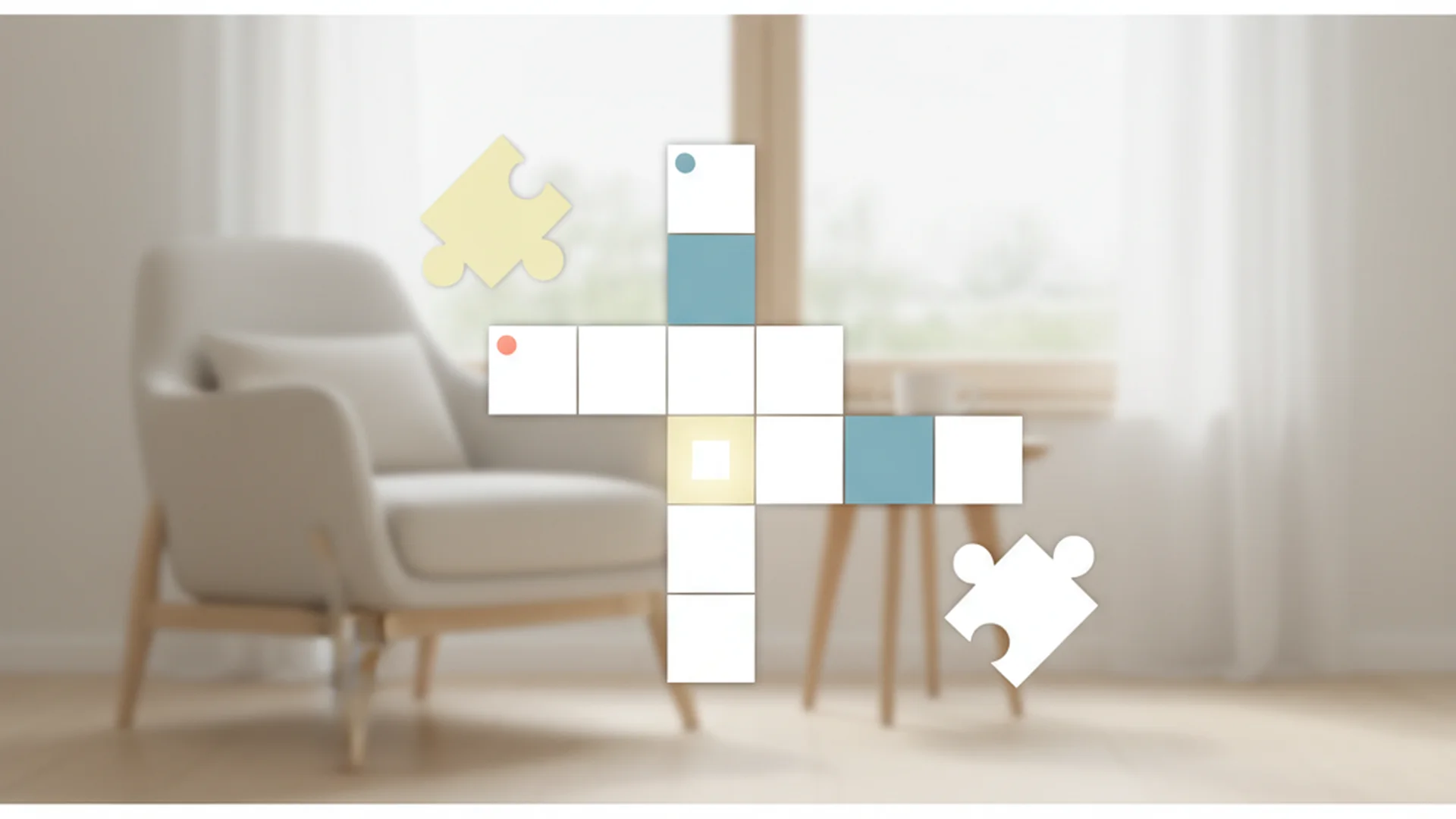
Entering the world of cruciverbalism—the art of crossword solving and construction—can feel like learning a new language. You open a grid, see a clue like "Ewe’s mate," and suddenly your mind goes blank. But here is the good news: crosswords for beginners have never been more accessible than they are in 2025. Whether you are looking to sharpen your mind or simply find a relaxing digital hobby, starting with easy crosswords for beginners is a scientifically proven way to boost your cognitive health while having a blast.
In this guide, we will break down the mechanics of the modern crossword, debunk common myths about "cheating," and provide you with a clear roadmap for new solvers.
Why Start Solving Now? The 2025 Crossword Boom
If you think crosswords are just for people in quiet library corners, the latest data might surprise you. As we move through 2025 and 2026, crosswords are experiencing a massive demographic shift. Research shows that 50% of Gen Z now reports solving crosswords regularly, a higher percentage than the Baby Boomer generation (38%).
The reason? It isn’t just about the challenge; it’s about brain longevity. A landmark study from the University of Exeter and King’s College London revealed that regular word puzzle solvers have brain functions equivalent to someone 10 years younger than their actual age. Furthermore, engaging with these puzzles can build a "cognitive reserve" that delays dementia symptoms by an average of 2.5 years.
The Beginner’s Roadmap: Where to Start
Not all puzzles are created equal. If you jump into a Saturday New York Times puzzle as your first attempt, you will likely walk away frustrated.
The Monday Rule
In the crossword world, there is a "Golden Rule": difficulty increases throughout the week. For major publications like The New York Times or The LA Times, Monday is the easiest day. The clues are literal, the themes are straightforward, and there is very little "trickery." As the week progresses toward Saturday, the clues become more cryptic and the wordplay more intense.
Start with "The Mini"
In 2025, the "Mini Revolution" is in full swing. These are 5x5 grids designed to be solved in under two minutes. They are the perfect training wheels for easy crosswords beginners because they focus on current events and modern vocabulary rather than obscure trivia.
Recommended Puzzles for Beginners
If you are just starting, I highly recommend these specific sources:
- USA Today: Widely considered by experts like Stan Newman to be the most beginner-friendly daily puzzle. It avoids "stuffy" references and focuses on accessible themes.
- The New York Times Mini: Excellent for building a daily habit without the intimidation of a full 15x15 grid.
- The LA Times (Mondays): Great for learning standard crossword logic.
Advertisement
Understanding the Language of Crosswords
To solve crosswords for beginners, you have to understand that the "Setter" (the person who wrote the puzzle) is following a set of strict rules. Once you know these rules, the grid begins to unlock itself.
The Part of Speech Rule
The clue and the answer must always match in part of speech, tense, and number.
- If the clue is plural, the answer is plural (e.g., "Fruit trees" = APPLES).
- If the clue ends in "-ing", the answer usually ends in "-ing" (e.g., "Running quickly" = HIEING).
- If the clue is an abbreviation, the answer must be an abbreviation (e.g., "Airport screening agency: Abbr." = TSA).
What is "Crosswordese"?
"Crosswordese" refers to words that appear frequently in puzzles but rarely in real life. These are usually short, vowel-heavy words that help constructors "glue" the grid together.
| Word | Definition | Why it’s used |
|---|---|---|
| EWE | Female sheep | High vowel-to-consonant ratio |
| ADO | Commotion/Fuss | Easy to fit into corners |
| AREA | Surface measurement | Common letters (A, R, E) |
| OREO | Popular sandwich cookie | Four vowels in a row |
| ERNE | A sea eagle | Common in older puzzles |
The Question Mark (?) Clue
One of the biggest hurdles for beginners is the question mark. When you see a "?" at the end of a clue, it means the clue is a pun or wordplay. You should not take it literally.
- Example: "Union agreements?"
- Literal interpretation: Labor contracts.
- Crossword interpretation: PRENUPS (agreements before a marriage "union").
For more on decoding these, check out our guide on Common Crossword Clue Types.
5 Expert Strategies to Solve Faster
Constructors see the grid differently than solvers do. Here is how you can use that "insider" knowledge to finish your first puzzle:
1. Scan for the "Gimmes"
Don't start at 1-Across. Instead, scan the entire list of clues for "fill-in-the-blank" clues. These are almost always the easiest entry points.
- Example: "___ and the Giant Peach" (JAMES).
2. The 3-Letter Strategy
Focus on the 3 and 4-letter words first. Because there are fewer combinations for these short words, they provide "anchor letters" that help you solve the longer, more difficult 10-letter themed entries.
3. Think in Pencil
Even if you are playing on a tablet or phone, treat your first guesses as hypotheses. If a word doesn't feel right where it intersects with another, delete it immediately. Holding onto a wrong guess is the #1 reason beginners get stuck.
4. Use the Title and Theme
Most puzzles have a theme. The title of the puzzle usually gives you a massive hint about what the "gimmick" is. If the title is "Double Trouble," you might find that certain squares require two letters instead of one.
5. Walk Away
If you are staring at a blank corner for five minutes, put the puzzle down. Take a 15-minute break. Crossword experts note that the brain continues to process clues subconsciously. You will often find that the answer "pops" into your head the moment you look at the grid again.
Common Mistakes to Avoid
Even seasoned solvers make mistakes, but beginners often fall into these three specific traps:
- Solving in Numerical Order: This is the hardest way to play. You should "hop" around the grid to build clusters of confirmed letters. If you get 1-Across, immediately look at the "Down" clues that intersect with it.
- Thinking You Aren't "Smart Enough": Many people quit because they don't know a specific trivia fact. Modern crosswords are actually about pattern recognition and logic, not being a walking encyclopedia.
- Refusing to "Cheat": In the learning phase, looking up a word is not cheating—it’s research. Every time you reveal an answer, you are adding a new word to your "crossword vocabulary" for next time.
For a deeper dive into these techniques, read our article on 10 Crossword Solving Strategies the Pros Use.
Advertisement
Modern Trends: Crosswords in 2025–2026
The hobby is evolving rapidly. We are currently seeing three major trends that make it an exciting time for new solvers:
- AI-Enhanced Hints: New apps are moving away from simply "revealing" the word. In 2026, many platforms are using AI to give "progressive hints"—starting with a cryptic nudge and only giving the full answer if you are truly stuck.
- Social & Competitive Solving: The American Crossword Puzzle Tournament (ACPT) saw record participation in 2025. Today’s apps feature "co-op modes" where you can solve the same grid with a friend in real-time.
- Modernized Lexicon: Constructors are actively moving away from 1950s references. Expect clues about streaming culture, current tech trends, and inclusive language.
Frequently Asked Questions
Is it "cheating" to look up an answer?
No. For beginners, "checking" or "revealing" a word is a vital learning tool. It helps you understand "crosswordese" and the specific logic of the person who created the puzzle. As you get better, you will find yourself needing to look things up less frequently.
Why do some clues have a question mark (?) at the end?
A question mark indicates wordplay or a pun. It’s a signal from the constructor to stop thinking literally. For example, the clue "A high-flyer?" might be PILOT or ALTIMETER, but with a question mark, it could be EAGLE.
How do I know if the answer should be plural or in a specific tense?
The clue and answer must always match. If the clue is "Jumps," the answer might be LEAPS. If the clue is "Jumped," the answer would be LEAPED. Always check the suffix of the clue!
What is the best day of the week for a beginner to solve?
Monday is universally the easiest day for daily newspaper puzzles. Sunday puzzles are large and impressive, but they are usually only at a "Wednesday" level of difficulty—they just take longer because of the size.
Should I learn common abbreviations?
Yes! Abbreviations are a staple of crossword puzzles. If a clue says "Abbr." or "In short," your answer will be a shortened version of a word. You can find a list of the most frequent ones in our Crossword Abbreviations Guide.
Conclusion
Starting your journey with crosswords for beginners is more than just a way to kill time; it’s an investment in your brain's future. By starting with "easy" Monday puzzles, mastering the "crosswordese" of 2025, and using strategies like the "3-letter word" approach, you’ll find yourself finishing full grids in no time.
Remember, every expert was once a beginner who didn't know why "Oreo" was in every puzzle. Stay curious, don't be afraid to "reveal" an answer when you're stuck, and most importantly, have fun with the wordplay!
Ready to Start?
Begin your crossword journey today with our daily puzzles.
Put it into practice
Keep reading
Crosswords
Mastering Two Speed Crosswords: The Ultimate Guide for Beginners
Learn how two speed crosswords and Everyman puzzles can bridge the gap between quick and cryptic crosswords with expert strategies and tips.
Nov 12, 2025 10 min
Crosswords
Mastering Themed Crosswords: A Guide to Identifying and Using Themes
Learn how to identify and master themed crosswords. This guide covers the latest 2025 trends, expert solving strategies, and the evolution of the crossword industry.
Nov 13, 2024 12 min
Crosswords
Mastering Giant Crosswords: A Guide to the World’s Biggest Puzzles
Discover the fascinating world of giant crosswords. From record-breaking grids to expert strategies, learn how to tackle these massive word challenges.
Jun 22, 2026 10 min
Advertisement