VR Puzzle Games: The Future of Virtual Reality Brain Training
Explore the evolution of VR puzzle games in 2026. Discover top-rated titles, market trends, and how virtual reality puzzles are enhancing cognitive wellness.
By Free To Play Puzzles Editorial Team 12 min read
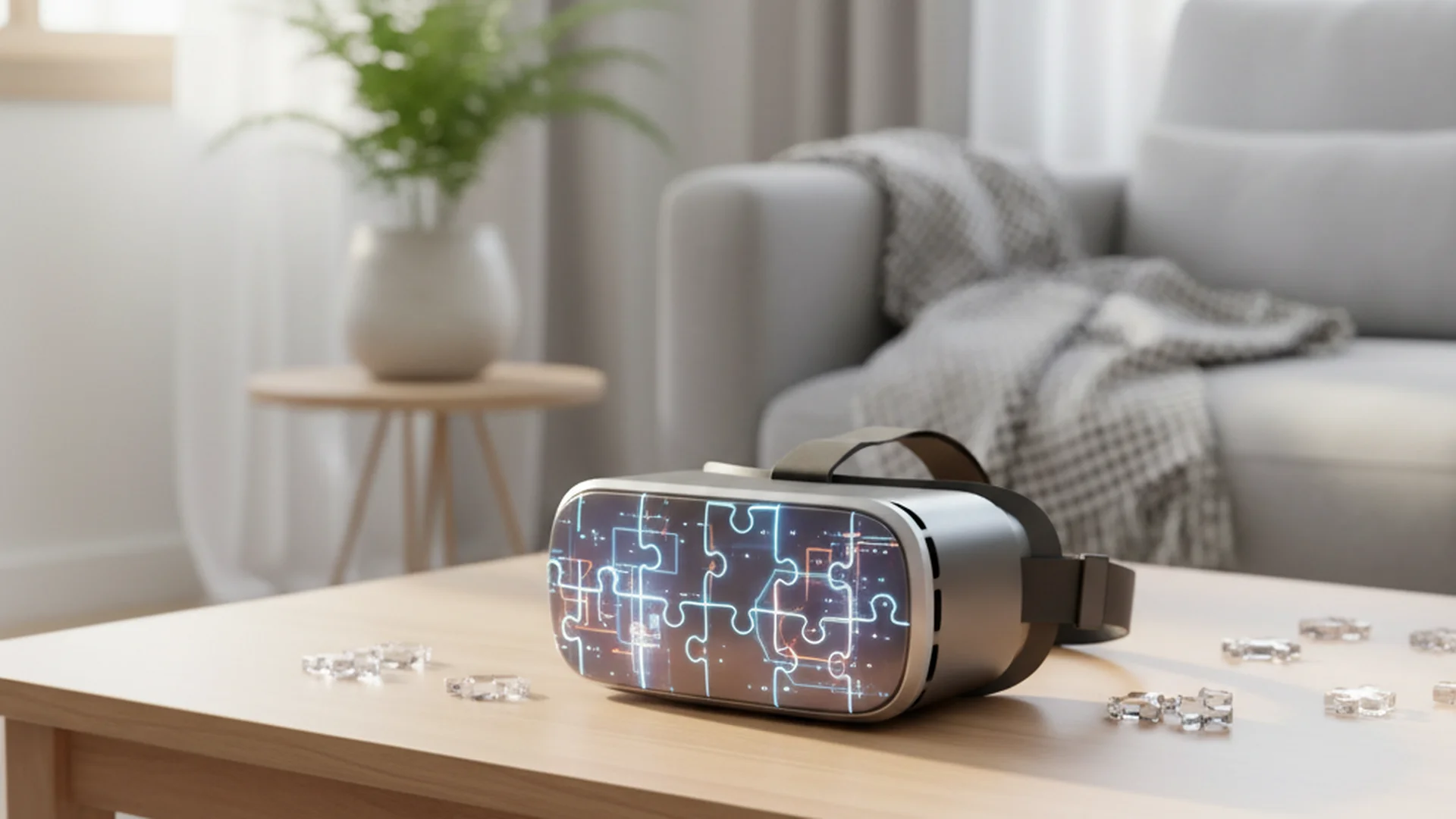
From the rhythmic logic of Sudoku to the high-pressure environment of international tournaments, the "eureka" moment is a universal thrill. However, in recent years, a new frontier has emerged that changes the very geometry of logic: vr puzzle games.
Unlike traditional screen-based challenges, virtual reality puzzles leverage our innate spatial reasoning, transforming abstract problems into physical, tactile experiences. We are no longer just looking at a puzzle; we are inside it. Whether you are manipulating a 3D artifact in a photorealistic tomb or arranging digital blocks on your actual kitchen table via Mixed Reality (MR), the landscape of digital puzzling has reached a sophisticated peak in late 2025.
The Evolution of Spatial Reasoning in VR
The primary reason vr puzzle games have become a dominant force in the industry is their ability to tap into "spatial presence." In a traditional logic game, your brain must translate 2D symbols into 3D concepts. In VR, that translation layer is removed.
In late 2025, we’ve seen the "uncanny valley" of physics disappear. When you pick up a digital key in a game like Ghost Town, the weight and friction are simulated so accurately through haptic feedback that your brain treats the object as real. This physical presence creates a deeper level of immersion than any other medium can offer.
From 2D Logic to 3D Environments
For those who enjoy Logic Puzzles, the leap to VR is comparable to the jump from a drawing of a house to actually walking through its front door. In VR, puzzles often require you to look under objects, peer through keyholes, or physically walk around a structure to see how its gears align. This engagement of the motor cortex alongside the prefrontal cortex provides a more holistic form of Brain Training.
The Demographic Shift: Why VR Puzzles are for Everyone
While the 18–34 age group remains the largest consumer of VR technology, 2025 has seen a massive surge in users aged 50 and older. Many seniors are looking for more engaging ways to maintain cognitive health.
VR puzzle games offer a unique solution for cognitive wellness. Unlike high-action shooters that require twitch reflexes, puzzle games prioritize deduction, memory, and spatial awareness. For many, these games are becoming a daily digital vitamin.
Mixed Reality and Accessibility
One of the biggest hurdles for VR in the past was the "total isolation" factor. The release of the Meta Quest 3/3S and subsequent 2026 hardware has shifted focus toward Mixed Reality (MR). Games like LEGO Bricktales allow you to build complex structures that appear to sit on your real-world coffee table. This blend of the physical and digital makes [virtual reality puzzles] much more approachable for those who might feel disoriented by a fully digital world.
Advertisement
Technical Breakthroughs in 2025-2026
The current generation of VR hardware has introduced features that were purely theoretical just a few years ago. These technical leaps have directly improved the puzzling experience.
AI-Driven Adaptive Difficulty
One of the most frustrating aspects of any puzzle game is getting truly stuck. In 2025, developers began implementing AI agents that monitor player "gaze duration" and "interaction speed."
If the AI notices you have been staring at a specific lever for three minutes without moving, it might provide a subtle environmental hint—perhaps the lever glows slightly, or a 3D sound cue emanates from the related mechanism. This prevents the need to remove your headset to look up a guide, maintaining the flow of the experience.
Hand-Tracking 2.0
Controllers are increasingly becoming optional. New sample-based eye-tracking (running at 1,000Hz+) allows players to interact with tiny puzzle components just by looking at them and pinching their fingers in mid-air. This "natural interaction" makes games feel less like a "video game" and more like an extension of your own hands.
Top Performers: The Best VR Puzzle Games of 2026
If you are looking to dive into the world of virtual reality puzzles, these are the current gold standards as of late 2025.
- Ghost Town: Created by the masterminds behind The Room VR, this title has swept "Game of the Year" awards for its atmospheric storytelling and tactile puzzles.
- Arken Age: A stunning blend of adventure and physics-based logic, this game uses Unreal Engine 5 to create environments that are virtually indistinguishable from reality.
- Puzzling Places: A meditative experience where you assemble hyper-realistic 3D scans of real-world locations. It is perfect for those who want a relaxing, seated experience.
| Game Title | Movement Type | Best For | Difficulty |
|---|---|---|---|
| Ghost Town | Teleport/Smooth | Immersion | High |
| Arken Age | Smooth | Adventure | Medium |
| Puzzling Places | Stationary | Relaxation | Low to High |
| Cubism | Stationary/MR | Logic | Medium |
Common Mistakes to Avoid
Even for experienced gamers, VR presents a unique set of challenges. Avoiding these common pitfalls will ensure your "brain training" sessions are productive and comfortable.
1. Thinking You Need a "Holodeck"
A common mistake is believing you need a massive, empty room (Room Scale) to enjoy VR. In reality, most puzzle games are designed to be "Stationary" or "Seated" friendly. As long as you have enough space to extend your arms, you can solve almost any digital mystery.
2. Ignoring Physical Fatigue
While the brain is getting a workout, the body is too. Standing for long periods on a hard floor can lead to foot strain.
3. Playing in the Dark
Because VR headsets use cameras to track your movement, playing in a dark room will lead to "tracking lost" errors. This is particularly annoying when you are in the middle of a delicate puzzle.
Advertisement
The Social Side: Co-op Puzzling
A common misconception is that VR is a solitary experience. The "Co-op Puzzle" trend is currently booming. Titles like Walkabout Mini Golf—which features intricate scavenger-hunt puzzles hidden within its courses—show that solving riddles with friends can be a major driver of player retention. Working together to solve a 3D logic problem adds a layer of communication and teamwork that 2D games simply cannot replicate.
For more information on how these games compare to traditional apps, see our guide on the Best Puzzle Apps 2025.
Frequently Asked Questions
Can I play VR puzzle games sitting down?
Yes. Most modern puzzle games, including Puzzling Places and Cubism, are specifically designed for seated play. Adventure-style puzzlers may require occasional reaching, but they usually offer "seated mode" settings to adjust the player's height.
Do these games cause motion sickness?
Generally, no. Puzzle games are among the most comfortable VR experiences because they often use "teleportation" for movement or keep the player in a stationary environment. This eliminates the sensory conflict that typically causes nausea.
Are VR puzzles harder than traditional ones?
They aren't necessarily "harder" in terms of logic, but they require better spatial reasoning. You must interact with the world in 360 degrees, which can feel more challenging at first but ultimately more rewarding.
Is there a difference between VR and Mixed Reality (MR) puzzles?
Yes. VR places you in a completely digital world (like The Room VR), while MR (like Laser Dance) projects digital puzzles onto your actual environment, using your own furniture as part of the game.
Conclusion
The rise of vr puzzle games represents a significant shift in how we approach Cognitive Benefits and digital entertainment. By moving away from flat screens and into three-dimensional space, we are engaging our brains in a way that mimics real-world problem-solving more closely than ever before.
Whether you are a logic professional or someone looking for a fun way to stay sharp, the current library of [virtual reality puzzles] offers something for every skill level. As hardware continues to evolve, the line between "playing a game" and "solving a real-world mystery" will only continue to blur.
Explore the Digital World
Dive into more brain-sharpening content today.
Put it into practice

Keep reading
Technology
The Ultimate Guide to Steam Puzzle Games: Best PC Brain Training for 2025
Discover the best Steam puzzle games for 2025. From indie logic gems to cozy brain trainers, explore market trends, expert strategies, and top PC puzzle recommendations.
May 21, 2025 12 min

Technology
Best Puzzle Apps 2025: Top-Rated Brain Games and Hidden Gems
Discover the best puzzle apps 2025 has to offer. From AI-driven brain trainers to immersive indie mysteries, explore the top-rated games for your mobile device.
Sep 30, 2026 15 min

Technology
Free Puzzle Apps: The Best No-Cost Brain Games for Cognitive Health in 2025
Explore the best free puzzle apps and brain games. Discover top-rated apps, market trends, and how to optimize your mental workout for longevity.
Mar 15, 2026 12 min
Advertisement