Types of Logic Puzzles: The Complete 2025 Guide to Every Category
Explore the diverse landscape of types of logic puzzles, from classic grids to 2025 AR trends. Master deduction with expert tips and category deep-dives.
By Free To Play Puzzles Editorial Team 12 min read

Have you ever found yourself staring at a grid of numbers or a series of cryptic statements, determined to find the one hidden truth? The world of types of logic puzzles has expanded far beyond the back pages of newspapers. In 2025, these brain teasers have transformed from a niche hobby into a multibillion-dollar global phenomenon. Whether you are a casual player looking for stress relief or a competitive solver aiming for tournament glory, understanding the different logic puzzle categories is the first step toward mastery.
As a logic instructor, I have seen how these puzzles bridge the gap between simple entertainment and rigorous mental training. Today, we are seeing a resurgence in physical puzzles alongside a massive boom in digital "hybrid-casual" games. In this guide, we will break down every major category, share expert solving strategies, and look at the future of deduction in the age of AI.
The Landscape of Logic Puzzles in 2025
The puzzle market has shifted dramatically. Once considered the domain of "math geeks," logic puzzles are now a core part of the wellness and digital gaming industry. Recent data suggests that the global market is projected to grow at a CAGR of 15.75% through 2032. Surprisingly, it is the 25–44 age demographic that makes up over half of the digital audience, while the 55+ demographic leads in total time spent, averaging nearly 15 hours a month on deduction-based games.
Core Categories of Logic Puzzles
Logic puzzles are generally classified by the method of deduction required to solve them. Understanding these categories allows you to build specific mental "muscles" for each type.
1. Logic Grid Puzzles (The "Classic" Deduction)
When most people think of a logic puzzle, they picture the standard grid. These puzzles provide a narrative (e.g., "Five people live in five different houses") and a series of clues. You must use a grid to cross-reference categories and eliminate impossibilities.
The most famous example is arguably the "Zebra Puzzle," often misattributed to Albert Einstein. It requires the solver to determine who owns a zebra and who drinks water based on a series of fifteen constraints. For those looking to dive deeper into this specific format, you can read our detailed breakdown of Einstein's Riddle Explained.
2. Grid Shading and Placement Puzzles
This category is dominated by Sudoku and Nonogram. These puzzles rely on numerical constraints and spatial logic.
- Sudoku: A number placement puzzle where each row, column, and 3x3 subgrid must contain the digits 1–9.
- Nonograms: Also known as Picross, these involve shading cells in a grid based on numbers at the side of the rows and columns to reveal a hidden image. Check out our Nonogram Puzzles: Complete Guide for advanced shading techniques.
- Akari (Light Up): A puzzle where you place lightbulbs in a grid to illuminate all white cells without the bulbs "seeing" each other.
3. Truth-Tellers and Liars (Knights and Knaves)
These are purely verbal puzzles that test your ability to handle contradictory statements. You might encounter three people: one who always tells the truth, one who always lies, and one who alternates. Based on their statements about each other, you must identify their identities. This category is a staple of Logic Puzzles: Complete Guide to Deductive Reasoning.
4. Path-Drawing and Loop Puzzles
In these puzzles, you are tasked with creating a single, continuous path or loop based on specific rules.
- Slitherlink: You connect dots to form a loop; numbers inside the squares indicate how many of its four sides are part of the loop.
- Masyu: You draw a loop through white and black circles, each of which has different rules for how the path must enter and exit the cell.
5. Syllogisms and Formal Logic
Syllogisms are the bedrock of classical philosophy. They consist of two premises and a conclusion (e.g., "All humans are mortal; Socrates is human; therefore, Socrates is mortal"). While they seem simple, complex syllogisms are used in LSAT exams and job interviews to test a candidate's ability to spot logical fallacies.
6. Mechanical and 3D Puzzles
Logic isn't always two-dimensional. Mechanical puzzles like the Rubik’s Cube, Burr puzzles, and 3D-printed escape room boxes require spatial-logical reasoning. In 2025, there has been a significant shift toward sustainability in this sector, with high-end brands moving toward bamboo and recycled ocean plastics.
| Puzzle Type | Primary Skill | Best For |
|---|---|---|
| Logic Grid | Elimination | Narrative thinkers |
| Sudoku | Patterning | Quick mental breaks |
| Nonograms | Visualization | Creative problem solvers |
| Slitherlink | Spatial Loops | Geometry lovers |
Advertisement
Real-World Applications: Why We Solve
The Job Interview Factor
Tech giants like Google and Microsoft have famously used logic puzzles to vet candidates. They aren't necessarily looking for the "correct" answer in a record time. Instead, they are evaluating structural thinking. How do you handle "ambiguous data"? Do you identify your premises before jumping to a conclusion?
The IQ and Brain Health Debate
Does solving these puzzles actually make you smarter? While they significantly improve fluid intelligence (the ability to solve new problems) and working memory, experts argue whether this translates to a higher general IQ. However, for the 47% of players who use puzzles for stress relief, the cognitive "flow state" achieved during a puzzle session is a major mental health benefit.
Expert Solving Strategies for 2026
If you want to move beyond the "Beginner" labels, you need to adopt the techniques used by tournament directors and professional solvers.
Beginner: The "Either-Or" Power Move
Clues that use "either-or" are the most powerful tools for a beginner. If a clue says "The person in the blue house is either the baker or the cat owner," you immediately know that the person in the blue house is not the architect, the plumber, or the dog owner. Cross those off immediately.
Advanced: X-Wing and Beyond
In Sudoku, the "X-Wing" is a pro-level strategy. You look for a candidate number that appears exactly twice in two different rows, and those two appearances happen to align in the same two columns. This allows you to eliminate that number from those two columns in every other row. This type of "global" thinking is what separates experts from casual players.
Advanced: K-Level Thinking
Used in multi-actor puzzles (like Liars and Truth-Tellers), K-Level thinking assumes that every actor is "perfectly logical" and knows that everyone else is also perfectly logical. You solve the puzzle by simulating the logical steps another person would take.
Recent Trends: The Future of Puzzles (2025–2026)
Hybrid-Casual Gaming
We are seeing a massive trend in mobile gaming where simple logic mechanics (like "Screw Jam" or "Block Jam") are layered with RPG elements. This keeps players engaged by giving them a sense of progression (building a city or leveling a character) while they solve traditional spatial logic puzzles.
AR and VR Integration
In 2025, Augmented Reality has moved into the mainstream. Players can now "step inside" a 3D logic maze in their living room using AR glasses, manipulating virtual objects as if they were physical. This hybrid approach caters to the 34% who love physical puzzles but want the infinite variety of digital platforms.
AI-Generated Challenges
The days of "running out" of puzzles are over. Platforms now use AI to create infinite, unique challenges that adapt in real-time. If the system detects "logical fatigue" (you've been staring at the same grid for 5 minutes without a move), it can offer a subtle hint that guides your logic rather than just giving you the answer.
Advertisement
Common Mistakes to Avoid
- Ignoring the "Negative Space": Most beginners only look for "true" links. Expert solvers focus on what cannot be true to narrow the field.
- Misreading the Premise: Logic only ensures that if your premises are true, your conclusion is valid. If you misread one clue, your "perfect logic" will lead you to a consistent but entirely wrong dead end.
- The Guessing Trap: In a "pure" logic puzzle, every single step is deducible. If you find yourself guessing, you have missed a subtle clue.
- Assuming Unique Solutions: While most published puzzles have one solution, modern "open-world" puzzle games often provide multiple valid paths to challenge your perception.
Frequently Asked Questions
What is the most famous logic puzzle?
The Zebra Puzzle (often called Einstein's Riddle) is the gold standard for grid-based deduction. It involves five houses, five nationalities, and a series of complex constraints.
Do logic puzzles actually increase IQ?
While they improve problem-solving skills and working memory, there is ongoing debate about whether they increase general IQ. They do, however, make you significantly better at structural thinking and data analysis.
Why are logic puzzles used in job interviews?
Companies like Google use them to see how you handle ambiguous data and whether you can explain your reasoning process, rather than just finding a "correct" answer.
What is the best logic puzzle for a total beginner?
Logic Puzzles for Beginners usually recommend starting with simple 3x3 Grid Puzzles or basic Sudoku to get a feel for the process of elimination.
How do I solve a puzzle when I get stuck?
Try "Backtracking." Pick a possible value for a cell and follow its logic. If it leads to a contradiction, you know that value is impossible. If you are playing a grid puzzle, re-read the clues—there is almost always one "negative" clue you haven't fully utilized.
Conclusion
The world of types of logic puzzles is more vibrant and accessible than ever before. From the classic deduction of grid puzzles to the cutting-edge AR mazes of 2026, these challenges offer a unique blend of relaxation and mental stimulation. By understanding the different logic puzzle categories and applying expert strategies like "negative space" and "either-or" deduction, you can transform your puzzle-solving experience.
Whether you are looking to sharpen your mind for a job interview or simply want to unwind after a long day, there is a logic puzzle out there for you. Start small, stay consistent, and remember: in the world of logic, the answer is always there—you just have to eliminate everything else.
Ready to Start?
Test your skills with our curated collection of logic challenges.
Put it into practice



Keep reading
Logic Puzzles
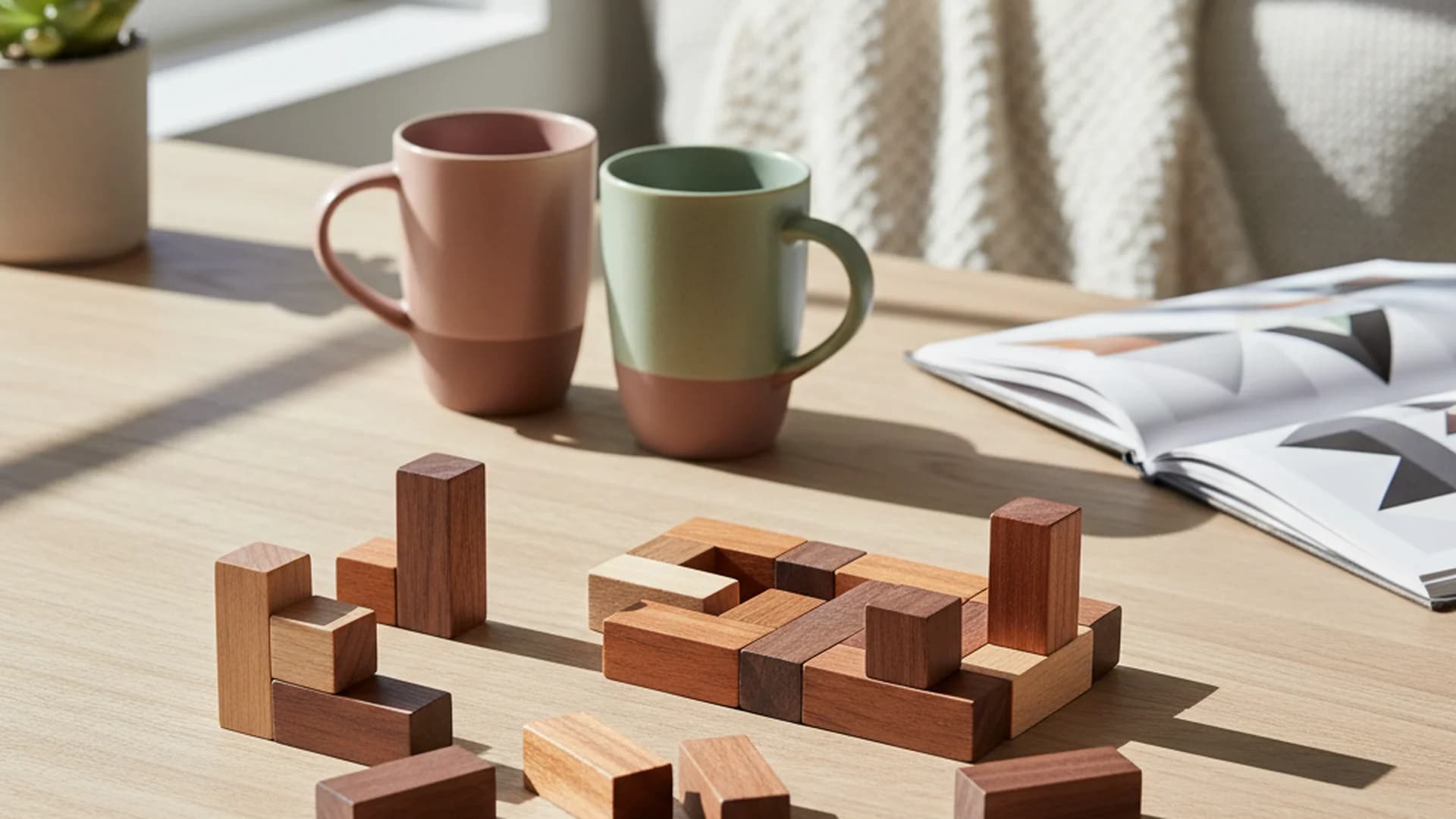
The Ultimate Pentomino Puzzles Guide (2025-2026 Edition)
Master pentomino puzzles with our comprehensive guide. Explore historical roots, 12-piece solutions, advanced solving strategies, and 2026 trends in logic gaming.
Sep 22, 2026 12 min
Logic Puzzles
Mastering Fillomino Puzzles: The Ultimate 2025 Strategy Guide
Unlock the secrets of Fillomino puzzles. Learn expert strategies, regional connectivity rules, and the latest 2026 trends for these complex logic games.
Sep 11, 2026 10 min
Logic Puzzles
Mastering Sequence Puzzles: The Ultimate Guide to Logic and Pattern Recognition
Unlock the secrets of sequence puzzles. Learn expert strategies for numerical, verbal, and order arrangement puzzles to boost your fluid intelligence and logic skills.
Aug 11, 2026 12 min
Advertisement