The Audio Revolution: Navigating the World of Text-to-Speech Puzzles
Explore the rise of text-to-speech puzzles and screen reader accessibility in 2025. Learn expert design tips and the neuroscience behind audio gaming.
By Free To Play Puzzles Editorial Team 10 min read
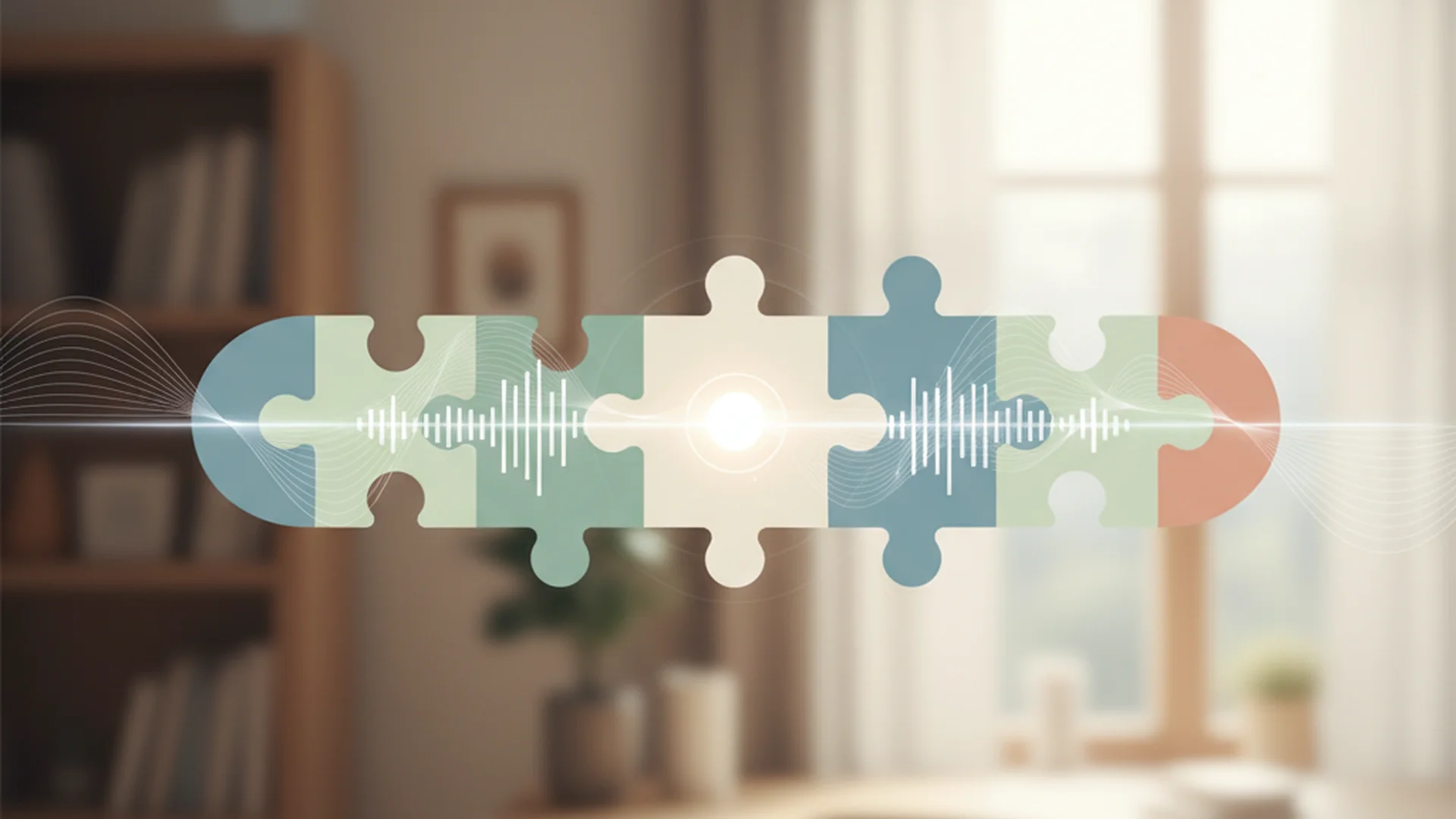
The landscape of digital gaming is undergoing a profound sensory shift. For decades, puzzles were defined by what we could see—intricate patterns, colorful grids, and hidden visual clues. However, a fascinating evolution is underway: the rise of the "eyes-free" experience. Audio puzzle descriptions and text-to-speech (TTS) technologies are no longer just assistive add-ons; they are becoming the core mechanics of a new generation of inclusive entertainment.
In 2025, we are seeing the convergence of advanced AI and spatial audio, turning the traditional puzzle-solving process into a rich, auditory narrative. Whether you are navigating a complex Sudoku grid via a screen reader or solving a mystery through binaural soundscapes, the way our brains process logic through sound is opening new frontiers for mental acuity and accessibility.
The Rapid Growth of Screen Reader Puzzles
The move toward "accessibility-first" design isn't just a trend; it is a response to a rapidly growing market and shifting legal landscape. By the end of 2024, digital accessibility lawsuits reached an all-time high, pushing developers to reconsider how they present information. But beyond the legalities, there is a massive human demand.
While screen reader puzzles are often associated exclusively with the blind community, recent WebAIM surveys reveal a more diverse user base. Approximately 23% of screen reader users have low vision, ADHD, or cognitive disabilities. For these individuals, TTS provides a vital anchor for focus and comprehension. By converting visual clutter into clear, sequential audio cues, puzzles become more manageable and less overwhelming for the neurodivergent brain.
Painting with Sound: The Design of TTS Puzzles
Creating an effective audio-based puzzle is more complex than simply reading text aloud. It requires "painting with sound" to build a mental map for the player. Developers are now utilizing AI in puzzle games to create dynamic environments that respond to player movement and choice.
Digital Grid Math
One of the primary challenges for users is navigating a spatial grid (like a crossword or Logic Puzzles) using a linear medium like audio. The solution lies in "digital grid math." Instead of a screen reader simply stating a letter, expert designs announce coordinates: "Row 1, Column 3: B." This allows the player to build a Cartesian map in their mind, facilitating the same spatial reasoning used by sighted players.
Spatial Audio and Eclipsa Formats
The emergence of open spatial formats like Eclipsa Audio (Google/Samsung) and Apple’s ASAF has revolutionized the genre. Players can now "locate" a clue by physically turning their heads or moving their character within a 3D sound field. This binaural technology mimics how we perceive sound in the real world, adding a layer of immersion that was previously impossible in text-based gaming.
Advertisement
The Neuroscience of Audio Logic
From a cognitive perspective, audio puzzles engage the brain in a unique way. When we solve a visual puzzle, our occipital lobe is heavily engaged. However, with audio puzzle descriptions, the brain must rely more on the temporal lobe (for processing sound) and the prefrontal cortex (for working memory).
Because the information is delivered sequentially rather than all at once, the "cognitive load" is distributed differently. This is why many users find "Spuzzles"—speech-based puzzles where the core mechanic involves analyzing pitch, timbre, or semantics—to be such an effective form of brain training.
Top Games and Platforms to Explore
If you are looking to dive into this world, 2025 has seen several standout titles and platforms that lead the way in accessibility.
- Blindfold Sudoku: A mobile-first app that utilizes highly optimized screen reader navigation to make the classic number puzzle fully playable without sight.
- Word Speaking Vocal Crossword: A platform that integrates natively with Crosswords to provide seamless clue-to-grid transition.
- Lingo 2: An indie favorite that focuses on the "Spuzzle" mechanic, requiring players to solve linguistic riddles based on the inflection and tone of AI voices.
- Amuse Labs’ PuzzleMe: A widely used platform by major news outlets that now includes native TTS support for daily puzzles.
| Feature | Visual Puzzles | TTS/Audio Puzzles |
|---|---|---|
| Navigation | Spatial/Instant | Linear/Sequential |
| Clue Delivery | Static Text | Dynamic Speech/AI |
| Primary Input | Mouse/Touch | Keyboard/Voice |
| Immersion | Graphical | Binaural/Spatial |
Common Mistakes to Avoid
Whether you are a developer or a player, there are common pitfalls that can ruin the experience of an audio-first game.
- Audio Clutter: The biggest mistake is assuming more detail is better. Screen reader users prefer concise, one-syllable feedback. Hearing "link" is much faster and less distracting than hearing "hypertext link."
- Invisible Elements: Developers often forget to assign ARIA roles to interactive pieces. If a screen reader just says "button," the player won't know if that button represents a door, a lever, or a hidden clue.
- Moon Logic: Introducing nonsensical solutions early in a game—often called "moon logic"—is the number one cause of "rage quitting" in the audio gaming community.
- Audio Pixel Hunting: Avoid making the player search for a tiny, specific sound in a cluttered environment. It is the auditory equivalent of looking for a single off-color pixel on a screen.
Advertisement
Frequently Asked Questions
How do you navigate a puzzle grid with a screen reader?
Navigation is typically done using "digital grid math." Instead of the screen reader scanning the whole page, players use the "Tab" and "Arrow" keys to move cell-by-cell. The software announces the coordinates (e.g., "A1," "B2") and the content of the cell, allowing the player to visualize the grid layout.
Can I play standard crosswords with TTS?
Yes. Many modern platforms, such as Amuse Labs, have built-in TTS support. Additionally, players can convert .puz files into accessible formats or use third-party screen readers to read clues and input letters into the grid.
What are 'Spuzzles'?
"Spuzzles" or Speech Puzzles are a genre of indie games where the core mechanic is auditory. These games might ask you to identify a password based on the pitch of a character's voice or solve a riddle where the clue is hidden in the timbre of a spoken word.
Are audio puzzles only for people with visual impairments?
Not at all. "Sighted" gamers frequently use TTS puzzles during commutes, while exercising, or while multitasking. Designing for "situational disability" (when your eyes are busy) has significantly broadened the audience for these games.
Do these games require a mouse?
Most screen reader puzzles are designed for keyboard-only or voice-only input. This removes the barrier of "pixel hunting" and ensures that the game is fully accessible to those with motor impairments as well.
The Future of Inclusive Play in 2026
As we look toward 2026, the integration of AI Puzzle Generation will make accessible gaming even more dynamic. We are moving toward a world where the "puzzling environment" adapts to the user's specific needs in real-time.
From my perspective in cognitive science, the growth of TTS puzzles is a win for everyone. It challenges our brains to map space using sound, it creates a more inclusive gaming culture, and it ensures that the joy of problem-solving is available to everyone, regardless of how they perceive the world.
Explore the Future of Gaming
Discover how technology is reshaping the world of puzzles.
Put it into practice

Keep reading

Technology
The Best Puzzle Apps for Seniors: A 2025 Guide to Easy-to-Use Brain Training
Discover the best puzzle apps for seniors in 2025. Explore science-backed brain training, accessible designs, and modern AI features to boost cognitive health.
Jan 7, 2026 12 min

Technology
The Future of Blockchain Puzzles: Earning While Solving in 2025
Explore the 2025-2026 landscape of blockchain puzzles. Learn about play-and-earn rewards, the "Telegram Era" of gaming, and how Web3 technology ensures fair play.
Jun 15, 2026 10 min

Technology
The Ultimate Guide to Free Online Puzzles (No Download Required)
Explore the world of online puzzles no download needed. Learn about 2025 trends, expert solving strategies, and how to play safely in your browser.
Apr 25, 2026 12 min
Advertisement