Tetris Piece Names: All 7 Tetriminos Explained
Discover the official names and history of the 7 Tetris pieces. From I-pieces to T-spins, learn how to master Tetriminos for high-scoring gameplay.
By Free To Play Puzzles Editorial Team 9 min read
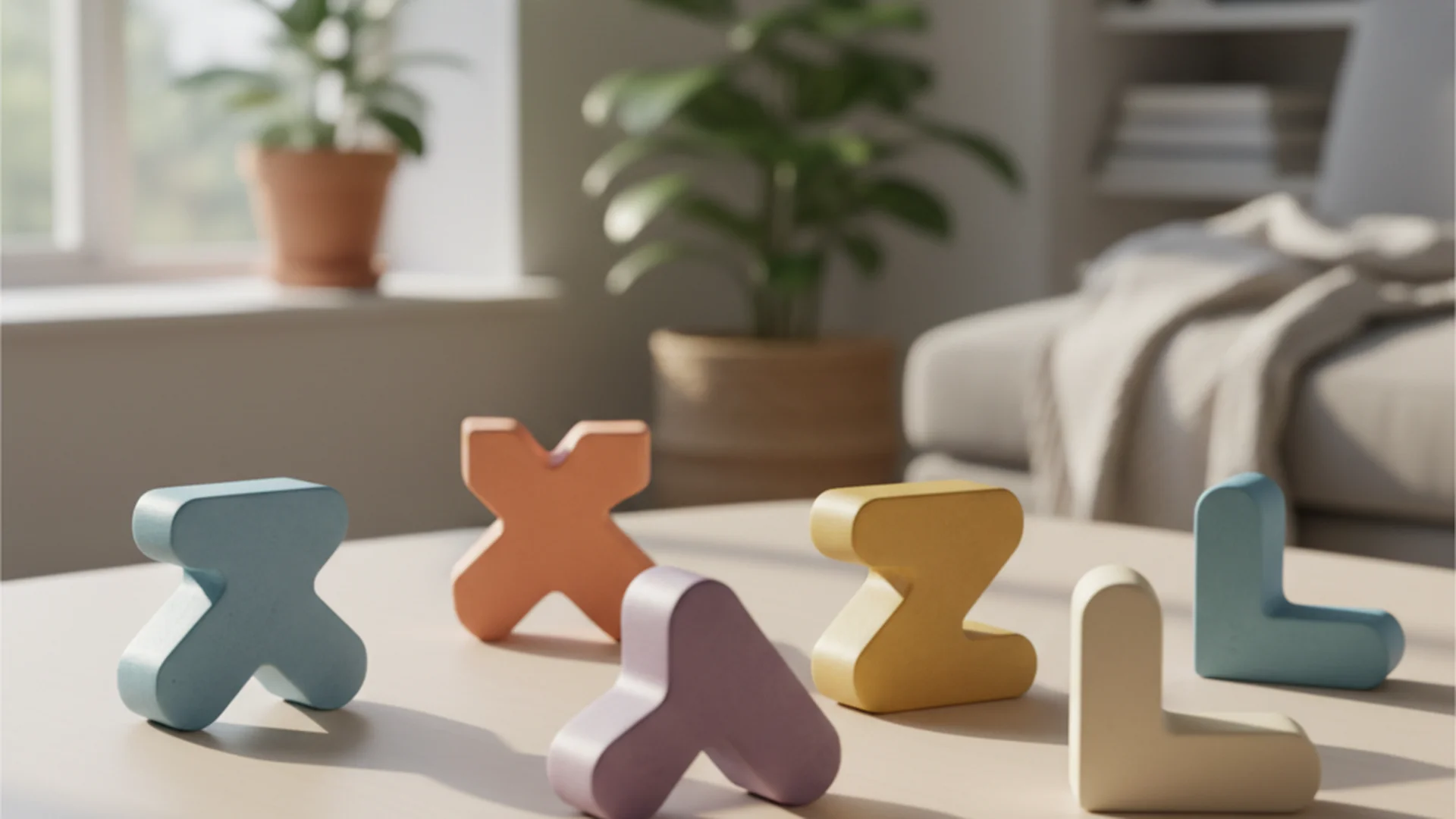
Since its creation in 1984 by Alexey Pajitnov, Tetris has become more than just a game; it is a global cognitive phenomenon. How our brains process these falling geometric shapes is a fascinating question. While casual players often refer to them simply as "blocks" or "bricks," understanding the official tetris piece names and the mechanics of these tetriminos is the first step toward moving from a casual player to a competitive master.
In this guide, we will explore the seven distinct shapes that make up the Tetris universe, their official terminology, and the advanced strategies used in the 2025 competitive circuit.
The Official Terminology: Tetromino vs. Tetrimino
Before we dive into the specific names, we must clarify a common linguistic confusion. In the world of mathematics, any shape formed by four squares connected at their edges is called a tetromino. However, the Tetris Company (TTC) holds the trademark for the specific versions used in the game, which they officially call Tetriminos (spelled with an "i").
The name "Tetris" itself is a clever portmanteau. Pajitnov combined "Tetromino" with "Tennis," his favorite sport, to create the brand we know today. You can learn more about the fascinating origins of this game in our History of Tetris.
The 7 Tetriminos: A Breakdown of Shapes and Colors
Since the implementation of the Standard Rotation System (SRS) in 2001, the colors and behaviors of the pieces have been strictly regulated. Understanding these pieces by their letter-based names is crucial for communication in the community.
1. The I-Piece (Cyan)
Commonly referred to as the "long bar" or "the straight piece," the I-piece consists of four blocks in a straight line. It is the only piece capable of clearing four lines at once—the move known as a "Tetris."
2. The O-Piece (Yellow)
The O-piece is a 2x2 square. It is unique because it remains identical regardless of how many times you rotate it. In the early days of the internet, this piece was jokingly named "Smashboy," but its official name remains the O-Tetrimino.
3. The T-Piece (Purple)
The T-piece is arguably the most important shape in modern Arcade Games. Shaped like a "T," it consists of a three-block row with one block centered on top.
4. The S-Piece (Green) and Z-Piece (Red)
These are the "squiggles" or "snakes." The S-piece steps up to the right, while the Z-piece steps up to the left. They are often the most difficult for beginners to place without creating gaps in their stack.
5. The L-Piece (Orange) and J-Piece (Blue)
These mirror-image "L" shapes are essential for filling gaps and smoothing out a jagged stack. The L-piece faces right, while the J-piece faces left.
Advertisement
The Mathematics of the "Seven-Bag" System
Modern Tetris, including versions found in our Classic Arcade Games Guide, does not use pure randomness. If the game were purely random, a player could theoretically go 50 pieces without seeing an I-piece—a phenomenon known as a "drought."
To prevent this, the game uses the Seven-Bag System. Imagine a physical bag containing one of each of the seven Tetriminos. The game pulls all seven out in a random order before "refilling" the bag.
| Tetrimino | Color | Best Use |
|---|---|---|
| I-Piece | Cyan | Clearing 4 lines (Tetris) |
| T-Piece | Purple | T-Spins and high-score combos |
| O-Piece | Yellow | Stable stacking and base building |
| S/Z Pieces | Green/Red | T-Spin setups and tucks |
Advanced Strategy: Beyond the Basics
If you want to excel at Tetris, simply knowing the tetris piece names isn't enough. You must understand how they interact with the game's physics.
Mastering the T-Spin
In competitive play (such as TETR.IO or Tetris 99), a "T-Spin" occurs when a T-piece is rotated into a tight space at the last millisecond. The game rewards this maneuver with more points and "garbage" sent to opponents than a standard line clear.
The Art of Finesse
Finesse is the practice of moving a Tetrimino to its intended location with the fewest possible button presses. This involves rotating in both directions (clockwise and counter-clockwise) and using "DAH" (Delayed Auto-Shift) to zip pieces to the wall.
Recent Trends in Tetris (2025–2026)
The world of Tetris is currently undergoing a massive resurgence. The "Tetris Forever" update released in early 2025 introduced "Tetris Time Warp," a mode that forces players to adapt to different piece physics from various eras of the game mid-match.
Furthermore, the 2025 Classic Tetris World Championship (CTWC) has been dominated by a technique called "rolling." By tapping the back of an NES controller, players can achieve inputs of over 20 times per second, allowing them to survive at "kill screen" speeds that were previously thought humanly impossible.
Advertisement
Common Mistakes to Avoid
- Clogging the Well: Many beginners place an S or Z piece in a way that blocks their "well" (the open column used for I-pieces). Always keep your well clear.
- Over-rotating: Every unnecessary rotation adds milliseconds to your time. Practice rotating once to reach the desired orientation.
- Holding the Wrong Pieces: The "Hold" queue is a powerful tool. Generally, you should hold an I-piece for emergencies or a T-piece for a setup. Avoid holding S or Z pieces unless your stack is in immediate danger.
Frequently Asked Questions
What is the best piece in Tetris?
While the I-piece is the most iconic, the T-piece is considered the "best" in modern competitive play because it enables T-Spins, which provide higher scoring efficiency.
Why are there only seven pieces?
There are mathematically only seven ways to arrange four squares into a single contiguous shape (not counting reflections or rotations as unique shapes). These are the seven fundamental "tetrominoes."
Is the I-piece drought real?
In modern Tetris (Post-2001), no. The Seven-Bag system ensures you get an I-piece at least once every 14 placements. In the original 1989 NES Tetris, however, the RNG was truly random, and droughts were a frequent and deadly reality.
What is the official name of the "squiggle" blocks?
The official names are the S-Tetrimino (green) and the Z-Tetrimino (red).
Conclusion
Understanding tetris piece names and the logic behind tetriminos transforms the game from a chaotic scramble into a structured puzzle. Whether you are building a "9-0 stack" for a massive Tetris or setting up a complex T-Spin Triple, your success depends on your familiarity with these seven shapes.
By mastering the Seven-Bag system and refining your finesse, you can significantly improve your speed and cognitive agility. If you're looking to broaden your gaming horizons, check out our 2048 Strategy Guide to see how these spatial reasoning skills apply to other logic-based games.
Master Your Strategy
Play Tetris now and test your spatial reasoning skills.
Put it into practice

Keep reading
Arcade Games
Tetris Rotation Systems: SRS vs. Classic Mechanics Explained
Master the mechanics of the Tetris rotation system. Explore SRS, classic wall kicks, and professional strategies to improve your gameplay and brain health.
Aug 20, 2025 12 min
Arcade Games
Tetris Line Clears Explained: Mastering Singles, Doubles, Triples, and Tetrises
Master the art of the Tetris line clear. Learn scoring multipliers, T-spins, and pro-level strategies from the 2025 competitive scene to maximize your high score.
Jul 24, 2025 12 min

Arcade Games
Tetris Rules Explained: Mastering the Science of the Stack
Master the essential Tetris rules and advanced strategies. Learn about the 7-bag system, T-spins, and expert stacking techniques to improve your high score.
Mar 29, 2025 12 min
Advertisement